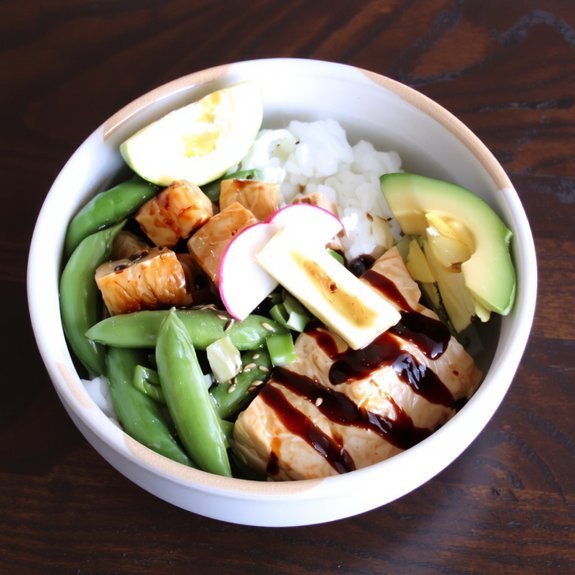

You’ll assemble a salmon poke bowl using sushi-grade salmon, precise marinade ratios, and an optimized rice base for texture and flavor. Measure ingredients, control marination time, and use sharp knives to guarantee clean cuts and safe handling. Continue for exact weights, timings, and plating technique that produce consistent results.
Why Use Sushi-Grade Salmon?
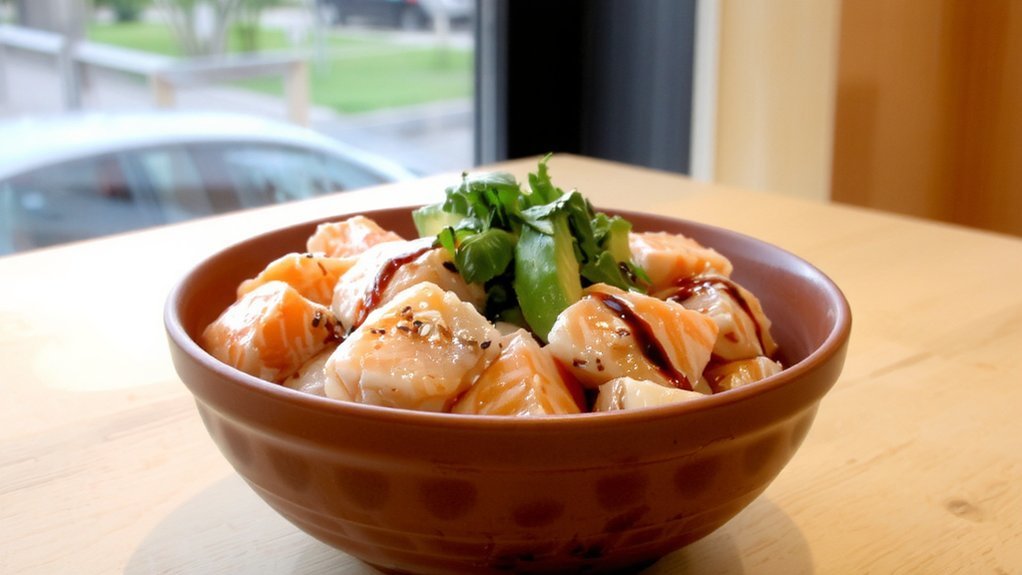
Because raw salmon can carry parasites and bacteria, you should buy fish labeled and handled as sushi-grade to reduce risk: reputable suppliers follow FDA-recommended parasite-destruction protocols that require freezing at −31°F (−35°C) or below until solid and storing at −4°F (−20°C) or below for at least 24 hours, which kills parasites such as Anisakis simplex; farmed Atlantic salmon is generally lower risk and may be exempt from freezing requirements due to controlled diets, but wild-caught salmon must be frozen to be considered safe for raw consumption.
You should verify handling, blast-freezing, bleeding and cold-chain control, since these processes preserve quality, minimize bacterial proliferation and protect the health benefits of raw salmon; prioritize vendors who document sustainable sourcing and traceability and provide clear storage records. Additionally, many suppliers use blast freezing to rapidly lower temperature and preserve texture.
Ingredients You’ll Need
Now that you’ve confirmed safe, sushi‑grade salmon and proper handling, gather the components grouped by function:
- base (short‑grain sushi rice or alternatives such as brown or cauliflower rice),
- primary proteins and produce (sushi‑grade salmon, avocado, cucumber, thinly sliced green onions),
- marinade and seasoning (soy sauce, toasted sesame oil, rice vinegar, grated ginger, optional sriracha),
- and toppings/garnishes (edamame, shredded carrot, sesame seeds, nori or wakame, pickled ginger).
Choose firm, translucent salmon and high‑quality rice for texture control. Include avocado for creaminess and cucumber for crisp contrast.
Select garnishes for textural and umami balance. Keep additional options—mango, radish, cilantro, red cabbage, spicy mayo—for targeted flavor combinations.
Note nutritional profiles and health benefits: omega‑3s, fiber, plant protein, and micronutrients contribute to a balanced bowl for ideal results.
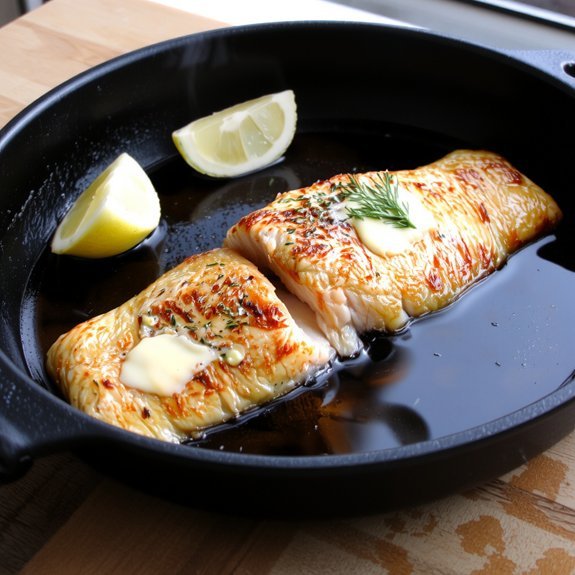
For quick preparation, broiled salmon cooks in just 4 minutes, so dinner can be ready in under 30 minutes.
Preparing the Salmon and Marinade
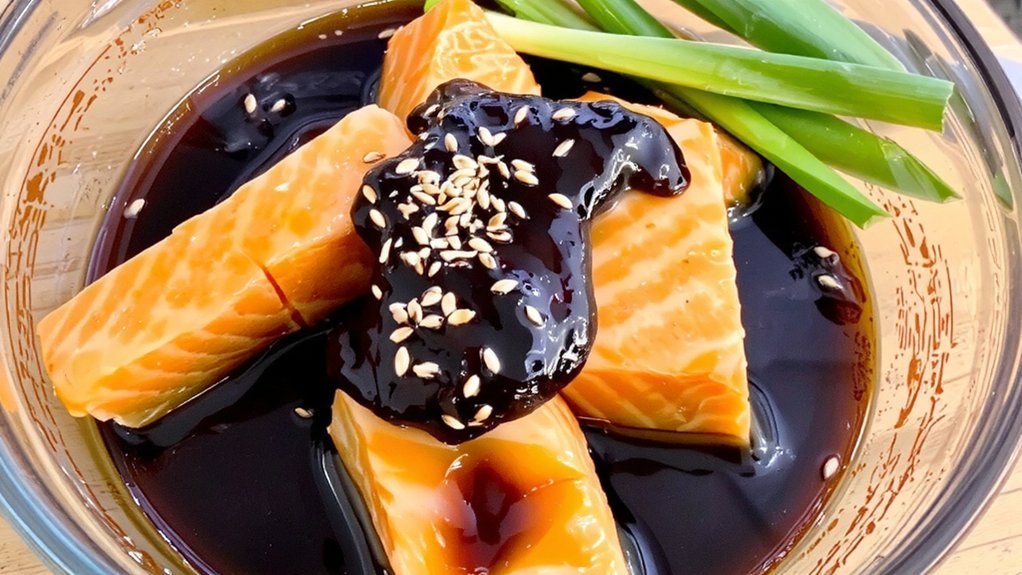
You should select sushi‑grade or high‑quality salmon, fully thawed and kept chilled, if you plan to serve it raw. Thaw the salmon in the refrigerator to ensure safety and quality, as recommended for sushi‑grade fish thaw in the refrigerator.
Use a sharp knife to remove the skin and cut the fillet into ½–¾ inch cubes on sanitized surfaces to preserve texture and prevent contamination.
Combine the marinade before adding the fish, fold gently to coat, and refrigerate about 15 minutes—longer marination increases flavor but risks softening the flesh.
Choosing Sushi-Grade Salmon
Sushi‑grade salmon denotes fish handled and processed to minimize bacterial growth and parasite risk: it’s either caught and processed the same day or has been flash‑frozen to meet FDA parasite‑destruction criteria (−20°C for ≥7 days or −35°C for ≥15 hours). Always prioritize freshness when choosing fish, as it is the cornerstone of both flavor and safety.
Farmed Atlantic salmon often presents lower parasite risk due to controlled diets but still benefits from supplier guarantees or certificates of analysis.
You must prioritize sourcing suppliers who provide certificates of analysis and clear time/temperature indicators; visual Freshness indicators—vibrant color, firm texture, clean ocean scent—support selection but don’t replace documented freezing.
Cure or marinate refrigerated fish for at least 45 minutes; rinse gently before serving.
Follow these controls:
- Verify certificates and freezing logs.
- Inspect color, texture, scent systematically.
- Maintain cold chain and time/temperature records.
Cutting and Cubing
A sharp, non‑serrated knife and a stable cutting board are essential to preserve texture and produce uniform 3/4‑inch cubes.
You’ll halve fillets, remove skin with a single steady stroke, and trim bloodlines and connective tissue to prevent off‑flavors.
Thaw sushi‑grade salmon in the refrigerator and pat dry to maintain firmness; keep salmon below 40°F on the surface before cutting. For raw preparations, using Sushi-grade salmon is recommended to ensure safety and quality.
Use controlled, single-stroke cutting techniques to minimize cell rupture and guarantee cube uniformity for even flavor distribution and consistent mouthfeel.
Work on a non-slip surface, sanitize tools and hands before and after handling, and use separate boards to prevent cross-contamination.
Transfer cubes immediately to a non-reactive container to preserve temperature and integrity until you apply the marinade.
You should measure cubes with a guide accurately.
Marinade Time and Tips
Although marinating infuses taste quickly, you should plan for a minimum of 10–15 minutes and can extend up to 4 hours in the refrigerator for deeper umami—never marinate at room temperature. Marinating salmon in a soy-based mix also alters the fish’s protein structure, improving its texture and flavor.
You’ll pat sushi‑grade salmon dry, cube uniformly, then apply a measured soy-sesame-rice mix (1–2 tbsp soy per 8 oz) and optional sweetener. Refrigerate; discard marinade that contacted raw fish if not cooking.
Short marination yields balanced texture; longer improves penetration and umami. Test and adjust acidity, salt, heat prior to contact to guarantee best flavors.
Consider mayo or avocado for viscosity in finished bowls. Use marinade variations systematically: document ratios and times to reproduce results.
- Standard soy-sesame base with citrus acid
- Spicy mayo for creamy heat
- Vinegar-forward light dressing for delicate protein balance
Rice and Base Options
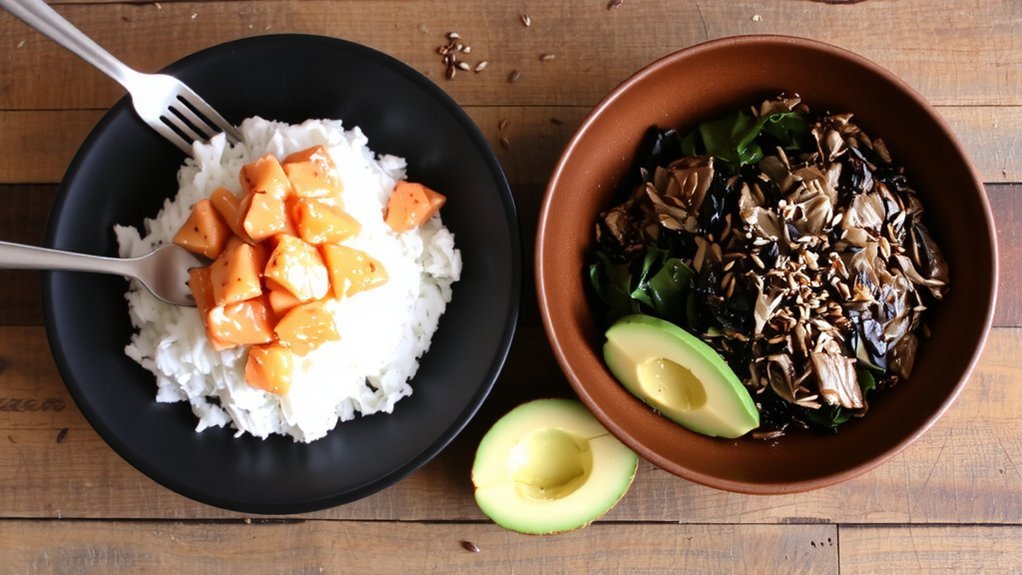
When selecting a base for your salmon poke bowl, prioritize texture and moisture so ingredients bind without becoming mushy. You’ll choose between Rice varieties and Base alternatives based on chew, starch content, and dietary goals.
Use sushi rice when stickiness is required; rinse and season to control adhesion. Choose jasmine or basmati for aromatic profiles; expect less cohesion. Prefer white rice for neutrality, brown rice for fiber and firmer grain.
For low-carb or higher-protein needs, substitute quinoa, cauliflower rice, buckwheat, or zucchini noodles—each alters mouthfeel and nutrient density.
Cook rice via stovetop, rice cooker, or Instant Pot to precise hydration ratios; microwave only with strict monitoring. Combine grains sparingly to achieve targeted texture and nutritional balance. Adjust salt and vinegar to optimize final palate. This approach pairs well with baked salmon, meaning no sushi-grade fish is required, making the bowl easier and safer for family meals.
Toppings, Mix-Ins, and Garnishes
You should add crunchy components—shredded carrots, red cabbage, sugar snap peas, and crushed macadamia nuts—for defined textural contrast.
You should layer creamy elements such as diced avocado and a controlled smear of sriracha mayonnaise to supply fat and a mouth-coating sensation.
You should apply pickled accents like pickled ginger and a few drops of toasted sesame oil to introduce acidity and aromatic lift.
The dish traditionally consists of marinated raw fish served over rice.
Crunchy Toppings
Because texture defines satisfaction in a poke bowl, prioritize crunchy toppings that provide clear contrasts to tender salmon and soft rice: you’ll want elements that deliver crunchy texture and amplify vibrant flavors without overpowering the fish. Also, be mindful to cook rice according to package instructions so the base isn’t mushy.
Choose raw vegetables like julienned carrot, thinly sliced cucumber, and shredded red cabbage for fresh snap and color. Add nut-and-seed components—toasted sesame, furikake, or toasted cashews—for nutty bite and umami. Incorporate seaweed elements such as nori strips or crispy salmon skin for oceanic crunch.
Balance portion and placement so each bite retains contrast. Measure quantities to maintain balance; excessive crunch masks delicate salmon and destabilizes mouthfeel. Use sparingly, judiciously.
- Julienne carrot, cucumber rounds, shredded red cabbage
- Toasted sesame, furikake, crushed rice crackers
- Nori strips, crispy salmon skin, edamame
Creamy & Pickled Accents
While creamy sauces deliver richness and mouth-coating body, pickled accents provide the necessary acidic lift to cut fat and refresh the palate, so balance and placement become critical. When assembling your poke, always source sushi-grade fish to ensure safety and freshness. You’ll deploy Creamy sauces—like creamy togarashi, gochujang mayo, Kewpie mayo with sriracha or Japanese mayo with roe—for layered fat and heat, placing sparingly to avoid dominance. Use Pickled vegetables—pickled cucumbers, daikon, quick pickled onions, pickled ginger or kimchi—for bright acidic contrast and texture. Follow this quick reference table for pairing.
| Creamy | Pickled |
|---|---|
| Gochujang mayo | Pickled daikon |
| Kewpie+sriracha | Pickled cucumbers |
| Japanese mayo+roe | Pickled ginger |
Finish with masago, sesame, nori or citrus to calibrate flavor and texture. Add avocado or edamame for cream and protein. Measure portions to maintain balance.
Assembly and Serving Tips
When assembling a poke bowl, start with a firm, evenly leveled base—steamed sushi rice or compacted mixed greens— so the bowl stays stable and absorbs dressing without becoming soggy. Also, ensure seafood is kept below 40°F while prepping to maintain safety.
Use precise assembly techniques: layer rice or greens evenly, position marinated salmon centrally or in a controlled spread, and section vegetables by texture and color for predictable bites and efficient flavor distribution.
Control sauce placement to prevent saturation; apply light dressings beneath protein and reserve bold sauces for visible drizzles or side containers as part of serving suggestions.
- Arrange toppings by color and texture to optimize contrast and mouthfeel.
- Use squeeze bottles for accurate sauce volume control.
- Garnish sparingly with sesame, green onion, or furikake for focused aroma.
Serve immediately or keep sauces separate for prepping.
Food Safety and Storage
Good assembly practices matter, but safe storage and handling determine whether a salmon poke bowl is fit to eat.
You must verify parasite control: confirm salmon was frozen at −20°C (−4°F) for seven days or at −35°C (−31°F) for 15 hours, with documentation.
For food safety, avoid serving raw fish to pregnant women, children, elderly, or immunocompromised individuals.
For proper storage, keep raw salmon below 4°C (40°F), never leave out over two hours, and thaw in refrigerator overnight; if faster, use sealed bag in cold water or microwave defrost until pliable.
Prevent cross-contamination by using separate utensils and sanitizing surfaces.
Discard marinades contacting raw fish unless reserved pre-contact and chilled.
Source fish from reputable suppliers exhibiting intact packaging and cold chain documentation and verification.
When not serving raw, you can cook to 145°F to ensure safety.
Leave a Comment