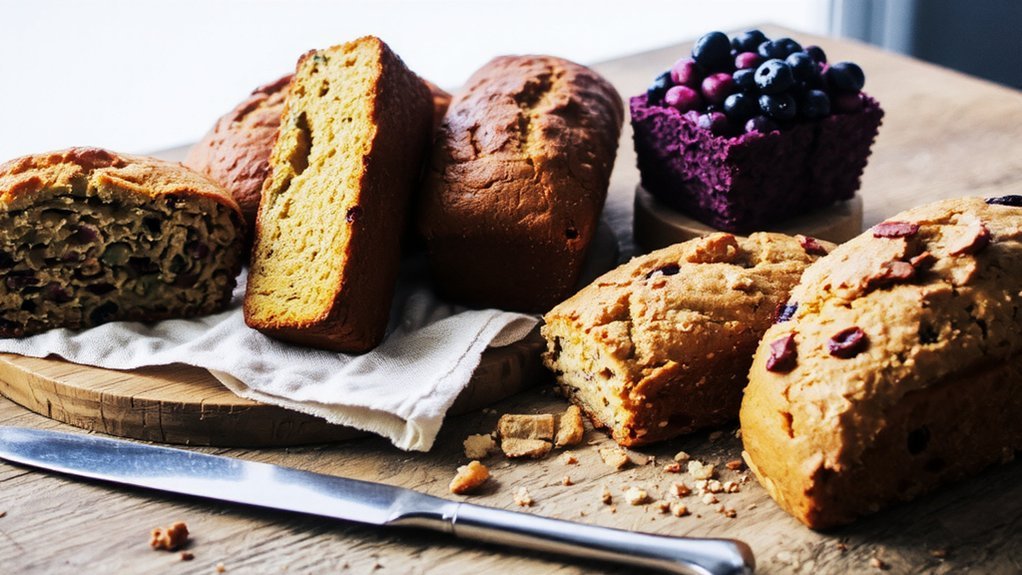

Key Takeaways
- Classic Banana Bread requires ripe spotted bananas, melted butter, sugar, egg, vanilla, flour, baking soda, and salt baked at 350°F for one hour.
- Cheddar Jalapeño Corn Bread combines cornmeal, flour, buttermilk, sharp cheddar, and jalapeños in a cast-iron skillet at 400°F for 20–25 minutes.
- Blueberry Lemon Bread uses fresh lemon zest, yogurt, and blueberries folded gently into batter, baked at 350°F for 55–60 minutes.
- Pumpkin Spice Bread blends pumpkin puree with cinnamon, nutmeg, cloves, and ginger, baked at 350°F for 50–60 minutes until toothpick emerges clean.
- Zucchini Chocolate Bread combines grated squeezed zucchini with cocoa powder, eggs, and oil, baked at 350°F for 50–60 minutes for moist crumb.
Classic Banana Bread
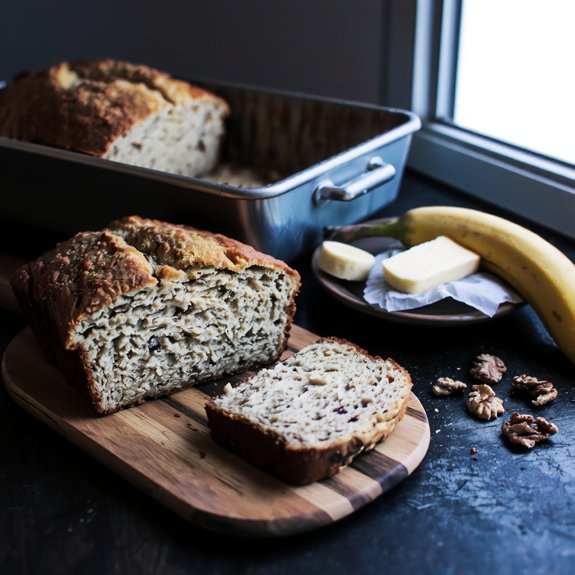
Whether you’re using overripe bananas that’d otherwise go to waste or you’re craving a simple, satisfying treat, banana bread delivers reliable results with minimal ingredients.
You’ll need three ripe bananas, melted butter, sugar, an egg, vanilla extract, flour, baking soda, and salt.
Ripening bananas until they’re spotted and soft maximizes natural sweetness and moisture.
Mash your bananas thoroughly, then mix in butter and sugar.
Mash your bananas thoroughly, then mix in butter and sugar to build your flavor foundation.
Beat in the egg and vanilla.
Combine your dry ingredients separately, then fold them into the wet mixture.
Your batter consistency should be thick yet pourable—not dry, not runny.
Pour into a greased loaf pan and bake at 350°F for approximately one hour.
You’ll know it’s done when a toothpick inserted in the center emerges clean.
Cool before slicing and enjoying your freedom to enjoy homemade bread anytime.
2. Cheddar Jalapeño Corn Bread
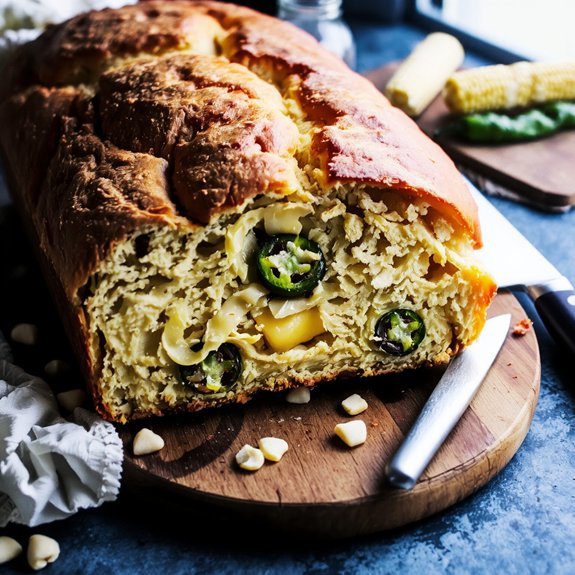
If you’re ready to move beyond sweet breads, cheddar jalapeño corn bread offers a savory alternative that’s equally straightforward to execute.
You’ll combine cornmeal, flour, baking powder, and salt in a dry bowl.
Whisk together eggs, buttermilk, and melted butter separately, then merge the wet and dry ingredients until just combined—don’t overmix.
For cheese varieties, sharp cheddar provides robust flavor, though you can experiment with pepper jack for additional complexity.
Fold in your cheese choice along with diced jalapeños, adjusting heat management by removing seeds for milder results or keeping them for assertive spice.
Pour the batter into a greased cast-iron skillet or standard baking pan.
Bake at 400°F for 20-25 minutes until golden and a toothpick emerges clean.
You’ll achieve a moist crumb with crispy edges—a versatile bread that complements soups and chili perfectly.
3. Blueberry Lemon Bread

Bright citrus notes and pops of blueberry make this quick bread a brisk counterpoint to heavier varieties.
You’ll want to master the zest technique—microplane fresh lemon zest into your dry ingredients to release aromatic oils evenly.
Combine two cups all-purpose flour, one-and-a-half teaspoons baking powder, half a teaspoon salt, and your zest.
In a separate bowl, you’ll whisk together one egg, half a cup melted butter, two-thirds cup sugar, and one cup plain yogurt.
Fold wet ingredients into dry until just combined—overmixing compromises your crumb texture, yielding dense results.
Gently fold one-and-a-half cups fresh blueberries into batter.
Pour into a greased loaf pan and bake at 350°F for fifty-five to sixty minutes until a toothpick emerges clean.
4. Pumpkin Spice Bread
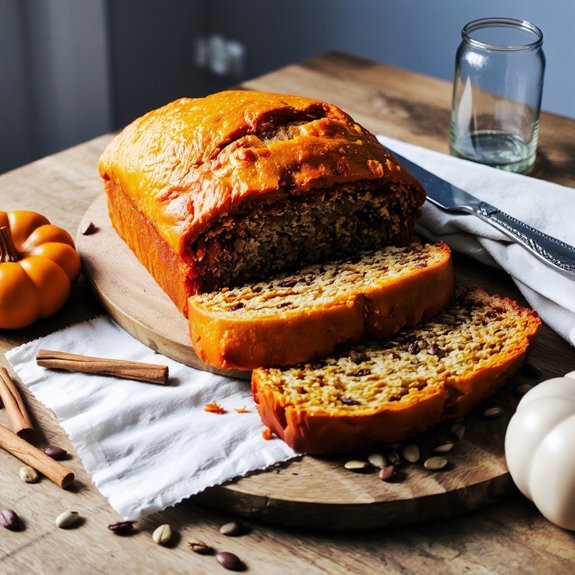
Moving from bright citrus flavors to warm autumn spices, pumpkin bread delivers rich, complex notes that deepen with proper spice layering.
You’ll combine one-and-a-half cups pumpkin puree with cinnamon, nutmeg, cloves, and ginger—adjusting ratios to your preference for personalized spice balance.
Mix your dry ingredients separately: flour, baking soda, salt, and spices.
Whisk together eggs, sugar, oil, and pumpkin, then fold into dry ingredients until just combined.
Pour into greased loaf pans and bake at 350°F for fifty to sixty minutes until a toothpick emerges clean.
You’ll achieve peak flavor after cooling completely.
For serving suggestions, slice thick pieces and serve warm with cream cheese frosting or alongside your morning coffee.
Store wrapped at room temperature for three days or freeze for extended enjoyment.
5. Zucchini Chocolate Bread
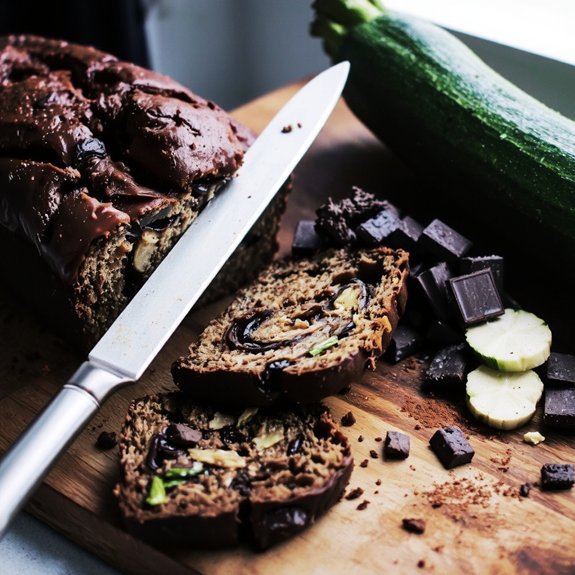
Combining shredded zucchini with cocoa creates a moist, tender crumb that defies the vegetable’s subtle presence.
Shredded zucchini meets cocoa for a moist, tender crumb that conceals the vegetable’s delicate flavor beautifully.
You’ll need grated zucchini, all-purpose flour, unsweetened cocoa powder, sugar, eggs, oil, baking soda, and salt.
Start by squeezing excess moisture from your grated zucchini—this step’s critical for proper texture.
Whisk together dry ingredients, then combine wet components separately.
Fold the zucchini into your wet mixture before blending with dry ingredients.
Don’t overmix; you’re after a tender crumb, not toughness.
The cocoa balance matters greatly. Too much cocoa overwhelms; too little disappears entirely.
Typically, ½ to ¾ cup cocoa powder per loaf works well. You’ll achieve a chocolate flavor that’s noticeable without being aggressive.
Bake at 350°F for 50-60 minutes until a toothpick emerges clean.
You’ve created a loaf that’s simultaneously decadent and nutritious—freedom on your plate.
Frequently Asked Questions
What Is the Difference Between Quick Bread and Yeast Bread?
You’ll find the key difference lies in their leavening mechanisms. Quick breads use chemical agents—baking powder or baking soda—for immediate rise, requiring no fermentation process.
Yeast breads rely on living yeast cultures that ferment, creating carbon dioxide slowly over hours.
You control quick breads’ timing completely; they’re ready when mixed and baked. Yeast breads demand patience for fermentation, developing complex flavors through ingredient transformation. Your choice depends on whether you’re prioritizing speed or depth.
Can I Substitute All-Purpose Flour With Whole Wheat Flour in Quick Breads?
Yes, you can substitute all-purpose flour with whole wheat flour in quick breads, though you’ll need hydration adjustments since whole wheat absorbs more liquid.
Start by replacing 25-50% of the all-purpose flour to control flavor changes—whole wheat brings earthiness and density.
If you’re going full substitution, increase your liquid by 2-4 tablespoons per cup and expect a nuttier taste, denser crumb, and darker color.
You’re free to experiment with ratios.
How Should I Store Quick Bread to Keep It Fresh Longer?
You’ll keep your quick bread fresh longest by wrapping it tightly and storing it in airtight containers at room temperature for up to three days.
For extended freshness, you’ve got freedom to refrigerate—it’ll last five to seven days when properly sealed.
Alternatively, you can freeze your bread for up to three months in airtight packaging.
Always let it cool completely before storing to prevent moisture buildup that ruins texture.
Why Did My Quick Bread Turn Out Dense Instead of Fluffy?
You’ve likely overmixed your batter, which develops gluten and creates a dense crumb structure.
Measuring errors—particularly too much flour or too little leavening agent—also compromise lift.
You’ll want to stir your ingredients just until combined, no more.
Accurate measurements matter; use a scale for precision.
Make sure your baking powder or soda isn’t expired, as these agents lose potency over time, directly affecting your bread’s rise and final texture.
Can Quick Bread Batter Be Frozen for Baking Later?
You can freeze quick bread batter for later baking.
For ideal results, use airtight batter packaging like freezer containers or heavy-duty bags, leaving headspace for expansion.
Freeze timing matters—batter stays viable for up to three months.
Before baking, thaw your batter overnight in the refrigerator.
You’ll notice slight separation; simply stir to recombine.
Bake according to your original recipe, though you might add one to two minutes to account for the cold batter’s slower initial rise.





Leave a Comment