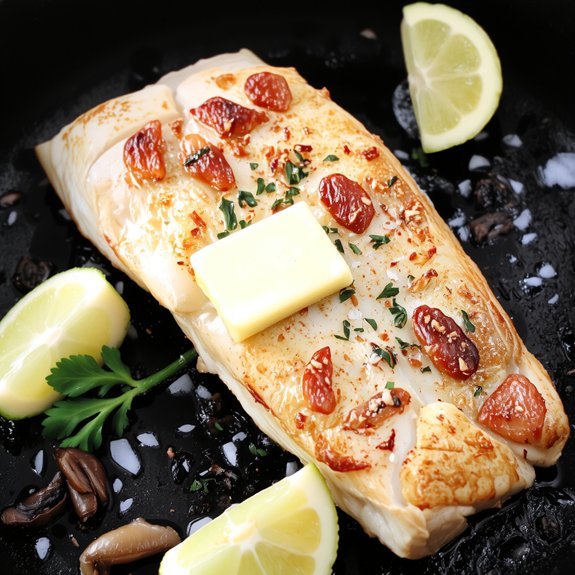

When you pan-fry mahi‑mahi, pat the fillets dry and season simply so the clean, slightly sweet flesh can sing; a light flour or panko dusting gives a golden, crispy edge. Heat a heavy skillet until hot, sear briefly each side, then rest to lock juices. Get the technique right and the flavor follows — here’s how to do it.
Ingredients and Measurements
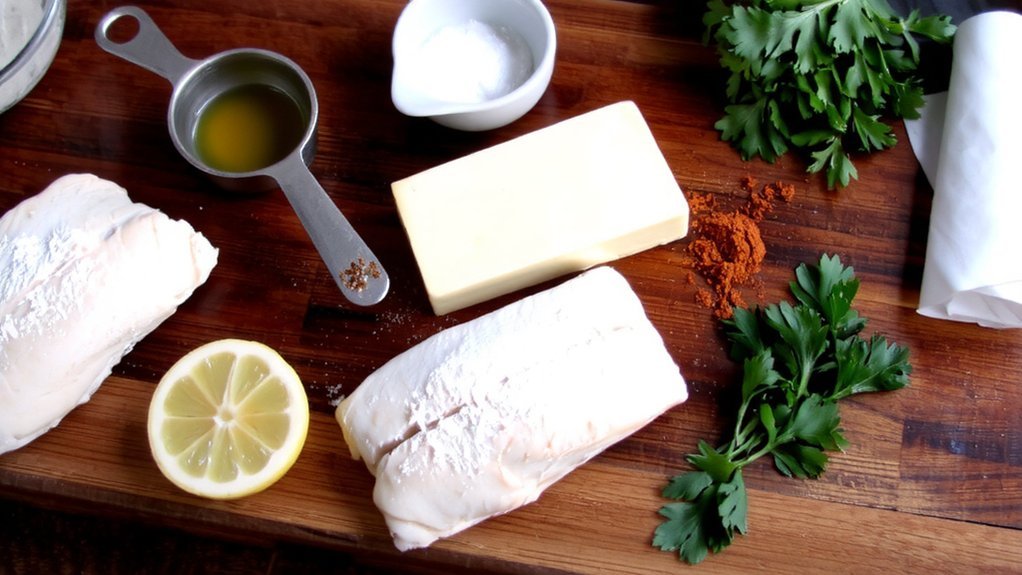
Start with 1 pound of mahi‑mahi (about four 6‑oz fillets) and set up a simple coating station: 2/3 cup all‑purpose flour (or substitute almond flour or 1–1½ cups panko for a lighter crunch), a beaten egg if you’re breading, and a blend of seasonings — blackened or Creole for heat, or Old Bay with garlic and onion powder plus paprika for a milder, savory crust. Mahi mahi is flaky and tender, making it a versatile main dish.
Then pat fillets dry, season both sides, and dust or bread them lightly so the exterior sears without overcooking the flesh. Use vegetable or canola oil for a high smoke point and controlled browning.
Note Nutritional benefits of mahi‑mahi: lean protein, low fat, and rich in B vitamins.
Explore Cooking variations like pan‑seared with lemon butter or blackened crusts.
Equipment and Tools Needed
You’ve prepped the fillets and seasoning — now outfit your station so the fish gets the crust and carry-through flavor it deserves. Gather a heavy-bottom stainless or cast-iron pan for heat retention, with a non-stick alternative for delicate coatings. Use an oven-proof skillet if you’ll finish in a 350°F oven.
Choose a thin, flexible fish spatula for flipping and a rubber spatula for sauces. For best results, opt for a thin, flexible fish spatula that lets you flip fillets without tearing. Keep a splatter guard, high-smoke-point oil, and heat-resistant mitts handy. Prep knives, a stable cutting board, paper towels and mixing bowls nearby to streamline workflow.
Maintain order with clear kitchen organization so tools are at hand. After cooking, protect seasoning with proper tool maintenance: scrub cast iron gently, dry thoroughly, and oil before storing to preserve performance and extend life.
Preparing the Fillets
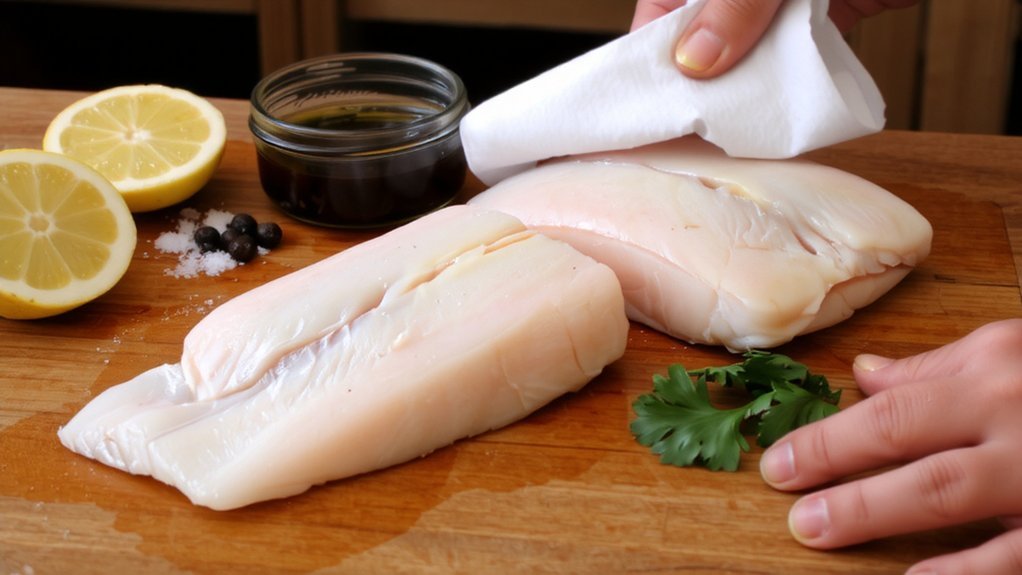
First, treat each fillet like delicate silk: pat it thoroughly with paper towels to remove surface moisture, rinse under cold running water if needed, then dry again so the fish will sear instead of steam.
Inspect for bones, scales and debris, removing any remnants with tweezers or the tip of a knife. Use gentle fillet handling—turn and portion with a flexible spatula to prevent tearing. Trim excess fat and portion to 4–6-ounce pieces for even cooking.
Keep fillets chilled below 40°F until they hit the pan; thaw frozen pieces under cold running water or overnight in the fridge. Practice precise washing techniques to clear impurities, then dry completely before brief marinating or immediate cooking.
Prompt, careful prep preserves texture and flavor and appearance always. Keep in mind that Mahi Mahi is a surface dwelling saltwater fish found in tropical climates.
Seasoning and Coating Options
Three reliable approaches let you tailor pan-fried mahi‑mahi: dry rubs for an immediate, charred crust; quick marinades for infusion and moisture; and light coatings (panko, cornmeal, or seasoned flour) for crunch.
Use a basic rub of garlic powder, onion powder, paprika, cayenne, salt and black pepper for flavor, adding thyme or oregano for herbal depth. For bold results, apply blackening techniques—cumin, smoked paprika and cayenne sear into a crisp, spiced shell.
Use a simple garlic-paprika rub—add thyme or oregano; for bolder flavor, blacken with cumin, smoked paprika and cayenne.
Try Asian marinades with soy, ginger, sesame oil and scallions to introduce umami before cooking. Mediterranean choices lean on lemon zest, oregano, garlic and olive oil.
If you want crunch, press panko or cornmeal into the surface after a light egg wash. You’ll make small test batches and adjust spice levels to taste.
For a classic blackened approach, use spices like smoked paprika, garlic powder, onion powder and cayenne and cook very hot to develop a darkened crust incorporating authentic blackening spices.
Pan-Frying Technique and Timing
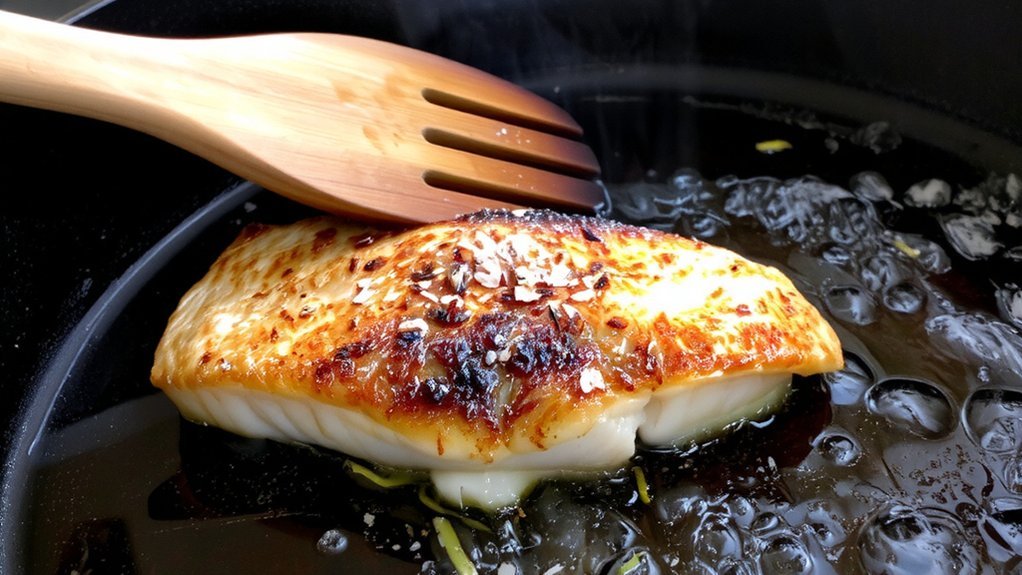
After seasoning or applying a light coating, get the pan hot so the fish sears the moment it hits the surface — a cast‑iron, stainless, or good nonstick skillet works best. Mahi mahi has a non-fishy mild flavor.
Pat fillets dry, choose a high smoke‑point oil, then use pan techniques to coat it. Use medium to medium‑high cooking temperature so thinner fillets need about 2–3 minutes per side and thicker pieces brown 3–5 minutes before flipping.
Don’t move the fish while the crust forms; flip gently to preserve that crust. For thicker fillets, baste the exposed side with hot oil to promote even cooking.
Total cook time hovers near eight minutes, and you’ll know it’s done when it flakes easily, is firm, and reaches roughly 140°F. Let it rest briefly afterward.
Sauces and Serving Suggestions
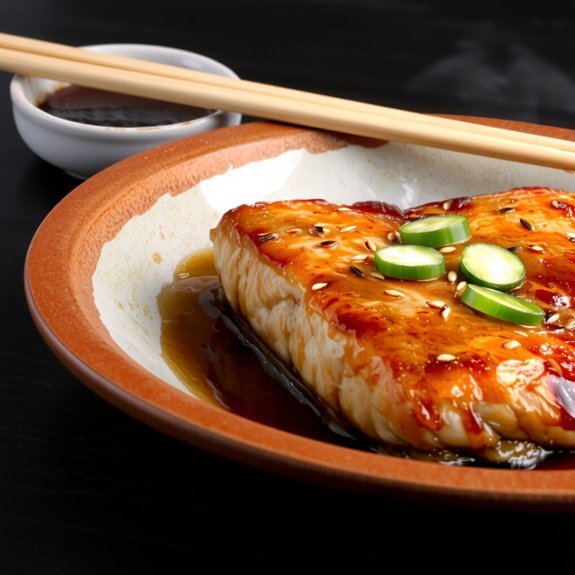
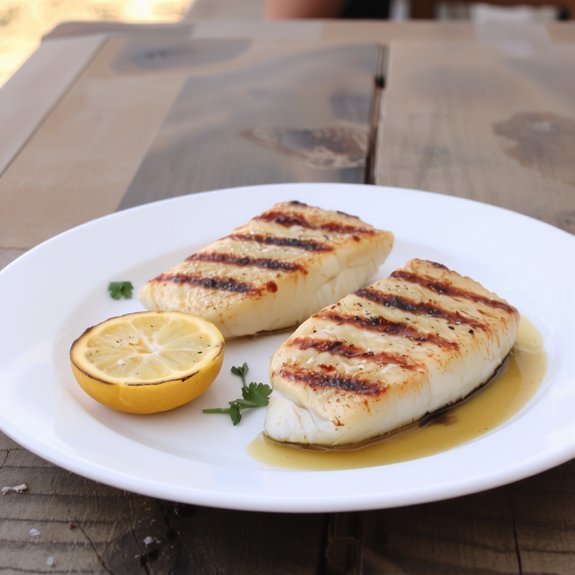
When you finish pan‑frying mahi‑mahi, pick a sauce that complements its mild, slightly sweet flesh—bright citrus or a fruit salsa will cut the richness, herb butter or caper‑lemon will deepen savory notes, and a touch of garlic or red‑pepper heat can lift the whole dish. Make sure the fillets are dry before cooking to get a crisp crust; dry fish sears better and prevents steaming.
Choose sauce combinations deliberately: lemon-garlic butter for balanced acidity and richness, mango-avocado salsa for tropical contrast, or a spicy garlic skillet sauce when you want warmth. Spoon sauce under and over the fillet to layer flavor, use warm plates, and serve with lemon or lime wedges.
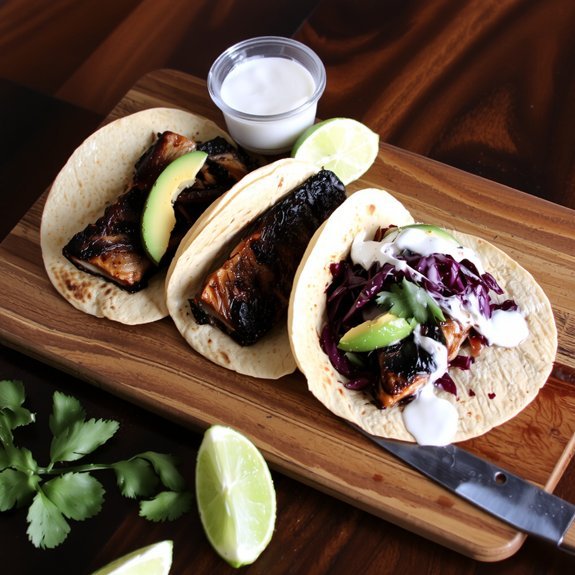
Match sides—coconut rice with mango salsa, roasted asparagus with herb butter—and finish with garnish ideas like chopped parsley, cilantro, or a few capers to brighten each bite and adjust seasoning before serving.
Tips for Doneness and Troubleshooting
Although mahi‑mahi cooks quickly, getting doneness right takes attention to temperature, look, and feel. It holds shape well, making it easy to pan‑fry, grill, or bake. Trust an instant‑read thermometer—USDA says 145°F (63°C), but many chefs stop at 140°F (60°C) or 135°F (57°C) for medium, letting carryover finish it.
Watch doneness indications: opaque flesh, a darkened pink stripe, and large flakes that separate with gentle twisting.
Pan‑preheat, use medium heat and a shimmering oil layer so you get a crisp crust in 3–5 minutes first side, 2–4 minutes second.
Troubleshoot common cooking mistakes: avoid high heat that burns seasoning, don’t flip early, and don’t skimp on oil or preheat if the fish sticks.
Rest briefly so residual heat evens doneness and preserves moisture. If undercooked, return to pan briefly; if overcooked, serve with sauce to revive.
Leave a Comment