

Key Takeaways
- Use a kitchen scale for weight-based substitutions; most specialty flours replace all-purpose flour at roughly 1:1 by weight with liquid adjustments.
- Reduce water by 1–2 tablespoons per cup when substituting since alternative flours absorb moisture differently than wheat flour.
- Add xanthan gum, psyllium husk, or an extra egg to compensate for lost gluten structure in binding-dependent recipes.
- Lower oven temperature by 25°F because specialty flours brown faster than wheat flour, preventing over-browning.
- Increase baking powder or soda by 25% for denser flour substitutes to improve rise and crumb texture.
Understanding Flour Substitutes and Their Properties
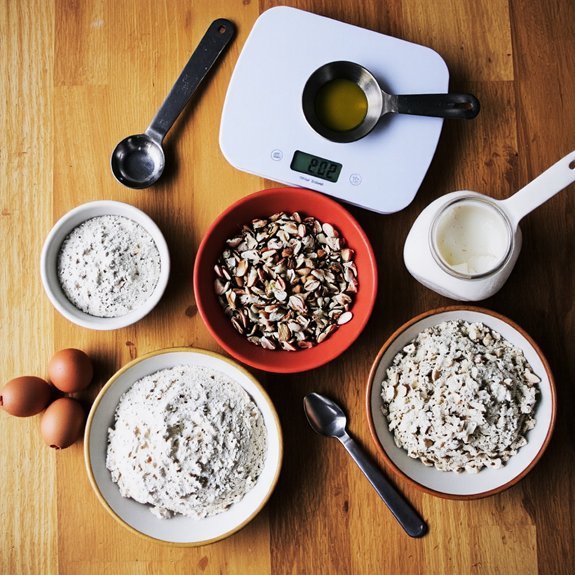
Choosing the right flour substitute depends on understanding how different ingredients behave in your batter or dough.
You’ll discover that each alternative carries distinct properties affecting your final product.
Moisture retention varies substantially across substitutes.
Almond flour absorbs less liquid than all-purpose flour, requiring you to reduce water by 25%.
Conversely, coconut flour demands increased hydration—typically an extra egg per quarter cup substituted.
Binding mechanisms differ too.
While traditional flour provides gluten’s structure, you’ll need to compensate using xanthan gum, psyllium husk, or eggs.
Cornstarch thickens without binding; tapioca starch creates chewiness.
Oat flour offers modest binding capacity.
You’re not locked into single substitutes.
Blending options—rice flour with potato starch, for instance—grants you control over texture, rise, and moisture balance.
Understanding these properties empowers you to make informed substitutions without guesswork.
Almond Flour: A Protein-Rich Alternative
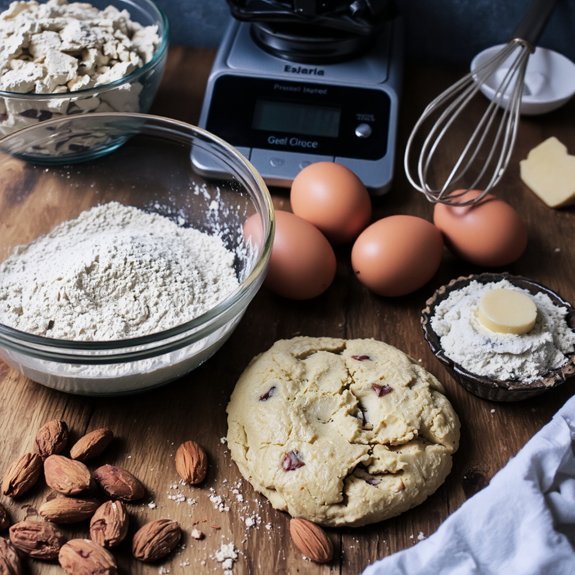
Almond flour stands out as a nutrient-dense substitute that’ll transform your baked goods with added protein and healthy fats.
You’ll want to use a 1:1 ratio when replacing all-purpose flour in most recipes, though you may need to add a binding agent like xanthan gum or an extra egg for structure.
When sourcing almond flour, prioritize sustainable sourcing practices—look for certified producers who implement responsible farming methods.
The fine, consistent texture works beautifully in cakes, cookies, and brownies, delivering a subtle nuttiness.
Beyond baking, almond flour finds applications in beauty treatments as an exfoliating ingredient.
You’ll appreciate its versatility and nutritional profile.
Remember that almond flour browns faster than wheat flour, so monitor your oven temperature carefully to prevent over-browning and guarantee ideal results.
Coconut Flour: Dense and Nutrient-Packed
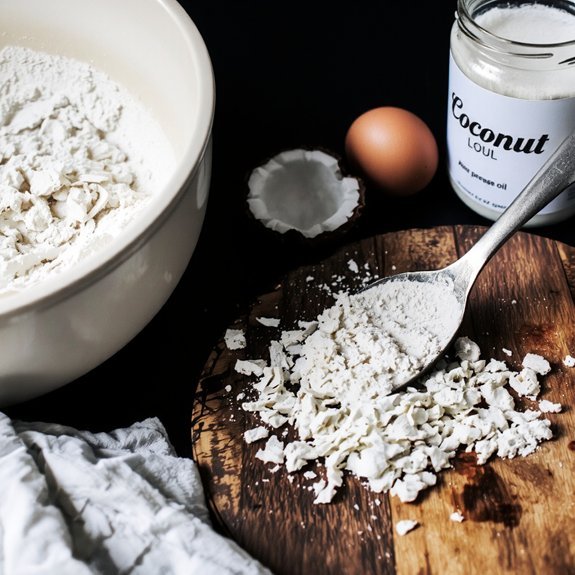
Coconut flour offers a distinctly different profile from almond flour, requiring careful adjustment since it absorbs considerably more liquid than wheat flour.
Coconut flour stands apart from almond flour, demanding careful adjustments due to its superior liquid absorption compared to wheat flour.
You’ll need to increase liquids by 25-30% and reduce coconut flour by one-quarter when substituting.
This dense ingredient delivers substantial fiber and medium-chain triglycerides.
Key considerations for your baking freedom:
- Replace one cup wheat flour with one-quarter cup coconut flour plus extra eggs for structure
- Adjust your flavor profile by balancing coconut’s subtle sweetness with vanilla or citrus
- Maintain moisture through increased liquid additions or healthy fats like coconut oil
- Employ proper storage methods in airtight containers away from heat to preserve freshness
Your baked goods’ll develop a tender crumb when you respect coconut flour’s unique absorption properties and adjust ratios accordingly.
Oat Flour: Mild and Versatile

Oat flour offers you a milder alternative that substitutes more directly for wheat flour than coconut flour does, requiring minimal ratio adjustments.
You’ll appreciate its 1:1 replacement ratio in most recipes, though you may need slightly more liquid since oats absorb moisture differently than wheat.
This versatile flour works exceptionally well in cookies, muffins, and pancakes.
You’re not limited to baking either—oat flour finds applications in skincare formulations and pet treats, making it genuinely multipurpose for your household needs.
When selecting oat flour, verify it’s certified gluten-free if you require that specification.
Store it in airtight containers to prevent rancidity from its natural oils.
You’ll find oat flour delivers a subtle, nutty flavor while maintaining the texture you’re seeking in your baked goods.
Specialty Flours: Rice, Buckwheat, and Beyond
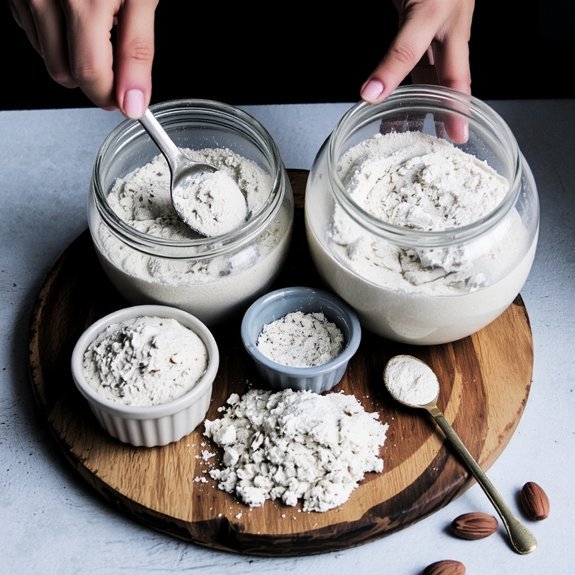
When you’re ready to explore beyond common wheat alternatives, specialty flours like rice, buckwheat, and sorghum offer distinct nutritional profiles and flavor characteristics that demand precise substitution strategies.
You’ll achieve ideal results by understanding each flour’s unique properties:
- Rice varieties—white, brown, and sweet—absorb less liquid; reduce water by 2-3 tablespoons per cup of flour
- Buckwheat profiles deliver earthy notes; use 75% buckwheat with 25% binding agent for structure
- Sorghum flour requires increased hydration; add 1 tablespoon liquid per cup substituted
- Teff and amaranth demand 90% substitution ratios to maintain crumb density
You’re not limited by convention.
These specialty flours give you freedom to craft distinctive baked goods while meeting dietary restrictions.
Match substitution ratios precisely to your specific recipe’s liquid content and binding requirements for consistent, reliable outcomes.
Conversion Ratios and Measurement Guidelines
Now that you’ve identified which specialty flour suits your recipe, you’ll need precise conversion ratios to guarantee your substitutions work reliably across different baking applications.
Weight accuracy matters most—use a kitchen scale rather than volume measurements, which introduce inconsistency.
If you must measure by volume, employ the spooning method: gently spoon flour into your measuring cup, then level it flush with a knife.
Never scoop directly from the bag.
Most specialty flours substitute at a 1:1 ratio by weight.
However, gluten-free blends often require slightly less liquid since they absorb differently.
Buckwheat and rice flour may need a binding agent like xanthan gum.
Start with conservative substitutions, adjusting incrementally based on your batter’s consistency.
Document your adjustments for future batches, granting yourself reliable results and experimentation freedom.
Troubleshooting Common Baking Challenges With Flour Substitutes
Even with precise conversion ratios, you’ll encounter texture and rise issues that demand immediate adjustment.
You’re working with fundamentally different ingredient structures when substituting flour, requiring strategic interventions.
- Moisture Adjustment: Reduce liquid by 1-2 tablespoons per cup of substitute flour; almond and coconut flours absorb considerably more liquid than wheat flour.
- Leavening Compensation: Increase baking powder or baking soda by 25% when using denser substitutes to counteract heavy crumb structure.
- Binding Enhancement: Add one extra egg or egg replacer to compensate for gluten’s binding properties you’ve lost.
- Temperature Modification: Lower oven temperature by 25°F to prevent over-browning; alternative flours brown faster due to higher fat content.
You’ll gain consistent results by addressing these variables systematically before your next batch.
Frequently Asked Questions
Can I Mix Multiple Flour Substitutes Together in a Single Recipe?
You can absolutely mix multiple flour substitutes together, but you’ll need to carefully manage binding ratios and texture adjustments.
Combine starches with protein-rich alternatives like almond or coconut flour to achieve proper structure.
Start with 25-30% of your total flour as substitutes, then experiment upward. Adjust liquid content accordingly—some alternatives absorb more moisture than wheat flour.
Weigh ingredients precisely for consistent results. This approach gives you freedom to create custom blends that suit your dietary needs while maintaining baked goods’ integrity.
How Do Flour Substitutes Affect the Shelf Life of Baked Goods?
You’ll find that flour substitutes dramatically alter your baked goods’ shelf life through moisture retention patterns.
Almond flour absorbs more moisture, accelerating staling rate compared to wheat flour.
Conversely, coconut flour’s hygroscopic nature extends freshness by locking in moisture.
You’re trading off: dense crumb structures from alternative flours resist staling longer, but they’re prone to rancidity from higher fat content.
Measure precisely—too much substitute amplifies moisture loss, shortening viability substantially.
Are Flour Substitutes More Expensive Than All-Purpose Flour?
You’ll find flour substitutes typically cost more than all-purpose flour.
Almond flour, coconut flour, and specialty blends run 2-4 times higher per pound.
However, you’re not locked into premium pricing—bulk pricing options exist for committed bakers.
Purchasing 5-pound bags or larger reduces your per-unit cost considerably.
Shopping directly from suppliers rather than retail stores gives you pricing freedom and better value on alternative flours.
Which Flour Substitutes Work Best for Yeast-Based Breads and Pastries?
You’ll get the best results with bread flour or essential wheat gluten blends for yeast breads—they’ll maintain structure and rise properly.
For pastries, you’ve got freedom to experiment with whole wheat (adjust hydration by 5%), spelt (use 90% ratio), or einkorn (reduce 10%).
Each brings distinct flavor profiles: nutty, complex notes versus delicate sweetness.
Texture comparisons matter: whole wheat creates denser crumb; spelt yields lighter pastries.
Match your substitute’s protein content closely to all-purpose flour’s 10-12% for reliable results.
Do Flour Substitutes Require Different Oven Temperatures or Baking Times?
You’ll often need temperature adjustments when substituting flour. Almond flour requires lower heat—reduce your oven by 25°F to prevent over-browning. Baking durations typically extend 5-15 minutes depending on your substitute’s moisture content.
Coconut flour absorbs liquid differently, demanding precision in measurement ratios. Gluten-free blends need slightly higher temperatures and longer times.
Monitor your baked goods closely, using visual cues rather than relying solely on traditional timing recommendations for reliable results.




Leave a Comment