

Key Takeaways
- Coconut oil substitutes butter at 1:1 ratio by volume and produces flakier pastries due to its higher melting point.
- Applesauce and fruit purees replace butter 1:1 but require reducing other liquids by 25% and lowering oven temperature by 25°F.
- Greek yogurt replaces butter 1:1 for dense cakes while reducing leavening by 25% to prevent over-rising from added acidity.
- Nut butters work as 1:1 replacements with denser crumbs; almond butter densifies while cashew butter yields smoother results.
- Olive oil substitutes at 3:4 ratio for robust-flavored bakes, while avocado oil replaces 1:1 for delicate cakes needing neutral flavor.
Coconut Oil: A Tropical Alternative

When you’re substituting coconut oil for butter, you’ll want to use a 1:1 ratio by volume, though you should note that refined coconut oil works best since virgin varieties impart a noticeable coconut flavor.
You’ll appreciate coconut oil’s higher melting point, which creates flakier pastries and crispier cookies than butter alone.
This tropical alternative won’t compromise your baked goods’ texture or rise.
You’ll also benefit from coconut oil’s extended shelf life—it outlasts butter substantially, giving you greater flexibility in your pantry management.
The fat content mirrors butter’s composition, ensuring reliable baking results.
Choose unrefined varieties only when you’re deliberately seeking coconut notes in your recipes.
This substitution grants you control over your ingredients while maintaining professional-quality outcomes in your baking endeavors.
Applesauce and Fruit Purees for Moisture
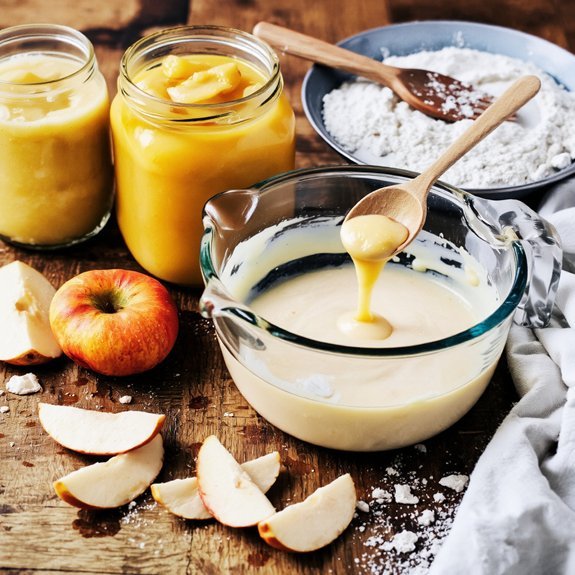
You’ll find that applesauce, pumpkin puree, and banana puree work best as butter replacements, each bringing distinct moisture levels and flavor profiles to your baked goods.
When you substitute, you’ll typically use a 1:1 ratio by volume, though you may need to reduce other liquid ingredients by 25% since purees contain significant water content.
You should also account for added sweetness from fruit purees by decreasing sugar in your recipe slightly, particularly with banana or applesauce.
Best Fruit Purees for Baking
How effectively can fruit purees replace butter in your baked goods?
You’ll find that applesauce, pumpkin, and prune purees work exceptionally well, each bringing distinct qualities to your recipes.
Applesauce offers neutral flavor pairings, making it ideal for cakes and muffins—use a 1:1 ratio.
Pumpkin puree adds earthy notes perfect for spiced baked goods, also at 1:1.
Prune puree delivers moisture and richness with deeper flavor pairings; reduce it to a 3:4 ratio since it’s denser.
Banana puree works best at a 4:5 ratio due to its potency.
For storage tips, refrigerate applesauce and pumpkin three to five days, or freeze up to three months.
Prune and banana purees freeze equally well.
Select purees based on your desired flavor profile and moisture requirements for best results.
Moisture Ratios and Adjustments
Because fruit purees contain substantially more water than butter, you’ll need to adjust your recipe’s liquid content to prevent dense, soggy results. You’re managing batter hydration by reducing other liquids—typically milk, eggs, or water—by 25-50% when substituting puree for butter.
| Puree Type | Butter Ratio | Liquid Reduction |
|---|---|---|
| Applesauce | 1:1 | 25% |
| Prune Puree | 3:4 | 35% |
| Banana Puree | 1:1 | 50% |
Evaporation control matters during baking. Lower oven temperatures by 25°F to allow gradual moisture release without surface burning. Monitor baking time closely—puree-based batters often finish 5-10 minutes faster. You’ll achieve ideal texture by respecting these moisture ratios and respecting your ingredient’s water content throughout the baking process.
Greek Yogurt and Sour Cream Options

When you’re looking for a dairy substitute that’ll add moisture and tenderness to your baked goods, Greek yogurt and sour cream deserve serious consideration.
Both options deliver a protein boost that strengthens your batter’s structure while keeping crumbs tender.
Replace butter at a 1:1 ratio with Greek yogurt for dense cakes and muffins.
Sour cream works best at a 3:4 ratio due to its higher fat content.
You’ll notice tang balance matters—the acidity requires reducing your recipe’s leavening by 25% to prevent over-rising.
These dairy options introduce liquid, so decrease other wet ingredients by 25% to maintain proper consistency.
Their tangy notes complement chocolate, vanilla, and spiced recipes exceptionally well.
You’re effectively swapping fat for protein-rich moisture, creating denser, more nutritious baked results while maintaining structural integrity.
Nut Butters for Rich, Dense Bakes
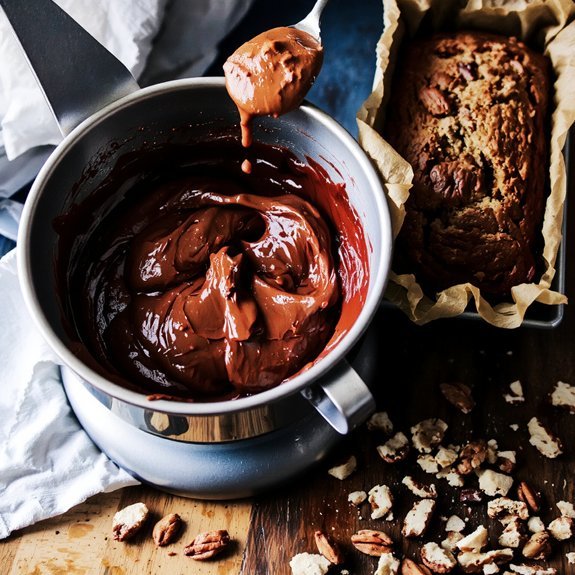
Nut butters offer a completely different approach to butter substitution, delivering richness and density through plant-based fat rather than dairy protein. You’ll find that almond, cashew, and peanut butters create distinctly different texture impacts depending on your chosen variety. A 1:1 replacement works best, though you might reduce liquid slightly since nut butters contain inherent moisture.
The texture impact varies noticeably—almond butter yields denser crumbs, while cashew butter produces smoother results. Your flavor pairing decisions matter tremendously; chocolate desserts pair excellently with peanut or almond butter, whereas cashew complements vanilla-forward applications beautifully.
You’ll notice these substitutes shine in brownies, cookies, and quick breads where their richness enhances rather than masks other flavors. Start with quality, unsweetened varieties to maintain control over your recipe’s sweetness and preserve the integrity of your baked goods.
Oil-Based Substitutes and Their Applications

Oil-based substitutes operate through an entirely different mechanism than nut butters, relying on liquid fat to hydrate your dough while minimizing gluten development.
You’ll find these options give you precise control over texture and moisture.
Consider these applications:
- Olive oil – Use at a 3:4 ratio to butter for robust-flavored bakes like focaccia and rustic breads
- Avocado oil – Substitute 1:1 for delicate cakes where neutral flavor matters; its higher smoke point supports even browning
- Refined vegetable oils – Maintain 1:1 ratios in quick breads and muffins for tender crumbs without flavor interference
You’re not constrained by traditional methods.
Oil-based substitutes demand less kneading, produce moister results, and stay fresher longer. Choose your oil based on flavor profile and bake type—you’re in complete control.
Choosing the Right Substitute for Your Recipe
Your recipe’s specific demands—fat content, moisture level, flavor profile, and baking method—determine which substitute’ll deliver ideal results.
Consider your dietary restrictions first. If you’re avoiding dairy, coconut oil works well for shortbread-style cookies, while applesauce suits moist cakes.
For texture matching, you’ll need precision with ratios. Dense baked goods like brownies tolerate oil substitutes at 75% of the original butter amount. Lighter cakes require full-fat Greek yogurt or sour cream for proper rise and crumb structure.
Cookie texture depends heavily on your fat choice—solid coconut oil yields crispness, while liquid oils produce chewier results.
Match your substitute’s smoke point to your oven temperature. Test small batches first, adjusting ratios based on how your specific combination performs.
Frequently Asked Questions
Can I Substitute Butter With Margarine in All Baking Recipes?
You can’t substitute margarine in all baking recipes without consequences.
Margarine’s higher water content affects dough hydration and texture unpredictably.
The flavor impact varies dramatically—you’ll lose butter’s rich complexity in delicate pastries and cakes.
For sturdy recipes like cookies or quick breads, you’ve got more flexibility, though results won’t match perfectly.
You’re better off choosing substitutes deliberately based on your recipe’s specific demands and your desired outcome.
How Do Butter Substitutes Affect the Shelf Life of Baked Goods?
You’ll find that butter substitutes notably impact your baked goods’ longevity. Plant-based oils enhance moisture retention, extending freshness beyond traditional butter’s typical span.
However, you’re trading oxidative rancidity concerns—margarine and shortening oxidize faster than butter’s natural preservation properties. You’ve got control here: coconut oil resists rancidity longest, while vegetable oil-based substitutes require careful storage. Your ratio matters critically; maintain 1:1 measurements to preserve shelf stability and prevent premature staleness.
Which Substitutes Work Best for Laminated Doughs Like Croissants and Puff Pastry?
You’ll want butter-specific alternatives with superior fat plasticity and temperature tolerance.
European-style butters work best due to their 86% butterfat content versus standard 80%.
If you’re substituting, use all-butter shortening at a 1:1 ratio—it’ll give you the lamination you’re after.
Coconut oil won’t cut it; it lacks the necessary plasticity.
You’ve got freedom to experiment, but stick with high-fat, structurally sound options for proper croissant and puff pastry development.
Do Butter Substitutes Change the Nutritional Content of Baked Products?
Yes, you’ll notice calorie differences depending on which substitute you choose.
Oil-based replacements typically reduce calories slightly, while applesauce adds fewer calories but alters your fat profile substantially.
Coconut oil maintains similar calorie counts but shifts saturated fat content.
You’re fundamentally trading butter’s butterfat composition for alternative lipid structures, directly impacting your final product’s nutritional makeup.
Choose your substitute based on the nutritional freedom you’re seeking.
Can I Mix Multiple Butter Substitutes Together in One Recipe?
You can absolutely mix multiple butter substitutes together, but you’ll need precise moisture management and careful attention to flavor compatibility. Combine oil-based substitutes with solid ones—like blending coconut oil with applesauce—maintaining your total fat ratio.
You’re free to experiment, though you should test batches first. Different substitutes absorb moisture differently, so adjust liquid ratios accordingly and verify your flavors won’t clash in the final product.




Leave a Comment