
Key Takeaways
- Store muffins in airtight containers at room temperature for up to two days without refrigeration.
- Refrigerate muffins in sealed containers at 35–40°F for freshness up to two weeks.
- Freeze muffins individually wrapped in plastic, then in freezer bags, for up to three months.
- Thaw frozen muffins in the refrigerator for 4–8 hours or at room temperature for 1–2 hours.
- Discard muffins showing visible mold, off-odors, unusual texture changes, or liquid seepage.
Room Temperature Storage for Short-Term Freshness

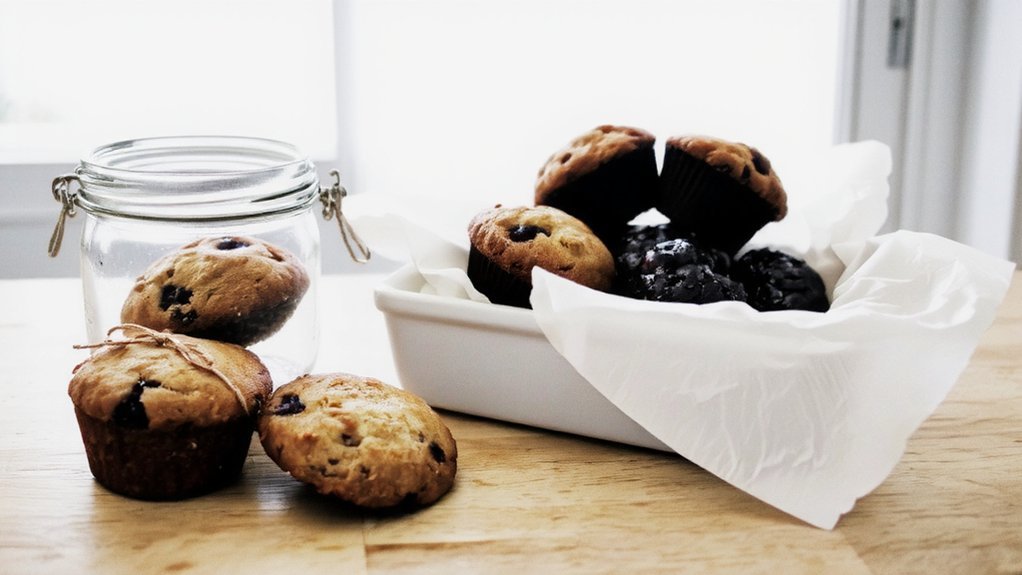
If you’ve just baked muffins or brought them home fresh, you can keep them at room temperature for up to two days without refrigeration.
Store them in an airtight container or covered basket to prevent moisture loss and staleness.
Position your storage away from direct sunlight exposure, which accelerates degradation and can affect flavor.
Implement shelf rotation by placing newer muffins toward the back and consuming older ones first, ensuring peak freshness.
Maintain temperatures between 68-72°F for best results.
Check muffins daily for signs of mold or off-odors.
This method works well for plain varieties; chocolate chips or fruit fillings may require faster consumption.
Room temperature storage gives you maximum flexibility while preserving your muffins’ quality without relying on refrigeration.
Choosing the Right Container for Your Muffins
Selecting an appropriate container is crucial to maintaining your muffins’ texture and preventing premature staleness.
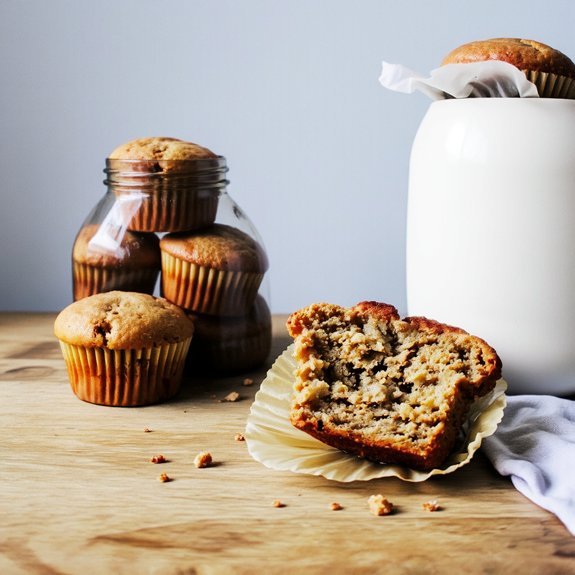
You’ll want an airtight container that seals completely, preventing moisture loss and oxidation.
Glass containers with tight-fitting lids work excellently for this purpose.
For eco-conscious choices, you can opt for eco packaging made from biodegradable materials or recycled cardboard.
These options protect your muffins effectively while minimizing environmental impact.
Consider your storage location when choosing containers.
You need something opaque if storing in direct sunlight, as light exposure accelerates degradation.
Aesthetic presentation matters too—transparent containers let you showcase your muffins while maintaining freshness.
Stack muffins carefully to avoid crushing; parchment paper between layers prevents sticking.
Select containers sized appropriately for your batch.
Oversized containers create excess air space, accelerating staleness.
Refrigerator Storage to Extend Shelf Life
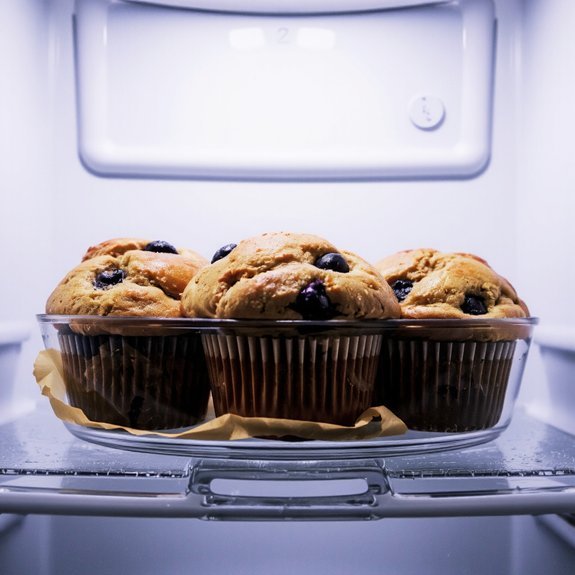
Refrigeration substantially extends muffin shelf life by slowing down the staling process and inhibiting mold growth.
You’ll want to store muffins in airtight containers set at your refrigerator’s standard temperature settings of 35-40°F for maximum freshness.
Keep muffins away from strong-smelling foods to prevent odor transfer, which can compromise their flavor profile.
Store them on a dedicated shelf or separate compartment if possible.
Properly refrigerated muffins stay fresh for up to two weeks, compared to just three to four days at room temperature.
Before consuming refrigerated muffins, allow them to reach room temperature or briefly microwave them to restore their original texture.
This simple method gives you substantial flexibility in meal planning without sacrificing quality or taste.
Freezing Muffins for Long-Term Preservation

You’ll want to prepare your muffins properly before freezing them—cool them completely, wrap them individually in plastic wrap, and place them in airtight containers or freezer bags to prevent freezer burn.
The ideal approach involves freezing at 0°F (-18°C) for up to three months, though you should label each container with the date and flavor for easy identification.
When you’re ready to enjoy them, thaw muffins at room temperature for 1-2 hours or reheat them directly from frozen in a 350°F oven for 10-15 minutes until warmed through.
Preparation Before Freezing
Proper preparation guarantees your muffins maintain peak quality during frozen storage.
You’ll want to cool them completely before freezing—this prevents condensation and ice crystals from forming.
Consider your slicing strategy upfront: decide whether you’ll freeze whole muffins or pre-slice them for convenient portioning later.
Pre-slicing saves time during thawing but increases surface area exposure.
Implement a reliable labeling system on each container or bag.
Include the muffin variety, freezing date, and intended use-by date.
This prevents mystery items languishing in your freezer and helps you rotate stock properly.
Wrap individual muffins tightly in plastic wrap or parchment paper to protect against freezer burn.
Then place wrapped muffins in airtight freezer bags, removing excess air before sealing.
This layered approach maximizes preservation and maintains texture integrity throughout storage.
Optimal Freezing Methods
Once you’ve prepared your muffins according to the previous steps, you’re ready to freeze them using methods that’ll preserve their quality for months. Place your wrapped muffins in airtight freezer containers, ensuring temperature uniformity throughout by arranging them in single layers. This prevents uneven freezing and maintains consistent texture.
Set your freezer to 0°F (-18°C) for ideal preservation.
Stack containers strategically to maximize energy efficiency while allowing cold air circulation around each muffin.
Label containers with contents and dates for easy tracking. Muffins’ll stay fresh for up to three months using this method. When you’re ready to eat them, thaw at room temperature for two to three hours, or reheat directly from frozen in your oven at 350°F for five to ten minutes.
Thawing and Serving Tips
Thawing your frozen muffins properly makes sure they regain their original texture and flavor.
Remove them from the freezer and let them sit at room temperature for 1-2 hours, unwrapped.
This gradual thawing prevents condensation that compromises quality.
- Thaw individually wrapped muffins for flexible serving schedules
- Microwave thawing takes 30-45 seconds per muffin if you’re short on time
- Toast thawed muffins lightly to restore crumb structure and warmth
- Pair with coffee, tea, or juice for ideal beverage pairings
For plating presentation, arrange muffins on neutral dishware to highlight their texture.
Serve warm or room temperature depending on your preference.
Your frozen muffins deserve thoughtful preparation that respects the time you invested in baking them.
How to Thaw Frozen Muffins Properly

You’ll want to select a thawing method based on your timeline: the refrigerator method takes 4-8 hours but preserves moisture best, room temperature defrosting requires 1-2 hours with careful monitoring to prevent bacterial growth, and microwave quick thaw gets you eating within minutes though it may slightly compromise texture.
Each approach offers different advantages depending on whether you’re planning ahead or need immediate access to your muffins. Your choice should factor in both time constraints and your priority between convenience and maintaining ideal muffin quality.
Refrigerator Thawing Method
If you’ve stored muffins in the freezer, the refrigerator thawing method’s the safest approach for maintaining moisture and texture.
This gradual process prevents condensation that damages quality.
Here’s your thawing protocol:
- Transfer frozen muffins from freezer to a fridge zone designated for thawing—typically the main shelf, away from temperature fluctuations
- Allow 4-8 hours for complete thawing, depending on muffin size
- Check labeling dates to confirm freshness before consuming
- Remove muffins only when fully thawed to prevent moisture loss
This method preserves your muffins’ structural integrity and flavor profile.
Unlike counter thawing, which risks bacterial growth, refrigerator thawing maintains food safety standards.
You’ll achieve best results by respecting the gradual temperature shift.
Plan ahead—this technique requires patience but guarantees superior quality.
Room Temperature Defrosting
When you’re short on time, room temperature defrosting offers a faster alternative to refrigerator thawing, though it requires careful monitoring to prevent quality degradation. You’ll need to place frozen muffins on a countertop in their original packaging, allowing them to acclimate gradually. This method typically takes 1-2 hours depending on muffin size and ambient temperature.
| Factor | Timeline | Consideration |
|---|---|---|
| Small muffins | 45-60 minutes | Check frequently |
| Standard muffins | 90-120 minutes | Maintain 68-72°F |
| Large muffins | 120+ minutes | Rotate packaging |
You’ll preserve your culinary rituals by monitoring moisture levels closely. Unwrap muffins only after thawing to meet your sensory expectations for texture and flavor. Avoid leaving them exposed longer than necessary, as surface condensation can compromise crumb structure. This approach grants you flexibility while maintaining quality standards your palate demands.
Microwave Quick Thaw
For the fastest thawing method, the microwave delivers results in just 30-60 seconds per muffin using the defrost setting at 30% power.
You’ll want to prioritize power calibration to prevent uneven heating and moisture loss.
Consider these essential guidelines:
- Container compatibility: Use microwave-safe plates or paper towels to avoid chemical leaching
- Spacing: Arrange muffins with space between them for consistent thawing
- Rotation: Flip muffins halfway through the cycle for uniform results
- Testing: Check doneness by pressing the center; it should yield slightly
You’ll achieve ideal texture by avoiding high-power settings that cook exteriors while leaving centers frozen.
Monitor your microwave’s wattage, as higher-wattage units require reduced time.
This method prioritizes your control over the thawing process, giving you quick access to your stored muffins without compromising quality or safety.
Maintaining Moisture and Preventing Staleness
Keeping muffins moist requires understanding how they lose moisture over time. You’ll want to focus on ingredient selection and baking techniques that lock in hydration.
Use ingredients like sour cream, yogurt, or oil rather than butter alone—they retain moisture longer. Don’t overbake; pull muffins from the oven when a toothpick shows slight moistness, not complete dryness.
Store muffins in airtight containers at room temperature for up to two days. You can also wrap individual muffins in plastic wrap before containerizing them, creating an extra moisture barrier. For longer storage, freeze them in freezer bags—they’ll maintain quality for three months.
When you’re ready to eat frozen muffins, thaw them in their wrapping to prevent condensation from drying them out. This approach gives you complete control over freshness and texture.
Identifying When Muffins Have Gone Bad
How can you tell when a muffin’s quality has deteriorated beyond safe consumption?
You’ll want to conduct a thorough mold inspection and smell assessment to determine safety.
Conduct a thorough mold inspection and smell assessment to determine if your muffin remains safe for consumption.
Here’s what you need to check:
- Visible mold growth – Inspect the surface, interior crumb, and bottom for any fuzzy spots or discoloration
- Off-odors – Conduct a smell assessment; any sour, fermented, or musty scents indicate spoilage
- Texture changes – Hard, dry, or unusually soft muffins suggest degradation
- Liquid seepage – Excessive moisture pooling indicates bacterial activity
Don’t compromise your health by guessing.
When in doubt, discard the muffin.
Proper storage extends shelf life substantially, but muffins eventually decline.
Trust your senses—they’re your best defense against consuming compromised baked goods.
Reheating Muffins to Restore Their Warmth
Once you’ve confirmed your stored muffins are safe to eat, you’ll want to restore their just-baked warmth and texture.
The oven technique delivers superior results compared to microwaving, which produces rubbery, unevenly heated muffins.
Preheat your oven to 350°F and place muffins directly on the rack for 8-10 minutes.
This method revives their crumb structure and exterior crispness.
For enhanced flavor, apply butter glazing before reheating.
Brush melted butter across each muffin’s top, allowing it to absorb into the surface.
The butter won’t only improve taste but also restore moisture that storage depletes.
Remove muffins when they’re warm throughout but not piping hot, which can degrade quality.
Serve immediately for maximum enjoyment.
Frequently Asked Questions
Can I Store Muffins With Different Flavors Together Without Affecting Their Taste?
You’ll want to avoid storing different-flavored muffins together.
Flavor migration occurs when aromatic compounds transfer between muffins, compromising their distinct tastes.
You’re best served using container separation—store each flavor in its own airtight container or sealed bag.
This approach gives you complete control over preserving your muffins’ integrity and guarantees you’ll experience exactly the flavor profile you chose, without unwanted blending or contamination.
What’s the Best Way to Store Muffins in a Humid Climate?
You’ll want to store your muffins in airtight containers with silica gel packets to eliminate excess moisture.
Position a dehumidifier in your storage area to maintain humidity below 50%.
Keep containers away from direct sunlight and heat sources.
Check muffins regularly for mold development.
This approach gives you complete control over your storage environment, preventing degradation while preserving freshness and texture effectively.
Do Store-Bought Muffins Last Longer Than Homemade Muffins When Stored?
You’ll find store-bought muffins outlast homemade ones considerably. The preservative comparison reveals commercial products contain additives that extend shelf life substantially—often 2-3 weeks versus your homemade batch’s 3-5 days.
Ingredient stability differs markedly; manufacturers use preservatives and modified starches that resist degradation. Homemade muffins lack these chemical stabilizers, making them vulnerable to staleness and mold.
You’re trading longevity for fresh ingredients when you bake yourself.
Can I Store Muffins in a Paper Bag Instead of Plastic?
You can store muffins in a paper bag, but you’ll face limitations. Paper’s breathability prevents moisture buildup that plastic containers trap, yet it lacks grease resistance—oils from your muffins’ll seep through, creating stains and potential spoilage.
For short-term storage under 24 hours, paper works fine if muffins aren’t particularly oily. Beyond that, you’re better off choosing airtight plastic containers or freezer bags that protect your baked goods while maintaining their integrity and your freedom from frequent replacements.
How Do I Prevent Muffin Tops From Getting Crushed During Storage?
You’ll protect your muffin tops by using Top Protectors—specialized dome covers that shield delicate peaks from pressure.
Alternatively, you can arrange Stacking Inserts between layers, creating airflow barriers that prevent direct contact.
Position muffins upright in containers rather than stacking them horizontally.
These methods guarantee you’ll maintain structural integrity during storage.
You’re in control—choose the approach that suits your independence and storage space constraints.




Leave a Comment