

Key Takeaways
- Use airtight containers at room temperature (68–72°F) to prevent moisture loss and staleness in most baked goods.
- Freeze items tightly wrapped in plastic then sealed in freezer bags for up to three months.
- Store bread at room temperature in paper bags; avoid refrigeration as cold accelerates starch retrogradation.
- Keep cookies, brownies, and pastries in sealed containers; separate flavors with parchment to prevent aroma transfer.
- Thaw frozen items at room temperature while wrapped; refresh in a 300°F oven for 5–10 minutes.
Understanding Moisture and Temperature
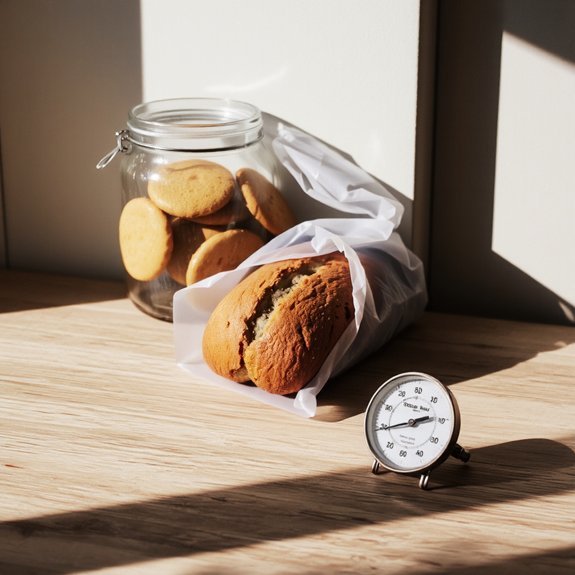
Why do some baked goods stay fresh for weeks while others turn stale within days?
The answer lies in understanding moisture and temperature dynamics.
You’ll find that starch retrogradation—the crystallization of starch molecules—drives staleness.
This process accelerates at cool temperatures, making refrigeration counterintuitive for most baked goods.
Room temperature storage slows this degradation considerably.
Evaporation mechanisms also matter.
You’re fighting moisture loss through your storage method.
Airtight containers trap humidity, preserving texture and softness.
Conversely, open storage accelerates water loss.
Heat capacity plays a vital role too.
You’ll want consistent, moderate temperatures between 68-72°F.
Fluctuations stress your baked goods, promoting mold growth and texture breakdown.
You control freshness by managing these factors strategically—choosing appropriate storage containers, maintaining stable temperatures, and monitoring humidity levels.
This knowledge gives you complete independence from commercial preservatives.
Storing Cookies and Brownies
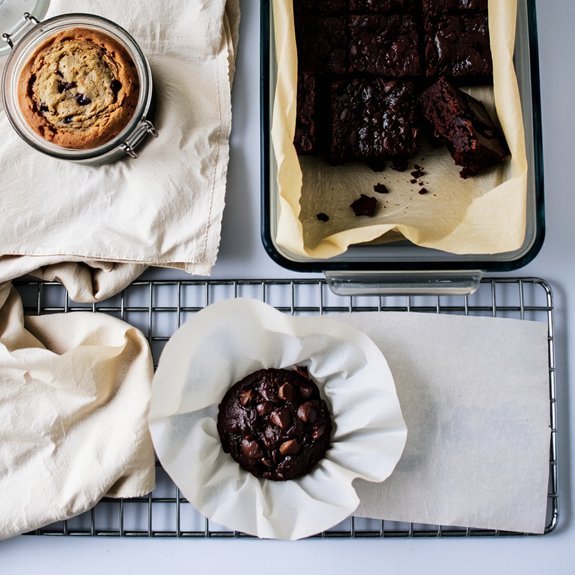
Cookies and brownies present distinct storage challenges that differ markedly from breads and pastries.
Cookies and brownies demand specialized storage approaches that set them apart from other baked goods.
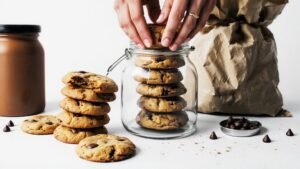
You’ll want to store cookies in airtight containers at room temperature, keeping them separate from moisture-sensitive items.
Hard cookies need different conditions than soft varieties—add a slice of bread to soft cookie containers to maintain their texture and decor longevity.
Brownies require cool, dry environments in sealed containers.
You shouldn’t refrigerate them unless your kitchen’s particularly warm.
If you’re storing homemade treats for gifting or sharing, include allergen labeling on containers to protect recipients with dietary restrictions.
Both items deteriorate when exposed to humidity and temperature fluctuations.
Check containers weekly for staleness.
Properly stored cookies last two weeks; brownies remain fresh for one week.
Freezing extends longevity considerably—both freeze well for up to three months.
Keeping Bread Fresh Longer

Preserving bread’s freshness requires understanding how moisture and temperature affect starch crystallization and mold growth.
You’ll find that ingredient impact directly influences shelf life—enriched doughs with fat and eggs resist staleness longer than lean formulations.
Store your bread at room temperature in a paper bag or breadbox, which allows controlled air circulation while preventing excessive moisture loss.
Avoid refrigeration, which accelerates starch retrogradation and hardens your crumb structure rapidly.
For extended storage, freeze bread immediately after cooling in airtight containers; you can thaw it at room temperature without quality loss.
Cut surfaces expose more crumb area to oxidation, so keep loaves whole when possible.
You’ll maintain ideal freshness by respecting these conditions and understanding your bread’s specific formulation requirements.
Preserving Cakes and Cupcakes

Unlike bread, cakes and cupcakes require moisture retention to maintain their tender crumb structure and prevent drying. You’ll want to store unfrosted cakes in airtight containers at room temperature for up to three days. Frosted cakes need refrigeration; they’ll last five to seven days when properly sealed. Consider frosting compatibility—buttercream tolerates room temperature better than cream cheese frosting, which demands consistent refrigeration.
| Storage Method | Temperature | Duration | Decoration Longevity | Best For |
|---|---|---|---|---|
| Airtight Container | Room Temp | 3 days | N/A | Unfrosted cakes |
| Cake Box | Refrigerated | 5-7 days | 4-5 days | Buttercream frosted |
| Plastic Wrap | Refrigerated | 4 days | 3-4 days | Delicate decorations |
| Cake Dome | Room Temp | 2 days | 2 days | Minimal decoration |
| Freezer Bag | Frozen | 3 months | 2 months | Long-term storage |
For cupcakes, individual wrapping maximizes decoration longevity while preventing moisture loss.
Protecting Pastries and Croissants
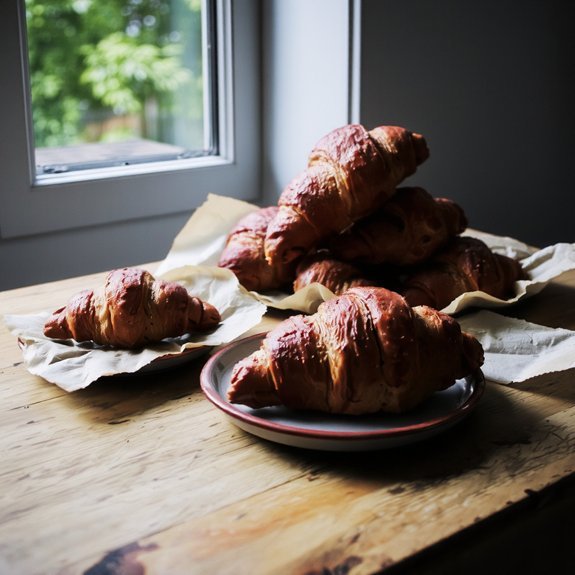
You’ll want to store pastries and croissants at room temperature in an airtight container to maintain their crispy exterior and flaky layers for up to two days.
If you need longer storage, you can refrigerate them for up to a week, though this may soften their texture slightly.
For extended preservation, freeze your pastries in airtight containers or freezer bags for up to three months, then thaw them at room temperature before serving.
Room Temperature Storage
How do you maintain the delicate texture of croissants and pastries without refrigeration?
Room temperature storage preserves their structure and flavor when done strategically.
- Store pastries in airtight containers away from direct sunlight and heat sources
- Keep shelf placement at consistent temperatures between 65-72°F for ideal preservation
- Use labeling dates on containers to track freshness and consumption windows
- Separate different pastry types to prevent flavor transfer and texture degradation
You’ll find that croissants stay crispy for 2-3 days using these methods.
Avoid sealed plastic bags that trap moisture and accelerate staleness.
Instead, use breathable paper or cardboard lined with parchment.
Position your storage away from kitchen appliances that generate heat.
This approach gives you freedom from refrigeration while maintaining quality and preventing premature deterioration of your baked goods.
Airtight Container Methods
Selecting the right airtight container makes all the difference when you’re protecting delicate pastries from moisture and staleness.
You’ll want to choose glass or food-grade plastic containers with tight-sealing lids that completely block air exposure.
Layer your croissants and pastries with parchment paper to prevent sticking and moisture transfer between items.
Store your containers in a cool, dark place away from direct sunlight and heat sources.
Implement shelf labeling with dates so you’re tracking freshness without guesswork.
This practice also promotes pest prevention by maintaining sealed storage that doesn’t attract insects or rodents.
Don’t overcrowd containers—you need minimal air space.
For maximum shelf life, you’ll achieve 3-5 days of peak quality with this method.
This straightforward approach gives you complete control over your baked goods’ preservation.
Refrigeration and Freezing
Protecting pastries and croissants through refrigeration and freezing requires understanding how temperature affects their texture and flavor. You’ll maintain your baked goods’ quality by following these essential practices:
- Set your refrigerator to 35-40°F and freezer to 0°F or below for ideal preservation
- Wrap items individually in parchment, then place in airtight containers to prevent moisture loss
- Store refrigerated pastries for up to five days; frozen items last three months
- Thaw frozen goods at room temperature for two to three hours before consuming
Temperature calibration guarantees you’re creating the ideal environment for preservation.
Regular appliance maintenance—checking seals and thermometer accuracy—prevents fluctuations that compromise texture.
You’ll protect your investment in quality baked goods by taking control of your storage conditions and refusing to settle for subpar results.
Storing Donuts and Glazed Items
Because glazed coatings can become sticky or separate from prolonged moisture exposure, you’ll want to store donuts in airtight containers at room temperature for up to two days. For extended shelf life, freeze them in freezer-safe bags for up to three months.
| Storage Method | Duration | Best For |
|---|---|---|
| Airtight container (room temp) | 2 days | Glazed varieties |
| Freezer bags | 3 months | Long-term preservation |
| Paper bags | 1 day | Retail merchandising displays |
When thawing frozen donuts, leave them in their sealed container to prevent condensation from compromising your glaze. Consider flavor pairing when storing multiple varieties together—aromatic donuts may transfer their essence to neighboring items. Separate distinct flavors using parchment dividers to maintain your intended taste experience and preserve your freedom of choice.
Best Containers for Different Baked Goods
What container you choose can make the difference between baked goods that stay fresh and those that deteriorate rapidly.
You’ll want containers tailored to your specific needs:
Selecting the right containers tailored to your specific baking needs ensures optimal freshness and preservation of your homemade goods.
- Airtight plastic containers with transparent lids—ideal for cookies and brownies, letting you monitor freshness without opening
- Nesting trays inside larger boxes—perfect for layered cakes, preventing compression while maximizing space efficiency
- Paper bags for crusty breads—allowing moisture escape while maintaining structural integrity
- Glass containers with silicone seals—best for high-humidity environments where you need complete moisture control
Select containers based on your baked goods’ moisture requirements.
Dense items tolerate plastic well, while delicate pastries demand breathable solutions.
Transparent lids grant you visual inspection capability—you control freshness assessment without guesswork.
Nesting trays maximize your storage freedom by accommodating multiple items vertically.
Match container choice to your baking volume and available space for effective preservation.
Freezing Baked Items for Long-Term Storage
You’ll want to wrap your baked goods tightly in plastic wrap, then place them in airtight freezer containers or bags to prevent freezer burn and odor absorption.
When you’re ready to enjoy them, you should thaw items at room temperature in their original packaging to retain moisture, though some items like cookies can go directly from freezer to plate.
Larger items such as cakes benefit from gradual thawing in the refrigerator before serving to guarantee even texture throughout.
Proper Packaging Methods
Freezing represents one of the most effective methods for extending shelf life and preserving quality in baked goods.
You’ll want to master proper packaging to maintain freshness and prevent freezer burn.
Follow these essential steps:
- Wrap items individually in plastic wrap or parchment paper for moisture protection
- Use airtight containers or freezer bags to create a barrier against ice crystals
- Select sustainable materials like compostable bags to minimize environmental impact
- Apply tamper evident seals or labels indicating freeze dates for quality assurance
You should remove excess air before sealing to prevent oxidation.
Layer items with parchment between them for easy separation.
Store at zero degrees Fahrenheit or below.
Properly packaged baked goods maintain peak quality for three months, giving you complete control over your inventory and consumption timeline.
Thawing and Serving Tips
To preserve the quality you’ve achieved through proper freezing, it’s critical to thaw baked goods correctly.
You’ll want to thaw items at room temperature while still wrapped—this prevents condensation from compromising texture.
Most baked goods require two to four hours, depending on size.
For best results, consider garnish timing strategically.
Add fresh toppings, glazes, or frostings after thawing rather than before, ensuring they maintain their visual appeal and taste.
Pairing suggestions matter too.
Serve thawed pastries with complementary beverages—fresh coffee with croissants, tea with scones.
This enhances your overall experience.
You can also refresh thawed baked goods briefly in a 300°F oven for five to ten minutes, restoring crispness without overdrying them.
This technique works exceptionally well for cookies and bread.
Signs Your Baked Goods Have Gone Bad
Several visual and olfactory indicators reveal when baked goods have spoiled.
You’ll want to inspect your items regularly to avoid consuming compromised products.
Key warning signs include:
- Mold indicators – Any visible fuzzy growth, discoloration, or spots signal immediate disposal
- Odor recognition – Off-putting, sour, or fermented smells indicate bacterial or fungal activity
- Texture changes – Excessive staleness, sliminess, or unusual stickiness suggests degradation
- Taste anomalies – Bitter, rancid, or unusual flavors mean the product’s integrity’s compromised
Don’t rely solely on expiration dates.
Your senses are your best defense against foodborne illness.
Trust your instincts—if something seems off, it probably is.
Discard questionable items without hesitation.
Proper inspection protects your health and guarantees you’re only consuming safe, quality baked goods worth your freedom to choose what enters your body.
Frequently Asked Questions
Can I Store Different Types of Baked Goods Together in One Container?
You shouldn’t store different baked goods together in one container.
Flavor transfer occurs when aromatic items like cinnamon rolls contaminate delicate goods such as plain cookies.
Texture migration happens too—moisture from soft breads transfers to crispy crackers, destroying their crunch.
You’re better off using separate airtight containers for each type.
This approach preserves each item’s intended taste and texture, giving you maximum control over your baked goods’ quality and longevity.
How Does Humidity Affect Baked Goods Storage Differently Than Temperature?
You’ll find humidity affects your baked goods’ shelf life differently than temperature does. High humidity triggers moisture migration into your products, softening them and compromising texture.
It’ll also accelerate mold growth, shortening storage duration substantially. Temperature primarily controls staling rates and ingredient stability.
You’ve got more control over humidity by using airtight containers or desiccants, whereas temperature fluctuations are harder to regulate. Master both variables to maximize your baked goods’ freshness and independence from frequent replacement.
Should I Store Baked Goods in Paper Bags, Plastic, or Glass Containers?
You’ll want paper bags for breathable storage that maintains freshness without trapping moisture.
Plastic containers work well for short-term storage but sacrifice container porosity, potentially softening crusts.
Glass offers excellent protection and reusability, reducing environmental impact.
Your choice depends on how long you’re storing items and your commitment to minimizing waste.
Paper provides the best balance of functionality and environmental responsibility for most baked goods.
Can I Refresh Stale Baked Goods, and if So, How?
You can revive stale baked goods through oven revival. Wrap your item in foil and heat it at 350°F for 5-10 minutes, allowing trapped moisture to redistribute.
For a steam refresh, place a shallow water dish in the oven alongside your wrapped goods. This method restores moisture and texture effectively.
Alternatively, you can microwave individual pieces for 10-15 seconds. Don’t overdo it—you’ll dry them further.
What’s the Ideal Room Temperature for Storing Baked Goods at Home?
You’ll achieve ideal temperature by storing baked goods between 65-75°F. This range maximizes pastry longevity without requiring refrigeration that’d dry them out.
Keep them in airtight containers away from direct sunlight and heat sources. You’ve got the freedom to choose your storage method—sealed bags, boxes, or containers all work.
Monitor humidity levels; moderate moisture prevents staleness while excessive moisture invites mold. These conditions let you enjoy quality baked goods longer.



Leave a Comment