
Key Takeaways
- Use passive moisture restoration by placing hardened cookies with bread or apple slices in an airtight container for 6–24 hours.
- Apply active methods like steam rehydration or syrup brushing to quickly restore moisture and chewiness to overbaked cookies.
- Crush overbaked cookies into uniform crumbs for use in chocolate bark, truffles, crusts, or batter ingredients.
- Transform overbaked cookies into sandwich cookies by pairing similarly-sized pieces with complementary fillings like frosting or ganache.
- Grind overbaked cookies into fine flour to replace 10–15% of all-purpose flour in future baking recipes.
The Bread Box Method for Softening
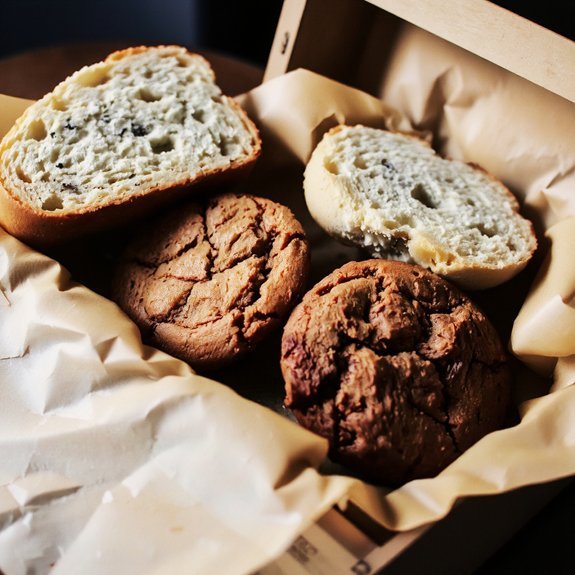
If your cookies’ve hardened beyond immediate consumption, you can restore their texture by placing them in an airtight container with a slice of bread for 24 hours.
The bread releases moisture that softens your cookies without compromising their integrity.
You’ll want to avoid box ventilation during this storage duration, as airflow will counteract the moisture transfer.
Make sure your container seals completely to maximize humidity retention.
Check your cookies after 12 hours to monitor progress.
Most batches reach ideal softness within 24 hours, though thicker cookies may require additional time.
Once restored, remove the bread slice immediately to prevent sogginess.
This method works universally across cookie varieties—from chocolate chip to oatmeal raisin.
You’re basically reclaiming your batch with minimal effort and zero waste, giving you full control over your baking outcomes.
Using Moisture to Restore Chewiness

While the bread method works through passive moisture absorption, you can accelerate chewiness restoration by actively introducing moisture directly into your cookies.
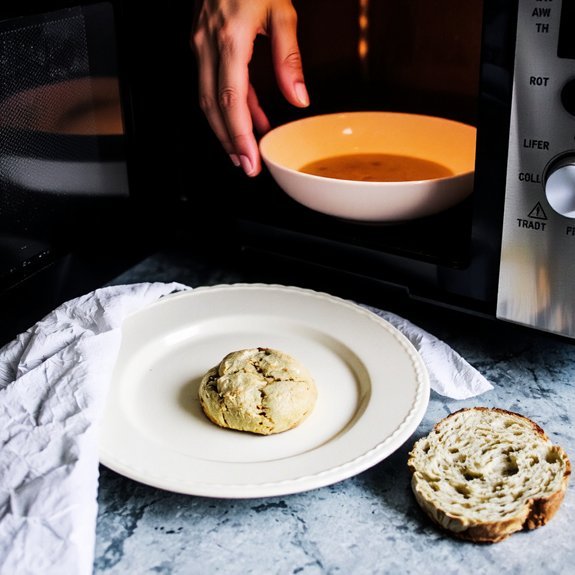
Steam rehydration involves placing your overbaked cookies in a covered microwave-safe container with a small bowl of water for 30 seconds.
The steam penetrates the cookie structure, restoring moisture throughout.
Alternatively, you’ll find syrup brushing highly effective for surface application.
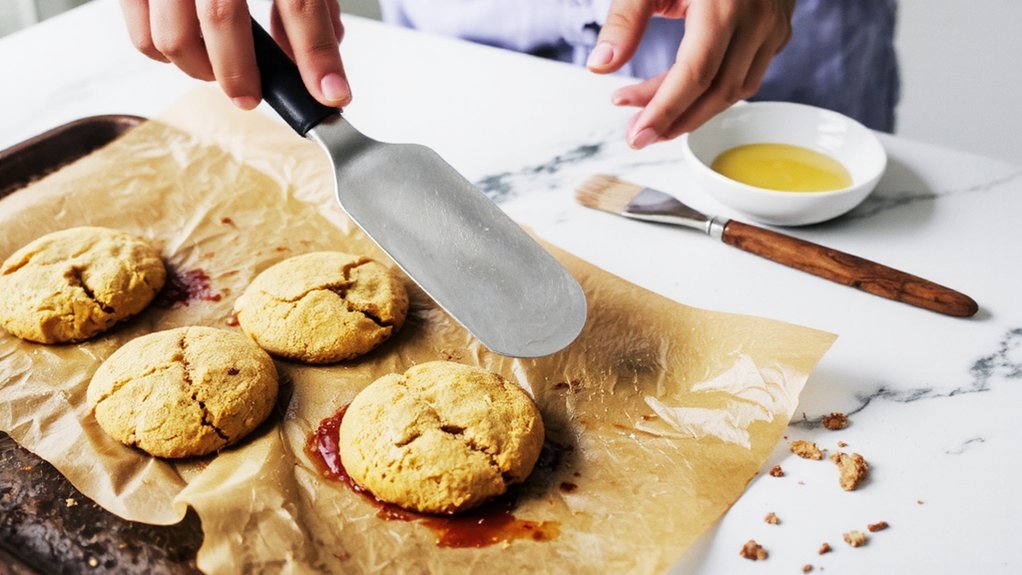
Lightly brush your cookies with simple syrup, honey, or agave nectar using a pastry brush.
This method allows you precise control over moisture distribution without oversaturating.
Both techniques work independently or in combination.
Start conservatively—you can always add more moisture.
Test your cookies’ texture after each application.
These direct methods let you reclaim overbaked batches quickly, giving you back the chewy satisfaction you originally intended.
The Apple Slice Trick
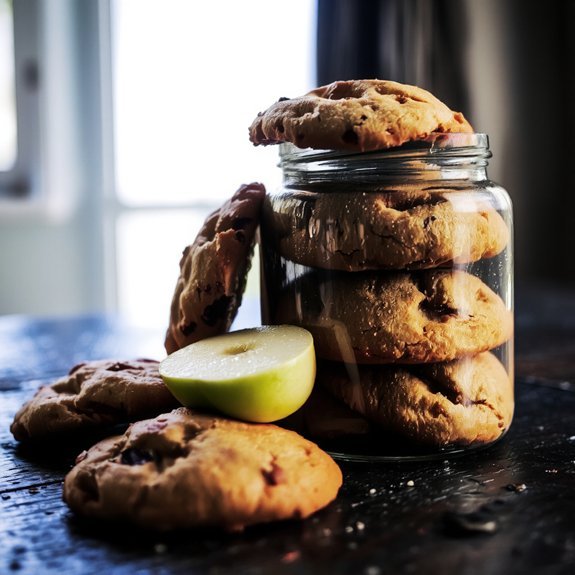
Among the most effective passive rehydration methods, placing apple slices directly in your cookie container offers a simple yet remarkably efficient solution for restoring moisture. You’ll want to select ideal slice thickness—roughly one-quarter inch—to maximize surface area without introducing excess water. Different apple varieties perform distinctly; choose based on your needs.
| Apple Variety | Moisture Release | Duration | Best For | Notes |
|---|---|---|---|---|
| Granny Smith | Moderate | 8-12 hours | Crispy cookies | Slower hydration |
| Honeycrisp | High | 6-8 hours | Dry batches | Rapid moisture transfer |
| Fuji | Medium | 10-14 hours | Moderate restoration | Balanced approach |
| Braeburn | Low | 12+ hours | Gentle rehydration | Minimal over-softening |
| Pink Lady | Medium-High | 7-10 hours | Mixed textures | Versatile option |
You’ll achieve ideal results by monitoring your cookies every few hours, adjusting based on desired chewiness levels.
Microwaving Techniques for Quick Fixes
How can you restore overbaked cookies in minutes rather than hours? Microwave techniques offer rapid solutions when you’re short on time.
Start by selecting an appropriate container—use a microwave-safe ceramic or glass dish rather than metal.
Place your overbaked cookies inside and cover them loosely with a damp paper towel.
This moisture helps soften the hardened structure without creating sogginess.
Set your microwave to 30% power settings to avoid further cooking.
Run it for 10-15 second intervals, checking between cycles.
You’ll maintain control over the restoration process and prevent additional damage.
This method works exceptionally well for cookies that’re merely hard on the exterior.
You’ll regain moisture penetration quickly, restoring that desirable chewy texture.
The low power settings guarantee even heating without hot spots that’d create uneven results.
You’ve reclaimed your batch efficiently.
Crushing Cookies Into Crumbs for New Desserts
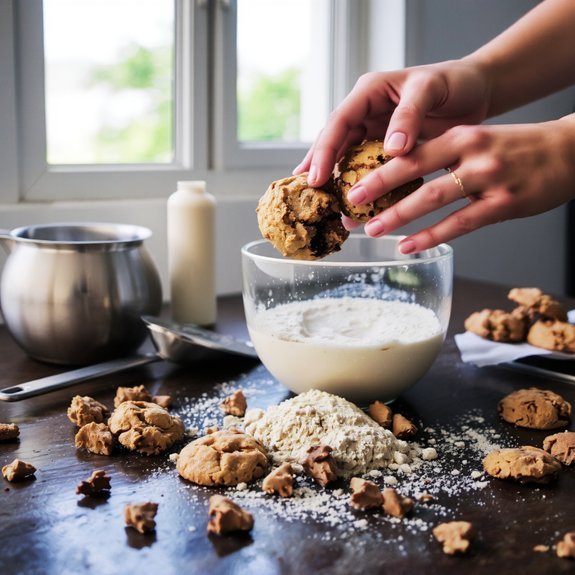
Transforming overbaked cookies into crumbs opens up possibilities for new desserts you’d otherwise discard.
Transforming overbaked cookies into crumbs unlocks unexpected possibilities, turning kitchen mishaps into intentional dessert creations.
You can crush hard cookies using a food processor or sealed bag with a rolling pin, creating uniform particles for multiple applications.
Use your crumbs as a base layer for chocolate bark by mixing them with melted chocolate and spreading the mixture onto parchment paper.
Once set, you’ve created a textured, innovative confection.
Alternatively, combine your crumbs with softened butter and powdered sugar to craft truffle filling.
Roll these mixture balls in cocoa powder or sprinkles for sophisticated homemade truffles.
You might also incorporate crumbs into cheesecake crusts, ice cream toppings, or pie fillings.
This approach maximizes your ingredient investment while liberating you from waste, transforming culinary mishaps into intentional creations.
Making Cookie Crumble Toppings and Mix-Ins
Leveraging cookie crumbles as toppings and mix-ins extends their utility beyond single applications. You can sprinkle crushed cookies atop yogurt, ice cream, or pudding for textural contrast and enhanced flavor complexity.
Incorporate them into brownie batters or cheesecake crusts to reinforce existing taste profiles. You’ll find that combining cookie crumbles with complementary spice blends—cinnamon, nutmeg, or cardamom—creates sophisticated seasoning layers without requiring additional sweeteners.
For indulgent applications, layer crumbles with toffee bits in homemade granola or energy bars. This approach maximizes your salvaged cookies while delivering consistent quality across multiple products.
You maintain complete control over ingredient proportions, ensuring every dessert meets your standards. This method transforms potential waste into deliberate culinary components that enhance your baking repertoire efficiently.
Transforming Them Into Cookie Sandwiches
You can transform overbaked cookies into elegant sandwich cookies by selecting fillings that complement their texture and flavor profile, such as buttercream for crumbly cookies or chocolate ganache for those with structural integrity.
Pair cookies of similar size and thickness to guarantee even distribution of filling and balanced bites, then apply a thin, consistent layer to one cookie before pressing its partner firmly against it.
This method effectively masks the overbaked appearance while creating a sophisticated finished product that masks textural imperfections.
Choosing Complementary Fillings
When overbaked cookies lack sufficient moisture, converting them into sandwich cookies with complementary fillings offers an effective salvage strategy. You’ll want to prioritize flavor harmony and spice complements that enhance rather than mask the cookies’ inherent characteristics.
Consider these filling options:
- Cream cheese frosting with lemon zest for bright, acidic contrast
- Chocolate ganache paired with espresso-infused cookies for depth
- Salted caramel for sweet-savory balance with nutty undertones
- Spiced buttercream matching cinnamon or ginger notes in the base cookie
You’re fundamentally creating a textural bridge—the filling’s moisture penetrates the dry cookie exterior while delivering complementary flavors. Select fillings with sufficient body to prevent seepage.
This transformation grants you complete control over the final product’s flavor profile, turning a baking mishap into an intentional, sophisticated dessert that showcases your culinary independence and creative problem-solving.
Assembling Perfect Cookie Pairs
Now that you’ve selected your filling, the actual assembly process determines whether your sandwich cookies’ll achieve ideal texture and visual appeal.
Size matching proves critical—pair cookies of equal dimensions to guarantee even pressure distribution and consistent filling thickness.
This precision prevents structural collapse and uneven flavor delivery.
Flavor balancing demands strategic placement.
Position your filling between complementary cookie varieties, allowing each component’s distinct characteristics to enhance rather than overshadow others.
Apply filling sparingly to maintain structural integrity; overbaked cookies require restraint to avoid crumbling.
Press cookies together with gentle, deliberate pressure.
You’ll achieve best adhesion without compromising the cookie’s interior structure.
Allow assembled pairs to set briefly before serving, permitting the filling to stabilize and create a cohesive unit.
This methodical approach transforms your overbaked cookies into refined, professional-quality confections.
Grinding Into Flour for Future Baking Projects
Transforming overbaked cookies into flour offers a practical solution for minimizing waste while creating a specialty ingredient for subsequent baking endeavors.
You’ll gain complete control over your baking supplies by processing hardened cookies into fine powder.
Here’s how you can maximize this flour substitute:
- Pulse cookies in a food processor until you achieve uniform, fine consistency
- Sift the resulting powder to remove any remaining chunks
- Store in airtight containers away from moisture and heat
- Label with the cookie variety and date for tracking
You’ll discover that cookie flour works effectively as a baking ratios adjustment—typically replacing 10-15% of all-purpose flour without compromising structure.
This flour substitute enriches your recipes with unique flavor profiles while eliminating waste. You’re reclaiming ingredient value and expanding your creative baking freedom.
Frequently Asked Questions
How Long Can I Store Overbaked Cookies Before They Go Bad?
You’ll maximize your overbaked cookies’ shelf life by storing them in an airtight container at room temperature for up to two weeks.
For extended preservation, you’ve got freedom to freeze them for three to four months without compromising quality.
Make sure they’re completely cooled before sealing containers to prevent moisture accumulation.
This approach lets you maintain your baked goods’ integrity while maintaining full control over your storage timeline and consumption schedule.
Will Overbaked Cookies Affect the Texture of Cookie Sandwiches?
Yes, overbaked cookies will compromise your sandwich’s structural integrity.
You’ll experience diminished chewiness contrast between the crisp exterior and filling, creating an undesirably uniform texture.
The reduced moisture content weakens filling adhesion, causing your sandwich to crumble during handling.
Overbaked cookies lack the slight flexibility necessary to properly grip and support the filling layer.
For ideal results, you’ll want cookies with adequate moisture retention to maintain textural balance and guarantee stable filling bonding throughout consumption.
Can I Prevent Cookies From Overbaking in the First Place?
You’ll prevent overbaking by mastering temperature control—use an oven thermometer to verify accuracy, as many ovens run hot.
Chill your dough before baking to slow spread and cooking rates.
Set a timer for the minimum recommended time, then check doneness early.
You’ve got the autonomy to remove cookies when edges firm but centers stay slightly soft—they’ll continue cooking on the hot pan after removal.
Are Overbaked Cookies Safe to Eat or Potentially Harmful?
You’ll find overbaked cookies generally safe to eat, though they’re not without concerns. Excessive heat creates potential toxin risk through acrylamide formation in carbohydrate-rich foods.
You’re also experiencing nutritional loss of heat-sensitive vitamins and minerals. The cookies won’t harm you immediately, but you’re compromising nutritional value and potentially increasing exposure to compounds formed during high-temperature cooking.
You maintain freedom to consume them, understanding these tradeoffs.
Which Method Works Best for Different Types of Overbaked Cookies?
You’ll find that Milk Soak works best for brittle, hard cookies—it rehydrates them effectively without compromising structure.
For cake-like varieties, you should apply a Syrup Glaze to mask dryness and restore moisture.
Thicker cookies benefit from Milk Soak’s penetrating hydration, while thinner ones respond better to Syrup Glaze’s surface coating.
Your choice depends on cookie density and desired texture.
Assess your specific batch’s thickness and crumb structure before selecting your salvage method.





Leave a Comment