
Key Takeaways
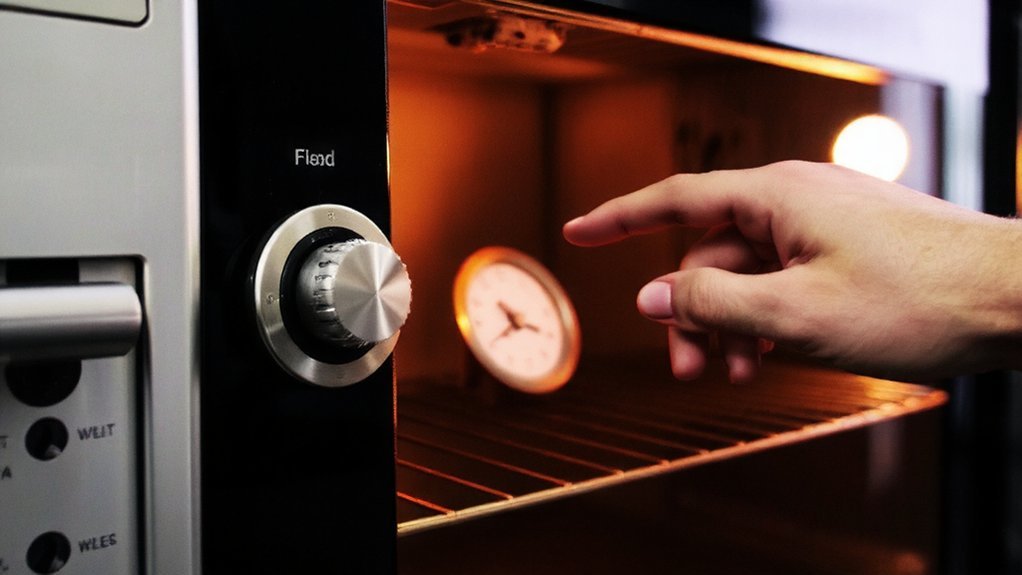
- Set your desired temperature using the dial or digital input, then keep the door closed until the oven signals readiness.
- Position oven racks at your preferred height before preheating to avoid heat loss from opening the door later.
- Allow 12–15 minutes for standard ovens to reach target temperature; convection models heat faster than conventional units.
- Verify actual temperature with an independent thermometer rather than relying solely on oven indicator lights for accuracy.
- Avoid opening the door during preheating, as heat loss extends warm-up time and compromises cooking consistency.
Why Preheating Your Oven Matters
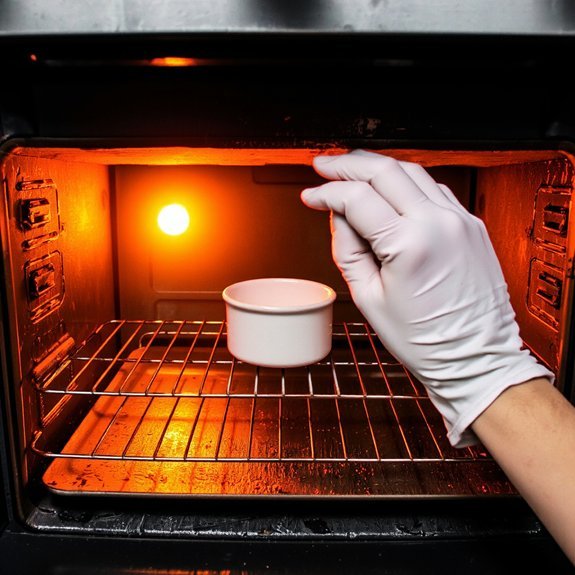
Preheating your oven establishes the precise internal temperature needed for consistent, predictable cooking results.
You gain control over your culinary outcomes by allowing thermal equilibrium before introducing food.
Even cooking depends on stable heat distribution.
Without preheating, you’d sacrifice doneness uniformity—exteriors burn while interiors remain undercooked.
Your dishes demand reliability, and preheating delivers it.
Flavor development accelerates at proper temperatures.
Chemical reactions responsible for browning, caramelization, and taste complexity occur ideally when your oven reaches target heat.
You’re not merely cooking; you’re engineering specific molecular transformations.
Additionally, preheating prevents guesswork.
You eliminate variables that compromise recipe outcomes.
Your freedom to experiment confidently expands when you establish this foundational practice.
Preheating transforms cooking from uncertainty into precision—a fundamental step separating adequate results from excellence.
Understanding Your Oven’s Temperature Settings
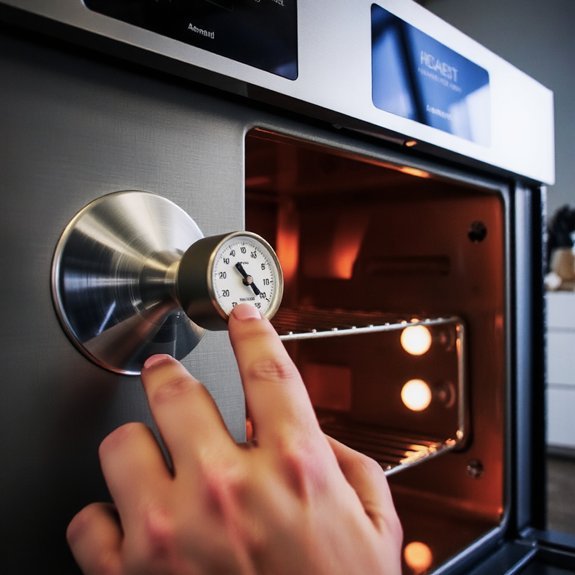
Your oven’s temperature controls directly determine whether you’ll achieve the precision preheating promises.
Most ovens feature a thermostat that regulates heating cycles to maintain your desired temperature.
A thermostat within your oven regulates heating cycles to consistently maintain your desired cooking temperature.
Understanding thermostat calibration helps you identify if your oven runs hot or cold, allowing you to adjust accordingly.
Sensor placement inside your oven monitors actual temperatures and signals the heating elements when adjustments are needed.
Modern ovens typically position sensors near the cooking chamber’s center for accurate readings.
You’ll find either dial or digital controls on your oven’s exterior.
Dial controls offer simplicity, while digital displays provide exact temperature settings.
Some units include convection options, which circulate hot air for faster, more even preheating.
Familiarize yourself with your specific oven’s manual to master these settings and gain complete control over your cooking environment.
Step-by-Step Preheating Process
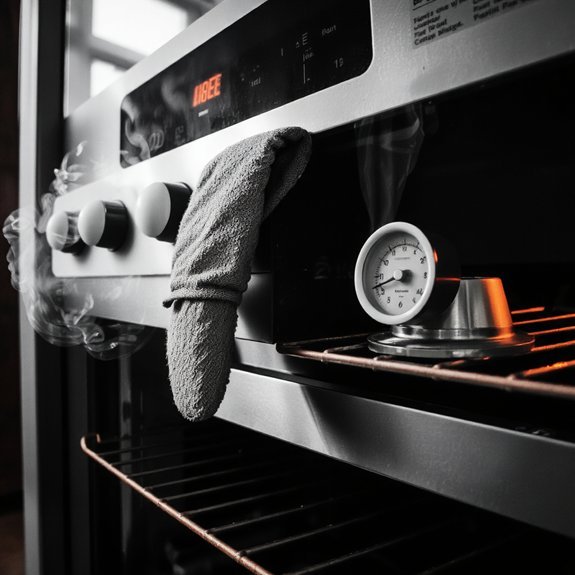
Turning the temperature dial or entering your desired setting on the digital display initiates the heating sequence. You’ll hear the ignition click and notice the heating element beginning to glow.
Position your oven rack to your preferred height before preheating—don’t adjust it afterward, as this wastes energy and compromises results.
Keep your oven door closed during preheating. Opening it releases heat and extends the process unnecessarily, costing you time and efficiency.
Most ovens reach temperature within 12-15 minutes, though larger models may require longer.
You’ll know preheating’s complete when your oven beeps or displays a ready indicator. Some models show a light that extinguishes once target temperature stabilizes. Trust these signals rather than guessing. Now you’re prepared to bake, roast, or broil with precision and confidence.
How Long to Preheat Your Oven
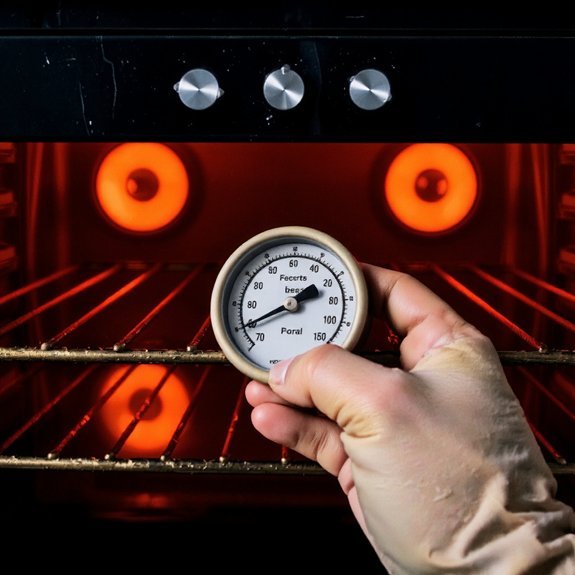
While most standard home ovens reach their target temperature within 12–15 minutes, the actual duration depends on several variables.
You’ll find that preheating times fluctuate based on multiple factors that you should understand to optimize your cooking results.
Several elements affect how quickly your oven reaches the desired temperature:
- Model differences: Convection ovens heat faster than conventional models; commercial-grade units vary considerably
- Ambient temperature: Cold kitchens require longer preheating than warm environments
- Target temperature setting: Higher temperatures demand extended preheating periods
- Oven age and condition: Older units may take 20+ minutes; newer models often finish in 10 minutes
You’ll gain better control over your cooking by accounting for these variables. Check your oven’s manual for manufacturer specifications, as they’ll provide precise preheating estimates tailored to your specific model’s capabilities.
Common Preheating Mistakes to Avoid
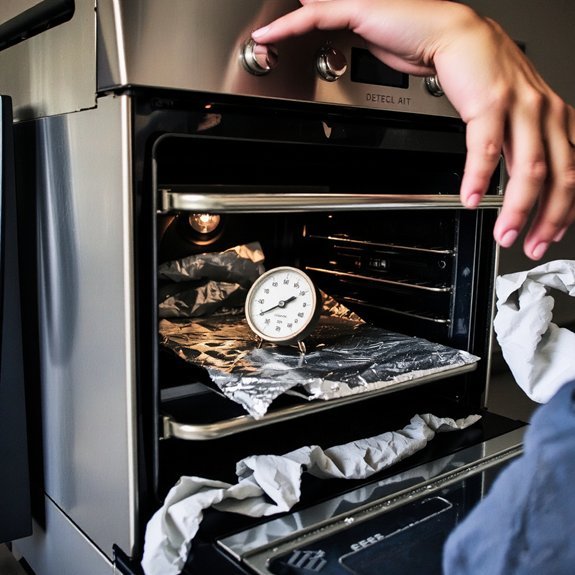
Why do so many home cooks compromise their baking results before they’ve even started cooking? You’re likely making critical preheating errors that sabotage your outcomes.
Don’t open your oven door repeatedly during preheating—you’ll lose heat and extend warm-up time considerably.
Avoid placing cold dishes directly into a preheated oven; they’ll shock the heating element and cause uneven cooking.
Never overcrowd your racks with multiple items, as this restricts air circulation and creates temperature inconsistencies.
Don’t rely on your oven’s indicator light alone. Use an independent oven thermometer to verify actual temperature, since many ovens run hotter or cooler than displayed.
Skip preheating altogether only if you’re confident in your oven’s reliability—most recipes demand precision.
Respect your oven’s capabilities. These preventative measures guarantee superior baking results and give you control over your culinary outcomes.
Frequently Asked Questions
What Should I Do if My Oven Won’t Reach the Desired Temperature?
You’ll need to troubleshoot systematically.
First, check power supply connections and circuit breaker status.
Next, inspect seals around the door—damaged gaskets allow heat escape, preventing temperature rise.
Test your thermostat accuracy with an oven thermometer.
If readings remain low, your heating element may’ve failed and require replacement.
Don’t settle for substandard performance; you deserve reliable equipment that functions properly for your cooking freedom.
Is It Safe to Preheat My Oven With the Door Open?
No, you shouldn’t preheat your oven with the door open. You’ll face significant fire hazards from exposed heating elements and flammable materials nearby.
Additionally, an open door increases carbon monoxide accumulation in your kitchen, creating serious health risks. You’ll also waste energy and extend preheating time substantially.
Keep your door closed during preheating to maintain safety, efficiency, and proper temperature calibration. This practice protects both your home and your family’s wellbeing.
Can I Use My Oven While It’s Still Preheating?
You shouldn’t use your oven while it’s preheating. Placing food inside before your oven reaches the target temperature creates unpredictable texture changes and browning consistency issues.
Your dishes won’t cook uniformly. You’re in charge of your cooking outcomes—wait for the preheat cycle to complete fully.
Most modern ovens signal when they’ve reached temperature. This small delay guarantees you’ll achieve the precise results you’re after every single time.
How Do I Know if My Oven’s Thermostat Is Accurate?
You’ll test your oven’s accuracy using the Thermometer Test—place an oven-safe thermometer inside and compare its reading to your oven’s display after preheating.
If they’re off by more than 25°F, you’ll need Calibration Steps.
Most ovens have an adjustable calibration dial or digital settings accessible through your control panel.
Check your manual for specific instructions, then recalibrate and retest until readings align precisely.
This guarantees you’re not bound by faulty temperature settings.
Does Preheating Time Vary Between Gas and Electric Ovens?
Yes, you’ll find significant differences in heating speed between gas and electric ovens.
Gas ovens typically preheat faster, reaching target temperatures in 10-15 minutes, while electric models need 15-20 minutes.
Gas’s superior heating speed comes from direct flame exposure.
However, electric ovens often demonstrate better energy consumption efficiency during extended cooking sessions.
Your choice between them depends on whether you prioritize quick preheating or long-term operational economy.





Leave a Comment