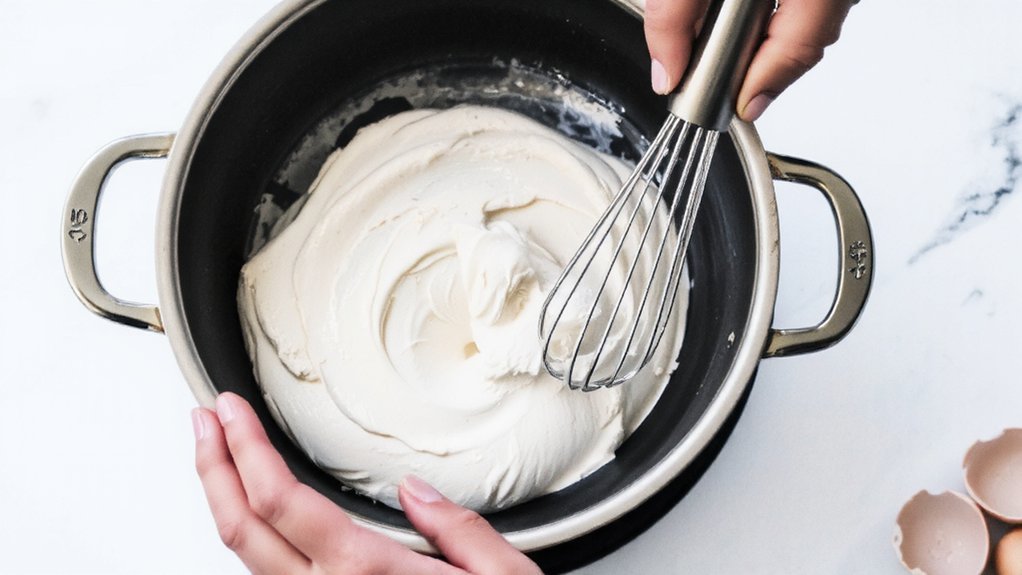

Key Takeaways
- Combine room-temperature egg whites and sugar in a 2:1 ratio, then heat over simmering water to 160°F while whisking constantly.
- Continue whisking for 7–10 minutes until sugar fully dissolves and mixture reaches target temperature for pasteurization and even heating.
- Remove from heat and whisk until stiff peaks form—glossy, dense, and rigid peaks that hold shape without drooping.
- Ensure bowl and utensils are completely grease-free; even traces of yolk or fat will prevent proper peak formation and stability.
- Store in airtight containers up to three days refrigerated or three months frozen with vacuum sealing for optimal texture preservation.
Ingredients You’ll Need
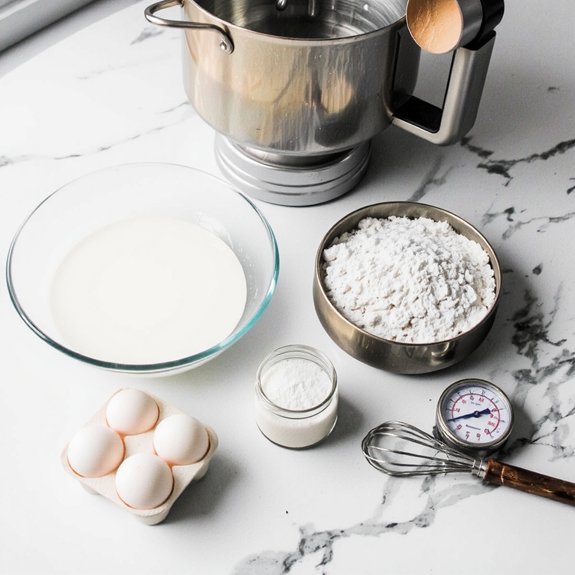
You’ll need egg whites, granulated sugar, and a pinch of salt to create the foundation of Swiss meringue.
Egg whites, granulated sugar, and a pinch of salt form the essential foundation for creating Swiss meringue.
When sourcing eggs, select room-temperature ones from reliable suppliers—pasteurized varieties work well if you prefer added safety.
You’ll want to make sure your whites contain zero yolk traces, as fat inhibits proper whipping.
For sugar varieties, standard granulated sugar works effectively, though you can experiment with superfine sugar for faster dissolution.
You’ll require roughly two parts sugar to one part egg white by weight, depending on your desired consistency.
You’ll also need a heatproof bowl, a whisk or electric mixer, and a thermometer.
A double boiler setup lets you gently heat the mixture while whisking continuously.
These precise measurements and quality ingredients guarantee best results when you’re crafting this versatile meringue.
Step-by-Step Instructions
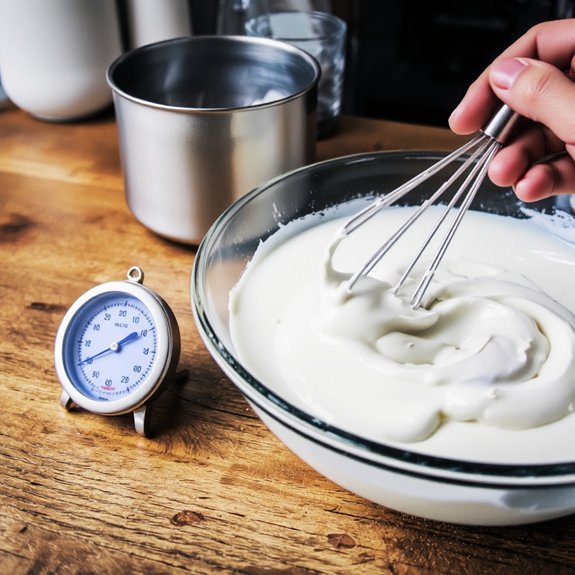
You’ll begin by combining your egg whites and sugar in a heatproof bowl, ensuring they’re properly measured and ready for the heat source.
Next, you’ll hold the bowl over simmering water while whisking constantly, bringing the mixture to approximately 160°F to pasteurize the eggs and dissolve the sugar completely.
Finally, you’ll transfer the warm mixture to a stand mixer and whip it until you’ve achieved stiff peaks with a glossy, stable meringue.
Preparing Your Ingredients
Before whisking egg whites and sugar together, gather and measure your components to guarantee a smooth preparation process.
Start by implementing proper kitchen organization—arrange your mixing bowl, whisk, thermometer, and ingredients within arm’s reach.
Establish a sanitation protocol by washing your bowl and all utensils thoroughly with hot, soapy water, then dry completely. Any residual grease will prevent egg whites from whipping properly.
You’ll need room-temperature egg whites, superfine sugar, and cream of tartar. Measure the sugar precisely; you can’t improvise quantities in meringue-making.
Place your egg whites in the prepared bowl and have your cream of tartar ready nearby.
Position your thermometer where you can monitor it easily during heating. This deliberate preparation eliminates obstacles during the actual cooking process.
Heating and Whisking
Creating Swiss meringue requires combining your egg whites and sugar in a heatproof bowl, then suspending it over simmering water in a double boiler setup.
This method gives you complete control over your meringue’s texture and stability.
Whisk constantly to prevent coagulation and guarantee even heating.
Your equipment choices matter—use a metal bowl for ideal heat distribution.
Monitor the temperature carefully; you’ll want to reach 160°F to eliminate safety concerns regarding raw eggs.
Continue whisking for approximately 7-10 minutes until the mixture reaches around 160°F.
You’ll notice the sugar dissolving completely and the mixture becoming warm to the touch.
Once you’ve achieved the proper temperature, remove the bowl from heat immediately.
This precise heating technique distinguishes Swiss meringue from other varieties, delivering superior stability and glossy results.
Testing for Peaks
How do you know when your Swiss meringue’s reached the right consistency? You’ll test for peaks—the standard measure of meringue doneness.
Lift your whisk straight up; the meringue should form peaks that hold their shape. You’re targeting stiff peaks, where the meringue stands upright without drooping.
Understanding peak anatomy helps you nail this. Soft peaks curl slightly at their tips; medium peaks stand with gentle curves; stiff peaks remain rigid and pointed.
At stiff peak stage, your meringue holds maximum stability and structure.
Check by tilting your bowl—properly whipped meringue shouldn’t slide. The mixture should feel thick, glossy, and dense.
If peaks collapse or droop, continue whisking. Overbeating creates a grainy, separated texture you’ll want to avoid.
You’ve achieved ideal consistency when peaks stand firm and glossy throughout.
Tips for Perfect Results
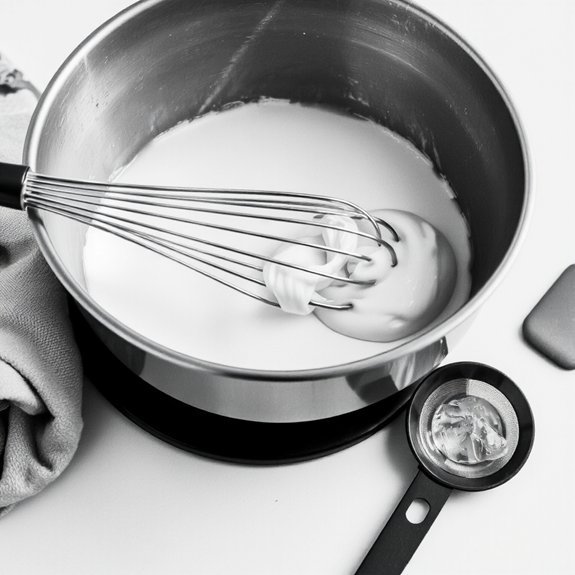
Several key factors’ll determine whether you achieve glossy, stable peaks or a disappointing, grainy mixture.
Temperature control is non-negotiable—maintain your double boiler between 160-180°F to denature proteins without cooking them. Use room-temperature bowls and equipment; cold surfaces impede incorporation. Make sure your ingredients are pure: even trace egg yolk fat sabotages structure.
Altitude adjustments affect heating times; higher elevations require longer warming periods. Optimize airflow management by whisking in a well-ventilated space, preventing moisture accumulation that destabilizes meringue.
| Factor | Result |
|---|---|
| Precise temperature | Silky, stable peaks |
| Contaminated bowls | Grainy, collapsed mixture |
| Poor ventilation | Weeping meringue |
Avoid over-whisking post-peak formation. Your freedom to create lies in mastering these technical variables. Patience and precision yield consistently superior results.
Troubleshooting Common Problems
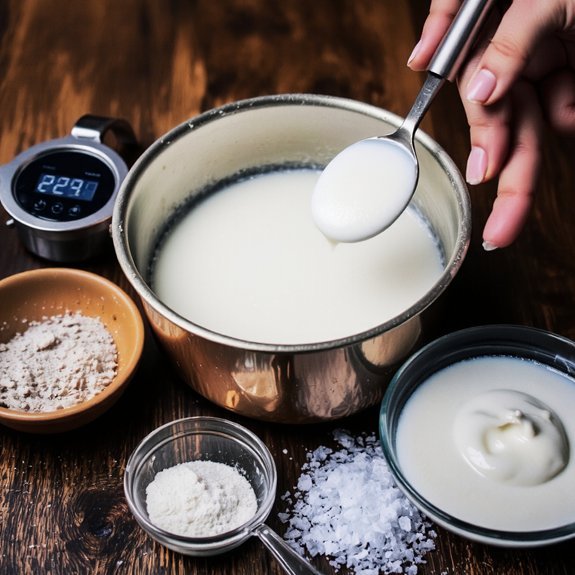
Even when you’ve mastered temperature control and maintained pristine equipment, Swiss meringue can still disappoint. You’ll encounter grainy texture when sugar crystals form during heating—prevent this by dissolving sugar completely before reaching 160°F.
Grainy Swiss meringue results from sugar crystals forming during heating—dissolve sugar completely before reaching 160°F to prevent disappointment.
If your meringue breaks or separates, you’ve likely overwhipped it or introduced fat; restart with clean bowls for contamination prevention.
Weeping occurs when humidity’s high; practice humidity mitigation by storing finished meringue in airtight containers with desiccant packets.
Flat, lifeless meringue signals undermixing or insufficient heating. Always verify your thermometer’s accuracy and make sure egg whites reach proper temperature for food safety.
These variables demand precision, but mastering troubleshooting gives you complete control over your results.
Storage and Make-Ahead Options
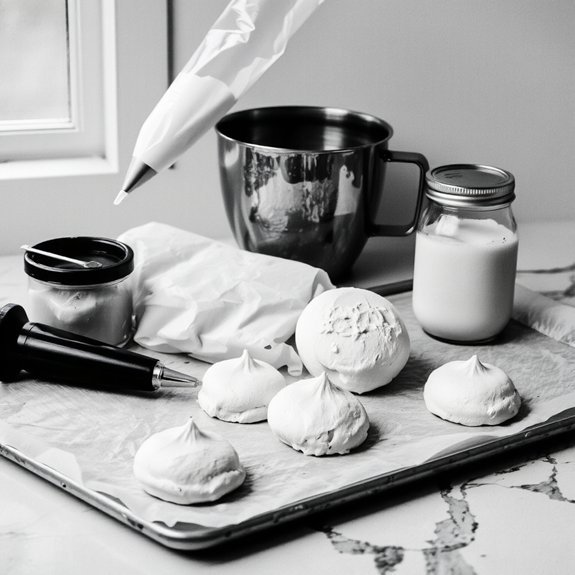
Swiss meringue’s stability makes it an ideal make-ahead component for your baking schedule.
You can refrigerate it for up to three days in an airtight container, maintaining its structure without degradation.
For extended preservation, frozen storage extends your options substantially—Swiss meringue freezes exceptionally well for up to three months when properly contained.
Vacuum sealing provides superior protection against freezer burn and oxidation during frozen storage, preserving both texture and flavor integrity.
When you’re ready to use frozen meringue, thaw it gradually in your refrigerator rather than at room temperature.
This controlled thawing prevents separation and maintains stability.
Prepare your meringue ahead strategically: make it the day before for immediate use, or freeze it in batches for spontaneous baking projects without sacrificing quality.
Creative Uses and Serving Ideas
You’ll elevate your Swiss meringue presentation by mastering dessert plating techniques that showcase the meringue’s glossy peaks and structural integrity.
Pairing your meringue with complementary flavor profiles—such as tart citrus curd, rich chocolate ganache, or delicate fruit compotes—enhances both visual appeal and taste complexity.
Strategic color contrast and textural layering transform your meringue from a simple component into a sophisticated focal point on the plate.
Dessert Plating and Presentation
How can you transform Swiss meringue beyond its traditional applications?
Strategic plating elevates your dessert’s visual impact and culinary sophistication.
You’ll leverage negative space deliberately, allowing your plate’s composition to breathe and guide the diner’s eye.
Height variation creates dynamic interest, preventing flat, uninspired presentations.
Consider these plating techniques:
- Stack meringue layers at staggered heights for architectural drama
- Use negative space to frame your focal points effectively
- Incorporate contrasting colors through fruit compotes or sauces
- Apply quenelles or peaks to create refined texture contrast
- Position garnishes asymmetrically for contemporary aesthetic appeal
Your plating decisions communicate culinary intent.
You’re not merely serving dessert—you’re orchestrating an experience.
Thoughtful composition transforms Swiss meringue into a statement piece that justifies your technical mastery and creative autonomy.
Flavor Pairing Combinations
What elevates Swiss meringue from a standalone element to an indispensable component of sophisticated desserts?
Strategic flavor pairing. You’ll discover that citrus harmony amplifies meringue’s delicate sweetness—lemon, passion fruit, and blood orange create vibrant contrast without overwhelming subtlety.
Pairing meringue with dark chocolate intensifies complexity while maintaining textural balance.
You can explore nutty complements by incorporating toasted almond, pistachio, or hazelnut elements.
These pairings enhance depth without compromising meringue’s signature lightness.
Vanilla bean and lavender add aromatic sophistication, while berry coulis introduces tartness that cuts through richness.
You’re free to experiment with unconventional combinations: Earl Grey infusions, cardamom undertones, or honey-based components.
The key remains balance—your meringue should complement, never compete.
These pairings transform meringue into your dessert’s defining element, elevating presentations from competent to exceptional.
Frequently Asked Questions
Can I Make Swiss Meringue Without a Double Boiler or Thermometer?
Yes, you can make Swiss meringue without these tools.
Use any heatproof bowl balanced over simmering water as your pan alternatives.
You’ll rely on visual cues and tactile feedback instead of a thermometer—whisk constantly until the mixture feels hot to touch (around 160°F), loses its grittiness, and reaches pale, glossy peaks.
This method demands your attention and skill, giving you complete control over the process.
How Does Swiss Meringue Differ From French and Italian Meringue Types?
You’ll find Swiss meringue uses equal ingredient ratios of egg whites to sugar, heated over a double boiler before whipping.
French meringue involves unheated ingredients mixed directly, while Italian meringue incorporates hot sugar syrup into whites.
These differences drastically affect stability and usage purposes—Swiss meringue’s heat treatment creates superior texture for frosting and stability, giving you reliable results whether you’re decorating cakes or crafting Swiss buttercream.
What Causes Swiss Meringue to Weep or Separate Over Time?
You’ll experience weeping when you don’t stabilize your meringue properly.
Sugar crystallization occurs if you’ve overheated your egg whites and sugar mixture, creating unstable protein structures.
Temperature fluctuations cause the meringue to contract and expand, forcing moisture out.
You’re also vulnerable if you’ve incorporated fat or yolk into your whites.
Guarantee precise temperature control—165°F minimum—and maintain consistent cool storage to prevent separation and maintain your meringue’s integrity.
Is Swiss Meringue Safe to Eat Raw or for Pregnant Women?
You shouldn’t consume raw Swiss meringue without egg pasteurization, as it poses salmonella risks.
If you’re pregnant, you’ll want to avoid unpasteurized eggs entirely due to pregnancy precautions and potential foodborne illness complications.
You can safely eat Swiss meringue made with pasteurized eggs, since the heating process during preparation reaches temperatures that further reduce pathogenic risks.
Always verify your eggs’ pasteurization status before preparation.
How Long Can Swiss Meringue Frosting Stay on a Cake at Room Temperature?
You’ll find that Swiss meringue frosting maintains ideal quality for 2-3 hours at room temperature before you should serve it. For extended display duration, keep your frosted cake in a cool environment below 70°F.
Beyond three hours, you’re risking textural breakdown and weeping. You can refrigerate the frosted cake for up to three days, allowing you complete control over your timing and presentation schedule without compromising structural integrity.
Leave a Comment