

Key Takeaways
- Cool baked goods completely to room temperature before freezing to prevent condensation and ice crystal formation.
- Use airtight, freezer-grade packaging with double-wrapping to protect against freezer burn and moisture loss.
- Maintain freezer temperature at 0°F (-18°C) or below for optimal preservation and shelf life.
- Label packages with item name, freezing date, and allergen information for easy identification and rotation.
- Thaw items overnight in the refrigerator or at room temperature for 1–3 hours to preserve texture.
Best Baked Goods for Freezing

Most baked goods freeze successfully, but some retain quality better than others after thawing. You’ll find that dense, moist items like brownies, banana bread, and pound cake freeze exceptionally well, maintaining their texture and flavor for up to three months.
Cookies with high fat content also perform admirably, preserving their structure during storage.
You should exercise caution with delicate pastries and cream-filled items, as they’re prone to quality degradation.
Regional specialties such as biscotti and fruitcakes freeze reliably due to their moisture content and density. Seasonal favorites like pumpkin bread and gingerbread snap freeze particularly well when wrapped properly.
You’ll achieve ideal results by freezing unfrosted items when possible. Baked goods with minimal air pockets and higher sugar or fat ratios withstand freezing temperatures better than lighter alternatives.
Preparing Your Baked Goods for the Freezer

You’ll need to cool your baked goods completely to room temperature before freezing, as residual heat creates condensation that damages texture and promotes freezer burn.
Select airtight packaging materials—freezer bags, rigid containers, or plastic wrap layered with aluminum foil—to prevent moisture loss and off-flavor absorption.
Label each package with the contents and freeze date so you can track storage time and use items within their ideal quality window.
Cool Completely Before Freezing
Before you place baked goods in the freezer, they must cool to room temperature—typically 68-72°F (20-22°C)—to prevent condensation from forming inside the storage container.
Allow adequate steam release by leaving items uncovered on wire racks for one to two hours, depending on size and density. This process enables crumb setting, which stabilizes the structure and prevents moisture reabsorption during thawing.
Don’t rush this step. Freezing warm baked goods creates ice crystals that compromise texture and taste.
Once cooled, you’re free to wrap and store items without quality degradation.
Proper cooling guarantees you’ll enjoy the same quality you’d expect from freshly baked goods when you thaw them later. This foundational preparation determines your freezing success.
Choose Proper Packaging Materials
Selecting the right packaging materials is critical for preventing freezer burn, oxidation, and moisture loss during storage. You’ll want to prioritize materials with proven material durability that withstand sub-zero temperatures without becoming brittle or compromised.
Airtight containers meeting food-safety certification standards offer your best protection. You can choose from freezer-grade plastic wrap, vacuum-seal bags, or rigid containers—each serving distinct purposes based on your baked goods’ texture and size.
Double-wrapping provides extra insurance against freezer burn. For ideal results, you should verify that your chosen materials display appropriate certification standards from regulatory bodies.
Avoid regular plastic bags or non-food-grade containers, which won’t adequately protect your baked goods. Investing in quality packaging guarantees you maintain freedom from waste while preserving flavor and texture throughout your freezer storage period.
Label With Date Information
Once you’ve sealed your baked goods in appropriate packaging materials, labeling becomes your next critical step in maintaining inventory control and food safety. You’ll want to mark each package with a clear date format—ISO 8601 (YYYY-MM-DD) is universally recognized and eliminates timezone confusion when sharing inventory across locations.
Write the freezing date prominently on your label using permanent marker or printed stickers. You’re establishing a transparent system that keeps you accountable for what’s in your freezer and when items should be consumed.
Include the item name and any relevant details like ingredients or dietary information. Most baked goods maintain quality for two to three months when properly frozen. By documenting dates systematically, you retain complete control over your freezer inventory and make certain nothing gets forgotten in the depths of your appliance.
Choosing the Right Storage Containers
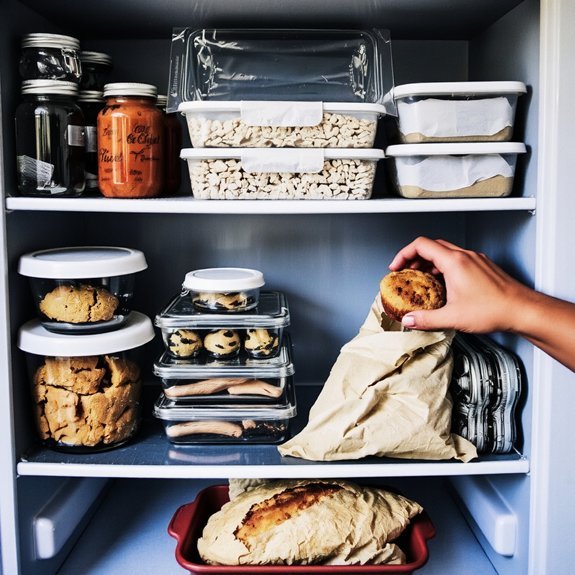
Proper containerization directly impacts freezer longevity and quality retention of your baked goods. You’ll want airtight containers that prevent freezer burn and moisture loss. Glass containers with silicone seals outperform plastic alternatives for long-term storage.
For travel readiness, choose lightweight, stackable options that withstand temperature fluctuations without cracking. Make sure containers have secure lids—this prevents contamination and preserves flavor integrity.
When child safety concerns arise, select containers with child-resistant locks or store them on higher shelves. Avoid containers with BPA or phthalates; opt for food-grade materials certified by regulatory agencies.
Label compartments clearly to prevent accidental consumption of allergens. Vacuum-sealed bags work effectively for space-conscious freezing, though they’re less durable than rigid containers. Select your storage solution based on your specific freezing duration and accessibility needs.
Proper Wrapping and Packaging Techniques

Wrapping your baked goods in multiple layers creates an effective barrier against freezer burn and oxidation.
You’ll want to start with plastic wrap, pressing it directly against the item’s surface to eliminate air pockets.
Follow this with aluminum foil, which provides additional moisture protection and structural support.
For best results, place wrapped items in airtight freezer bags, removing excess air before sealing.
Consider your brand packaging goals when selecting materials—professional-grade wrapping enhances gift presentation and maintains product integrity.
Label everything with content and date to track storage duration accurately.
This methodical approach guarantees your baked goods retain quality, texture, and flavor for months.
You’re basically creating an impenetrable shield that preserves freshness while allowing you complete control over your freezing process.
Freezer Organization and Labeling

How should you organize your freezer to maximize accessibility and minimize quality degradation?
Implement a zone layout system that designates specific areas for different baked goods categories.
This strategic arrangement prevents you from digging through frozen items, which compromises texture and moisture retention.
Minimize freezer rummaging to preserve texture and moisture retention in your baked goods.
- Create a dedicated zone for breads, pastries, and cakes, positioning frequently accessed items at eye level
- Use inventory apps to track what you’ve frozen, expiration dates, and ideal consumption windows
- Establish a “first in, first out” rotation system to make sure older items get used before newer stock
Label every package with contents, freeze date, and thaw instructions using waterproof markers.
This documentation eliminates guesswork and prevents accidental waste.
Your organized freezer gives you complete control over your baked goods inventory, guaranteeing you retrieve exactly what you need without unnecessary waste or quality loss.
Storage Duration and Shelf Life
You’ll want to maintain your freezer at 0°F (-18°C) or below to maximize the shelf life of your baked goods, as this temperature effectively halts microbial growth and slows quality degradation.
Different items have varying ideal storage windows—cookies and unfrosted cakes last 3-4 months, while bread products remain quality for 2-3 months, and frosted items typically deteriorate faster at 1-2 months.
Proper thawing in your refrigerator overnight, rather than at room temperature, preserves texture and moisture while minimizing quality loss during the defrosting process.
Optimal Freezer Temperature Settings
What temperature keeps baked goods fresh longest in the freezer?
You’ll want to maintain a consistent temperature of 0°F (-18°C) or below for ideal preservation. Here’s what you need to know:
- Thermostat calibration: Verify your freezer’s accuracy with a reliable thermometer, as fluctuations degrade quality and shorten shelf life considerably.
- Energy efficiency: Running your freezer at -4°F wastes energy without improving results; stick to 0°F for the best balance between food safety and cost.
- Temperature stability: Avoid frequent door openings that cause warming cycles, which create ice crystals and compromise texture.
Maintaining these precise settings gives you maximum freedom to stock your freezer without worrying about premature spoilage or quality degradation.
Shelf Life by Baked Good
Now that you’ve got your freezer set at the ideal temperature, understanding how long different baked goods actually last becomes your next priority.
Freezing dramatically extends shelf life by halting microbial growth and slowing oxidation. You’ll benefit from moisture retention properties that prevent staleness, while the preservative effects of freezing maintain nutritional integrity and flavor compounds.
| Baked Good | Freezer Duration |
|---|---|
| Bread & Rolls | 3-4 months |
| Cakes & Cupcakes | 2-3 months |
| Cookies & Pastries | 4-6 months |
These timeframes assume proper packaging in airtight containers or freezer-grade bags. You’ll notice that dense, lower-moisture items like cookies outlast delicate, moisture-rich cakes. Thaw items at room temperature to restore original texture. Don’t rely solely on freezing—monitor for freezer burn and off-odors indicating spoilage.
Thawing and Quality Preservation
Proper thawing is critical to restoring the sensory and textural qualities that freezing preserves.
You’ll maintain ideal flavor retention by thawing baked goods at room temperature rather than using heat, which accelerates moisture migration and compromises crumb structure.
- Thaw unwrapped items on parchment paper to prevent condensation buildup
- Allow 2-4 hours for standard items; larger cakes require 6-8 hours
- Keep thawed goods in airtight containers to prevent staling
You’ll notice that gradual temperature equilibration prevents the texture degradation associated with rapid moisture redistribution.
Don’t microwave frozen baked goods—this creates uneven heating and accelerates water loss from the crumb matrix.
Properly thawed items regain their original palatability when you respect the slow, controlled process that science supports.
Thawing and Serving Your Frozen Baked Goods
Since you’ve successfully preserved your baked goods through freezing, thawing them properly guarantees you’ll retain their original texture and flavor.
Thaw items at room temperature for 1-3 hours, depending on size—this gradual process prevents condensation that compromises quality.
For time-sensitive situations, you can thaw in your refrigerator overnight.
When serving, consider presentation ideas that elevate your baked goods: dust pastries with powdered sugar, garnish cakes with fresh berries, or arrange cookies on tiered stands.
Beverage pairings enhance the experience notably. Match rich chocolate items with coffee or dark tea.
Pair lighter cakes with herbal infusions or milk-based drinks.
Fruit-forward baked goods complement citrus tea or sparkling water.
You’ve earned complete control over your baking schedule without sacrificing quality or flavor.
Frequently Asked Questions
Can You Freeze Baked Goods With Cream Cheese Frosting or Fresh Fruit Fillings?
You can freeze cream cheese frosting, but you’ll experience flavor changes and texture separation upon thawing.
Fresh fruit fillings present bacterial safety concerns since freezing won’t eliminate pathogens if proper handling wasn’t observed.
For ideal results, freeze unfrosted goods separately, then assemble after thawing.
If you must freeze frosted items, use airtight containers and consume within two weeks.
This approach gives you control over quality and safety.
Does Freezing Affect the Nutritional Value of Baked Goods Like Cookies and Cakes?
Freezing doesn’t substantially compromise your cookies’ and cakes’ nutritional value.
You’ll maintain mineral retention effectively since freezing halts nutrient degradation that occurs during storage at room temperature.
Vitamin stability remains largely intact, though some water-soluble vitamins may experience minor losses during thawing.
Macronutrients—proteins, fats, carbohydrates—stay preserved.
Your baked goods retain their original nutritional profile when you freeze them promptly after baking and thaw them properly, giving you complete control over your food’s quality.
What’s the Best Way to Freeze Baked Goods Without Developing Freezer Burn or Ice Crystals?
You’ll prevent freezer burn by employing proper wrapping techniques—use airtight containers or vacuum-sealed bags that eliminate oxygen exposure.
Maintain consistent temperature consistency at 0°F or below, avoiding fluctuations that create ice crystals.
Wrap items individually before bulk storage. You’re protecting moisture content and structural integrity through this multi-layer approach, ensuring your baked goods remain uncompromised for months.
Can You Freeze Unbaked Dough Instead of Finished Baked Goods for Later Baking?
You can absolutely freeze unbaked dough for later baking.
When you’re portioning tips, divide dough into individual portions before freezing—this gives you flexibility.
Regarding proofing considerations, you’ve got two options: thaw at room temperature before your final proof, or bake directly from frozen with extended baking time.
Yeast-based doughs perform best; they’ll maintain rise capability and deliver superior results compared to pre-baked alternatives.
How Do You Prevent Frozen Baked Goods From Becoming Dry or Losing Their Original Texture?
You’ll prevent moisture loss by wrapping baked goods in airtight layers—plastic wrap directly against the item, then foil—immediately after cooling.
This wrap timing seals in moisture effectively.
When you’re ready, employ proper reheating techniques: thaw at room temperature in original packaging to recapture surface moisture, then briefly reheat in a 350°F oven.
You’ll restore the original crumb structure and texture without compromise.
Avoid microwaves, which accelerate drying.

Leave a Comment