
Key Takeaways
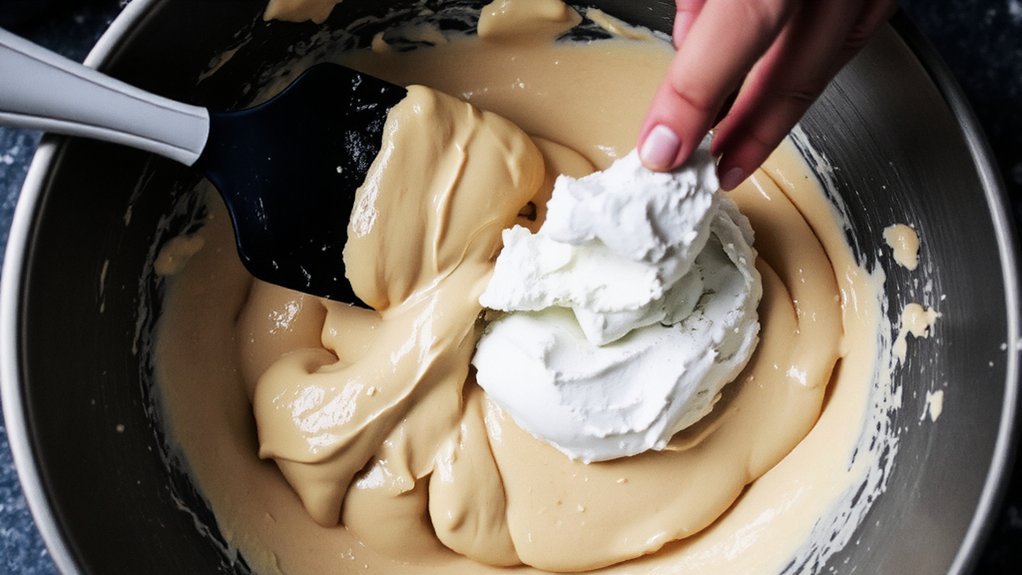
- Add buttermilk or sour cream to relax gluten strands and restore tenderness to overmixed batter.
- Incorporate extra baking powder or baking soda using gentle folding to compensate for lost air.
- Reduce oven temperature by 25°F and increase baking time by 5–10 minutes for better rise.
- Use a spatula with careful folding motions to incorporate moisture-adding ingredients without further gluten development.
- Recognize point-of-no-return signs like separation and unworkable texture; discard and start fresh when necessary.
Understanding What Happens When You Overmix
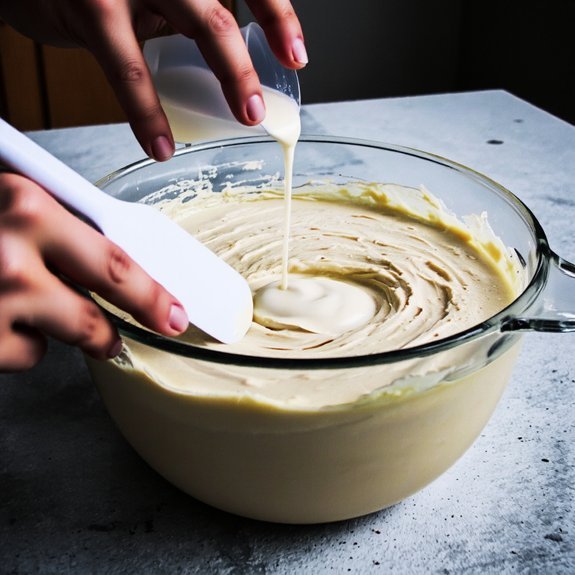
When you overmix batter, you’re developing gluten strands beyond what your recipe requires. These molecular changes fundamentally alter your final product’s texture and structure.
Excessive mixing causes gluten proteins to bond excessively, creating an overly dense network.
This tightens the batter’s structure, trapping less air and producing tough, compact baked goods instead of light, tender results.
Additionally, overmixing accelerates starch gelatinization during baking. The damaged starch granules absorb excess moisture, creating a gummy interior and compromised crumb structure.
You’ll also notice increased oxidation of flour components, which can affect flavor and color development. The batter loses its ability to rise properly, yielding disappointing volume and height.
Understanding these consequences helps you recognize overmixing’s impact and take corrective action before baking.
How to Identify Overmixed Batter
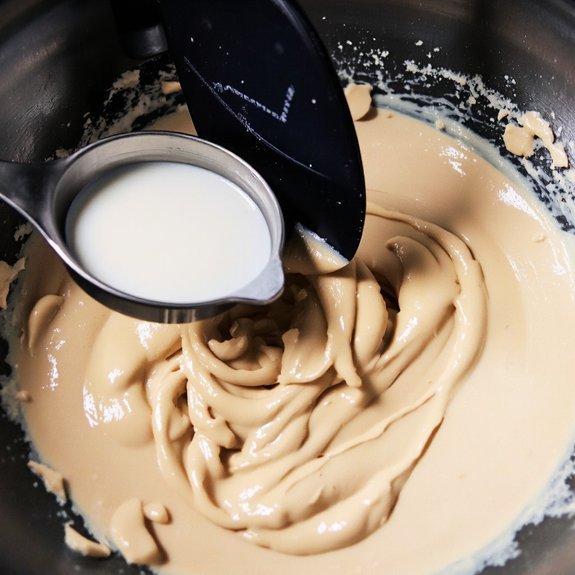
You’ll notice overmixed batter exhibits distinct texture and consistency changes, such as a denser, more compact appearance that lacks the light airiness of properly mixed batter.
Look for visual signs like a smooth, ribbon-like quality and a greyish tint rather than the bright color you’d expect from your ingredients.
Most commonly, you’ve overmixed when you’ve stirred beyond the point where ingredients just combined, or when you’ve used an electric mixer longer than necessary for dry ingredients.
Texture and Consistency Changes
Because overmixing develops gluten strands in batters, you’ll notice distinct physical changes that signal overworking.
The batter becomes denser and loses its airy quality—a rheology basics shift from light suspension to heavy paste.
Your mouthfeel vocabulary expands as you recognize the change: the batter transforms from tender and delicate to tough and elastic.
You’ll observe increased viscosity and reduced flow.
The mixture develops a stringy, resilient character that resists pouring smoothly.
Air bubbles collapse rather than integrate naturally, creating a compact structure.
The batter may appear grayish instead of its original bright color, indicating oxidation from excessive mechanical action.
These textural shifts directly affect your final product’s crumb structure.
Dense cakes, tough muffins, and rubbery pancakes result from these consistency changes.
Trust these visual and tactile indicators—they’re your freedom to identify problems before baking.
Visual Signs to Notice
How can you spot overmixing before it ruins your baked goods?
You’ll notice distinct visual cues that signal excessive mixing has compromised your batter’s integrity.
Look for these telltale indicators:
- Color banding – Streaks of varied tones running through your mixture
- Separation – Visible layers forming instead of a uniform blend
- Tool imprints – Paddle or whisk marks remaining permanently in the batter
- Dense appearance – Batter looking heavier and more compact than intended
- Surface sheen – An overly glossy, slick finish replacing the matte texture
These visual markers emerge as gluten networks overdevelop and air incorporation becomes excessive.
Recognizing them gives you the freedom to stop mixing immediately and salvage your recipe.
Early intervention prevents dense, tough results that’ll undermine your final product’s quality and texture.
Common Mixing Mistakes
Even when you’re aware of overmixing’s dangers, specific mistakes during the blending process make it happen more often than you’d expect. Using the wrong utensil—like an electric mixer instead of a spatula—introduces excessive agitation that you can’t easily control. You’ll overdevelop gluten strands, resulting in tough, dense baked goods that lack the tender crumb you’re after.
Another critical error involves ingredient order. Adding dry ingredients to wet ones gradually while mixing continuously encourages overworking. Instead, combine your dry ingredients separately first, then fold them gently into your wet mixture using minimal strokes.
You’re also prone to overmixing when you blend until you can’t visibly detect lumps. Abandon that impulse. Small flour pockets won’t affect your final product, but excessive mixing definitely will. Embrace restraint in your technique.
Adding Moisture to Restore Texture
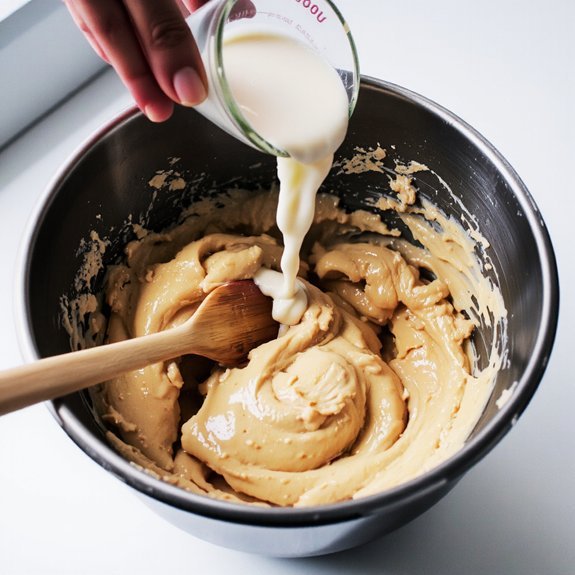
When you’ve identified overmixed batter, you can restore its texture by strategically adding moisture back into the mixture.
You’ll find that the buttermilk rescue method works exceptionally well, as its acidity helps relax gluten strands while thinning the batter.
Alternatively, you can experiment with oil-based texture recovery or the yogurt thinning technique, each offering distinct benefits depending on your specific recipe and batter type.
Buttermilk Rescue Method
Since overmixing gluten strands causes them to tighten and create a dense crumb structure, you can counteract this effect by introducing additional moisture through buttermilk.
Buttermilk’s acidity and fat content break down gluten networks while tenderizing your batter.
Here’s your rescue strategy:
- Replace 25% of your liquid with buttermilk to activate enzymatic breakdown
- Add buttermilk’s lactic acid to relax overstretched gluten bonds
- Use commercial alternatives like Greek yogurt or sour cream if buttermilk isn’t available
- Incorporate cultural origins of buttermilk marinades that historically tenderize dense batters
- Fold mixture gently for 10-15 seconds post-addition to avoid further development
This method restores tender crumbs by chemically softening gluten structure rather than fighting mechanical damage.
You’re effectively reversing overmixing’s effects through targeted moisture intervention, giving you control over your batter’s final texture.
Oil-Based Texture Recovery
While buttermilk chemically breaks down gluten networks, you’ll find that adding fat through oil provides a complementary mechanical approach to texture recovery. Oil coats flour particles, interrupting gluten strand formation and creating a tender crumb structure.
You can incorporate neutral oils like vegetable or canola oil directly into your overmixed batter, using approximately one tablespoon per cup of flour. Make sure you’re stirring minimally—just enough to distribute the oil evenly. Oil separation won’t occur if you work quickly and maintain consistent temperatures. The heat stability of quality oils means your batter remains stable throughout baking without compromising rise or structure. This method works particularly well for cakes and quick breads where tenderness is essential. Your freedom to salvage batches gives you confidence experimenting with ratios and techniques.
Yogurt Thinning Technique
As overmixing dehydrates your batter by overworking gluten strands into tight, moisture-resistant networks, you’ll find that incorporating yogurt directly counteracts this effect by reintroducing moisture.
It also adds lactic acid to further tenderize the crumb.
You’re taking control of your batter’s destiny by strategically selecting yogurt varieties that match your recipe’s flavor pairing requirements:
- Plain Greek yogurt adds density without competing flavors
- Vanilla yogurt enhances dessert applications seamlessly
- Sour cream provides tang and improved shelf stability
- Coconut yogurt suits specialized dietary preferences
- Non-fat options minimize unwanted richness
Start with one tablespoon per cup of flour, folding gently until combined.
This technique restores moisture while preserving structural integrity.
The probiotics enhance shelf stability naturally, extending your baked goods’ viability without artificial additives.
Incorporating Leavening Agents to Regain Lift
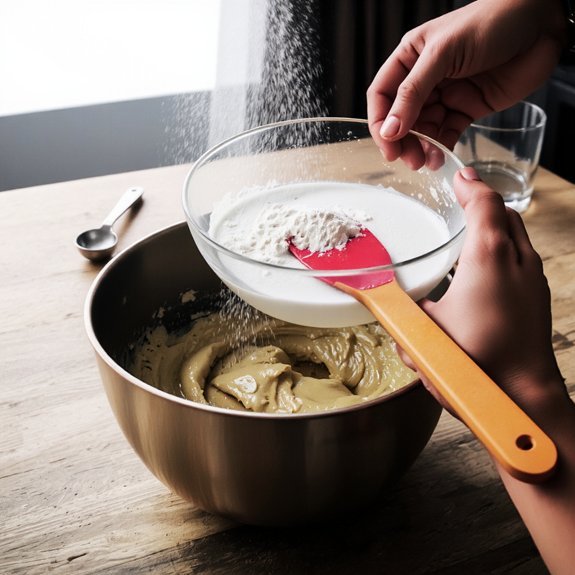
When you’ve overmixed your batter and lost the incorporation of air bubbles, you can partially recover the lift by introducing additional leavening agents to compensate for the structural damage.
Start by adding extra baking powder or baking soda, but adjust your acid balance carefully to prevent off-flavors. If you’re working with yeast-based batters, yeast addition provides a secondary lift mechanism through fermentation, though this requires extended rising time.
For chemically leavened batters, incorporate the extra agents gently using a spatula, folding rather than stirring. Remember that overcompensation won’t fully restore original texture—overmixing permanently damages gluten structure.
These adjustments offer partial redemption, giving you acceptable results despite the initial mixing error.
Using Gentle Folding Techniques to Rescue Your Mix
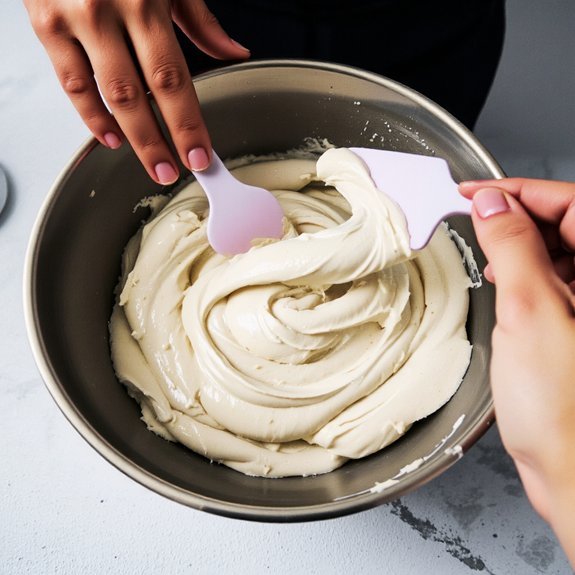
Beyond simply adding extra leavening agents, your technique for incorporating them makes the difference between salvaging your batter and compounding the damage.
Your technique for incorporating leavening agents makes the difference between salvaging your batter and compounding the damage.
Mastering gentle folding techniques gives you control over your mixture’s fate.
Tool selection matters critically—use a spatula, not a whisk, to minimize agitation.
Develop rhythm practice by folding deliberately: cut down the center, sweep across the bottom, and fold upward in one fluid motion.
Key folding strategies:
- Rotate your bowl slightly after each fold for even distribution
- Keep your wrist relaxed and movements deliberate
- Fold until streaks barely remain visible
- Avoid overpowering strokes that deflate air pockets
- Stop folding immediately when ingredients combine
You’re effectively rewinding gluten development by employing restraint.
This methodical approach preserves the airiness you’ve fought to maintain, giving your batter genuine redemption.
Adjusting Baking Temperature and Time
Even if you’ve perfected your folding technique, temperature and timing adjustments become your final safety net for overmixed batter.
You’ll want to reduce your oven temperature by 25°F to slow the rising process, allowing your batter to set gradually without spreading excessively.
Increase baking time by 5-10 minutes to compensate, checking doneness with a toothpick rather than relying on standard recipes.
Consider altitude adjustments if you’re baking above 3,000 feet.
Higher elevations require lower temperatures and extended times due to reduced atmospheric pressure.
For convection conversion, reduce the temperature by an additional 25°F since circulating air bakes faster.
These calibrations work together to minimize the density issues overmixing creates, delivering better texture and crumb structure.
Strategic Ingredient Additions for Different Batter Types
While temperature and timing adjustments help compensate for overmixing’s effects, you’ll find that strategic ingredient modifications can actively reverse some of the structural damage already done.
Different batter types respond distinctly to corrective additions:
- Cake batters: Incorporate additional fat to restore tenderness and mask toughness
- Quick breads: Add flavor enhancers like vanilla or citrus to distract from dense crumb
- Pancake batters: Use vegan substitutes such as aquafaba for improved lift and structure
- Cookie doughs: Introduce acidic components to activate leavening agents independently
- Muffin batters: Blend in sour cream or Greek yogurt for moisture recovery
You’re not simply masking problems—you’re chemically compensating.
These strategic additions work by introducing new variables that counteract gluten overdevelopment.
Select modifications based on your specific batter type and desired outcome, maintaining complete control over your baking results.
Prevention Tips for Your Next Baking Project
Now that you understand how to salvage overmixed batter, you’ll want to prevent the problem from occurring in your next baking session.
Master ingredient organization by arranging all components before you start mixing. This setup eliminates scrambling mid-process and reduces unnecessary stirring.
Implement precise measuring using calibrated scales or properly leveled measuring cups—guesswork invites problems.
Adopt a deliberate mixing strategy: combine dry ingredients separately, then introduce wet components gradually. Mix only until you achieve uniform consistency; stop immediately when streaks disappear. Use a timer to track mixing duration and establish your baseline for different batter types.
Document your methods. Note which mixing speeds and durations work best for specific recipes. This data-driven approach builds your confidence and independence in the kitchen, allowing you to execute flawlessly every time.
When to Accept and Move Forward
Despite your best efforts, you’ll occasionally end up with overmixed batter that you can’t salvage.
Knowing when to let go prevents wasted time and frustration.
Recognize these signs you’ve crossed the point of no return:
- Batter’s consistency has become too dense or separated
- Gluten development has created an unworkable texture
- Ingredients won’t incorporate uniformly regardless of technique
- Visual inspection shows irreversible breakdown
- Temperature changes won’t restore workability
Adjust expectations and move forward.
Document what happened—overmixing time, speed, method—so you’ll recognize warning signs earlier next time.
Discard the batch and start fresh rather than compromising your final product.
This approach preserves your baking standards and prevents you from investing additional ingredients into a failing project.
You’ll develop better instincts through experience, not by forcing problematic batters.
Frequently Asked Questions
Can I Use Overmixed Batter in Recipes Other Than Cakes and Muffins?
Yes, you can repurpose overmixed batter.
For pancake rescue, you’ll thin your batter with milk to restore some structure.
With cookie adaptation, you’ve got freedom to use overmixed dough since cookies tolerate denser textures better than cakes.
You’ll notice slightly tougher results, but they’re still edible.
Adjust your recipe’s liquid content based on your batter’s consistency.
This approach maximizes your ingredients without waste, giving you control over your final product.
How Long Can I Store Overmixed Batter Before It Becomes Unusable?
You can refrigerate overmixed batter for 24 hours maximum. Check for spoilage indicators: separation, off-odors, or mold growth before using.
Don’t rely on expiration dates alone—trust your senses. Temperature stability matters; keep your fridge at 40°F or below.
Beyond 24 hours, bacterial growth accelerates rapidly, compromising safety and quality. When in doubt, discard it. You’re better off making fresh batter than risking food safety issues.
Does the Type of Flour Used Affect How Quickly Batter Overmixes?
Yes, flour type notably affects overmixing speed. High-protein flours like bread flour develop gluten faster, so you’ll overmix them quicker with vigorous stirring.
Low-protein cake flour’s smaller particle size and reduced gluten-forming potential give you more mixing tolerance.
All-purpose flour falls between these options.
You’re in control—choosing your flour strategically lets you dictate mixing margins and maintain the texture you want without excessive manipulation.
Can Overmixed Batter Be Salvaged if It Has Already Been Partially Baked?
You can’t reverse overmixing’s damage once baking’s started, but you’ve got options for crumb rescue.
Stop baking immediately when you notice dense texture developing.
Steam finishing—placing a water pan in your oven—won’t fix the problem but can improve moisture retention.
Your best move? Accept the loss, learn from it, and commit to gentler mixing next time.
Prevention beats salvage every time.
Are There Commercial Additives That Can Help Fix Overmixed Batters?
You can deploy commercial additives to salvage overmixed batters.
Emulsifier blends stabilize your mixture by strengthening fat-water interactions, while enzymatic improvers break down gluten networks you’ve damaged through excessive mixing.
These products work independently or combined, giving you control over your final product’s structure.
You’ll find them in professional baking suppliers.
Apply them according to manufacturer specifications for ideal results without compromising your batter’s integrity.



Leave a Comment