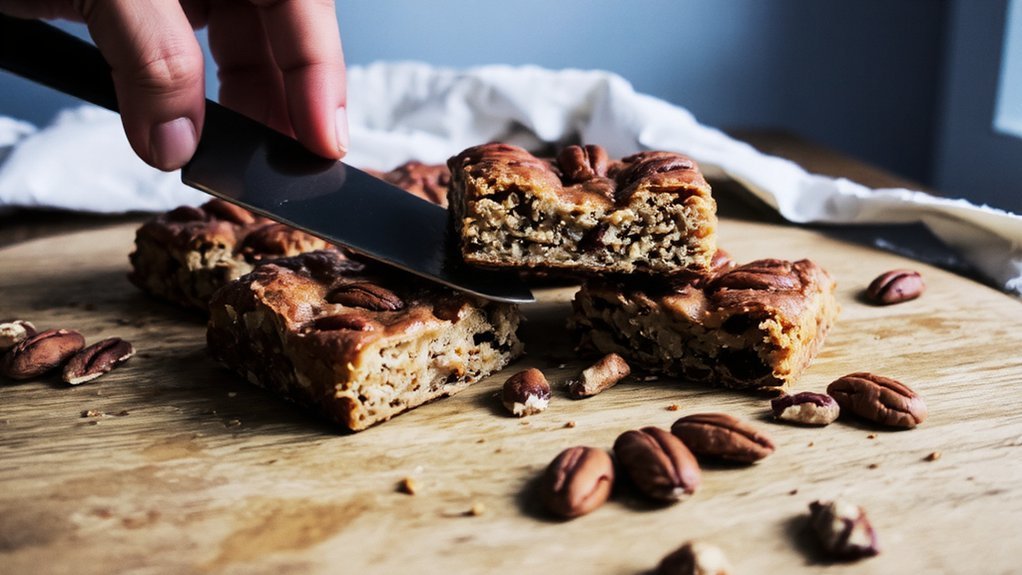

Key Takeaways
- Cream softened butter and granulated sugar until pale, then mix in flour and salt to form the shortbread base.
- Combine butter, brown sugar, and honey in a saucepan; heat to 300–310°F while stirring constantly for proper caramel consistency.
- Fold toasted pecans into hot caramel immediately after reaching target temperature, then pour over cooled shortbread base.
- Bake at 350°F for 12–15 minutes until caramel reaches deep amber color with an internal temperature of 210°F.
- Cool for minimum 2–3 hours before cutting with a heated knife; yields 16–48 pieces depending on desired portion size.
Gathering Your Ingredients
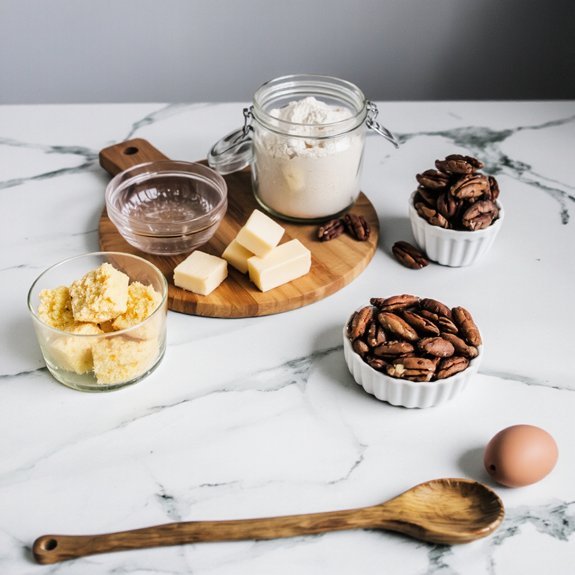
You’ll need several key components to prepare pecan bars: two cups all-purpose flour, one cup unsalted butter (softened), three-quarters cup granulated sugar, one-quarter teaspoon salt, one cup brown sugar, two large eggs, two tablespoons honey, one teaspoon vanilla extract, and two cups chopped pecans.
Source your ingredients with intention.
You’re free to explore ingredient substitutions—coconut oil replaces butter for dairy-free versions, while maple syrup substitutes honey.
Consider seasonal sourcing; autumn harvests yield premium pecans at peak freshness and pricing.
Verify your flour’s protein content and butter’s temperature for precise lamination.
Use large, room-temperature eggs to guarantee proper emulsification.
Toast your pecans lightly beforehand to intensify their flavor complexity.
Measure ingredients by weight when possible for consistent results across batches.
Preparing the Shortbread Base
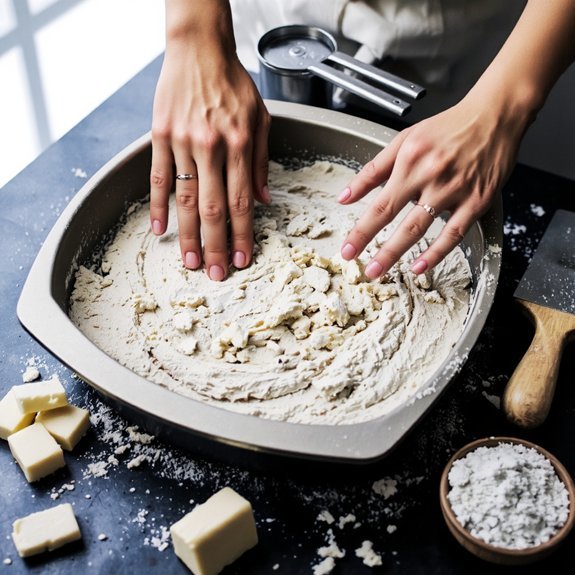
Cream together your softened butter and granulated sugar until you’ve achieved a pale, fluffy consistency—approximately 3-5 minutes at medium speed—which incorporates air and guarantees proper structure in the base layer. Incorporate your flour and salt, mixing until the dough consistency reaches a uniform, crumbly texture without overworking the mixture.
| Ingredient | Measurement | Function |
|---|---|---|
| Butter | 1/2 cup | Binding agent |
| Granulated sugar | 1/4 cup | Sweetener |
| All-purpose flour | 1 1/2 cups | Structure |
| Salt | 1/4 tsp | Flavor enhancement |
Press this mixture firmly into your prepared pan, ensuring even distribution across the bottom. Dock the surface with a fork to prevent bubbling during baking. This deliberate pan preparation and precise dough consistency establish your foundation for maximum control over your final product’s texture and stability.
Making the Pecan Caramel Topping
With your shortbread base baked and cooled, it’s time to build the topping that’ll make these bars irresistible.
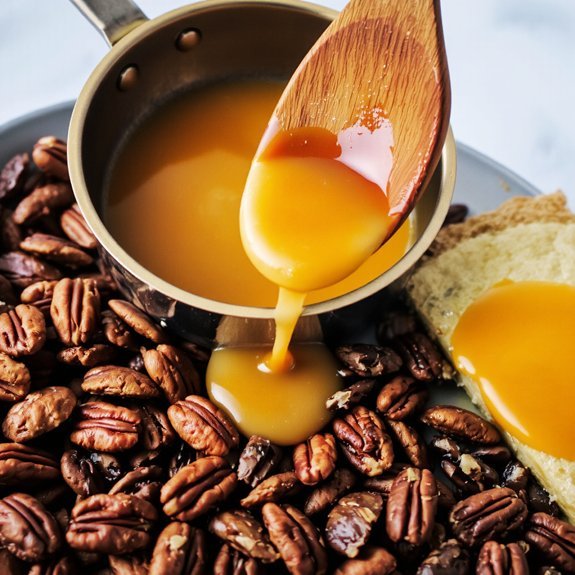
Combine one cup of butter, one cup of brown sugar, and one-quarter cup of honey in a heavy-bottomed saucepan.
Melt over medium heat, stirring constantly.
Temperature control is critical—maintain 300-310°F, using a candy thermometer to monitor progress precisely.
Temperature control is critical—maintain 300-310°F using a candy thermometer to monitor progress precisely.
Understanding caramel chemistry means recognizing that you’re breaking down sucrose molecules through controlled heat application.
Once you’ve reached hard-crack stage, remove from heat and fold in two cups of toasted pecans.
Pour the mixture immediately over your cooled shortbread, spreading evenly before it sets.
The precise ratios and careful temperature management guarantee consistent results every time you make these decadent bars.
Baking and Cooling Your Bars
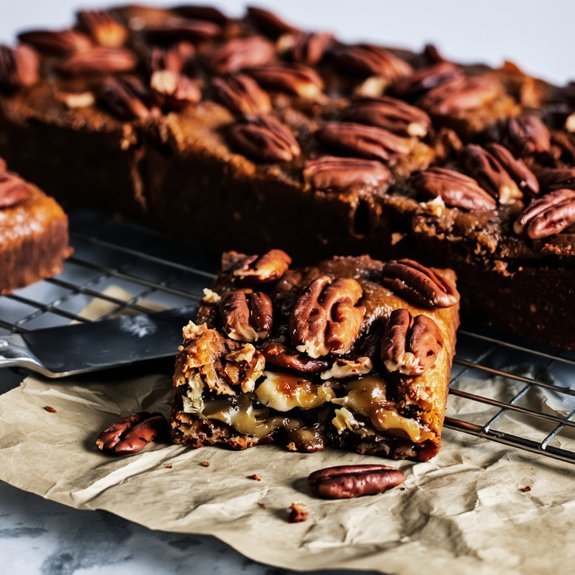
Once the pecan caramel topping’s been poured and spread across your shortbread base, the bars need time to set and firm up—don’t rush this critical phase.
Preheat your oven to 350°F and bake for 12-15 minutes until the caramel reaches a deep amber color.
Follow these steps for ideal results:
- Monitor internal temperature—aim for 210°F at the caramel’s center for proper firmness
- Remove from heat and transfer immediately to a cooling rack to prevent carryover cooking
- Allow 2-3 hours minimum before cutting to guarantee clean edges and structural integrity
Don’t cut prematurely.
The bars’ll firm considerably as they cool to room temperature, giving you that signature crisp-yet-chewy texture you’re after.
This patience yields professional-quality results worth the wait.
Cutting and Serving Tips
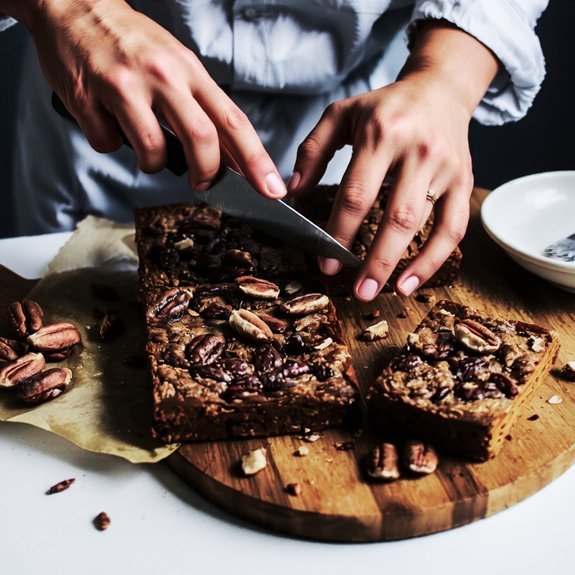
How do you achieve those clean, professional cuts that showcase the distinct layers of your pecan bars? You’ll need a sharp knife heated under hot water, then wiped dry between each cut. This prevents the caramel from sticking and guarantees precise divisions.
| Portion Size | Dimensions | Yield |
|---|---|---|
| Standard | 1.5″ × 2″ | 24 pieces |
| Petite | 1″ × 1.5″ | 48 pieces |
| Generous | 2″ × 2.5″ | 16 pieces |
For garnish options, consider a light dusting of fleur de sel or a drizzle of dark chocolate. You’ve earned the freedom to customize your bars. Let them cool completely before cutting—premature slicing compromises structural integrity. Store individual portions in parchment paper to maintain freshness and prevent oxidation of the pecans.
Frequently Asked Questions
Can I Make Pecan Bars Ahead of Time, and How Should I Store Them?
You can absolutely make pecan bars ahead of time. Store them in airtight storage containers at room temperature for up to five days, or refrigerate them for extended shelf life.
Layer parchment paper between bars to prevent sticking. For ideal results, freeze them in sealed containers for up to three months.
Thaw at room temperature before serving. This make ahead flexibility lets you prepare batches whenever you prefer, maintaining peak freshness and texture throughout storage.
What Can I Substitute for Pecans if I Have a Nut Allergy?
You can substitute pumpkin seeds or sunflower seeds at a 1:1 ratio for pecans in your bars.
Both seeds deliver similar textural density and fat content, ensuring proper binding and moisture retention.
Toast your seeds to 325°F for 8-10 minutes before incorporating them, maximizing flavor development and crunchiness.
This substitution maintains structural integrity while accommodating your dietary restrictions, allowing you complete autonomy over your baking choices.
How Do I Prevent the Caramel Topping From Sliding off the Bars?
You’ll prevent caramel sliding by properly tempering your chill layers.
Apply the caramel while your base’s still warm—it’ll adhere molecularly.
Use thickener options like cornstarch or gelatin to increase viscosity; aim for a 2:1 sugar-to-butter ratio for ideal consistency.
Refrigerate between applications for structural integrity.
This technique gives you complete control over your bars’ architecture, ensuring stable, professional results every time.
Can I Freeze Pecan Bars, and for How Long Will They Stay Fresh?
You can freeze pecan bars for up to three months in airtight containers. Proper freezing preserves flavor and maintains structural integrity.
To prevent texture changes, wrap bars individually in parchment, then seal in freezer-safe containers.
Thaw at room temperature for two hours before serving. This method safeguards your caramel topping’s integrity while extending shelf life substantially, giving you freedom to bake ahead without compromise.
Why Did My Shortbread Base Turn Out Too Thick or Too Thin?
You’ve likely encountered measuring errors or selected the wrong pan size. If you’re underpacking your flour or miscalculating ingredient ratios, you’ll get a thinner base. Conversely, overmeasuring creates excessive thickness.
Verify you’re using the correct pan dimensions—a 9×13-inch yields proper thickness. Employ a kitchen scale for precision rather than volume measurements. Level flour when measuring. These technique adjustments guarantee consistent, professional-quality shortbread foundations every time you bake.

Leave a Comment