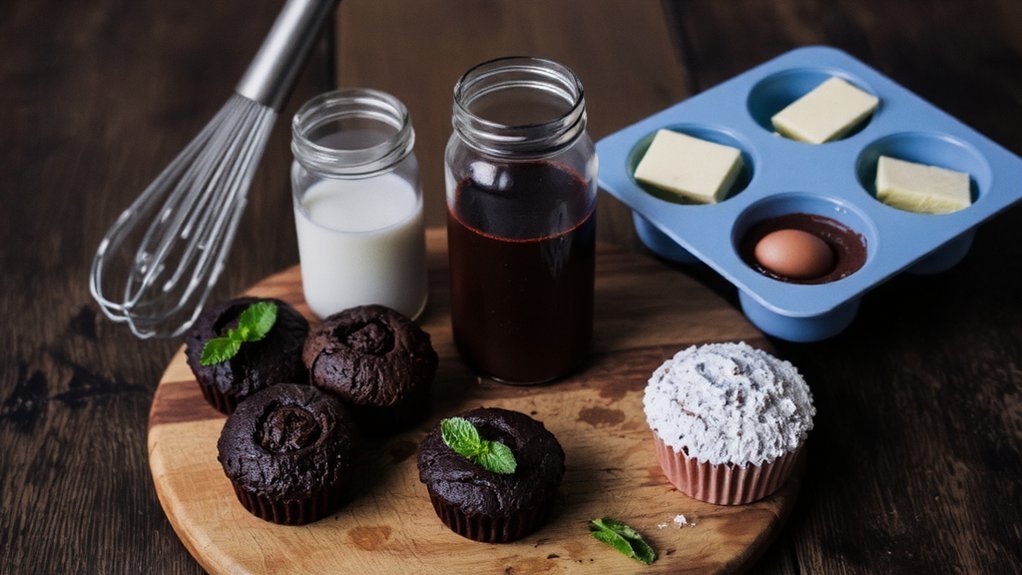

Key Takeaways
- Master low-carb flour substitutions (almond, coconut, psyllium husk) by understanding their unique binding and moisture absorption properties.
- Balance fat content at 70–80% of recipe calories while using room-temperature eggs for proper emulsification and tender crumb structure.
- Select appropriate sweeteners strategically: erythritol for beverages, monkfruit for delicate bakes, allulose for caramelization and browning effects.
- Separate dry and wet ingredients into distinct bowls to prevent overcrowding and ensure even blending without unmixed pockets.
- Adjust liquid content based on chosen fat source and flour type; cream cheese and nut butters contribute significant moisture.
Understanding Ketogenic Baking Basics
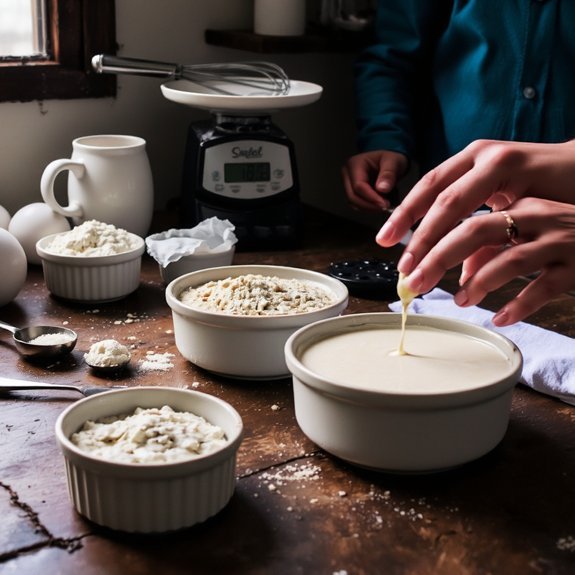
When you’re baking keto desserts, you’ll need to fundamentally rethink how traditional baking works—swapping high-carb flour and sugar for low-carb alternatives that maintain structure and flavor.
Keto baking demands rethinking traditional techniques—swap high-carb flour and sugar for low-carb alternatives that preserve structure and flavor.
Understanding baking chemistry becomes essential because almond flour, coconut flour, and sugar substitutes behave differently than wheat flour and refined sugar.
You’re not just replacing ingredients; you’re rebalancing moisture, binding, and browning reactions.
Oven calibration matters notably since keto batters often bake faster and differently.
Invest in an oven thermometer to guarantee accurate temperatures—even slight variations derail results.
Recognize that fat content in keto recipes affects spreading and texture more dramatically than conventional baking.
Master these fundamentals, and you’ll gain the freedom to create satisfying desserts aligned with your dietary goals.
Essential Keto Sweetener Substitutes
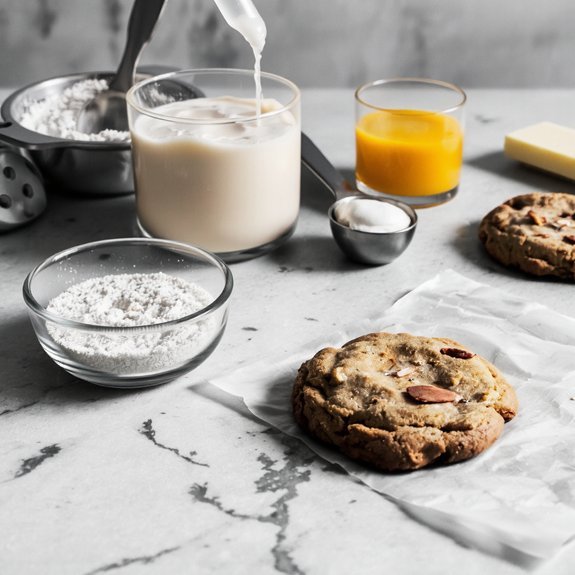
How do you sweeten keto desserts without spiking blood glucose or leaving a bitter aftertaste? You’ve got options that’ll liberate you from sugar’s grip.
| Sweetener | Glycemic Impact |
|---|---|
| Erythritol | Minimal, ~0 net carbs |
| Monkfruit blends | Zero glycemic response |
| Allulose benefits | 90% fewer calories than sugar |
Erythritol won’t derail your ketosis—it’s a sugar alcohol with virtually no carbs. Monkfruit blends combine natural zero-calorie compounds with minimal aftertaste, giving you genuine sweetness. Allulose benefits shine through its similarity to table sugar in browning and texture while maintaining metabolic freedom.
You’ll want to experiment with ratios since these sweeteners behave differently in various recipes. Start with erythritol for beverages, monkfruit blends for delicate bakes, and allulose for caramelization. This strategic approach guarantees you’re crafting desserts that taste exceptional while honoring your metabolic goals.
Low-Carb Flour Alternatives Explained
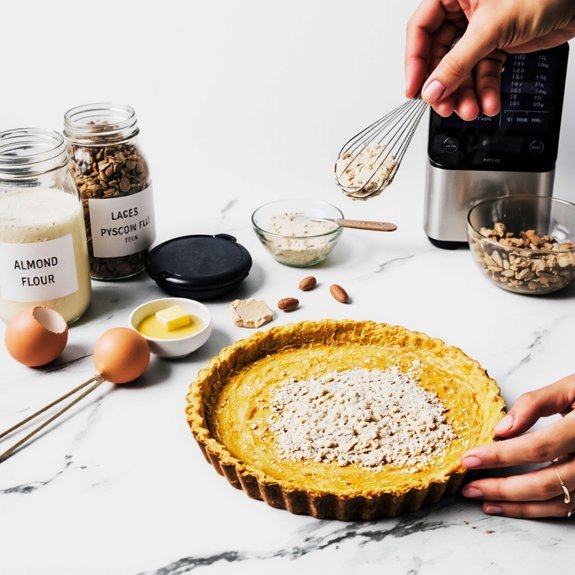
You’ll find that almond flour provides a neutral flavor and fine texture that mimics wheat flour’s binding properties in most keto recipes.
Coconut flour absorbs substantially more liquid than traditional flour, requiring you to adjust your wet ingredients carefully to avoid dense results.
Psyllium husk acts as a powerful binder and thickener, offering you soluble fiber benefits while improving your dessert’s structure and moisture retention.
Almond Flour Basics
Almond flour’s popularity in keto baking stems from its macronutrient profile: roughly 6 grams of protein and 3 grams of net carbs per ounce, compared to wheat flour’s 20 grams of carbs.
You’ll find two primary types: blanched almond flour, created through blanching techniques that remove skins, and unblanched varieties retaining their nutrient-dense outer layer.
Blanched versions offer lighter color and finer texture, ideal for delicate cakes and pastries.
Grind consistency matters greatly.
You’re after a texture resembling fine powder—too coarse and you’ll experience grittiness; too fine and you risk density issues.
Most quality products specify their micron size.
You should store almond flour in airtight containers away from heat and light.
Its higher fat content demands refrigeration to prevent rancidity, preserving both flavor and nutritional integrity for your keto creations.
Coconut Flour Properties
Coconut flour presents a distinctly different profile from almond flour, offering approximately 5 grams of net carbs and 5 grams of fiber per ounce—making it an excellent low-carb choice that’s also particularly higher in fiber.
You’ll find coconut flour absorbs considerably more liquid than almond flour, requiring recipe adjustments to prevent dry results.
Its protein content ranges from 3-4 grams per ounce, supporting your macronutrient goals effectively.
When you’re baking with coconut flour, you’re gaining a distinct tropical flavor that complements chocolate and vanilla desserts beautifully.
Consider allergen considerations carefully: coconut flour works well for tree nut-sensitive individuals, though it’s technically a seed product.
You’ll achieve superior texture by using a 1:4 coconut-to-almond flour ratio, giving you flexibility and control over your keto desserts’ final composition.
Psyllium Husk Benefits
Psyllium husk’s soluble fiber content—approximately 7 grams per tablespoon—makes it a powerful binding agent that’s virtually carb-free, containing less than 1 gram of net carbs per serving.
You’ll find this ingredient invaluable when crafting keto desserts that maintain structural integrity without compromising your macros.
Beyond baking, psyllium husk delivers significant health benefits.
It supports digestive health by promoting regular bowel movements and feeding beneficial gut bacteria, essential when you’re restricting carbs.
Studies demonstrate cholesterol reduction properties, helping you maintain cardiovascular wellness while enjoying ketogenic eating.
You’re getting approximately 88% dietary fiber per tablespoon, meaning minimal digestible carbohydrates reach your system.
This makes psyllium husk an intelligent choice for your low-carb baking arsenal—delivering both functional binding properties and measurable health advantages without dietary compromise.
Mastering Fat and Moisture in Keto Recipes
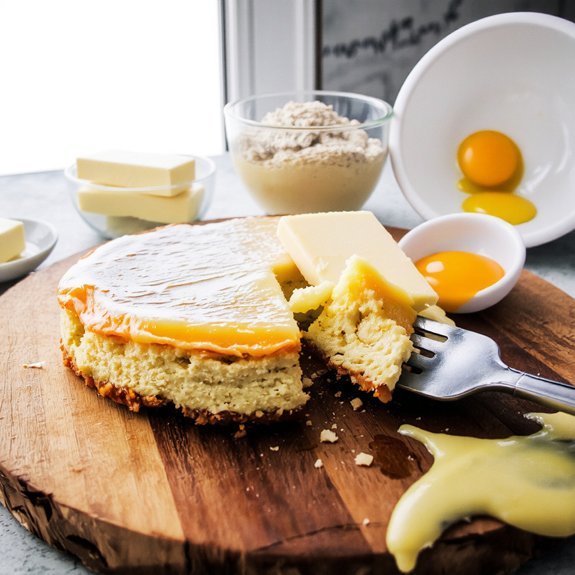
Balancing fat and moisture fundamentally shapes your keto desserts’ texture, crumb structure, and nutritional profile. You’ll master emulsion stability by understanding how fats interact with your binding agents, creating the tender crumb you’re after without sacrificing that satisfying richness.
| Fat Type | Moisture Retention | Emulsion Stability |
|---|---|---|
| Butter | Moderate | High |
| Coconut Oil | Low | Medium |
| Cream Cheese | High | Excellent |
| Almond Butter | Very High | Good |
Fat ratios matter tremendously—you’re aiming for 70-80% of your recipe’s calories from fat to maintain ketosis while preventing dryness. Too little fat leaves you with crumbly disappointment; too much creates greasy density. Adjust your liquid content based on your chosen fat source, since cream cheese and nut butters contribute significant moisture independently.
Common Mistakes to Avoid When Baking Keto
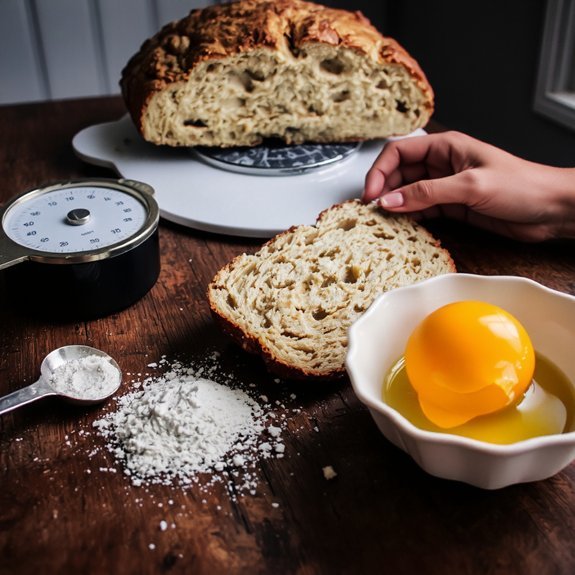
You’ll sabotage your keto baked goods if you overcrowd your mixing bowl, which prevents proper ingredient incorporation and creates dense, uneven textures.
Neglecting ingredient substitutions—particularly swapping regular flour for almond or coconut flour without adjusting liquid ratios—throws off your macronutrient balance and compromises your dessert’s structure.
These missteps undermine both the metabolic benefits you’re pursuing and the technical success of your final product.
Overcrowding the Mixing Bowl
When multiple dry ingredients—allulose, erythritol, almond flour, coconut flour, and baking soda—share a single bowl, they won’t blend evenly, leaving pockets of unmixed components that compromise texture and rise.
You’ll benefit from using separate bowls for dry and wet ingredients.
This approach streamlines kitchen traffic, prevents cross-contamination, and makes sure each component integrates properly.
Overcrowding forces you to mix longer, overworking your batter and degrading its structure.
By maintaining organized, dedicated mixing stations, you’re not just improving results—you’re boosting cleaning efficiency afterward.
Residual almond flour and erythritol won’t stubbornly cake into corners of an oversaturated bowl.
Give yourself freedom in your keto baking process.
Strategic bowl usage guarantees consistent, superior desserts while respecting both your time and your kitchen’s functionality.
Neglecting Ingredient Substitutions
Proper ingredient ratios matter just as much as proper mixing technique—and swapping conventional baking staples for keto alternatives without understanding their unique properties will sabotage your results.
You’re trading wheat flour for almond or coconut flour, but these alternatives absorb liquids differently.
Coconut flour demands considerably more moisture; use too little and you’ll end up with dense, crumbly desserts.
Almond flour behaves closer to traditional flour but won’t provide identical structure.
When making allergen swaps, recognize that each substitute carries distinct binding capacities and fat content.
These factors directly impact texture and rise.
Additionally, shelf life impacts vary—keto-friendly ingredients like nut flours oxidize faster than refined options, affecting freshness and flavor stability.
You’re demanding control over your ingredients.
Master these substitutions’ mechanics, and you’ll bake desserts that actually deliver results.
Best Tools and Equipment for Keto Baking
Since keto baking requires precise measurements and temperature control to achieve proper macronutrient ratios, investing in quality equipment becomes essential.
You’ll want a digital scale to measure ingredients accurately—this eliminates guesswork and guarantees your macros stay on point.
Silicone molds give you freedom to create diverse dessert shapes without worrying about sticking or uneven baking.
You’ll also need an oven thermometer to verify your baking temperature’s accuracy, since keto batters behave differently than traditional recipes.
A stand mixer handles dense, low-carb doughs efficiently, saving you time and effort.
Quality measuring cups and spoons prevent ingredient miscalculations that sabotage results.
Consider parchment paper for easy cleanup and consistent baking surfaces.
These tools empower you to master keto desserts confidently, transforming your kitchen into a controlled environment where precision and freedom intersect seamlessly.
Chocolate Desserts That Stay in Ketosis
You’ll want to master sugar substitutes like erythritol and monk fruit to create chocolate desserts that won’t spike your blood glucose while maintaining authentic cocoa richness.
Understanding how different keto sweeteners interact with cocoa’s natural bitterness helps you balance flavor profiles without artificial aftertaste or unwanted carbs.
Proper tempering techniques and ingredient ratios guarantee your chocolate desserts achieve the right texture and mouthfeel while staying strictly within ketogenic macronutrient targets.
Sugar Substitutes for Chocolate
When baking keto chocolate desserts, selecting the right sweetener makes the difference between maintaining ketosis and spiking blood sugar. You’ll find several viable options: erythritol, xylitol, stevia, and monk fruit each offer zero or minimal carbs.
Erythritol provides the closest taste to sugar with minimal aftertaste, though digestive tolerance varies individually—start with smaller quantities. Xylitol delivers excellent flavor but requires careful label decoding since some brands contain added sugars. Stevia and monk fruit concentrate are intensely sweet, so you’ll use less.
Always check nutrition labels for hidden carbs and sugar alcohols that could derail ketosis. Combining sweeteners often yields superior results, reducing aftertaste while maintaining your metabolic freedom. Experiment to discover your ideal blend.
Low-Carb Chocolate Flavor Profiles
Beyond sweetener selection, the cocoa percentage and fat composition determine whether your chocolate desserts deliver authentic flavor while maintaining ketosis.
You’ll find that higher cocoa percentages—70% and above—offer superior aroma chemistry and complexity without added sugars.
Consider these flavor-building strategies:
- Single-origin cocoa – Select beans by terroir to reveal distinct flavor notes
- Fat ratios – Balance cocoa butter with MCT oil for mouthfeel and satiety
- Roast levels – Dark roasts provide depth; lighter roasts preserve fruity undertones
- Flavor pairing – Combine cocoa with vanilla, espresso, or sea salt to enhance perception
You’re crafting desserts that satisfy cravings without compromising metabolic state.
Understanding these technical elements gives you control over your keto baking outcomes, ensuring every bite delivers both pleasure and adherence to your dietary goals.
Keto-Friendly Chocolate Baking Techniques
Mastering heat management and ingredient substitutions is essential for creating chocolate desserts that maintain ketogenic macronutrient ratios without sacrificing texture or taste. You’ll want to control temperatures precisely—sous vide methods guarantee even chocolate tempering while preventing heat damage to delicate fats. Torch finishing delivers caramelized surfaces on mousse and custard-based creations without compromising ketogenic integrity.
| Technique | Temperature | Benefit |
|---|---|---|
| Sous vide | 104-122°F | Precise cocoa butter control |
| Torch finishing | 300-400°F surface | Professional texture contrast |
| Double boiler | 160-175°F | Gradual melting without separation |
You’re replacing traditional sugars with erythritol and monk fruit while leveraging dark chocolate’s natural fat content. This approach preserves your macronutrient freedom, allowing decadent desserts aligned with your metabolic goals. Your keto journey doesn’t require sacrifice—it demands intelligent technique application.
Cookies and Brownies Made Keto-Friendly
Transforming classic cookies and brownies into keto-compliant treats requires understanding how sugar replacements and fat ratios affect texture and browning.
You’ll discover that allulose and erythritol behave differently than conventional sweeteners, demanding precise measurements for ideal results.
Master these essentials:
- Use higher fat ratios—butter and coconut oil create moisture and structure without sugar’s binding properties
- Choose allulose for superior browning and texture replication in brownies
- Add xanthan gum sparingly to prevent grittiness in cookie doughs
- Implement meal prep strategies by portioning dough for weekday baking
For holiday variations, you’re free to experiment with sugar-free chocolate chips, nuts, and spice blends.
These modifications maintain nutritional ketosis while delivering satisfying indulgence. Your keto journey doesn’t require sacrifice—it demands smart ingredient selection and technique refinement.
Advanced Techniques for Texture and Flavor
Once you’ve mastered basic keto baking ratios, you’ll find that layering technique and ingredient timing unlock dramatically superior results in both texture and taste.
Master Maillard Control by carefully managing oven temperatures and bake times—lower heat preserves delicate flavors while preventing bitter notes in sugar substitutes.
This precision prevents the harsh aftertaste common in keto desserts.
Aroma Amplification comes from strategic ingredient pairing.
Combine vanilla extract with almond flour’s natural nuttiness, or pair cinnamon with cocoa to enhance perceived sweetness without additional carbs.
Toast nuts before incorporating them to develop complex flavor profiles.
You’ll also benefit from understanding fat ratios.
Ghee and coconut oil contribute distinct taste notes that elevate your creations beyond basic recipes.
Proper emulsification through room-temperature egg incorporation guarantees moisture retention and tender crumb structure.
Storing and Serving Your Keto Baked Goods
Preserving your keto desserts’ texture and nutritional integrity requires understanding how fat oxidation and moisture migration affect shelf life.
You’ll maximize freshness by implementing these storage strategies:
- Refrigerate fat-based items in airtight containers to prevent rancidity
- Freeze portions within two weeks for extended preservation
- Store at serving temperatures (68-72°F) for ideal consumption experiences
- Label dates clearly to track degradation and maintain quality standards
You’re free to customize storage based on your macronutrient composition—higher fat desserts need cooler environments than lower-fat varieties.
Thaw frozen items gradually in refrigeration rather than at room temperature to prevent condensation that compromises texture.
Proper labeling dates guarantees you’re consuming products at peak nutritional value while maintaining the dietary freedom keto demands.
Frequently Asked Questions
Can I Convert My Regular Dessert Recipes to Keto Without Starting From Scratch?
You can absolutely convert your regular desserts to keto through strategic ingredient substitutions.
Replace sugar with erythritol or stevia, swap flour for almond or coconut flour, and use butter or coconut oil instead of refined oils.
Expect texture adjustments—keto baked goods often require added moisture and binding agents like xanthan gum.
You’ll reclaim your dessert freedom without abandoning your low-carb lifestyle or nutritional goals.
How Do Keto Desserts Affect Blood Sugar Levels Compared to Traditional Baked Goods?
You’ll experience dramatically reduced glycemic response with keto desserts. By replacing sugar with low-carb sweeteners like erythritol or stevia, you’ll avoid the insulin spike traditional baked goods trigger.
Your blood sugar stays stable because keto desserts contain minimal net carbs—typically under 5g per serving. You’re free from energy crashes and cravings that follow conventional sweets, maintaining steady glucose levels throughout your day.
Are Keto Baked Goods Suitable for People With Nut Allergies or Sensitivities?
You can absolutely enjoy keto desserts with nut allergies by choosing nut-free flours like coconut, almond-free blends, or psyllium husk.
You’ve got the freedom to bake confidently when you’re vigilant about cross-contamination—check your ingredient labels carefully and maintain separate preparation surfaces.
These alternatives deliver the same low-carb, high-fat results you’re after, letting you reclaim your dessert independence without compromising your health or safety.
What Is the Shelf Life of Homemade Keto Desserts in the Freezer?
You’ll find homemade keto desserts maintain quality in your freezer for 2-3 months when properly stored. To prevent freezer burn, wrap items tightly in parchment paper and airtight containers.
For thawing methods, move desserts to your refrigerator overnight—this preserves their macronutrient integrity and prevents condensation. Room temperature thawing works for 1-2 hours, though it may slightly compromise texture. Your ingredient choices, particularly fat content, determine longevity.
Can Children Safely Eat Keto Desserts as Part of a Balanced Diet?
You can safely incorporate keto desserts into your child’s balanced diet with proper parental guidance. Growth considerations matter—children need adequate carbohydrates for development, so keto treats shouldn’t replace nutritious foods.
Focus on ingredient quality: use whole nuts, natural sweeteners like erythritol, and nutrient-dense fats. Consult your pediatrician before making dietary changes.
You’ve got freedom to experiment, but moderation and nutritional balance protect your child’s health and growth trajectory.
Leave a Comment