
Key Takeaways
- Replace butter with coconut oil, avocado oil, or plant-based spreads using 1:1 or 3:4 ratios depending on recipe type.
- Choose plant-based milks by fat content: oat milk for cakes, soy milk for chocolate, coconut milk for richness.
- Substitute eggs with flax eggs, aquafaba, or applesauce at 1:1 proportions, adjusting liquid and fat content accordingly.
- Read all labels carefully for hidden allergens like tree nuts, soy, and gluten in dairy-free products.
- Use separate utensils and surfaces to prevent cross-contamination; store finished goods airtight with parchment layers for freshness.
Understanding Dairy-Free Baking Basics
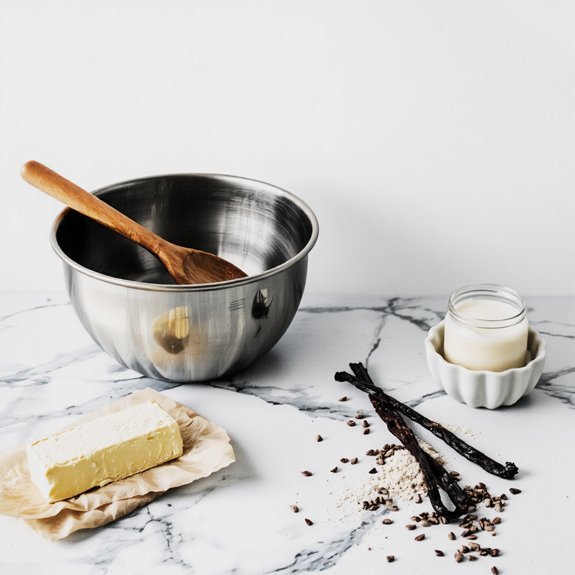
When you’re baking without dairy, you’ll need to understand how milk, butter, and other dairy products function in traditional recipes so you can replace them effectively. Dairy contributes moisture, fat, and structure—roles you’ll fulfill with alternatives like coconut oil, almond milk, or oat milk.
Each substitute performs differently, affecting texture and flavor.
Your Kitchen Setup matters notably. Designate separate utensils and surfaces for dairy-free preparation to prevent cross-contamination. Label all ingredients clearly.
Allergen Awareness extends beyond dairy. Many dairy-free products contain tree nuts, soy, or gluten. Read labels meticulously.
Understand ingredient ratios: typically, you’ll substitute butter 1:1 with coconut oil, though adjustments vary by recipe. Milk replacements often require slight ratio modifications due to viscosity differences. Master these fundamentals, and you’ll liberate yourself from dairy constraints entirely.
Best Plant-Based Milk Substitutes
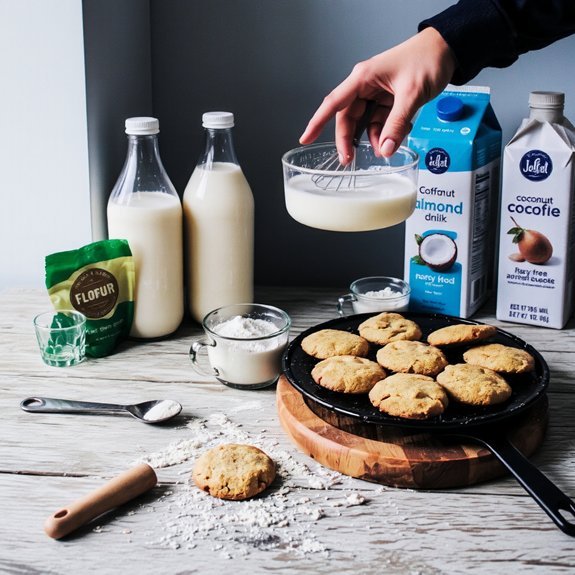
Since you’re replacing dairy milk’s moisture and binding properties, you’ll want to select plant-based alternatives based on their fat content, protein levels, and how they behave under heat.
Your nutrient comparison reveals distinct advantages:
- Oat milk: 2g protein per cup, neutral flavor ideal for vanilla cakes and pastries
- Soy milk: 3.3g protein per cup, creates tender crumb structure in chocolate desserts
- Coconut milk: higher fat content delivers richness; pairs excellently with tropical and spiced recipes
- Almond milk: lean option requiring added fat; complements delicate flavor profiles
Match milk selection to your recipe’s demands. Higher-fat alternatives work best in dense cakes and brownies. Thinner varieties suit lighter applications.
Always use unsweetened varieties unless your formula accounts for added sugars. Temperature stability matters—heat affects protein denaturation and emulsification differently across plant options.
Replacing Butter in Your Recipes
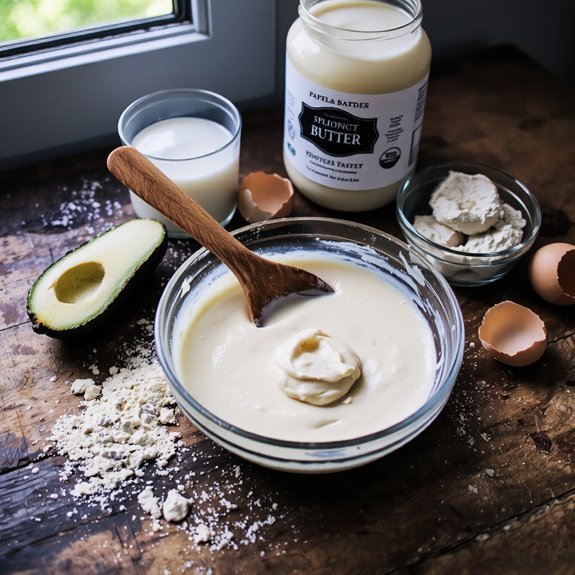
You’ll find that oil-based butter substitutes work well in most recipes by using a 3:4 ratio—for every tablespoon of butter, use three-quarters tablespoon of neutral oil like vegetable or canola oil.
Plant-based alternatives like coconut oil, vegan butter, and nut butters each offer distinct flavor profiles and moisture levels that you should match to your specific baked good. Your best approach is testing these substitutes in individual recipes first, since their behavior varies depending on whether you’re making cookies, cakes, or pastries.
Oil-Based Butter Substitutes
Swapping conventional butter for oil-based alternatives requires understanding the chemical differences between solid fats and liquid oils to maintain proper texture and moisture in your baked goods.
You’ll discover that coconut oil, olive oil, and avocado oil each deliver distinct results.
Consider these oil-based options:
- Coconut oil — provides aroma retention and mimics butter’s solid state when cold
- Avocado oil — offers neutral flavor with excellent shelf stability for long-term storage
- Vegetable oil — delivers consistent results with reliable moisture distribution
- Olive oil — creates tender crumbs but works best in savory applications
Replace butter at a 3:4 ratio (use three-quarters cup oil per one cup butter).
You’ll achieve superior shelf stability while maintaining the structural integrity your recipes demand.
This approach gives you genuine control over your ingredient choices.
Plant-Based Alternatives Guide
Beyond oils, plant-based butter substitutes offer structured alternatives that more closely replicate butter’s solid consistency and baking performance.
You’ll find coconut oil-based spreads deliver excellent lamination for croissants and pie crusts, while aquafaba-enriched formulas create superior moisture retention in cakes.
For nut-free alternatives, you’re looking at soy or sunflower seed butters combined with starches—these options bind effectively without compromising texture.
Refined coconut oil works exceptionally well for pastries requiring structure.
When selecting your substitute, check ingredient lists for plant-based sweeteners like erythritol or stevia; they won’t interfere with your dough development.
You’ll want a 1:1 ratio replacement in most recipes, though enriched formulas may require slight adjustments.
Refrigerate these substitutes before use—cold consistency promotes proper incorporation during creaming or folding stages, maximizing your baking freedom.
Egg Alternatives for Baking
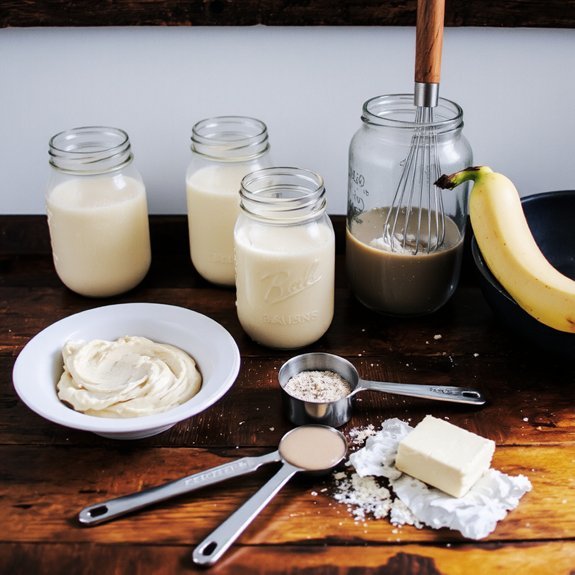
Since eggs bind, leaven, and add moisture to baked goods, you’ll need to replace their specific functions rather than use a single substitute.
Your freedom in the kitchen depends on understanding each egg’s role.
Consider these reliable options:
- Flax or chia eggs: Mix 1 tablespoon ground flax with 3 tablespoons water per egg; let sit 15 minutes for binding
- Aquafaba: Use 3 tablespoons per egg for leavening; whip to stiff peaks for meringues
- Commercial replacers: Formulated blends offering consistent nutrition comparison and reliable results across recipes
- Applesauce or banana: Add 1/4 cup per egg for moisture in dense cakes and quick breads
Each substitute delivers different structural properties.
Flax and chia excel at binding. Aquafaba creates lift. Commercial replacers balance multiple functions. Test substitutions in your preferred recipes to master dairy-free baking without compromise.
Adjusting Recipes for Texture and Moisture
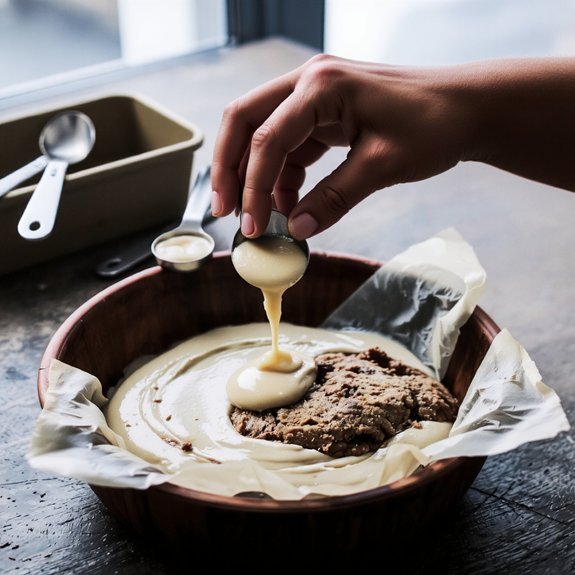
When you’ve selected your egg alternative, you’ll need to fine-tune liquid ratios and fat content to compensate for the structural changes in your batter.
Your hydration balance directly impacts crumb structure and rise. Add dairy-free milk or plant-based yogurt incrementally—start with the recipe’s original liquid amount, then adjust by 1-2 tablespoons until you achieve proper consistency.
Fat content matters substantially. Increase oil or vegan butter by 10-15% to replicate eggs’ binding properties.
Mixing methods determine texture success. Combine dry ingredients thoroughly before wet additions. Whisk egg replacers with liquids until frothy for maximum lift. Fold in flour gently to preserve air incorporation.
Test your hydration balance by checking batter consistency—it should coat a spoon smoothly without running excessively. These precise adjustments guarantee reliable, liberty-enabling dairy-free baked goods.
Troubleshooting Common Dairy-Free Baking Issues
Even with careful attention to ratios and mixing methods, you’ll encounter specific challenges that dairy-free baking presents.
Master these solutions to liberate your baking practice:
- Dry crumb texture: Increase non-dairy milk by 2-3 tablespoons or add applesauce for moisture retention
- Dense results: Verify oven calibration with a thermometer; incorrect temperatures compromise rise and structure
- Separation in batters: Whisk non-dairy milk with emulsifiers like xanthan gum before incorporating
- Stale products: Implement proper storage solutions using airtight containers with parchment layers to maintain freshness
Don’t overlook ingredient quality—premium non-dairy alternatives yield superior results.
Test small batches first, adjusting liquid ratios based on your specific milk brand’s consistency.
Document successful modifications for future reference.
Frequently Asked Questions
Can I Use Dairy-Free Butter in All Recipes That Call for Regular Butter?
You can substitute dairy-free butter in most recipes, but you’ll need to understand creaming performance differences.
Dairy-free alternatives often contain more water, affecting your baking ratios and final texture.
For best results, you’ll want to use a 1:1 ratio while monitoring how your mixture creams—it may take slightly longer.
Choose brands with higher fat content for superior results.
Test recipes first before committing to full batches, ensuring you’re achieving proper emulsification and structure.
How Do Dairy-Free Baked Goods Compare Nutritionally to Traditional Baked Goods?
You’ll find dairy-free baked goods offer comparable calorie counts to traditional versions, though micronutrient balance shifts noticeably.
You’re replacing milk’s calcium and vitamin D with fortified alternatives or plant-based sources.
You’ll need to adjust binding agents—eggs, flax, or aquafaba—since you’re eliminating dairy’s emulsifying properties.
You’re gaining freedom from lactose while potentially reducing saturated fat, but you’re also managing different moisture retention profiles and texture outcomes.
What’s the Shelf Life of Dairy-Free Baked Goods Versus Traditional Baked Goods?
You’ll find dairy-free baked goods typically have shorter shelf lives than traditional counterparts because they lack dairy’s natural preservatives.
However, you can extend moisture retention by using plant-based oils and aquafaquas instead of butter.
For maximum freezer longevity, you’re better off storing dairy-free items frozen—they’ll maintain quality for three months compared to traditional goods’ two-month window.
This freedom from dairy doesn’t mean sacrificing storage success.
Are There Specific Brands of Dairy-Free Ingredients That Work Best for Baking?
You’ll find that brands like Bob’s Red Mill, Miyoko’s, and Oatly deliver consistent results through strong brand reliability and ingredient transparency. You’re choosing products that clearly label their compositions, letting you control exactly what enters your creations.
When you select these trusted sources, you’re liberated from guessing games. They’ve engineered their formulations specifically for baking performance, ensuring your dairy-free batches rise properly and achieve ideal texture every time you mix your ingredients.
How Can I Make My Dairy-Free Baked Goods Taste Less Dry or Dense?
You’ll improve texture through strategic hydration techniques: increase liquid ratios by 10-15%, add applesauce or aquafaba for moisture retention, and incorporate oil instead of butter. For leavening adjustments, boost baking soda or powder slightly to counteract density.
Use room-temperature ingredients, which blend more effectively. Choose binding agents like ground flaxseed or cornstarch. These adjustments won’t compromise your baking freedom—you’re simply optimizing dairy-free formulations for superior crumb structure and palatability.



Leave a Comment