
Key Takeaways
- Replace butter with coconut oil at a 1:1 ratio for crispy edges, or use fruit purees at ¾ to 1 cup per cup of butter.
- Reduce liquid ingredients by 25% when using purees to prevent dense, overly moist cookies from forming.
- Increase baking powder or baking soda by 10–15% to compensate for the lack of solid fat structure from butter.
- Chill dough longer or reduce liquid content to control spreading caused by oil-based substitutes.
- Raise oven temperature by 25°F or add milk powder if replacement fats produce pale cookies with insufficient browning.
Coconut Oil: A Tropical Alternative
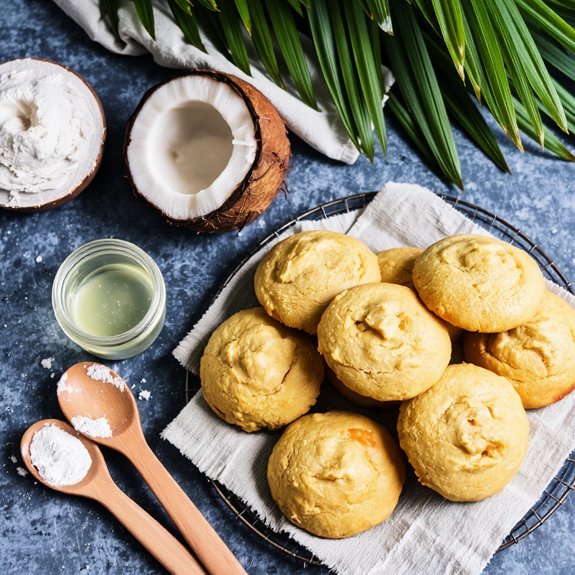
Coconut oil’s molecular structure makes it an excellent butter substitute in cookie recipes.
You’ll find that coconut oil contains similar saturated fats, enabling proper dough consistency and browning.
When you use refined coconut oil, you’ll minimize aroma retention concerns that unrefined varieties might introduce into your baked goods.
You should consider the sustainability impact of your choice.
Coconut oil production supports tropical agriculture without requiring dairy farming’s resource intensity.
You’ll reduce your carbon footprint while maintaining cookie texture and moisture content.
You can substitute coconut oil at a 1:1 ratio for butter.
You’ll achieve crispy edges and tender centers comparable to traditional recipes.
The neutral flavor profile doesn’t compete with vanilla, chocolate, or spice additions.
You gain independence from conventional dairy ingredients while enjoying exceptional baking results.
Applesauce and Fruit Purees for Moisture
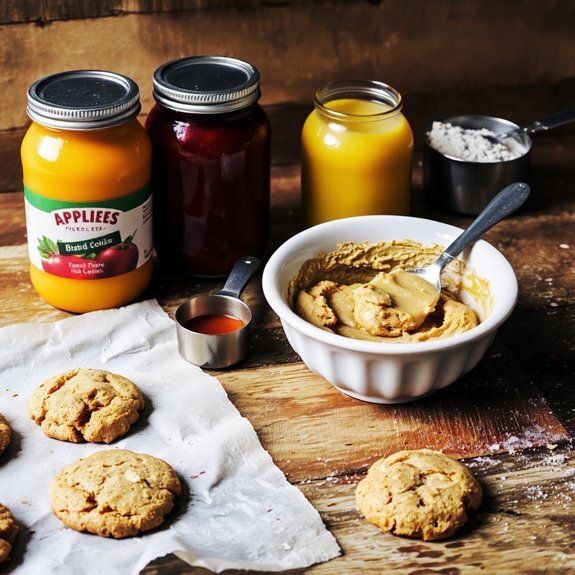
You can substitute applesauce for butter in cookies at a 1:1 ratio, though you’ll need to reduce other liquid ingredients slightly to maintain proper dough consistency.
The best fruit purees for baking include unsweetened applesauce, mashed bananas, and prune puree, each contributing distinct moisture levels and subtle flavor notes to your final product.
These alternatives work particularly well in dense cookies like oatmeal or spice varieties, where the fruit’s natural sweetness complements existing flavors without creating texture problems.
Applesauce as Butter Substitute
Since applesauce contains natural sugars and pectin that create moisture and binding properties, it’s an excellent butter replacement in cookie recipes.
You’ll find applesauce delivers superior results when you understand proper measurement conversions and flavor pairings.
Here’s how to maximize your success:
- Measurement conversions: Replace each cup of butter with ¾ to 1 cup of unsweetened applesauce, adjusting based on your dough’s consistency
- Moisture management: Reduce other liquid ingredients by 25% to prevent overly dense cookies
- Flavor pairings: Combine applesauce with cinnamon, nutmeg, or vanilla to enhance your cookies’ taste profile
You’ll notice applesauce creates slightly softer, chewier textures than traditional butter.
This substitution works particularly well in spiced cookies and fruit-forward varieties.
Your freedom to experiment with ratios allows you to achieve your desired cookie consistency while maintaining nutritional benefits.
Best Fruit Purees for Baking
Fruit purees offer versatile moisture solutions that extend far beyond applesauce when you’re crafting butter-free cookies. You’ll discover that banana, pumpkin, and prune purees deliver distinct flavor pairings that elevate your baking while maintaining ideal texture.
| Puree Type | Flavor Profile | Best Cookie Pairing |
|---|---|---|
| Banana | Mild, sweet | Chocolate chip, walnut |
| Pumpkin | Warm, spiced | Cinnamon, nutmeg |
| Prune | Rich, deep | Oatmeal, dried fruit |
You can substitute purees at a 1:1 ratio for butter, though you’ll need slight flour adjustments for density control. Storage longevity varies—refrigerate banana purees three days, while pumpkin and prune last two weeks. Freezing extends viability to three months, giving you flexibility in your butter-free baking endeavors and freedom from conventional ingredient constraints.
Nut Butters: Rich and Flavorful Options
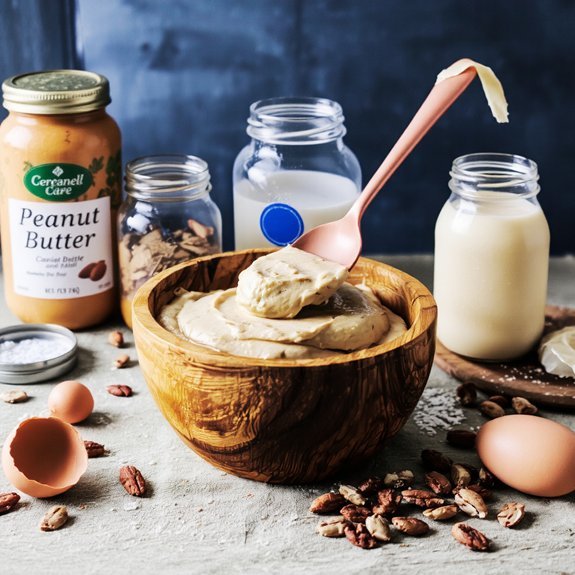
You’ll discover that nut butters deliver richness and depth that traditional butter can’t replicate, with almond butter offering subtle sweetness and peanut butter providing bold, savory complexity.
By experimenting with creative nut butter blends—combining almond with cashew or mixing peanut with sunflower seed butter—you can craft uniquely flavored cookies that showcase your preferences.
These alternatives bind ingredients effectively while contributing protein and healthy fats that enhance both texture and nutritional value.
Almond Butter Cookie Magic
Almond butter transforms cookies into sophisticated treats with naturally nutty depths that’d be difficult to achieve through conventional baking fats.
You’ll discover that almond butter creates tender, moist textures while delivering substantial nutritional value.
When you’re crafting almond butter cookies, consider these essential techniques:
- Spice pairings: Combine cardamom, cinnamon, or clove to complement almond’s earthy notes and elevate complexity
- Moisture balance: Reduce liquid slightly since almond butter contains inherent oils that affect dough consistency
- Storage methods: Keep finished cookies in airtight containers at room temperature for five days, or freeze for extended shelf life
You’ll find that almond butter’s protein content produces denser crumbs than traditional butter cookies.
The natural oils eliminate the need for additional fat, giving you greater control over your final product’s texture and nutritional profile.
Peanut Butter Rich Depth
Peanut butter delivers a distinctly different profile than almond butter, offering robust flavors and superior binding properties that reshape cookie architecture. You’ll find that the roast profile markedly influences your final product—darker roasts yield deeper, more complex notes, while lighter roasts maintain subtle sweetness.
The salt balance demands precision; you’re controlling both flavor intensity and structural integrity simultaneously. Natural peanut butters require careful measurement since their oil content varies, affecting moisture levels.
You’ll achieve ideal results by selecting a roast that complements your other ingredients and adjusting salt incrementally. This approach gives you complete control over your cookies’ depth and texture without relying on traditional butter. The versatility of peanut butter empowers you to innovate confidently.
Creative Nut Butter Blends
Combining multiple nut butters opens up flavor dimensions and textural properties that single-source options can’t achieve.
You’ll discover that blending complementary nuts creates sophisticated cookies with unprecedented depth.
Consider these strategic combinations:
- Almond and Walnut Blend – Pairs nutty richness with subtle bitterness, ideal for spice infusions like cardamom and cinnamon
- Pecan and Hazelnut Mix – Delivers buttery sweetness perfect for herb pairings such as rosemary or sage
- Cashew and Pistachio Fusion – Creates creamy texture with distinctive earthiness, enhanced by vanilla or coffee undertones
You’re not limited to standard ratios. Experiment with 50/50 splits or weighted proportions favoring your preferred flavor profile.
These blends eliminate butter’s dependency while offering superior complexity.
The proteins and oils in nut butters work synergistically, creating cookies with remarkable structure and moisture retention that competitors can’t replicate.
Mashed Avocado: Creamy and Nutritious

Mashing ripe avocados into your cookie dough creates a luxurious, creamy texture while delivering substantial nutritional benefits. You’ll enjoy rich monounsaturated fats, fiber, and potassium that traditional butter can’t match. Ripeness indicators include slight yielding to gentle pressure and dark green skin coloring.
| Benefit | Details |
|---|---|
| Fat Content | Healthy monounsaturated fats replace saturated butter fats |
| Fiber | Supports digestive health and satiety |
| Potassium | Exceeds banana content per serving |
| Vitamins | Rich in E, K, and B vitamins |
You’ll substitute one-to-one avocado for butter, adjusting liquid content slightly since avocados contain natural moisture. This swap demands precision—overripe specimens yield mushy results, while underripe ones won’t blend smoothly. Start with medium ripeness for ideal control over your dough’s consistency and final cookie texture.
Oil-Based Substitutes: Finding the Right Type
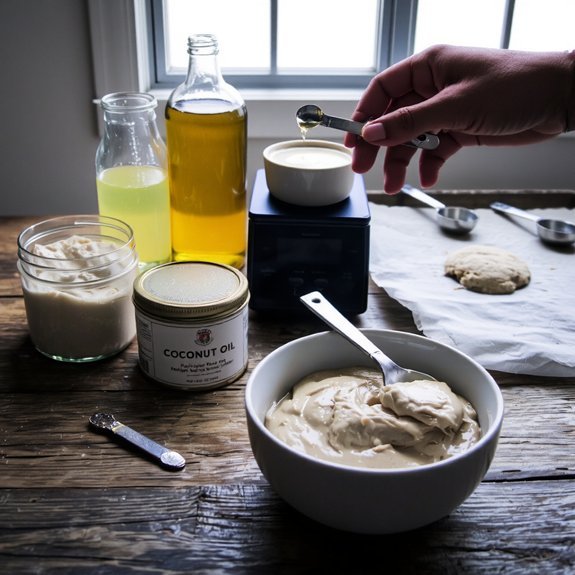
While oils offer distinct advantages over solid fats in cookie baking, you’ll need to understand their unique properties to select the right option.
Different oils possess varying smoke points and flavor profiles that’ll directly impact your final product.
Oil selection hinges on understanding smoke points and flavor profiles—critical elements determining your cookie’s ultimate success.
Consider these critical factors:
- Neutral oils (vegetable, canola) maintain high smoke points and won’t overpower your cookie’s taste
- Coconut oil delivers tropical notes with a moderate smoke point, ideal for specific recipes
- Olive oil provides robust flavor but requires careful application in delicate batches
You’ll achieve ideal results by matching your oil choice to your recipe’s demands.
Neutral oils offer versatility for traditional cookies, while specialty oils create distinctive flavor experiences.
Always verify smoke points exceed your baking temperature to prevent degradation and confirm structural integrity in your cookies.
Adjusting Your Recipe for Butter-Free Baking
Once you’ve selected your oil, you’ll need to modify your recipe’s ingredient ratios and mixing techniques to compensate for butter’s unique properties. Start by reducing your oil quantity by 25% since oils contain no water, unlike butter.
Adjust your sugar ratios downward slightly—oils don’t cream with sugar, so you’ll need less sweetener overall. You’ll also require leavening adjustments; increase baking powder or baking soda by 10-15% to achieve proper rise without butter’s air-incorporation benefits.
Mix wet and dry ingredients separately, then combine gently to avoid overdeveloping gluten. This approach grants you complete control over your baking results while maintaining structural integrity and texture. Your cookies’ll achieve consistent quality across every batch.
Troubleshooting Common Butter-Free Cookie Issues
Even with careful recipe adjustments, you’ll encounter predictable challenges when baking without butter.
Understanding these issues empowers you to troubleshoot confidently.
Common problems include:
- Spread Prevention: Oil-based substitutes lack butter’s solid structure, causing excessive spreading. Combat this by reducing liquid content slightly or chilling dough longer before baking.
- Browning Control: Butter contributes to browning; replacements may produce pale cookies. Increase oven temperature by 25°F or add milk powder to enhance color development.
- Texture Inconsistency: Your cookies may become dense or dry without butter’s moisture balance. Incorporate applesauce or yogurt to maintain ideal texture.
Master these adjustments, and you’ll achieve consistently excellent results. Your butter-free baking won’t compromise quality—it’ll expand your culinary independence.
Frequently Asked Questions
Can I Use Dairy-Free Yogurt as a Butter Substitute in Cookie Recipes?
Yes, you can use dairy-free yogurt as a butter substitute, though you’ll notice texture impact differences.
You’re trading richness for moisture, creating denser, chewier cookies. Use a 1:1 ratio by weight, but reduce other liquids slightly to prevent sogginess.
The tanginess provides interesting flavor pairing with vanilla, chocolate, or spiced recipes. Your cookies won’t achieve traditional buttery crispness, but you’ll gain a tender crumb and liberation from dairy constraints.
How Do Vegan Butter Alternatives Compare to Traditional Butter Substitutes?
You’ll find vegan butter alternatives deliver superior texture differences compared to traditional substitutes like applesauce or yogurt.
They’re engineered to mimic dairy butter’s fat content, creating flakier, more tender cookies.
Flavor profiles remain neutral, allowing your recipe’s true essence to shine.
You’re getting consistent results without compromising your values.
Traditional substitutes often yield denser, grainier textures and can introduce unwanted flavors.
Vegan butter gives you genuine baking freedom.
What Is the Shelf Life of Cookies Made Without Butter?
You’ll find that butter-free cookies typically last 5-7 days in ambient storage within airtight containers, maintaining quality and texture. For extended refrigerator longevity, you can preserve them up to two weeks at controlled temperatures.
Oil-based formulations generally outperform dairy-free spreads in shelf stability. Proper storage conditions—cool, dry environments away from moisture and heat—are critical.
You’re free to experiment with various butter substitutes; each affects preservation differently based on fat composition and water content ratios.
Can I Freeze Cookie Dough Made With Butter Substitutes?
You can absolutely freeze cookie dough with butter substitutes.
Most doughs freeze well for up to three months when stored properly in airtight containers.
Freezing times depend on your dough’s thickness and composition.
When you’re ready to bake, you’ve got options: thaw overnight in your refrigerator for best results, or bake directly from frozen, adding a few extra minutes to your baking time.
This flexibility gives you complete control over your baking schedule.
Do Butter-Free Cookies Have Different Nutritional Profiles Than Traditional Cookies?
You’ll find that butter-free cookies differ notably in their macronutrient profile and calorie comparison to traditional versions.
Oil-based substitutes typically contain similar calories but alter fat ratios, while applesauce or Greek yogurt reduces overall caloric density.
Plant-based alternatives affect protein content and saturated fat levels distinctly. Your nutritional outcomes depend entirely on which substitute you’ve chosen, making macronutrient adjustments essential for meeting your dietary objectives and freedom to customize recipes.



Leave a Comment