

Key Takeaways
- Preheat oven to 425°F and verify temperature with an independent thermometer for consistent baking results.
- Place bagels cut-side up on parchment paper, spaced two inches apart for even heat circulation.
- Bake bagels for 20–25 minutes until golden brown, rotating at 15 minutes for uniform browning.
- Apply egg wash before baking to help toppings and seeds adhere to the bagel surface.
- Monitor for pale bagels indicating low oven temperature or dense interiors from insufficient proofing time.
Understanding Bagel Dough: The Foundation of Great Bagels
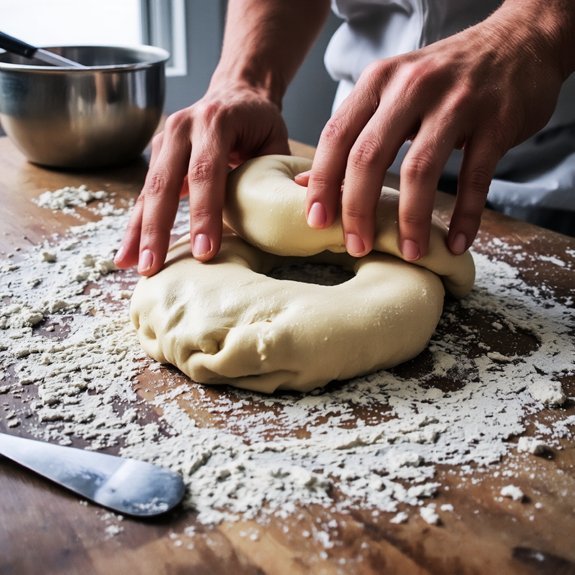
Mastering bagel dough requires understanding how gluten development and hydration ratios directly affect your final product’s texture and chew.
Gluten development and hydration ratios are the foundation of exceptional bagel dough—master these, and texture follows.
You’ll need to prioritize flour selection, choosing bread flour with high protein content—typically 12-14%—to build the strong network that gives bagels their signature density and bite.
Your hydration ratio should sit between 55-65%, creating dough that’s stiff yet workable.
Don’t rush fermentation; you’re not beholden to quick rises.
You’ve got flexibility here.
Select yeast varieties based on your timeline: instant yeast for controlled fermentation or active dry yeast if you prefer slower development.
Mix your dough thoroughly using proper kneading techniques.
You’re developing gluten intentionally, not accidentally.
This foundation determines whether your bagels achieve that coveted chewy interior and slight resistance to your teeth.
Get this right, and everything else follows.
Mixing, Kneading, and the First Rise

Once you’ve assembled your ingredients, combine your flour, water, salt, and yeast in a large mixing bowl, stirring until a shaggy mass forms—this initial stage takes just two to three minutes.
Let the mixture rest for 20-30 minutes; this autolyse benefits your dough by allowing gluten development without mechanical work.
Using a mixer technique, knead on medium speed for 8-10 minutes until your dough becomes smooth and elastic.
You’ll know it’s ready when it springs back after poking.
- Dough should pass the windowpane test—stretch it thin without tearing
- Temperature should reach 75-78°F for ideal fermentation
- Make sure no dry flour remains in the bowl
- Cover with plastic wrap to prevent drying
Transfer to a lightly oiled container for the first rise, approximately 1-2 hours at room temperature.
Shaping and Proofing Your Bagels
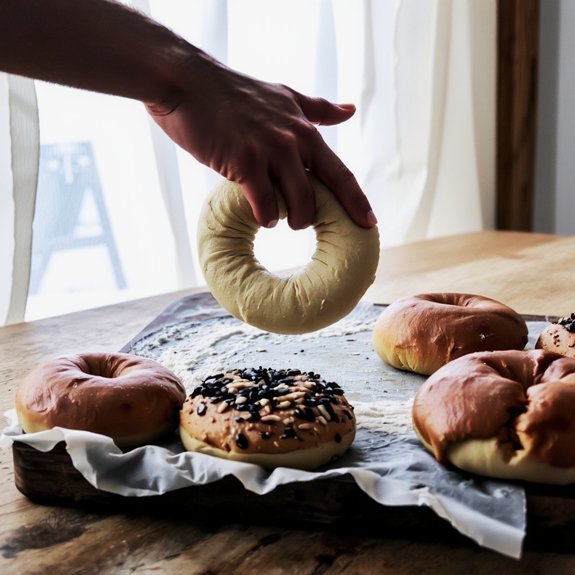
After your dough’s first rise, you’ll divide it into equal portions—typically 80-100 grams each for standard bagels—and pre-shape each piece into a round by gently tucking the edges underneath. Allow these rounds to rest for 10-15 minutes, then perform hand shaping by poking a hole through the center with your thumb, gradually stretching the dough into a ring with a 2-inch center hole.
| Proofing Method | Duration | Temperature | Result |
|---|---|---|---|
| Room Temperature | 2-4 hours | 70°F | Quick rise, ideal flavor |
| Cold Proofing | 8-16 hours | 38-40°F | Enhanced taste, convenience |
| Overnight | 12-18 hours | Refrigerator | Superior crust development |
| Flash Proof | 30-45 minutes | 75°F | Emergency option only |
| Hybrid Method | 4 hours + overnight | Variable | Best texture control |
Cold proofing develops superior flavor complexity while accommodating your schedule.
The Boiling Process: Creating That Signature Chew
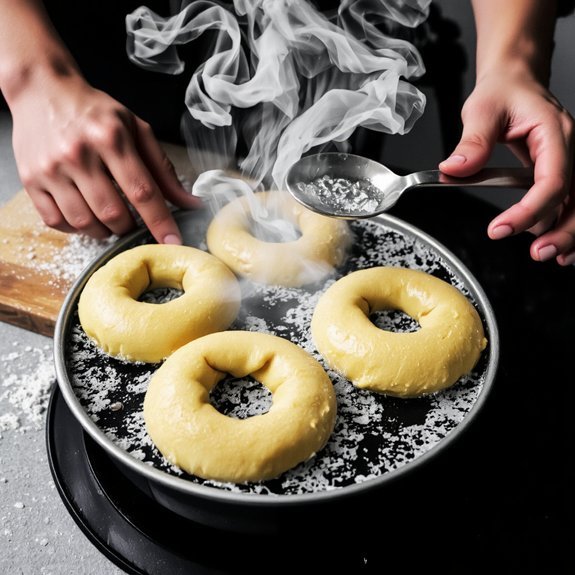
Your properly proofed bagels now require boiling—the step that transforms them from bread into genuine bagels.
This essential process gelatinizes the starches, creating that distinctive chewy crust and tender interior you’re after.
Boiling essentials:
- Heat water to 212°F with added baking soda or malt syrup to adjust water chemistry
- Maintain consistent boil timing: 60-90 seconds per side, depending on bagel size
- Use a slotted spoon to submerge bagels fully, preventing floating
- Transfer immediately to your prepared baking sheet
You’ll notice bagels sinking initially, then floating to the surface when done.
Don’t overcrowd your pot—this compromises water chemistry and boil timing consistency.
Your water temperature and boil duration directly determine crust development and that signature chew you’re pursuing.
Get this step right, and you’re nearly finished.
Baking and Troubleshooting Common Issues

Since you’ve successfully boiled your bagels, you’re ready for the final transformation in the oven.
Preheat to 425°F with proper oven calibration—use an independent thermometer to verify accuracy, as most ovens run hot or cold.
Preheat to 425°F and verify oven temperature with an independent thermometer—most ovens run hot or cold.
Place bagels cut-side up on parchment paper, spacing them two inches apart.
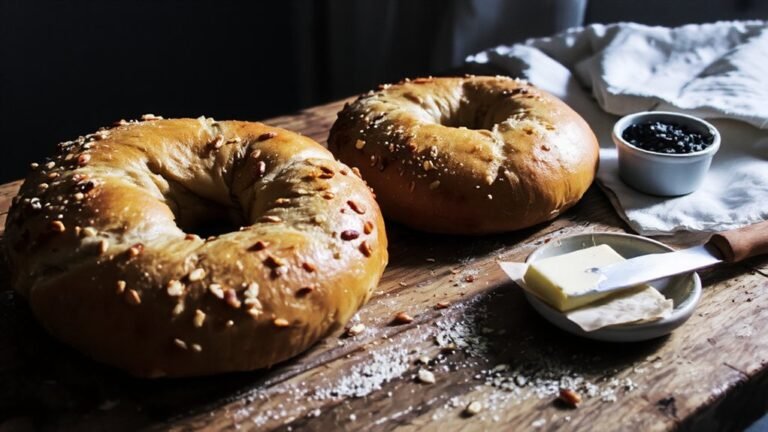
Bake for 20-25 minutes until golden brown.
For topping adhesion, brush bagels with egg wash before baking; this creates a sticky surface that holds seeds and seasonings firmly in place.
Common issues: pale bagels indicate insufficient oven temperature; dense interiors suggest underproofing during bulk fermentation.
If your bagels spread excessively, your dough was overproofed.
Burnt bottoms mean your oven rack sits too low.
Monitor progress at the 15-minute mark and rotate your baking sheet for even browning.
Frequently Asked Questions
What Equipment Do I Need to Make Bagels at Home?
You’ll need a stand mixer to develop your dough’s gluten structure efficiently.
A bench scraper helps you divide portions with precision and clean your work surface.
Additionally, grab a large pot for boiling, a slotted spoon for handling bagels, sheet pans, parchment paper, and a Dutch oven or baking stone for achieving that authentic crust.
A kitchen scale guarantees accurate measurements, giving you complete control over your baking results.
Can I Freeze Bagel Dough, and How Long Does It Last?
You can absolutely freeze bagel dough for up to three months.
Wrap each portion tightly in plastic wrap, then place it in freezer bags to prevent freezer burn.
For thawing techniques, transfer your dough to the refrigerator overnight—this slow thaw preserves gluten development.
Alternatively, you can thaw it at room temperature for two to three hours.
Once thawed, you’re ready to shape and boil your bagels without compromising quality.
What Toppings and Seasonings Work Best on Bagels?
You’ll maximize flavor by pairing your bagels with Savory Spreads like cream cheese, lox, capers, and red onion for classic combinations.
Sweet Toppers work brilliantly too—try cinnamon sugar, honey, or jam for breakfast options.
Don’t shy away from experimenting with everything bagel seasoning, herb blends, or toasted seeds.
Layer your toppings strategically: spread base first, then add proteins and vegetables.
You control your bagel’s destiny by balancing moisture, texture, and complementary flavors.
How Do I Store Freshly Baked Bagels to Keep Them Fresh?
You’ll keep your bagels fresh by storing them in airtight containers at room temperature for up to two days.
For extended storage, you’ve got freedom to refrigerate them for up to a week—just make sure you’re using genuinely airtight containers to prevent moisture loss and staleness. Don’t refrigerate warm bagels; let them cool completely first.
For longer preservation, freeze them in airtight freezer bags up to three months.
Can I Make Bagels Without a Dutch Oven or Special Equipment?
Yes, you can absolutely make bagels without a Dutch oven.
You’ll need to master Crust Tricks by creating steam in your oven—boil water in a pan on the lower rack during baking.
For Texture Tweaks, use a regular baking sheet and spray your bagels with water before baking. This DIY approach gives you complete control over your final product’s quality, letting you achieve that authentic bagel crust and chewy interior you’re after.


Leave a Comment