
Key Takeaways
- Use a heavy-gauge Bundt pan thoroughly coated with nonstick spray, reaching every crevice and detail.
- Bring all ingredients to room temperature and cream butter with sugar for 3–5 minutes until pale and fluffy.
- Alternate adding dry ingredients with wet components while mixing on medium speed, beginning and ending with dry.
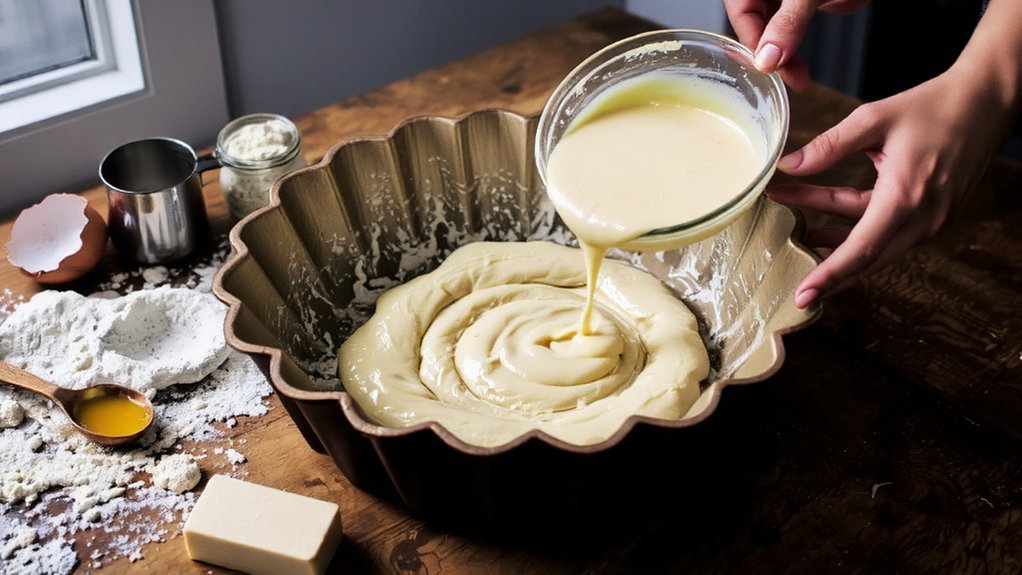
- Pour half the batter into the pan, layer fruit fillings, then top with remaining batter before baking.
- Bake at 325–400°F for 45–55 minutes until a toothpick emerges with moist crumbs and the top springs back.
Selecting and Preparing Your Bundt Pan
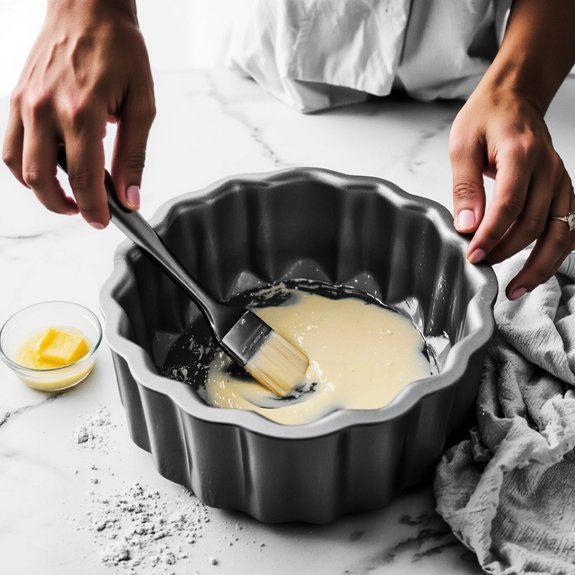
Before you’ve mixed a single ingredient, you’ll want to select a heavy-gauge metal Bundt pan—typically 10 to 12 cups—as it distributes heat evenly and prevents hot spots that cause uneven browning. Material comparison reveals that aluminum pans heat quickly but aren’t as durable as steel options, which offer superior longevity.
Heavy-gauge metal Bundt pans distribute heat evenly and prevent hot spots. Steel options offer superior durability over aluminum alternatives.
You’ll achieve ideal release results through proper coating techniques. Thoroughly coat your pan’s interior with nonstick spray, ensuring you reach every crevice and detail.
Alternatively, apply a mixture of softened butter and flour for superior results with delicate batters. Don’t skimp on coverage—inadequate coating leads to frustrating sticking.
Allow your prepared pan to rest briefly before pouring batter. This preparation step determines your cake’s final presentation, making it non-negotiable for success.
Mixing the Perfect Bundt Cake Batter
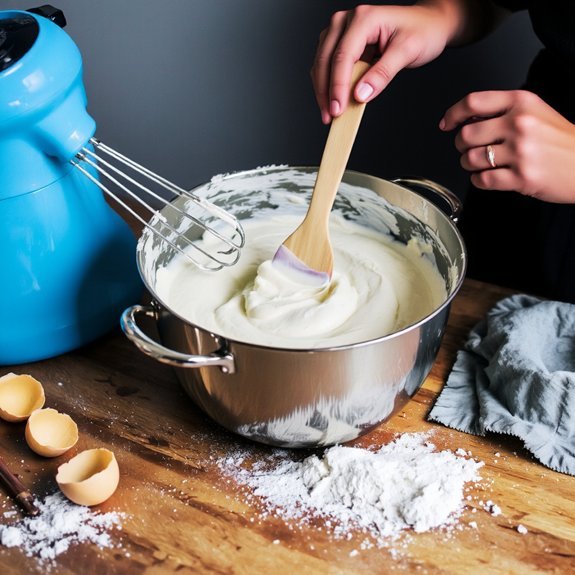
Once you’ve prepared your pan, you’ll want to gather all ingredients and bring them to room temperature—a critical step that guarantees proper emulsification and uniform texture throughout your batter.
Begin with the creaming technique:
- Beat butter and sugar together for 3-5 minutes until pale and fluffy, incorporating air that’ll create lift
- Add eggs individually, allowing each to fully incorporate before adding the next
- Alternate dry ingredients with wet components, beginning and ending with dry mixtures to prevent overmixing
Ingredient temperatures directly influence how readily fats emulsify with liquids. Cold eggs or butter delay incorporation, potentially yielding dense crumbs.
Mix on medium speed only—excessive beating overdevelops gluten, resulting in tough texture. Scrape bowl sides frequently to make certain even distribution.
Your batter’s ready when it’s smooth, homogeneous, and creamy throughout.
Filling and Baking Your Cake
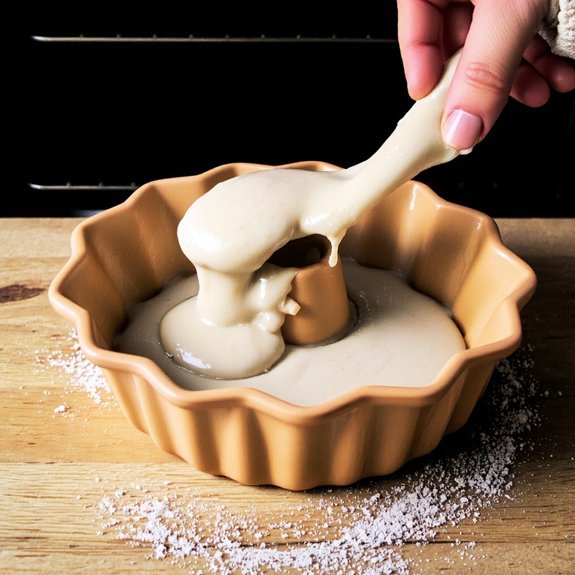
With your batter prepared and properly emulsified, you’re ready to transfer it into your prepared Bundt pan. Pour half the batter into the pan, then add your desired fruit fillings—fresh berries, chocolate chips, or nuts work exceptionally well.
Pour half your emulsified batter into the prepared Bundt pan, then layer with fresh berries, chocolate chips, or nuts.
Top with remaining batter, ensuring even distribution around the ring mold.
Place your filled pan into a preheated oven at the specified baking temperatures for your recipe, typically 325-350°F for dense cakes or 375-400°F for lighter varieties. Bake for 45-55 minutes until a toothpick inserted near the center emerges clean, though the fruit fillings may still appear slightly moist.
Allow the cake to cool in the pan for 15 minutes before inverting onto a wire rack. This cooling period prevents structural collapse while maintaining your cake’s distinctive Bundt shape and moist crumb structure.
Testing for Doneness
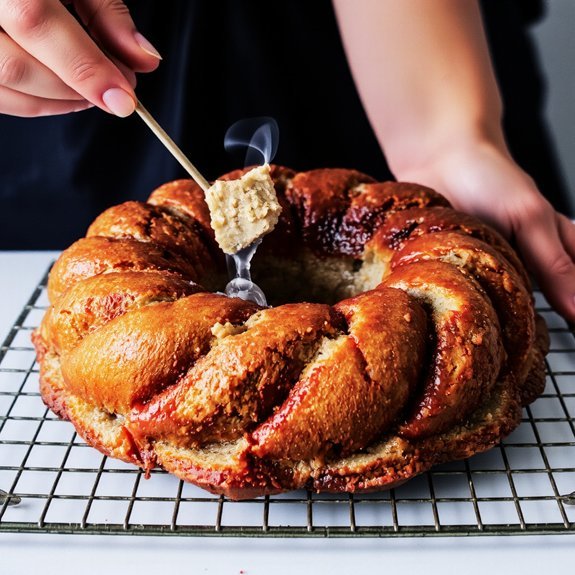
How can you tell when your Bundt cake’s done baking without overbaking it?
You need reliable methods to determine the precise moment your cake reaches perfect doneness.
Use these three testing techniques:
- Toothpick test: Insert a wooden toothpick into the cake’s thickest section. It should emerge with just a few moist crumbs clinging to it—not wet batter, not completely clean.
- Visual inspection: Examine the crumb texture through the center opening. The surface should appear set and lightly golden, with no jiggly center.
- Touch assessment: Gently press the cake’s top. It’ll spring back immediately when properly baked, indicating structural integrity.
Start checking at the minimum recommended time.
Remove your cake immediately once these indicators align.
Overcooking produces dry, dense results that compromise texture and flavor.
Turning Out and Serving Your Bundt Cake
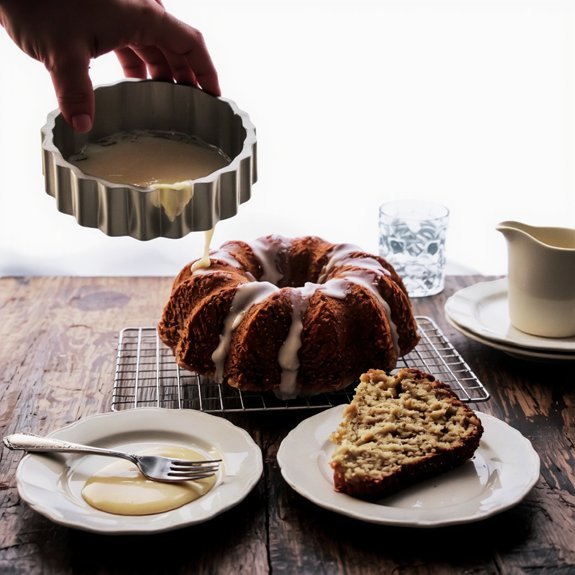
After you’ve confirmed your cake’s doneness, you’ll need to remove it from the pan while it’s still warm—this is when the structure’s most pliable and least likely to stick. Run a thin knife around the cake’s perimeter, then invert it onto a wire rack or serving plate.
If it doesn’t release immediately, gently tap the pan’s bottom.
Once cooled completely, you’re ready to customize your presentation. Decorating options range from simple powdered sugar dust to elaborate glazes and fondant work. Consider your audience’s preferences and skill level.
For serving accompaniments, pair your cake with complementary elements: fresh whipped cream, fruit compotes, or coffee-based sauces enhance most Bundt varieties. Slice with a serrated knife using gentle sawing motions to maintain clean edges, then plate individual portions with accompaniments alongside.
Frequently Asked Questions
Can I Use a Regular Cake Pan if I Don’t Have a Bundt Pan?
Yes, you can substitute a regular cake pan, though you’ll lose the iconic ring shape.
For tube substitute options, use a 9-inch round or square pan with equivalent capacity.
Make pan adjustments by reducing bake time by 5-10 minutes since heat distributes differently.
Fill your substitute pan three-quarters full, then monitor doneness closely.
You’ll sacrifice the aesthetic presentation, but your cake’s texture and flavor remain uncompromised with proper technique and timing modifications.
How Far in Advance Can I Bake a Bundt Cake Before Serving?
You can bake your bundt cake up to two days ahead, maximizing your resting window for ideal flavor development.
Follow these timing guidelines: cool completely at room temperature, then wrap tightly in plastic wrap and store at room temperature or refrigerate.
This preparation method allows you complete freedom to frost and serve whenever you’d like, accommodating your schedule without compromising quality or taste.
What’s the Best Way to Store Leftover Bundt Cake?
You’ll preserve your bundt cake’s quality through airtight wrapping with plastic wrap or aluminum foil, ensuring moisture control and preventing staleness.
Store it at room temperature for up to three days, or refrigerate for extended freshness up to a week.
For longer storage, freeze your wrapped cake up to three months.
Before serving, allow frozen cake to thaw completely at room temperature, maintaining its structural integrity and flavor profile.
Can I Freeze a Bundt Cake, and How Long Does It Last?
Yes, you can freeze your bundt cake for ideal preservation.
Wrap it tightly in plastic wrap and aluminum foil, then place it in an airtight container.
Store it at a freezer temperature of 0°F or below.
Your cake maintains peak quality throughout the quality timeline of 2-3 months.
For best results, freeze the unfrosted cake before decorating.
Thaw it overnight in your refrigerator before serving.
What Frosting or Glaze Works Best on Bundt Cakes?
You’ll find that Lemon Glaze works exceptionally well for bundt cakes, offering a bright, tangy finish that complements vanilla and almond varieties.
Chocolate Ganache provides an elegant, professional appearance—simply pour it over the cooled cake’s crown, allowing it to cascade down the fluted sides.
Both glazes set beautifully on bundt cakes’ intricate surfaces, accentuating their distinctive ridged architecture while delivering sophisticated flavor profiles you control completely.


Leave a Comment