
Key Takeaways
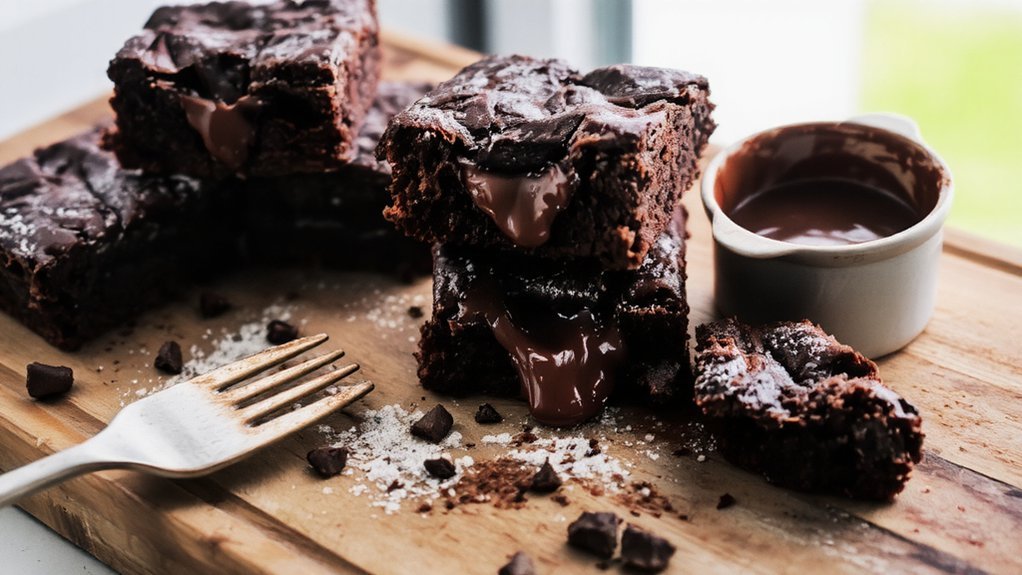
- Melt 8 oz dark chocolate with butter, then fold in dry ingredients with minimal mixing to prevent cake-like texture and maintain density.
- Intentionally underbake brownies until toothpick shows moist crumbs; carryover heat finishes cooking while preserving the fudgy center.
- Use quality cocoa powder and verify oven accuracy with an independent thermometer, as temperature variance significantly affects final texture.
- Bake 8×8-inch pan at 350°F for 20–24 minutes; adjust time based on pan size, color, and altitude for desired fudginess.
- Store cooled brownies in airtight containers at 68–72°F for up to five days, or freeze individually wrapped to prevent freezer burn.
Ingredients You’ll Need
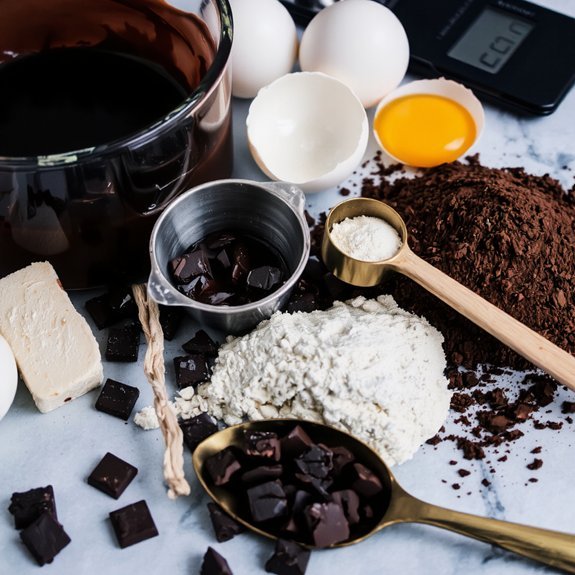
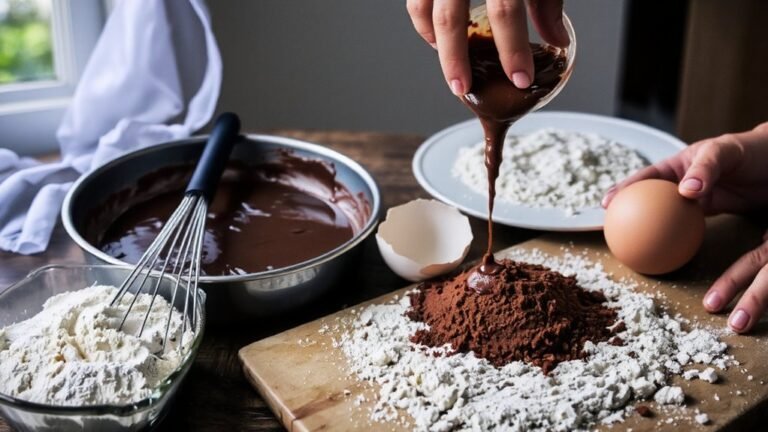
You’ll need 175 grams of all-purpose flour, 85 grams of unsweetened cocoa powder, 230 grams of granulated sugar, 115 grams of unsalted butter, 2 large eggs, 1 teaspoon of vanilla extract, ½ teaspoon of baking powder, and ¼ teaspoon of kosher salt.
For cocoa sourcing, you’ve got freedom to select premium single-origin varieties or Dutch-processed options depending on your flavor preference. Each delivers distinct intensity levels.
Regarding sweetener options, you can substitute the granulated sugar with coconut sugar for deeper molasses notes.
You can also experiment with muscovado for enhanced fudginess. These alternatives maintain proper moisture content while offering unique taste profiles.
Your butter must be unsalted to control sodium content precisely.
Use room-temperature eggs for ideal emulsification.
Source your cocoa from ethical suppliers when possible, ensuring quality while supporting responsible farming practices.
Equipment and Tools
Once you’ve gathered your premium cocoa and selected your sweetener, assembling the right equipment guarantees consistent results and proper brownie development.
You’ll need these essential tools:
- 9×13-inch metal baking pan with even heat distribution properties
- Digital scale for precise ingredient measurements
- Sturdy whisk or stand mixer for proper emulsification
- Double boiler setup to prevent chocolate seizing
Maintain your equipment meticulously—clean pans immediately after use to prevent cocoa buildup that compromises heat transfer.
Inspect your scale regularly for accuracy drift.
Prioritize safety precautions by keeping pot handles turned inward, using oven mitts rated for high temperatures, and ensuring your workspace remains uncluttered.
Your freedom to bake exceptional brownies depends on respecting these fundamental technical requirements. Quality tools eliminate guesswork and deliver reproducible excellence every time.
Step-by-Step Instructions
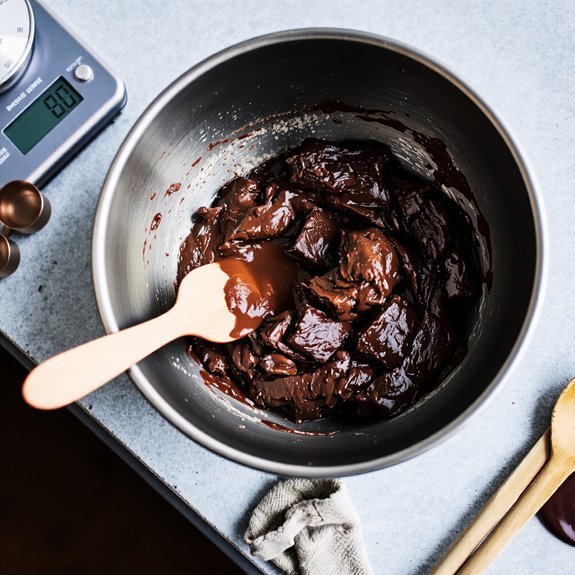
Begin by melting 8 ounces of chopped dark chocolate and 4 ounces of unsalted butter together in your double boiler, stirring occasionally until you’ve achieved a smooth, homogeneous mixture at approximately 115°F.
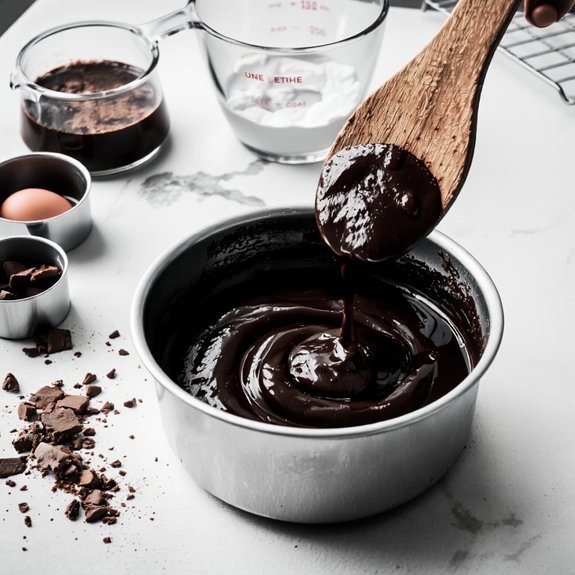
Remove from heat and whisk in 1 cup granulated sugar and 2 large eggs until fully incorporated.
Add 1 teaspoon vanilla extract and fold in ¾ cup all-purpose flour combined with ¼ cup cocoa powder and ½ teaspoon salt.
Pour batter into your prepared 8×8-inch pan.
Bake at 350°F for 20–24 minutes, watching for visual cues: the edges should pull slightly from pan sides while the center remains set but fudgy.
Follow this step sequencing precisely to achieve ideal texture and prevent overbaking.
Pro Tips for Perfect Fudgy Brownies
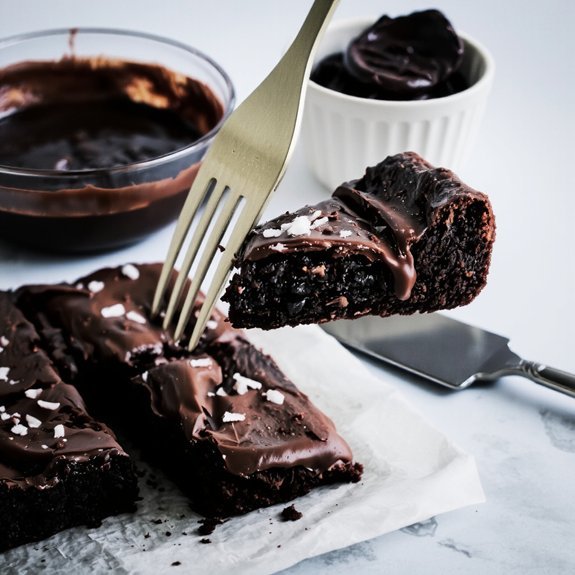
Mastering the fudgy brownie requires understanding how temperature and timing interact with ingredient ratios.
You’ll achieve superior results by developing sensory training—trusting your instincts beyond recipes.
Here’s what separates exceptional brownies from mediocre ones:
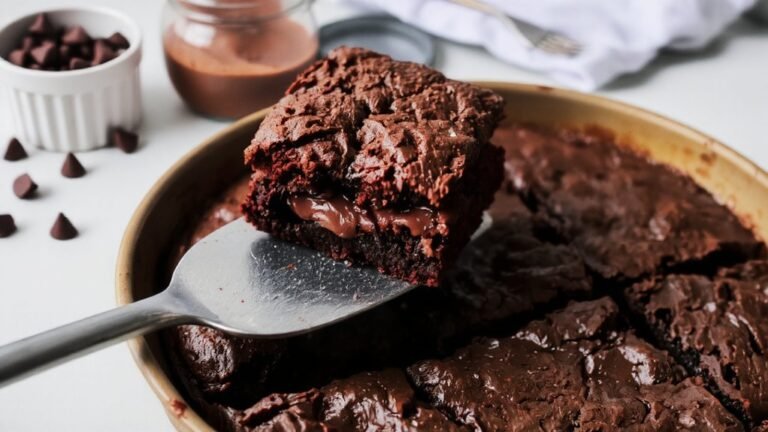
- Underbake intentionally: Remove brownies when a toothpick shows moist crumbs, not clean extraction. Carryover heat continues cooking during cooling.
- Use quality cocoa: Dutch-process cocoa delivers deeper flavor and darker color than natural varieties. Your chocolate choice determines final taste complexity.
- Master batch scaling: Increase cocoa butter content proportionally when doubling recipes. Fat ratios directly impact fudginess and mouthfeel.
- Control oven accuracy: Verify temperature with an independent thermometer. Even 10-degree variance affects texture dramatically.
You’ll notice freedom in adjusting bake times once you understand these fundamentals.
Temperature control and ingredient precision trump following instructions blindly.
Common Mistakes to Avoid
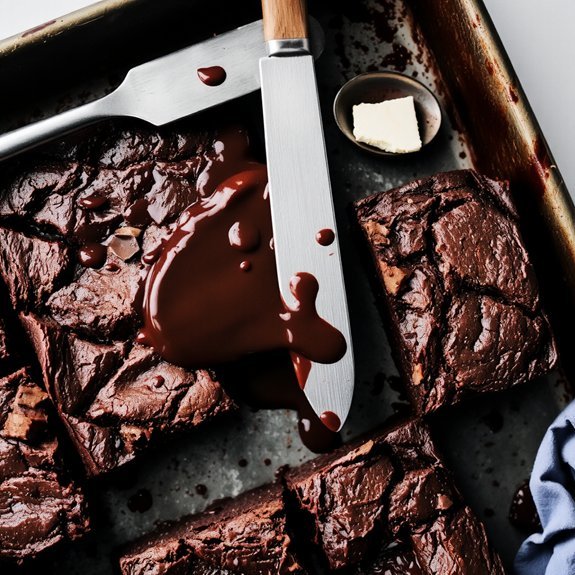
You’ll sabotage your fudgy texture if you overmix the batter, which incorporates excess air and develops gluten strands that create a cake-like crumb structure instead of the dense, fudgy consistency you’re after.
Your oven temperature must stay calibrated at exactly 350°F (175°C); even a 25-degree variance will either underbake your centers or overbake your edges, compromising the critical fudgy center-to-set ratio. These two variables—mixing time and thermal precision—represent the most common culprits behind disappointing brownie results.
Overmixing the Batter
Excessive mixing develops gluten strands in the flour, which’ll transform your brownies from fudgy to cake-like in texture.
You’re introducing unwanted air incorporation that compromises density and moisture retention.
To maintain ideal brownie consistency, limit your mixing:
- Combine dry ingredients (cocoa powder, flour, baking soda) separately for 15-20 seconds maximum
- Fold wet ingredients into dry mixture using 10-12 deliberate strokes only
- Stop mixing immediately when you see no flour streaks—slight lumps are acceptable
- Use a rubber spatula instead of electric mixers to prevent gluten development
Precision matters here.
Your batter should appear slightly undermixed rather than smooth and homogeneous.
This restraint preserves the fudgy structure you’re after, delivering dense, moist brownies instead of airy cake-like results that undermine your intended outcome.
Incorrect Oven Temperature
Since brownies rely on precise heat distribution to set the edges while maintaining a fudgy center, oven temperature deviations’ll sabotage your results. You’ll encounter uneven baking—burnt exteriors with raw centers—when your thermostat fails to maintain 350°F consistently. Invest in an oven thermometer to verify actual temperatures; many ovens run 25-50°F hotter or cooler than displayed.
Baking at excessive temperatures (375°F+) caramelizes your chocolate too rapidly, creating dry, cake-like brownies. Conversely, underbaking at 325°F leaves centers undercooked and structurally compromised. Safety risks emerge when you compensate by extending bake times; prolonged heat exposure risks surface burning while interiors remain raw.
You’ll achieve ideal fudgy texture by respecting the 350°F standard and verifying your oven’s accuracy before baking. This technical precision guarantees consistent results and eliminates guesswork from your brownie-making process.
Baking Time and Temperature Guidelines
For ideal fudgy results, preheat your oven to 350°F (175°C) and bake your brownie batter for 25-30 minutes, depending on your pan’s dimensions and depth.
- Center insertion test: Insert a toothpick into the brownie’s center—it should emerge with moist crumbs, not batter
- Altitude adjustments: Increase oven temperature by 15-25°F at elevations above 3,000 feet to compensate for faster moisture evaporation
- Residual heat utilization: Remove brownies when slightly underbaked; carryover cooking continues as your pan cools
- Pan specifications: 8×8-inch pans require shorter baking times than 9×13-inch pans; darker pans conduct heat faster, reducing time by 2-3 minutes
Don’t overbake.
Your fudgy texture depends on precise timing and temperature control.
You’re in charge of your results—master these guidelines and enjoy consistently decadent brownies.
Creative Variations to Try
You can elevate your brownies by incorporating mix-in flavor combos like espresso powder with dark chocolate chunks or crushed pretzels with toffee bits to create complexity.
To enhance texture, you’ll want to experiment with additions such as brownie brittle pieces, chopped nuts, or swirled peanut butter that contrast against the fudgy crumb structure.
These strategic inclusions, added during the final fold before baking, yield depth and dimensional mouthfeel without compromising the brownie’s characteristic density.
Mix-In Flavor Combos
Elevating your fudgy brownies beyond the classic formula requires strategic ingredient pairings that complement the cocoa’s inherent bitterness and richness.
You’ll harness flavor psychology by understanding how complementary notes enhance perception and satisfaction.
Consider these aroma pairing combinations:
- Espresso + Sea Salt: 15ml espresso powder intensifies chocolate depth while 2g fleur de sel cuts richness, creating sophisticated contrast
- Cinnamon + Cardamom: 3g cinnamon and 1g ground cardamom introduce warming spice notes that amplify perceived complexity
- Orange Zest + Dark Chocolate: 8g zest oil provides citric brightness, offsetting 85% cocoa intensity
- Black Pepper + Vanilla: 0.5g freshly ground pepper and 5ml vanilla extract create subtle heat that prolongs chocolate sensation
You’re not simply mixing ingredients—you’re strategically manipulating sensory experience through precise ratios that unleash brownie complexity.
Texture Enhancement Ideas
While flavor layering establishes sophistication on the palate, texture manipulation creates the physical experience that defines truly memorable brownies.
You’ll achieve superior mouthfeel mapping by incorporating contrasting elements: fold in crushed pretzels for crunch, toast your walnuts to 350°F for enhanced crispness, or layer brownie batter with peanut butter ribbons for textural variance.
Sensory sequencing matters equally.
You can stratify your brownies by alternating dense fudgy sections with airier crumb structures using different mixing techniques.
Try underbaking the center by 2-3 minutes while fully setting the edges.
Adding 1 tablespoon of cornstarch reduces density, creating a lighter crumb while maintaining fudginess.
Your texture innovations needn’t compromise structure.
Temper cocoa butter to 88-90°F before mixing to enhance snap without sacrificing moisture retention.
These precise adjustments give you complete control over your brownie’s final mouthfeel.
Storage and Shelf Life
Because fudgy brownies contain high fat content from butter and chocolate, they’ll retain moisture and maintain their dense, chewy texture for up to five days when stored in an airtight container at room temperature (68-72°F).
Freezer Tips and Preservation Methods:
- Wrap cooled brownies individually in parchment paper, then aluminum foil to prevent freezer burn
- Store in airtight freezer containers for up to three months without quality degradation
- Thaw at room temperature for 2-3 hours before serving to restore ideal fudgy consistency
- Label containers with storage dates to track freshness intervals
Monitor for staleness signs including surface dryness, hardened edges, or loss of structural integrity.
You’ll maintain maximum flavor complexity and textural quality by controlling humidity levels and temperature fluctuations. Proper storage protocols guarantee your brownies retain their premium fudgy characteristics.
Serving Suggestions and Pairings
To maximize the sensory experience of your fudgy brownies, you’ll want to pair them strategically with complementary beverages and accompaniments that either contrast or enhance their rich cocoa profile and dense texture.
| Beverage Pairings | Presentation Ideas |
|---|---|
| Cold whole milk (cuts fat saturation) | Warm plate with vanilla bean ice cream |
| Espresso (amplifies cocoa notes) | Dusted with powdered sugar and cocoa |
| Bourbon or cognac (adds depth) | Garnished with fleur de sel crystals |
| Oat milk (smooth texture contrast) | Served with fresh raspberry compote |
| Dark roast coffee (intensifies bitterness) | Accompanied by whipped mascarpone cream |
You’ll achieve ideal flavor complexity by selecting beverages that either neutralize the brownie’s richness or deepen its cocoa intensity. Temperature contrast—pairing warm brownies with cold beverages—enhances perception of both elements’ distinct characteristics while providing textural variation that liberates your palate from monotony.
Frequently Asked Questions
Can I Substitute All-Purpose Flour With Other Flour Types for Fudgy Brownies?
You can absolutely swap all-purpose flour with alternatives.
Almond flour adds moisture and richness—use a 1:1 ratio but reduce liquids slightly.
Coconut flour absorbs more liquid; substitute at a 1:4 ratio and increase eggs by one.
Both options yield denser, fudgier textures.
You’re not bound by conventional baking standards—experiment freely.
These substitutions deliver gluten-free results while maintaining that coveted fudgy consistency you’re after.
How Do I Fix Brownies That Turned Out Too Cake-Like Instead of Fudgy?
You’ve likely overworked your batter or used insufficient melted chocolate.
To rectify this, increase your brown sugar ratio and reduce flour measurements by 10-15%.
Add an extra egg yolk for richness and moisture retention.
Make sure your melted chocolate comprises at least 70% of your fat content.
Lower your oven temperature by 25°F and reduce baking time by 2-3 minutes.
You’ll achieve that dense, fudgy crumb you’re after.
What’s the Difference Between Dutch-Process and Natural Cocoa Powder for Brownies?
Dutch-process cocoa’s alkaline treatment darkens your brownie’s flavor profiles while reducing acidity.
You’ll get deeper, earthier notes.
Natural cocoa powder maintains higher pH acidity, producing brighter chocolate flavors and subtle fruity undertones.
For fudgy brownies, Dutch-process delivers richer depth; natural cocoa offers complexity.
Your choice determines the final taste trajectory.
Pick whichever flavor direction you’re craving—neither’s wrong, just different chemical outcomes affecting your chocolate experience.
Can I Make Fudgy Brownies Without Eggs for Vegan or Allergy Purposes?
You can absolutely make fudgy brownies without eggs.
You’ve got two solid options: flax eggs (1 tablespoon ground flaxseed mixed with 3 tablespoons water per egg) or aquafaba binding (3 tablespoons aquafaba per egg).
Both provide moisture and binding properties essential for achieving that dense, fudgy texture.
Flax eggs add subtle nuttiness; aquafaba keeps flavor neutral.
Either substitute maintains your freedom to indulge while accommodating dietary restrictions or allergies.
Why Do My Brownies Sink in the Middle After Baking and Cooling?
Your brownies sink because you’re likely dealing with an undercooked center. You’ll need to verify your oven temperature’s accuracy with a thermometer—ovens frequently run hot or cold.
Reduce baking time by 2-3 minutes, pulling them when a toothpick shows minimal crumbs. Underbaking creates that fudgy texture you’re after, but excessive moisture causes structural collapse.
Use precise measurements and quality ingredients like Dutch-processed cocoa to maintain proper crumb structure throughout cooling.
Leave a Comment