

Key Takeaways
- Baking soda is pure sodium bicarbonate requiring external acid to activate, while baking powder contains baking soda plus built-in acid.
- Baking soda produces CO₂ immediately upon mixing with acidic ingredients, demanding prompt baking to retain lift.
- Baking powder releases gas in two stages: when wet and during heating, allowing flexibility in baking timing.
- Use baking soda with acidic recipes (buttermilk, lemon juice, chocolate); use baking powder for recipes without acidic ingredients.
- Baking powder maintains stability longer in storage, while baking soda absorbs moisture and odors, degrading reactivity over time.
What Is Baking Soda?
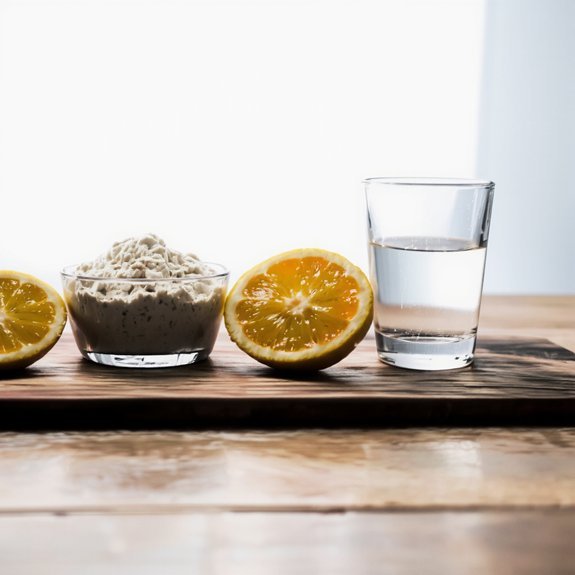
Baking soda, or sodium bicarbonate (NaHCO₃), is an alkaline compound that acts as a chemical leavening agent in baking.
You’ll find it’s been used since the 1840s, with historical origins tracing back to the Solvay process, which revolutionized industrial production.
Today, you can purchase it under various brand names like Arm & Hammer, the most recognized in North America.
When you combine baking soda with acidic ingredients—such as buttermilk, lemon juice, or vinegar—it immediately releases carbon dioxide gas.
This reaction creates bubbles that expand during heating, causing your baked goods to rise.
You’ve got complete control over the leavening process since the reaction occurs instantly upon mixing.
This immediate action makes baking soda ideal when you’re seeking quick, efficient baking results without waiting for fermentation or additional preparation time.
What Is Baking Powder?
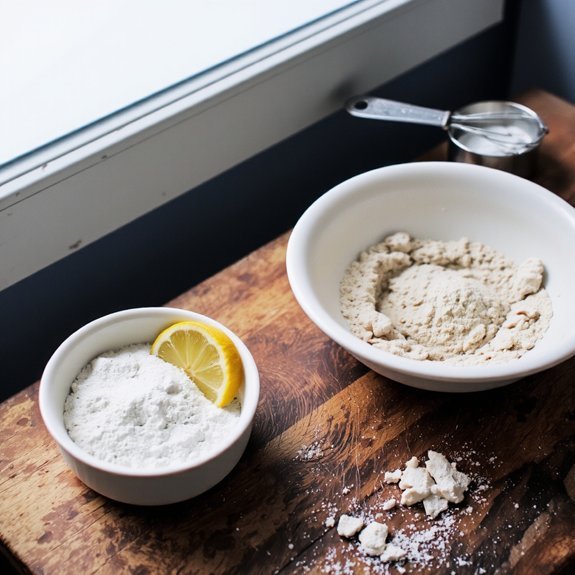
When you’re baking, you’ll encounter baking powder as a leavening agent composed of baking soda, an acid (typically cream of tartar), and a moisture absorber like cornstarch.
You should understand that baking powder works through an acid-base reaction: the acid and baking soda react when mixed with liquid, producing carbon dioxide gas that creates lift in your batter.
You’ll find baking powder invaluable in recipes requiring a slower, more controlled rise, making it ideal for cakes, quick breads, and biscuits where you can’t rely on acidic ingredients for leavening.
Composition and Ingredients
Unlike its chemical cousin, powder’s formulation contains three key components: sodium bicarbonate (the same active ingredient found in baking soda), an acid—typically cream of tartar or sodium aluminum sulfate—and a moisture-absorbing agent such as cornstarch or calcium phosphate.
You’ll find that manufacturing variations substantially affect the final product’s performance. Different producers source mineral components from distinct geological deposits, influencing purity and reactivity levels.
Single-acting formulations activate during mixing, while double-acting versions release gas twice—initially when wet, then again under heat. These manufacturing variations determine how your recipes behave.
The acid selection particularly matters; cream of tartar provides slower activation, whereas aluminum sulfate accelerates the reaction. Understanding these compositional differences empowers you to choose the right leavening agent for your specific baking applications and desired results.
How It Works Chemically
Now that you understand baking powder‘s components, let’s examine how they interact chemically to create lift.
When you mix baking powder with wet ingredients, acid and base react immediately, releasing carbon dioxide gas.
This reaction depends on crystal hydration—moisture activates the acid-base interaction at the molecular level.
Double-acting baking powder contains two acids: one reacts during mixing, while the other activates during heating.
This staged release gives you control over rising timing.
The carbon dioxide bubbles expand as heat increases, creating the rise you need.
Molecular diffusion spreads these gas bubbles throughout your batter evenly, establishing consistent texture.
Understanding this chemistry lets you troubleshoot failures confidently.
You’re not guessing; you’re applying proven chemical principles to achieve reliable results every time.
Common Baking Applications
Baking powder’s versatility across baked goods stems from its reliable carbon dioxide production and controlled release mechanism. You’ll find it indispensable in cakes, muffins, and quick breads where you need consistent rise without acidic ingredients.
When you’re crafting holiday cookies, baking powder guarantees even texture and volume. You can also employ it in savory pastries—biscuits, scones, and dumplings—where neutral pH compatibility matters.
Unlike baking soda, which requires acidic counterparts, baking powder works independently, giving you freedom in recipe formulation. The double-acting formulation releases gas during mixing and again when heat activates the second acid salt, guaranteeing thorough leavening.
This predictability makes baking powder your go-to choice for standardized baking applications where you demand reliable, reproducible results every single time.
How Baking Soda Works in Recipes
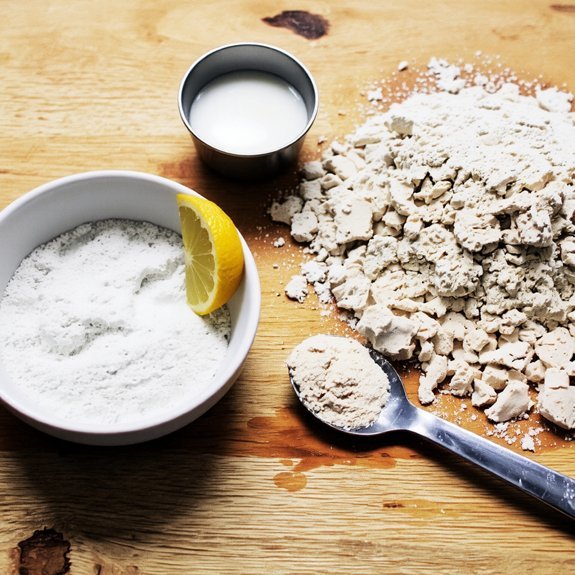
When you add baking soda to a recipe containing acidic ingredients—such as buttermilk, lemon juice, or vinegar—you’ll trigger an immediate chemical reaction that produces carbon dioxide gas.
This acid activation process begins right away, creating the bubbles that leaven your batter or dough without requiring heat or additional time.
You must bake your mixture promptly after combining these ingredients, or you’ll lose the lift that baking soda provides.
Acid Activation Process
To activate sodium bicarbonate’s leavening properties, you’ll need an acid—whether buttermilk, yogurt, lemon juice, vinegar, or cocoa powder—that initiates an immediate chemical reaction.
When you combine baking soda with acidic ingredients, you’re triggering sodium bicarbonate to decompose into carbon dioxide gas, water, and sodium salt. This reaction happens instantly at room temperature, releasing bubbles that leaven your batter immediately.
| Factor | Impact |
|---|---|
| Temperature Dependence | Higher temps accelerate reaction rate |
| Acid Strength | Stronger acids activate faster |
| Environmental Factors | Humidity affects ingredient reactivity |
| Timing | Immediate mixing prevents gas loss |
You’ll notice that environmental factors—particularly humidity and altitude—influence how quickly your acid activates the baking soda. Temperature dependence plays a pivotal role too; warmer environments intensify the chemical process. This is why recipes demand prompt baking after mixing acidic ingredients with baking soda.
Immediate Chemical Reaction
Because sodium bicarbonate requires acidic activation to generate carbon dioxide, you’re working with a single, instantaneous reaction that demands careful timing.
When you combine baking soda with acidic ingredients, the chemical transformation happens immediately.
You’ll notice:
- Visual Indicators – The batter froths visibly as CO₂ gas forms within seconds of mixing
- Texture Shifts – Your batter rises rapidly, creating the initial lift that sets the structure
- Time Sensitivity – You must bake promptly; delayed baking allows gas escape, reducing lift
This single-stage reaction means you can’t rely on prolonged standing time.
The carbon dioxide production peaks almost instantly, then diminishes.
Your mixing-to-oven window is narrow and unforgiving.
Understanding this immediate chemical activation helps you execute recipes successfully, capturing maximum rise before gas dissipates through your baked good.
How Baking Powder Works in Recipes
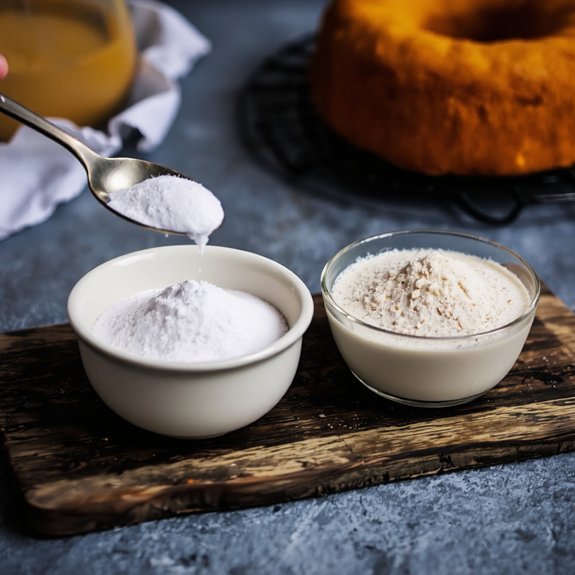
Unlike baking soda, which requires an acidic ingredient to activate, baking powder contains its own acid and doesn’t need external help to produce carbon dioxide gas.
When you mix baking powder into your batter, the acid—typically cream of tartar—reacts with the base immediately upon contact with moisture, releasing bubbles that leaven your baked goods.
Baking powder’s acid reacts with moisture immediately, releasing bubbles that leaven your baked goods upon mixing.
You’ll notice that double-acting baking powder offers two distinct reaction phases: one during mixing and another during baking.
This dual-action mechanism gives you greater control over your recipe’s rise and final texture.
Regarding shelf stability, baking powder’s sealed, dry environment preserves its potency far longer than baking soda.
Unlike baking soda, which can absorb odors and moisture, baking powder maintains consistent performance.
Additionally, baking powder’s flavor influence remains neutral—it won’t impart the metallic taste that excess baking soda creates.
Key Chemical Differences
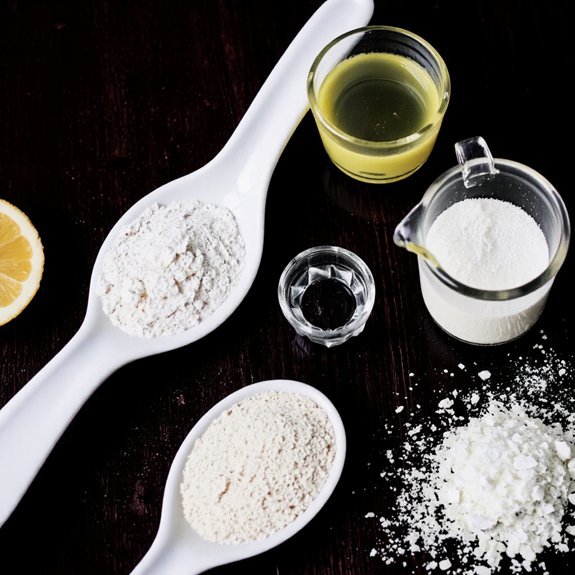
While baking powder‘s dual-phase activation demonstrates how leavening agents work mechanistically, the underlying chemistry reveals why these two substances behave so differently.
You’re dealing with fundamentally distinct compounds:
- Sodium bicarbonate (baking soda) is a base requiring acidic activation, making it dependent on recipe pH stability for proper function.
- Baking powder contains sodium bicarbonate plus acidic salts, creating an independent leavening system that doesn’t rely on external acids.
- Thermal decomposition differs critically—baking soda releases CO₂ rapidly when heated, while baking powder’s dual-acting formulation releases gas in two stages at different temperatures.
You’ll find baking soda demands precise acid ratios, whereas baking powder gives you flexibility.
Understanding this chemistry empowers you to choose the right leavening agent and achieve consistent baking results.
When to Use Each Leavening Agent
Now that you’ve grasped the chemical distinctions, you can strategically select your leavening agent based on your recipe’s specific requirements. Choose baking soda when you’re working with acidic ingredients like buttermilk, lemon juice, or chocolate, since it reacts immediately upon contact.
This makes timing constraints critical—you’ll need to bake right away to capture the CO₂ production.
Conversely, baking powder works best for recipes lacking acidic components, offering you flexibility since its reaction occurs gradually during baking.
Consider cost considerations too: baking soda’s affordability and dual functionality as both leavening agent and odor neutralizer make it economical.
Ultimately, your recipe’s acid content determines which agent you’ll deploy, ensuring ideal rise and texture while respecting your ingredient budget and preparation timeline.
Common Mistakes and How to Avoid Them
Even when you’ve selected the correct leavening agent for your recipe, missteps in measurement, storage, or timing can sabotage your results.
The right leavening agent isn’t enough—measurement, storage, and timing errors can still compromise your baking results.
Avoid these common pitfalls:
1. Measurement mistakes: Use a kitchen scale for accuracy.
Spooning directly from containers compresses ingredients, yielding excess baking soda or powder that creates metallic flavors and uneven rise.
2. Storage solutions: Keep both agents in airtight containers away from humidity and heat.
Moisture degrades baking soda’s reactivity and causes baking powder’s acid-base components to activate prematurely.
3. Timing errors: Add leavening agents immediately before baking.
Delayed baking allows CO₂ gas to escape, diminishing lift.
You’ll achieve superior results by weighing ingredients precisely, maintaining ideal storage conditions, and respecting chemical timing requirements.
You’ll also benefit from understanding the reaction kinetics inherent to each leavening agent.
Frequently Asked Questions
Can You Substitute Baking Soda for Baking Powder in Equal Amounts?
You can’t substitute baking soda for baking powder in equal amounts without consequences. Baking soda requires an acid requirement to activate and produce CO₂, whereas baking powder’s built-in acid does this independently.
You’ll experience significant texture changes—your baked goods won’t rise properly, becoming dense and flat.
If you must substitute, use three times more baking powder than the soda called for, ensuring your recipe contains acidic ingredients like buttermilk or vinegar to achieve proper leavening.
Does Baking Soda Expire, and How Should It Be Stored Properly?
You’ll find that baking soda doesn’t technically expire, but it does lose potency over time.
Store it in airtight containers away from moisture and heat to maximize effectiveness.
Watch for shelf life indicators—clumping suggests moisture absorption and degraded leavening power.
Properly sealed, unopened baking soda remains chemically stable for years.
However, once exposed to air and humidity, its sodium bicarbonate structure gradually decomposes, reducing your baking results’ reliability.
What Happens if You Use Too Much Baking Soda in Recipes?
When you’re using too much baking soda, you’ll experience undesirable chemical reactions. Excess sodium bicarbonate creates a soapy taste and bitter aftertaste because unreacted alkaline compounds remain in your baked goods.
You’re effectively overwhelming the acid required for complete neutralization. This imbalance produces sodium carbonate, which deposits on your palate with an objectionable, caustic flavor profile.
Stick to precise measurements—typically 1/4 teaspoon per cup of flour—to maintain chemical equilibrium and achieve ideal taste results.
Can Baking Powder and Baking Soda Be Used Together in One Recipe?
Yes, you can combine both in your recipe. You’ll want to achieve precise leavening balance—baking soda needs an acid to activate, while baking powder‘s already equipped.
Together, they’ll give you superior rise and texture control. The flavor impact differs too: baking soda can leave metallic notes if overused, so you’re managing both chemical reactions simultaneously. This dual approach lets you optimize your baking results without compromise.
Why Does Baking Soda React Immediately While Baking Powder Doesn’t?
You’ll witness baking soda’s immediate reaction because it requires only an acid catalyst—like buttermilk or vinegar—to activate right away.
Baking powder, conversely, contains acid built in, so reaction timing’s delayed.
You control when baking powder activates through moisture and heat exposure, not instant acid contact.
This fundamental chemical difference grants you freedom to choose your leavening strategy based on your recipe’s specific demands and baking timeline.






Leave a Comment