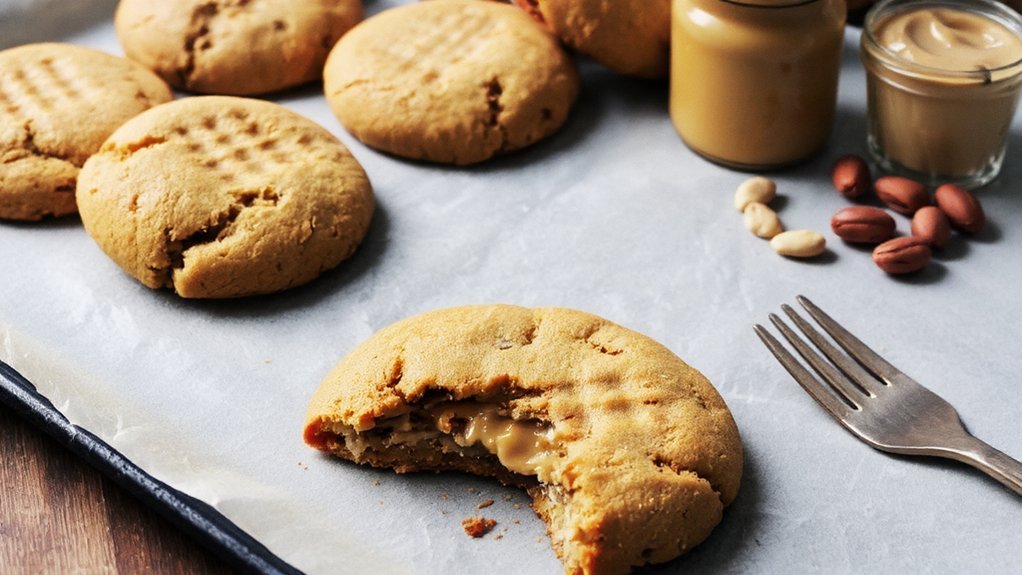

Key Takeaways
- Cream softened butter and peanut butter until fluffy, then beat in eggs and vanilla for smooth base.
- Mix flour, baking soda, and salt separately before folding into wet ingredients until fully incorporated.
- Scoop dough onto baking sheet and bake at 350°F for 10–12 minutes until edges turn golden.
- Brown sugar creates chewy centers while granulated sugar promotes crispy edges for balanced texture.
- Cool completely on baking sheet to allow residual heat to finish structure before transferring to storage.
Ingredients You’ll Need
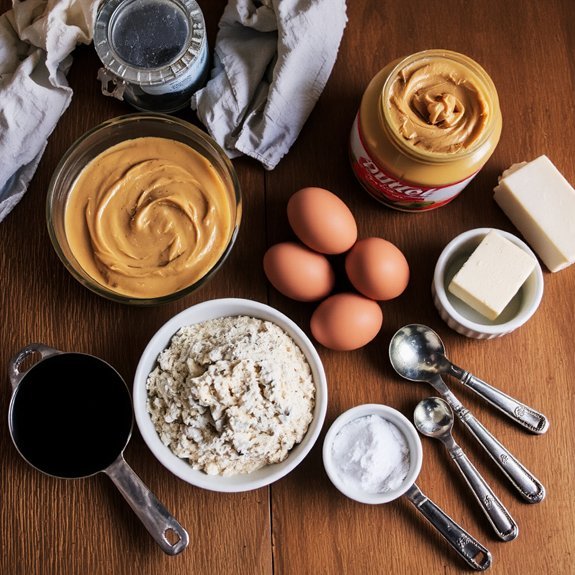
You’ll need just a handful of staples to create these rich, nutty cookies. Start with creamy peanut butter—choose quality grading options like natural or conventional based on your preference.
Grab one cup of unsalted butter, softened to room temperature for easier mixing. For sweetness, you’ll want one cup of granulated sugar and three-quarters cup of brown sugar.
Two large eggs bind everything together beautifully. One teaspoon of vanilla extract adds depth.
Your dry ingredients matter too: one and three-quarter cups all-purpose flour, one teaspoon baking soda, and half a teaspoon of salt. Ingredient sourcing makes a difference—select unrefined peanut butter if you crave authentic flavor, or refined if you prefer subtle nuttiness.
This simple combination delivers maximum satisfaction with minimal fuss.
Why This Recipe Works
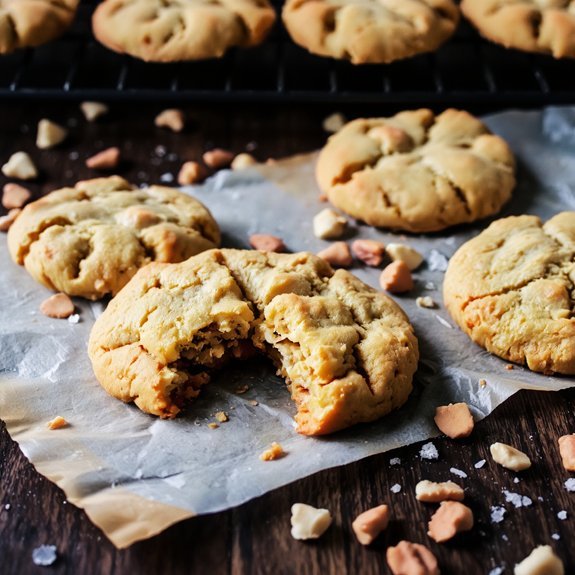
You’ll discover that this recipe’s straightforward blend of peanut butter, butter, sugar, and eggs creates a naturally cohesive dough without requiring excess mixing or finicky techniques. The balance between wet and dry ingredients gives you cookies that bake up with crispy edges and a tender, almost fudgy center—that perfect textural contrast you’ve been craving.
This formula relies on established baking principles: the ratio of fats to flour guarantees proper spread and structure, while the modest amount of leavening produces reliable, consistent results every single time.
Simple Ingredient Combination
Combining just a handful of pantry staples creates magic in a single bowl.
You’re working with ingredient symbolism—peanut butter representing comfort, butter embodying richness, and sugar delivering sweetness.
Each component pulls its weight without unnecessary additions cluttering your process.
You’ll experience sensory expectations that unfold beautifully: the creamy peanut texture melding with buttery smoothness, the slight crunch when you bite through golden edges, the aroma that fills your kitchen.
This stripped-down approach gives you complete control over your creation.
You’re not wrestling with lengthy ingredient lists or mysterious additives.
Instead, you’re building honest cookies from recognizable elements you understand.
The simplicity liberates you from complexity, letting pure flavors shine.
Every ingredient serves a purpose, nothing more, nothing less.
That’s where the real freedom lies—in knowing exactly what goes into every bite.
Perfect Texture Balance
Achieving that ideal contrast between crispy edges and chewy centers isn’t accidental—it’s the result of precise ingredient ratios working in harmony. You’ll notice how brown sugar’s moisture content creates that signature chew contrast, while granulated sugar promotes spreading and crispness. The crumb structure develops beautifully when you respect baking time and temperature.
| Ingredient | Function | Impact |
|---|---|---|
| Brown Sugar | Moisture retention | Chewy center |
| Granulated Sugar | Spread promotion | Crispy edge |
| Butter Ratio | Fat distribution | Texture balance |
| Baking Time | Structure set | Golden perfection |
You’re in control here—slight adjustments yield dramatic results. Underbake by one minute, and you’ll experience pure chewiness. Add thirty seconds, and crispness takes over. This recipe respects your preferences, giving you the freedom to dial in exactly the texture you crave.
Reliable Baking Science
Understanding the chemistry behind these ingredient ratios transforms you from someone following instructions to someone who truly masters peanut butter cookies.
You’ll discover that peanut butter’s fat content controls spread rate through thermal diffusion, while brown sugar’s moisture creates chewy centers. This recipe reproducibility stems from precise measurements working in concert:
- Baking soda neutralizes peanut butter’s acidity, triggering lift
- Egg acts as binder, stabilizing the dough’s structure
- Butter’s emulsification properties create uniform texture
You’re not guessing—you’re commanding the baking process. The fork crosshatch pattern isn’t decorative; it regulates heat penetration uniformly. Your oven temperature becomes non-negotiable, not optional.
When you understand that cooling time allows carryover cooking to finish the job, you’ve reclaimed control from chance. You’ve earned reproducible excellence.
Step-by-Step Instructions
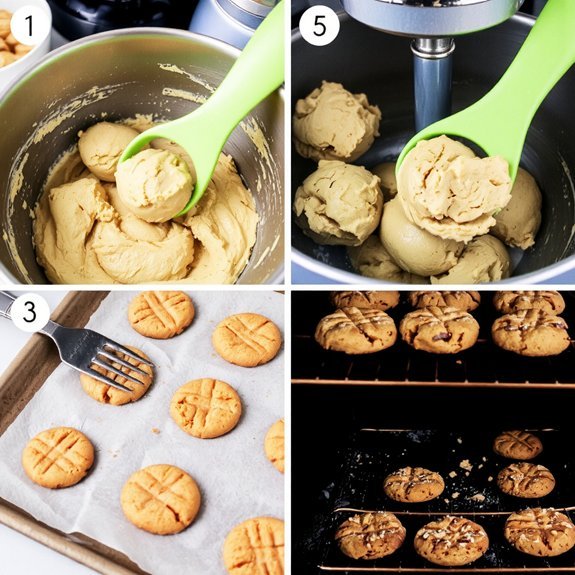
Grab your mixing bowl and cream together the softened butter and peanut butter until they’re light and fluffy—about two minutes of mixing will do the trick. You’ll notice the mixture transform from dense to airy as you work. Next, beat in your eggs and vanilla, creating a smooth base.
| Step | Action | Visual Checklist |
|---|---|---|
| 1 | Mix dry ingredients | Combined, no lumps |
| 2 | Fold into wet mixture | Fully incorporated |
| 3 | Scoop onto baking sheet | Even spacing |
| 4 | Bake at 350°F | Golden edges |
| 5 | Cool completely | Safety reminder: hot surface |
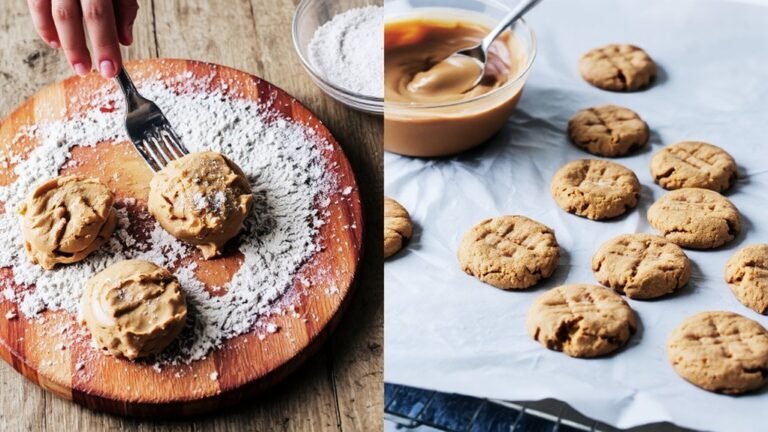
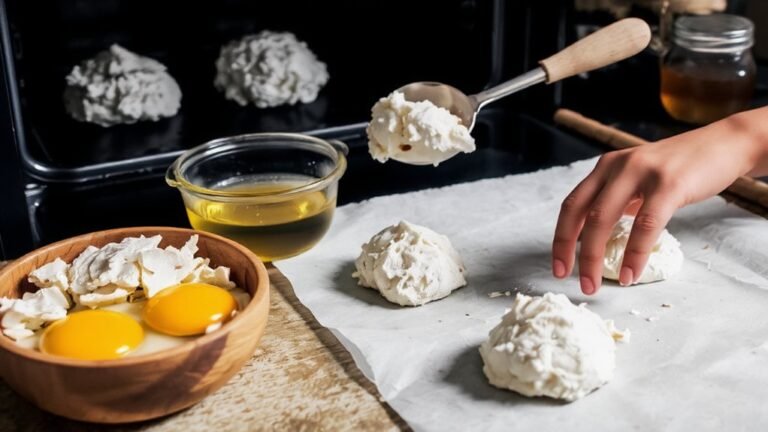
Gradually stir in your flour mixture. Drop spoonfuls onto your baking sheet, then slide them into a preheated 350°F oven for 10-12 minutes. You’re in control—bake until edges turn golden brown while centers stay slightly soft. Your freedom to customize awaits.
Baking Tips for Perfect Results
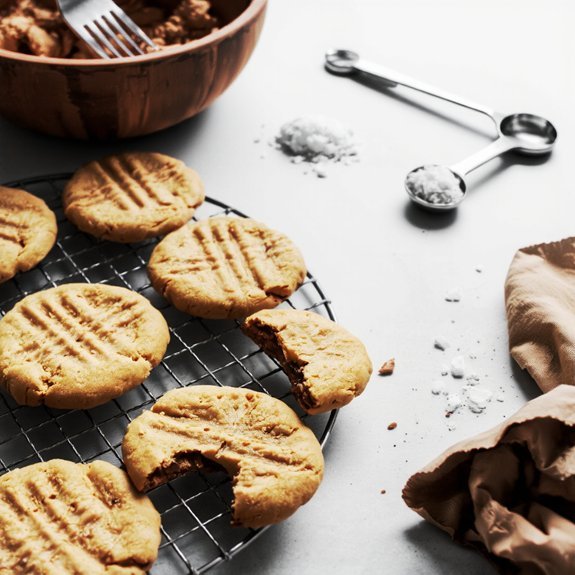
While your peanut butter cookies bake, you’ll want to watch for that perfect moment when the edges turn crispy and golden but the centers still yield slightly to the touch—this delicate balance makes all the difference between a cookie that crumbles and one that’s wonderfully chewy.
Your success depends on proper preparation:
- Oven Calibration: Use an oven thermometer to verify your temperature’s accuracy, as most ovens run hot or cold
- Equipment Maintenance: Keep your baking sheets clean and flat to promote even heat distribution
- Timing Precision: Set a timer for the lower end of the recommended range, then check frequently
Don’t overbake.
Remove cookies when they’re still slightly underdone—they’ll continue cooking on the hot pan.
You’ll notice the aroma intensifying as they set.
This technique guarantees cookies that stay soft inside while maintaining those irresistible crispy edges.
Storage and Shelf Life
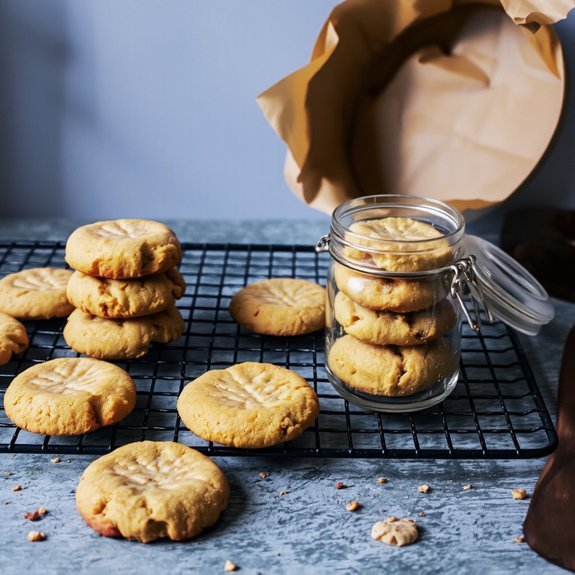
Once your cookies have cooled completely on the baking sheet, you’ll want to store them properly to preserve that perfect texture you’ve worked to achieve.
Store cooled cookies properly to preserve that perfect texture you’ve worked to achieve.
Keep them in an airtight container at room temperature for a pantry lifespan of up to five days.
The container’s seal locks in that satisfying crunch while blocking out moisture and staleness.
For extended enjoyment, freeze your cookies in a freezer-safe container with parchment between layers.
Their freezer longevity reaches three months without compromising flavor or texture.
When you’re ready to indulge, thaw them at room temperature for thirty minutes—they’ll taste freshly baked.
This freedom to bake ahead and enjoy later means you’re never without these irresistible treats.
Smart storage transforms your peanut butter cookies into a convenient pleasure you control completely.
Variations to Try
Why settle for the classic when you can elevate your peanut butter cookies into something entirely new? You’ve got endless creative freedom to explore savory experiments and international influences that’ll transform your baking game.
Consider these bold directions:
- Spicy heat: Mix cayenne pepper or sriracha into your dough for a kick that’ll wake up your taste buds
- Salty-sweet fusion: Add miso paste or a sprinkle of sea salt to deepen flavor complexity
- Global twists: Incorporate matcha, cardamom, or black sesame for exotic flair
You can also play with mix-ins—crushed pretzels, dark chocolate chunks, or toasted coconut flakes add textural interest. Drizzle finished cookies with white chocolate or dust them with cinnamon sugar.
These variations let you break free from convention while honoring the cookie’s soul.
Serving Suggestions
You’ll find that peanut butter cookies shine when you pair them with cold milk, iced coffee, or hot chocolate—the beverage choice depends on whether you’re craving temperature contrast or complementary warmth.
Serve them at afternoon tea gatherings, casual dessert spreads, or as the perfect finale to weeknight dinners when you want something satisfying without fuss.
Their rich, nutty flavor and tender texture make them equally welcome at children’s birthday parties or sophisticated dinner parties where guests appreciate homemade treats.
Serving Suggestions
Because peanut butter cookies shine brightest when paired thoughtfully, consider serving them while they’re still slightly warm from the oven—the soft centers and nutty aroma’ll create an irresistible treat.
Your plating arrangements should highlight each cookie’s rustic charm without overcomplications.
Elevate your presentation with these garnish options:
- Dust cookies with a light sprinkle of sea salt to amplify the peanut butter’s natural richness
- Drizzle melted chocolate across the plate for visual contrast and complementary flavor
- Arrange cookies on slate or wooden boards for an artisanal, unburdened aesthetic
Pair them with cold milk for classic satisfaction, or serve alongside strong coffee for sophisticated depth.
Stack three cookies at varying angles on individual plates to create visual interest.
This approach respects both the cookie’s integrity and your guests’ desire for straightforward, quality indulgence.
Pair With Cold Beverages
While warm cookies benefit from the comfort of hot coffee, cold beverages offer their own compelling magic with these nutty treats. You’ll discover that icy milk creates stunning flavor contrasts, amplifying the cookie’s rich peanut butter notes while the cold cuts through sweetness beautifully.
Consider dairy alternatives like oat or almond milk for a lighter pairing that doesn’t overwhelm your palate.
Iced tea provides invigorating sophistication—choose unsweetened varieties to let your cookies shine. Cold brew coffee delivers smooth, bold companionship without bitterness.
For adventurous tastes, you might reach for sparkling water with lemon, which cleanses your palate between bites and heightens each cookie’s complex flavors.
The temperature contrast itself becomes part of the experience.
You’re free to experiment with whatever cold beverage calls to you, discovering combinations that satisfy your unique preferences and cravings.
Ideal Dessert Occasions
These peanut butter cookies aren’t just casual snacks—they’re versatile dessert stars ready to elevate any gathering.
You’ll find they shine brightest at:
- Holiday Gatherings where their rich, nutty aroma fills rooms and guests reach for seconds
- Picnic Celebrations where their sturdy texture withstands transport and outdoor conditions
- Intimate dinner parties where they provide the perfect closing note to your meal
You can pack them in mason jars for potlucks.
Stack them on tiered stands for elegant affairs, or simply pile them on a plate for casual hangouts.
Their golden-brown edges and slightly crackled tops catch everyone’s eye.
Whether you’re hosting a backyard barbecue or a formal holiday event, these cookies adapt seamlessly to your vision.
They’re your freedom to create memorable moments around food that tastes authentically homemade.
Frequently Asked Questions
Can I Use Natural Peanut Butter Instead of Traditional Creamy Peanut Butter?
You can absolutely swap natural peanut butter into your cookies. You’ll notice intensified, robust flavor that’ll blow traditional creamy versions away.
Watch for oil separation—just stir that rich layer back in before measuring. Your dough might need slight adjustments since natural varieties contain less stabilizer.
The result? Grittier texture, deeper complexity, and genuine peanut satisfaction. You’re liberated from artificial additives, embracing pure, unfiltered taste that transforms ordinary cookies into something extraordinary.
What Should I Do if My Cookies Spread Too Much During Baking?
You’ll want to chill your dough for at least 30 minutes before baking—this firms up the butter and gives you control.
Reduce leavening agents like baking soda; they’re what’s causing that aggressive spread.
Try dropping smaller portions onto your baking sheet too.
These tweaks’ll give you thick, chewy cookies with crispy edges instead of flat, greasy discs.
You’re commanding your oven now.
Can I Freeze the Cookie Dough Before Baking for Later Use?
You can absolutely freeze your peanut butter cookie dough for future baking freedom.
Shape it into balls and store them in the freezer for up to three months—they’ll keep beautifully.
When you’re ready to bake, you’ve got options: thaw them at room temperature for thirty minutes, or pop them straight into the oven, adding a few extra minutes to your baking time.
This gives you spontaneous, fresh-baked cookie satisfaction whenever you crave it.
Why Do My Cookies Turn Out Cakey Instead of Chewy?
You’re likely overmixing your dough, which builds gluten and creates that unwanted cake-like crumb.
Too much baking soda or powder delivers excess leavening, puffing your cookies skyward instead of keeping them gloriously dense.
Dial back your mixing—fold ingredients together until just combined.
Use precise measurements for leavening agents.
Your reward? Chewy centers with slightly crispy edges that’ll satisfy your cravings for authentic, indulgent peanut butter bliss every single time.
Is It Possible to Make This Recipe Without Eggs for Dietary Reasons?
You’ve got solid options to liberate your baking from eggs.
A flaxseed substitute—mixing ground flaxseed with water—creates a binding powerhouse that’ll hold your dough together beautifully.
Alternatively, aquafaba binding, that magical liquid from canned chickpeas, delivers remarkable moisture and structure.
Both methods let you craft gloriously chewy peanut butter cookies that taste indulgently rich without compromising your dietary freedom.
You’re not sacrificing flavor; you’re choosing independence.


Leave a Comment