

Key Takeaways
- Granulated sugar provides consistent structure and browning; measure by weight for precise baking results.
- Honey and maple syrup accelerate browning but require reducing other liquids and lowering oven temperature.
- Brown sugar adds moisture and tenderness through molasses coating; store in airtight containers to prevent clumping.
- Coconut sugar offers lower glycemic index but produces denser crumbs; adjust liquid ratios and baking times accordingly.
- Monk fruit and erythritol blends provide zero-calorie sweetness while maintaining moisture and texture closer to sugar.
Granulated Sugar: The Baking Staple

White granules of refined sugar form the foundation of most baked goods because they’re versatile, affordable, and reliable.
You’ll appreciate granulated sugar’s consistency and performance across virtually every baking application.
The crystal size matters substantially in baking.
Uniform granules dissolve evenly into batters and doughs, ensuring predictable results.
Industrial processing standardizes this product, removing impurities and creating the pure sucrose you depend on for structure, browning, and moisture retention.
You gain precise control when you measure granulated sugar by weight rather than volume.
This sweetener caramelizes effectively, contributing depth to cookies and cakes.
Its neutral flavor won’t mask other ingredients, allowing you the freedom to showcase chocolate, vanilla, or spices without competition.
Granulated sugar remains your most economical choice, delivering consistent quality batch after batch.
Brown Sugar: Moisture and Molasses Magic
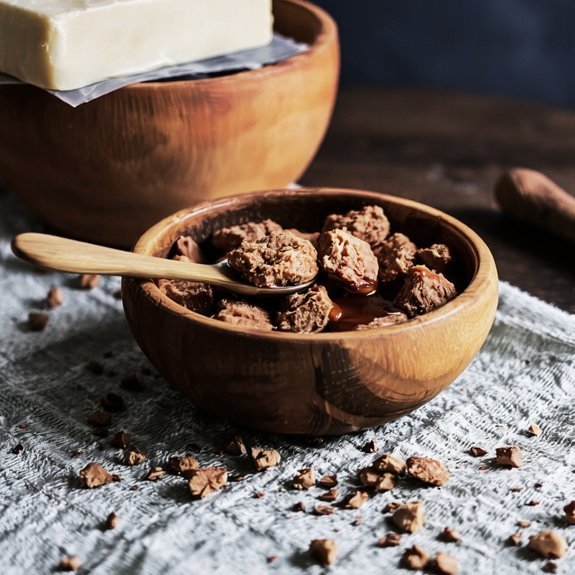
Because molasses coats each crystal, brown sugar delivers moisture and depth that granulated sugar can’t match.
Brown sugar’s molasses coating delivers moisture and depth that granulated sugar simply cannot match in your baking.
You’ll notice immediate differences when you use it in your baking.
Here’s what you need to know about brown sugar:
- Moisture retention – The molasses content keeps your baked goods tender and prevents them from drying out quickly
- Molasses antioxidants – You’re adding beneficial compounds that enhance flavor complexity and nutritional value
- Clump prevention – Store brown sugar with parchment paper or an airtight container to maintain workability
- Flavor depth – You’ll achieve rich, caramel-forward notes impossible with white sugar alone
Light brown sugar offers subtle molasses presence, while dark brown sugar gives you assertive, almost toffee-like richness.
Choose based on your desired intensity.
You’ve got the freedom to experiment and discover which works best for your specific recipes and taste preferences.
Honey: Liquid Sweetness and Browning Power

When you substitute honey for granulated sugar in your baking recipes, you’ll notice its superior browning capabilities stem from its higher concentration of reducing sugars, which accelerate the Maillard reaction at lower temperatures.
You must adjust your recipes by reducing liquid content by approximately one-quarter cup per cup of honey used, while also lowering your oven temperature by 25°F to prevent over-browning.
Honey’s complex flavor profile—ranging from floral to caramel notes depending on its source—adds dimensional sweetness and inherent moisture that fundamentally alters your final product’s texture and taste.
Honey’s Unique Browning Properties
Unlike granulated sugar, honey’s molecular structure enables superior browning through the Maillard reaction, a chemical process that occurs when amino acids and reducing sugars interact under heat.
You’ll experience Maillard acceleration that produces deeper, more complex flavors in your baked goods.
Consider these browning advantages:
- Crust coloration develops faster and more uniformly across surfaces
- Fructose content lowers the temperature threshold for caramelization
- Natural enzymes enhance flavor compound development during baking
- Moisture retention prevents over-browning while maintaining golden hues
This chemical advantage means you’re not simply adding sweetness—you’re leveraging honey’s inherent properties to achieve professional-quality results.
When you substitute honey for conventional sweeteners, you gain control over browning intensity while expanding your flavor palette.
Your baked goods will exhibit superior color depth and taste complexity that granulated alternatives simply can’t match.
Converting Recipes With Honey
Since honey’s hygroscopic nature absorbs and retains moisture differently than granulated sugar, you’ll need to adjust your recipe’s liquid ratios to prevent dense, overly moist results.
Reduce other liquids by approximately one-quarter cup per cup of honey you’re substituting.
You’ll also want to lower your oven temperature by 25°F, since honey browns faster than sugar.
This prevents over-darkening before your baked goods fully cook.
For yeast-based recipes, monitor yeast hydration carefully—honey’s added moisture affects fermentation rates.
You may need to reduce water content further or extend rising times.
Additionally, consider acid adjustments.
Honey’s alkalinity can neutralize acidic ingredients like buttermilk or lemon juice.
Add a pinch of baking soda or reduce acidic components to maintain proper flavor balance and texture.
Flavor Profile and Moisture Content
Honey’s complex flavor profile—ranging from delicate floral notes to robust caramel undertones depending on the source—can’t be replicated by granulated sugar, so you’ll want to choose varieties that complement your recipe’s other ingredients.
Honey’s hygroscopic nature creates distinct moisture interactions that affect your final product’s texture and shelf life.
Consider these critical factors:
- Fat interaction: Honey binds with fats differently than sugar, altering crumb structure and moisture retention
- Spice integration: Darker honey varieties amplify warm spices like cinnamon and nutmeg through flavor concentration
- Browning acceleration: Honey’s reducing sugars promote Maillard reactions, darkening crusts faster than conventional sweeteners
- Hydration balance: Reduce other liquids by 25% to compensate for honey’s moisture content
You’ll achieve superior results by matching honey varieties to your recipe’s flavor demands and adjusting hydration accordingly.
Maple Syrup: Distinct Flavor and Texture Benefits
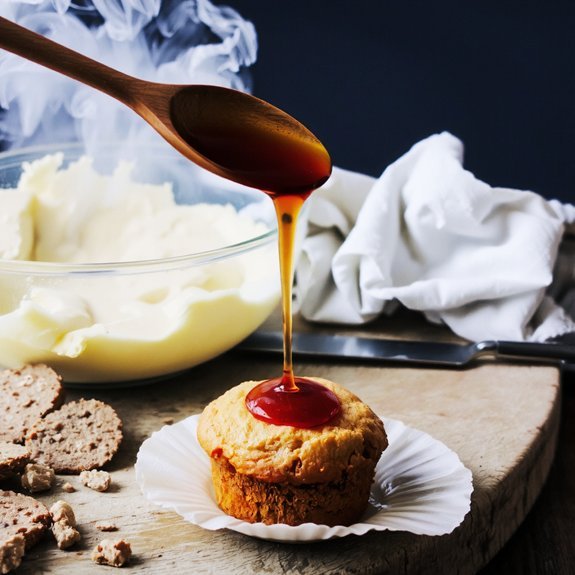
Maple syrup brings distinctive qualities to baked goods that’ll noticeably alter both flavor and crumb structure. You’ll experience terroir nuances depending on syrup grade—light varieties contribute delicate sweetness, while dark grades deliver robust molasses undertones. Viscosity effects directly impact your batter’s hydration levels; maple syrup’s higher water content requires recipe adjustments to prevent excessive moisture.
| Grade | Flavor Profile | Viscosity | Baking Application |
|---|---|---|---|
| Golden | Subtle, buttery | Medium | Cakes, cookies |
| Amber | Balanced maple | Medium-high | Breads, muffins |
| Dark | Strong, complex | High | Dense baked goods |
| Very Dark | Intense, molasses | Very high | Spice cakes |
You’ll achieve superior browning and enhanced tender crumbs when you substitute maple syrup for refined sugars. Its natural compounds interact with proteins during baking, creating superior texture without compromising structural integrity.
Coconut Sugar: Lower Glycemic Alternative
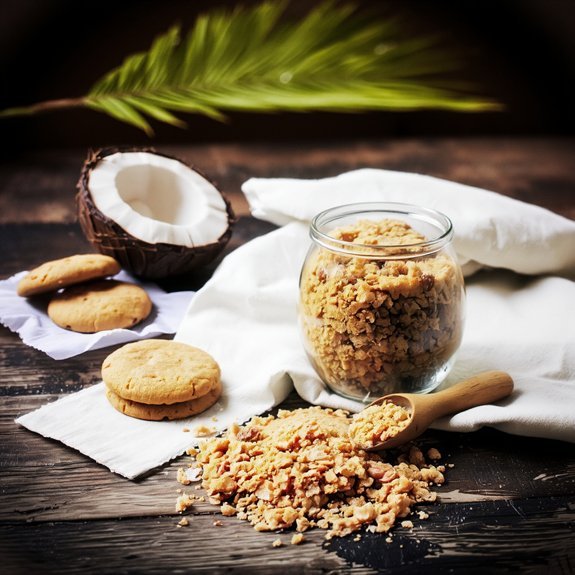
You’ll find coconut sugar’s lower glycemic index (GI)—typically ranging from 35 to 54 compared to regular sugar’s 65—makes it an attractive option when you’re seeking blood sugar stability in your baked goods.
When you incorporate coconut sugar into your recipes, you’ll notice it behaves differently than conventional sugar; it absorbs moisture more readily and can produce denser crumbs while yielding a subtle caramel undertone.
Understanding these performance characteristics allows you to adjust your liquid ratios and baking times accordingly to achieve the texture and rise you’re targeting.
Glycemic Index Explained
Why does the rate at which a sweetener raises blood glucose matter when you’re baking?
Understanding glycemic index (GI) gives you control over your metabolic response to sweetened treats.
The GI measures how quickly carbohydrates elevate blood sugar levels.
Here’s what you need to know:
- Scale range: GI values span 0-100, with glucose as the reference standard
- Insulin response: Lower GI sweeteners trigger gentler insulin spikes, reducing energy crashes
- Testing variability: Individual factors like digestion speed and food combinations affect actual GI outcomes
- Practical application: Combining low-GI sweeteners with fats and proteins further moderates blood sugar elevation
When you choose sweeteners strategically, you’re not just baking—
you’re optimizing your body’s metabolic freedom and sustained energy levels throughout your day.
Baking Performance and Results
Because coconut sugar contains inulin—a soluble fiber that slows glucose absorption—it delivers a glycemic index around 35, substantially lower than table sugar’s 65.
You’ll notice coconut sugar performs differently in your baked goods than conventional sweeteners.
When you’re baking, coconut sugar’s hygroscopic properties retain moisture, which enhances crumb structure and creates a denser, chewier texture.
This characteristic demands you adjust liquid ratios slightly to prevent excessive moisture content.
Your oven spring may be slightly reduced compared to refined sugar batches, as coconut sugar’s composition affects yeast fermentation rates differently.
You’ll achieve superior browning due to coconut sugar’s lower melting point and deeper molasses notes.
For your freedom-focused baking endeavors, this alternative delivers consistent results while maintaining nutritional integrity and lower glycemic impact across your finished products.
Stevia: Zero-Calorie Sweetening Option
Derived from the leaves of the Stevia rebaudiana plant, stevia offers a zero-calorie alternative to traditional sugars without triggering the glycemic response associated with glucose metabolism.
You’ll find stevia extraction methods yield varying purity levels, affecting baking outcomes.
When you’re selecting stevia varieties, consider these factors:
- Rebaudiana A and Rebaudiana C strains deliver different sweetness intensities
- Extraction processes determine residual aftertaste profiles you’ll encounter
- Powder versus liquid formulations require distinct measurement adjustments
- Heat stability varies across stevia varieties, impacting baked goods at high temperatures
You’re gaining control over your sugar intake without sacrificing sweetness.
Stevia’s thermostability makes it compatible with most baking applications, though you should experiment with ratios since it’s 200-300 times sweeter than sucrose.
This independence from conventional sweeteners empowers your dietary choices.
Monk Fruit: Natural and Intensely Sweet
You’ll find that monk fruit extract delivers zero calories while providing sweetness 150 to 200 times greater than sugar, making it an efficient choice for reducing caloric content in your baked goods.
When you incorporate monk fruit into baking, you’ll need to adjust ratios carefully since its intensity requires less sweetener by weight than conventional sugars, which can affect moisture and browning.
You should expect slightly different crumb structures and textures compared to sugar-based recipes, though blending monk fruit with other sweeteners often yields results closest to traditional baking outcomes.
Zero Calorie Sweetening Power
What makes monk fruit an exceptional zero-calorie sweetening option for bakers?
Monk fruit delivers powerful sweetening without caloric burden, giving you complete control over your nutritional intake.
You’ll appreciate its clean profile:
- 300 times sweeter than sugar – minimal quantities needed per recipe
- Zero glycemic impact – won’t spike blood sugar levels
- Heat stability – maintains sweetness through baking temperatures without degradation
- Labeling advantages – complies with FDA regulations, clearly marked zero-calorie on packaging
You’re investing in a sweetener that respects both your health goals and ingredient transparency.
The environmental impact remains minimal compared to conventional sugar production, requiring less water and fewer pesticides.
You’ll bake confidently knowing you’re choosing a solution that aligns with your freedom to make informed dietary decisions.
Baking Applications and Results
Since monk fruit’s intense sweetness requires careful measurement adjustments, you’ll need to modify traditional recipes to prevent oversweetening and texture problems.
You’re working with a sweetener that’s 150–200 times sweeter than sugar, demanding precision in your approach.
When baking, reduce monk fruit sweetener to one-quarter to one-third of the sugar amount your recipe calls for.
This adjustment preserves proper crust development and browning while maintaining structural integrity.
You’ll find that monk fruit blends containing erythritol perform better than pure extracts, providing bulk that supports moisture retention and rise.
For serving suggestions, pair monk fruit-sweetened goods with complementary flavors—citrus or vanilla enhance rather than mask the subtle taste.
Your baked results achieve comparable texture and crumb structure to traditional recipes, giving you the freedom to enjoy guilt-free indulgence without compromising quality.
Agave Nectar: Mild Flavor Profile
Because agave nectar’s flavor compounds remain relatively neutral during extraction and processing, it won’t overpower delicate baked goods the way honey or molasses might.
Agave nectar’s neutral flavor compounds won’t overpower delicate baked goods like honey or molasses might.
You’ll appreciate agave’s versatility across applications.
Key advantages you’ll experience:
- Subtle sweetness that lets your core ingredients shine through without interference
- Floral origins that contribute gentle undertones rather than assertive flavors
- Sustainable sourcing practices that align with conscious baking choices
- Consistent results across cookies, cakes, and pastries without flavor masking
You’re choosing a sweetener that respects your recipe’s integrity.
Agave nectar dissolves seamlessly into batters, creating tender crumb structures while maintaining ingredient transparency.
This neutrality grants you complete control over your final product’s flavor profile, empowering you to showcase premium ingredients without competitive sweetener interference.
Erythritol: Sugar Alcohol for Reduced Calories
If you’re seeking to reduce caloric intake without sacrificing sweetness, erythritol offers a compelling alternative to traditional sugars.
This sugar alcohol contains virtually zero calories while maintaining 70% of sugar’s sweetness, giving you complete control over your dietary choices.
Erythritol’s molecular structure means your body doesn’t metabolize it like regular sugar, preserving your metabolic freedom.
You’ll notice a slight cooling effect when using it in baking, which some bakers minimize by combining it with other sweeteners.
Digestive tolerance is generally excellent—erythritol doesn’t trigger the bloating or digestive distress associated with other sugar alcohols.
Your body excretes it largely unchanged, making it ideal for anyone monitoring their sugar consumption while maintaining their baking standards without compromise.
Allulose: The Sugar Substitute That Bakes Like Sugar
While erythritol excels at calorie reduction, allulose takes a different approach by mimicking sugar’s functional properties in baking applications.
You’ll find allulose delivers superior results because it behaves nearly identically to sucrose, giving you freedom from compromise in texture and browning.
Here’s what makes allulose exceptional:
- Metabolic Pathways: Your body minimally absorbs allulose, routing most through your kidneys unchanged, keeping calories negligible
- Browning Performance: It caramelizes and Maillard-reacts like sugar, creating authentic color and flavor
- Crystalline Structure: You get identical moisture absorption and texture development
- Regulatory Status: It’s FDA-recognized as Generally Recognized as Safe (GRAS), affirming its legitimacy
You can substitute allulose one-to-one in most recipes.
Its technical superiority means you’re not sacrificing baking quality for health benefits—you’re achieving both simultaneously.
Frequently Asked Questions
Can I Substitute One Sweetener for Another in My Favorite Baking Recipes?
Yes, you can substitute sweeteners, but you’ll need to understand how each one affects your results. Different sweeteners bring texture changes—some add moisture, others create dryness.
You’ll require ratio adjustments because sweetness levels vary; honey and maple syrup aren’t 1:1 replacements for sugar.
Take control of your baking by accounting for liquid content and sweetness potency. Experiment methodically with small batches to master substitutions without compromising your favorite recipes’ integrity.
How Do Sweeteners Affect Blood Sugar Levels Differently Than Regular Sugar?
You’ll find that alternative sweeteners impact your blood sugar differently than regular sugar.
They typically feature a lower glycemic index, meaning they won’t spike your glucose levels as dramatically.
Your body’s insulin response remains minimal with most sugar substitutes like stevia, erythritol, and monk fruit.
This metabolic advantage gives you freedom to enjoy sweetness without the blood sugar rollercoaster, making them ideal for managing your energy and health independently.
Which Sweeteners Work Best for Vegan or Allergen-Free Baking?
You’ll find that fruit purees and plant syrups deliver superior results in vegan and allergen-free baking.
Applesauce and banana puree provide moisture while binding ingredients effectively.
Maple syrup and coconut nectar won’t compromise your dietary freedom.
You’re eliminating common allergens—dairy, eggs, and refined sugar—while maintaining structural integrity.
These alternatives give you complete control over your baking outcomes without sacrificing texture or rise.
What Is the Shelf Life and Proper Storage for Each Sweetener?
You’ll preserve most sweeteners 1-3 years in airtight containers away from direct light and heat.
Honey and maple syrup last indefinitely.
Implement moisture control to prevent crystallization and clumping—use desiccant packets in storage containers.
Practice pest prevention by sealing containers tightly; you’re protecting your ingredients from contamination.
Refrigeration extends shelf life for liquid sweeteners.
Store granulated sugars cool and dry.
You maintain complete autonomy over your baking supplies through proper storage discipline.
How Do Different Sweeteners Impact the Nutritional Content of Baked Goods?
You’ll notice sweeteners dramatically alter your baked goods’ nutritional profiles through caloric density variations and micronutrient retention differences.
Refined sugars provide empty calories without beneficial compounds, while honey and maple syrup retain trace minerals and antioxidants.
Sugar alcohols and stevia offer reduced caloric impact.
Your choice determines whether you’re consuming nutrient-dense creations or simple carbohydrate vehicles.
You’re ultimately controlling your baked goods’ glycemic response and mineral content through sweetener selection.

Leave a Comment