

Key Takeaways
- Look for food-grade silicone with reinforced fiberglass cores and heat resistance rated to at least 480°F for reliable performance.
- Premium mats (platinum-grade silicone) maintain flexibility over 500+ uses; mid-range options ($15–$25) suit regular bakers with 3–5 year durability.
- Verify third-party certifications, warranty coverage (1–5 years), and manufacturer specifications rather than relying on marketing claims or endorsements.
- Darker mats accelerate bottom browning; lighter mats promote even color—choose based on your baking style and desired browning outcomes.
- Hand wash with mild soap after each use, air dry completely, and store flat in a cool area to extend lifespan.
What Are Silicone Baking Mats?

Silicone baking mats are flexible, heat-resistant sheets made from food-grade silicone that you place on baking sheets to prevent sticking without using oils or cooking sprays.
Flexible, heat-resistant silicone baking mats prevent sticking naturally without oils or cooking sprays, transforming your baking experience.
Dating back to the 1970s, these mats emerged from industrial applications before gaining popularity in home kitchens.
You’ll find they’re reusable, lasting hundreds of uses when properly maintained.
They withstand temperatures up to 480°F, making them suitable for most baking applications.
Beyond traditional cookie baking, you can explore creative uses like roasting vegetables, dehydrating foods, or molding chocolate.
The non-stick surface derives from silicone’s molecular structure, which prevents food adhesion naturally.
You’ll appreciate their durability and environmental benefits as sustainable alternatives to parchment paper.
Simply rinse with warm soapy water for easy cleanup.
They offer you genuine kitchen freedom through reliable, chemical-free baking.
Key Features to Look For

When you’re selecting a baking mat, you’ll want to prioritize several technical specifications that directly impact performance and longevity.
Heat resistance matters—look for mats rated to at least 480°F to handle most baking applications safely.
Check the thickness; mats between 0.5mm and 1mm provide ideal flexibility and durability without compromising heat distribution.
Examine material composition to confirm you’re getting pure silicone free from harmful fillers.
You’ll appreciate mats with reinforced edges that resist curling and cracking over time.
Consider non-slip backing, which prevents shifting during use and protects your oven surfaces.
Don’t overlook aesthetic designs that complement your kitchen while maintaining functionality.
Verify eco packaging options—responsible manufacturers now offer sustainable materials.
Compare surface texture for non-stick properties, so that food releases cleanly without requiring added oils or parchment paper.
Heat Resistance and Temperature Limits
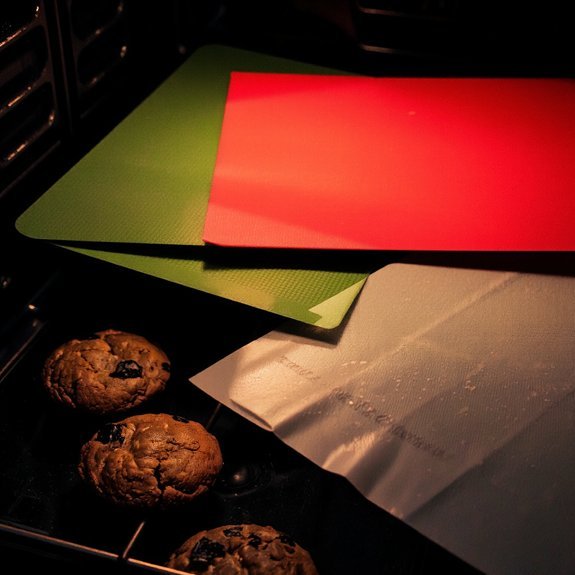
Because your oven’s temperature directly determines whether a baking mat’ll perform safely or fail, you’ll need to understand how heat resistance ratings translate to real-world baking.
Most silicone mats withstand temperatures between 400°F and 500°F, though premium options reach 600°F.
You’ll want to verify the decomposition temperature—the point where silicone breaks down chemically—to make sure your mat won’t degrade during extended use.
Consider these critical factors:
- Thermal conductivity ratings determine heat distribution across your mat’s surface
- Maximum safe temperature differs from decomposition temperature by significant margins
- Manufacturer specifications reflect tested limits under standard conditions
You’re responsible for matching your mat’s capabilities to your baking demands.
Don’t assume all silicone mats perform identically.
Check documentation carefully, and never exceed stated limits, as doing so compromises both safety and results.
Non-Stick Performance Comparison
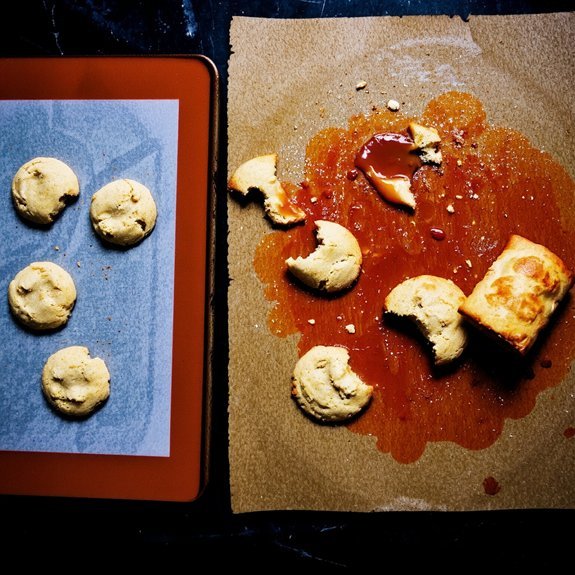
Beyond temperature ratings, a mat’s non-stick properties determine whether your baked goods release cleanly or stick stubbornly to the surface.
A mat’s non-stick properties determine whether your baked goods release cleanly or stick stubbornly to the surface.
You’ll find meaningful variations across brands through standardized release tests that measure adhesion force and removal ease.
Premium silicone mats consistently outperform budget alternatives, particularly with delicate items like cookies and pastries.
Browning differences also matter notably.
You’ve got choices: darker mats accelerate bottom browning, while lighter surfaces promote even color development.
This affects your baking outcomes directly.
Superior non-stick formulations reduce the need for parchment paper or cooking spray, giving you genuine freedom from preparation hassles.
When evaluating mats, prioritize those backed by rigorous performance data rather than marketing claims.
Your actual baking results will reveal which mats deliver reliable, consistent non-stick functionality across varied recipes and temperatures.
Durability and Longevity

A silicone mat’s lifespan depends largely on material composition and manufacturing quality, both of which directly influence how well it resists degradation from repeated heating cycles and mechanical stress.
You’ll want to evaluate these critical factors:
- Platinum-grade silicone resists material degradation better than standard formulations, maintaining flexibility over 500+ uses
- Warranty coverage typically spans 1-5 years, indicating manufacturer confidence in durability standards
- Temperature stability at 480°F prevents accelerated breakdown compared to lower-rated alternatives
You’re investing in freedom from parchment paper waste when you choose quality mats.
Premium silicone demonstrates superior longevity through consistent non-stick performance across years of baking.
Check warranty terms—they reveal real durability expectations.
Avoid cheaper options; material degradation accelerates with inferior silicone, requiring frequent replacement and negating cost savings.
Easy Cleaning and Maintenance
Since silicone’s non-porous surface resists food particle adhesion, you’ll find cleaning remarkably straightforward compared to traditional parchment paper or metal baking sheets. Hand wash with warm soapy water or use your dishwasher—both methods work equally well. For stubborn stains, apply baking soda paste or white vinegar to affected areas, letting them sit briefly before scrubbing.
| Cleaning Method | Time Required | Effectiveness | Dishwasher Safe | Best For |
|---|---|---|---|---|
| Hand Washing | 2-3 minutes | High | N/A | Daily use |
| Dishwasher | 1 cycle | High | Yes | Bulk cleaning |
| Baking Soda Paste | 5 minutes | Very High | N/A | Stain removal |
| Vinegar Soak | 10 minutes | High | N/A | Discoloration |
| Commercial Degreaser | 3 minutes | Very High | N/A | Heavy buildup |
Storage tips: keep mats flat or loosely rolled in a cool, dry cabinet away from sharp objects. Avoid stacking heavy items on top to prevent warping and maintain ideal performance.
Size and Compatibility Options
Proper maintenance keeps your silicone mat in excellent condition, but you’ll also want to make sure you’ve selected the right size for your specific baking needs.
Proper maintenance extends your silicone mat’s lifespan, but selecting the right size for your baking needs ensures optimal performance.
Silicone mats come in various dimensions to accommodate different pan shapes and oven configurations.
Consider these essential factors:
- Standard dimensions: Half-sheet (16.5″ x 11.5″) and quarter-sheet (13″ x 9″) sizes fit most residential ovens and cookware.
- Pan shape compatibility: Rectangular, round, and irregularly-shaped baking vessels require specific mat sizes for ideal coverage and heat distribution.
- Storage solutions: Rolled or folded mats demand adequate drawer or cabinet space; measure your available storage before purchasing.
You’ll maintain maximum flexibility and efficiency by selecting mats that align with your existing equipment and kitchen constraints.
Price Range and Value for Money
Silicone baking mats typically range from $10 to $40 per unit, depending on quality, brand reputation, and material composition. You’ll find that premium options offer superior heat distribution and durability, justifying higher price points. Strategic shopping during seasonal discounts can substantially reduce your costs, while bundle deals provide exceptional value when you’re outfitting your kitchen.
| Price Tier | Cost Range | Durability | Best For |
|---|---|---|---|
| Budget | $10–$15 | 1–2 years | Occasional bakers |
| Mid-range | $15–$25 | 3–5 years | Regular use |
| Premium | $25–$40 | 5+ years | Professional bakers |
You maximize value by matching your purchase to actual baking frequency. Don’t overspend on premium mats if you bake quarterly, yet investing in quality prevents premature replacement costs.
Top Silicone Baking Mat Brands
Several established manufacturers dominate the silicone baking mat market, each offering distinct advantages in heat distribution, non-stick performance, and longevity.
You’ll find that brand reputation directly correlates with product reliability and customer satisfaction ratings across independent testing platforms.
When evaluating top contenders, consider these factors:
- Manufacturing standards – Premium brands utilize food-grade silicone with reinforced fiberglass cores, guaranteeing consistent performance across repeated use cycles
- Thermal properties – Leading manufacturers engineer mats that withstand temperatures up to 480°F without degradation or chemical leaching
- Market positioning – Some brands leverage celebrity endorsements to build consumer trust, though technical specifications ultimately determine actual value
You’re empowered to make informed decisions by comparing certifications, warranty periods, and third-party lab results rather than relying solely on marketing claims.
This systematic approach guarantees you select mats that deliver genuine performance improvements for your baking needs.
How to Extend the Life of Your Mats
To maximize your silicone baking mat’s lifespan, you’ll want to adopt a systematic maintenance routine that addresses the primary degradation factors: thermal stress, abrasive contact, and chemical exposure.
| Maintenance Practice | Frequency | Benefit |
|---|---|---|
| Hand wash with mild soap | After each use | Prevents residue buildup |
| Air dry completely | Before storage | Eliminates moisture damage |
| Store flat in cool area | Always | Reduces warping risk |
| Register warranty | Upon purchase | Enables repair options |
| Inspect for wear | Monthly | Catches early degradation |
You’ll extend mat durability by avoiding extreme temperature fluctuations, metal utensils, and harsh abrasives. Don’t stack mats when damp. Register your warranty immediately to access manufacturer repair options should damage occur. These systematic practices preserve your investment’s functionality and performance for years of reliable baking.
Frequently Asked Questions
Can Silicone Baking Mats Be Used in Microwave Ovens Safely?
You can safely use silicone baking mats in microwave ovens. Microwave compatibility depends on your mat’s composition—food-grade silicone withstands microwave temperatures without degrading.
However, verify BPA concerns by checking manufacturer specifications; quality mats shouldn’t contain BPA. You’ll find that most reputable brands clearly state microwave-safe ratings on packaging.
Always confirm your specific mat meets FDA standards before heating, ensuring you’re not compromising your independence through unknown material exposure.
Are Silicone Baking Mats Suitable for All Types of Baked Goods?
You’ll find silicone mats work excellently for most applications, but they’re not universally ideal.
They don’t deliver crisp bottoms like traditional pans do—cookies and pastries won’t brown as effectively underneath.
Delicate pastries, particularly those requiring precise moisture control, perform better on parchment paper.
You’ve got freedom to experiment, though.
Use silicone mats for items tolerating softer bases: brownies, bars, and non-critical baked goods.
For superior results with temperature-sensitive or bottom-crust-dependent items, you’ll want alternative surfaces.
Do Silicone Mats Work Effectively on Uneven or Warped Baking Sheets?
You’ll find that silicone mats don’t fully compensate for warped sheets. While they’re flexible enough to achieve reasonable surface conformity, you can’t guarantee tray stability on severely uneven surfaces.
Heat distribution becomes compromised, potentially creating hot spots that affect baking results. For ideal performance, you’ll want to use your mats on flat, quality baking sheets. Warped trays undermine the mat’s effectiveness regardless of material quality.
Can Silicone Baking Mats Be Safely Cut to Smaller Sizes?
You can safely cut silicone baking mats to smaller sizes using sharp kitchen shears or a utility knife. This customization won’t compromise functionality.
However, check your warranty considerations first—some manufacturers void coverage for modified mats. Use proper tool recommendations like ceramic scissors to guarantee clean edges that won’t fray.
You’re free to tailor your mat dimensions to your specific baking needs without degrading performance or heat resistance.
How Do Silicone Mats Compare to Parchment Paper in Environmental Impact?
You’ll find silicone mats demonstrate lower overall environmental impact than parchment paper through lifecycle assessment analysis.
While parchment requires repeated manufacturing and disposal, silicone mats you’ll reuse for years, reducing waste substantially.
However, recycling challenges persist—most facilities won’t accept silicone, limiting end-of-life options. Parchment paper’s compostability offers advantages there.
You’re choosing between reduced consumption versus better recyclability, making silicone superior for minimizing landfill contribution over time.
Leave a Comment