

Key Takeaways
- Professional-grade steel delivers exceptional thermal conductivity for uniform heat distribution and consistent, predictable browning performance.
- Glass pans provide real-time visibility of crust development without opening the oven, promoting superior browning consistency.
- Ceramic pans offer superior heat retention for steady temperatures supporting crust development, though they require longer preheating.
- Standard 9×5″ pans at 375–400°F for 35–45 minutes suit most bread recipes; larger pans need lower temperatures and extended times.
- Hand-wash all pans immediately after use; preserve non-stick coatings by avoiding abrasive tools, metal utensils, and dishwashers.
Steel Loaf Pans: Durability and Even Heat Distribution

Steel loaf pans’ superior thermal properties make them the preferred choice for bakers seeking consistent results. You’ll appreciate steel’s exceptional thermal conductivity, which distributes heat uniformly throughout your dough, eliminating hot spots that compromise crust quality.
Steel loaf pans deliver superior thermal conductivity, distributing heat uniformly to eliminate hot spots and guarantee consistent crust quality.
Modern steel pans maintain strict manufacturing tolerances, ensuring dimensional accuracy that prevents warping during repeated use. This precision gives you reliable oven performance across countless bakes.
You’re investing in durability when selecting steel. Unlike aluminum, steel resists denting and maintains its structural integrity indefinitely.
Its robust construction withstands aggressive handling without compromising performance. Steel’s non-reactive surface protects your bread from unwanted metallic flavors.
You control every variable—temperature, timing, ingredients—without interference from your equipment. For bakers demanding freedom and predictability, steel loaf pans deliver uncompromising performance that justifies their investment.
3. Ceramic Loaf Pans: Aesthetic Appeal and Heat Retention

While steel excels in thermal conductivity, ceramic loaf pans offer you a distinctly different advantage: superior heat retention that creates exceptional crust development. You’ll find ceramic pans maintain steady, consistent temperatures throughout your bake, reducing hot spots that compromise bread quality.
Ceramic’s aesthetic versatility distinguishes it from utilitarian steel. Glaze varieties range from matte to glossy finishes, allowing you to select pans reflecting your kitchen’s style. Artisanal finishes—hand-painted designs, earth-tone colorways—elevate ceramic beyond functional cookware into decorative pieces.
However, ceramic demands careful handling. It’s more fragile than steel and conducts heat slower, requiring longer preheating periods. You’ll also need to account for ceramic’s weight when maneuvering heavy dough.
For bakers prioritizing aesthetic appeal and willing to embrace ceramic’s specific requirements, these pans deliver both functional excellence and visual distinction.
4. Glass Loaf Pans: Visibility and Browning Performance

Glass loaf pans deliver a decisive advantage that ceramic and steel can’t match: complete visibility of your bread’s browning progress without removing it from the oven.
This transparency enables real-time visual monitoring, allowing you to adjust baking time precisely based on actual crust development.
Glass conducts heat efficiently, promoting superior browning performance compared to ceramic alternatives.
You’ll achieve excellent color uniformity across all surfaces—top, sides, and bottom—without the guesswork.
The consistent heat distribution prevents the pale, undercooked spots that sometimes plague other pan materials.
However, glass requires careful handling to avoid thermal shock.
Always preheat thoroughly and avoid sudden temperature changes.
Despite this consideration, glass loaf pans remain your best choice for achieving professional results while maintaining complete control over your baking process.
5. Non-Stick Coatings: Benefits and Drawbacks
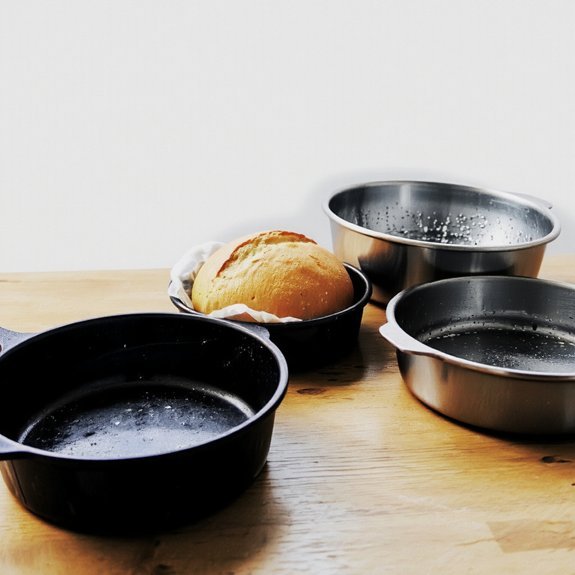
Non-stick coatings give you the advantage of releasing your bread with minimal effort and reduce the cleanup time required after baking.
However, you’ll need to understand that these coatings degrade over time with repeated use, heat exposure, and cleaning, ultimately compromising their non-stick properties.
You must weigh whether the initial convenience justifies the eventual need for replacement, as coating longevity varies considerably based on pan quality and maintenance practices.
Easy Release and Cleanup
Coating your loaf pan with a non-stick surface substantially reduces the effort required to remove baked bread and clean the pan afterward.
You’ll appreciate how the smooth coating prevents dough from adhering to pan walls, eliminating frustration during release.
Unlike traditional pans requiring flour dusting or parchment sling techniques, non-stick surfaces demand minimal preparation.
Post-baking cleanup becomes straightforward—you’ll simply wipe the pan with warm soapy water rather than scrubbing stubborn residue.
This efficiency matters when you’re producing multiple loaves regularly.
The reduced cleanup time frees you to focus on other kitchen tasks without tedious maintenance obligations.
However, remember that non-stick coatings require gentle handling.
Avoid abrasive tools and metal utensils that compromise coating integrity.
Proper care preserves your investment and maintains the pan’s superior release properties over years of use.
Durability and Coating Longevity
While non-stick surfaces dramatically simplify bread release and cleanup, their longevity depends entirely on how you maintain them. You’ll find that premium pans featuring ceramic or PTFE coatings resist degradation considerably longer than budget alternatives. Manufacturing standards directly impact coating durability—reputable brands employ multi-layer construction that withstands repeated use and thermal stress.
| Coating Type | Durability | Warranty | Best For |
|---|---|---|---|
| PTFE (Traditional) | 3-5 years | 1-2 years | Budget-conscious bakers |
| Ceramic | 4-7 years | 2-3 years | Health-focused users |
| Reinforced Hybrid | 7+ years | 5+ years | Serious enthusiasts |
| Ceramic-Titanium | 8+ years | Lifetime | Professional demands |
You’ll maximize coating longevity by avoiding metal utensils, using moderate heat, and hand-washing. Warranty considerations matter—longer warranties indicate manufacturer confidence in their product’s staying power. Choose pans meeting stringent manufacturing standards to guarantee your investment endures.
6. Standard vs. Large Loaf Pans: Choosing the Right Size
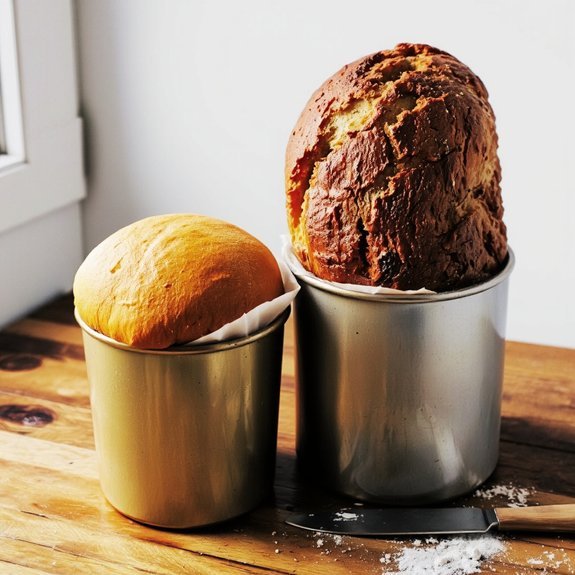
You’ll find that standard loaf pans (9×5 inches) yield one regular loaf, while large pans (10×5 inches) produce noticeably more volume, requiring you to adjust your recipe quantities accordingly.
Baking time and temperature shift between sizes—larger pans typically need 5-10 additional minutes and may benefit from slightly lower heat to prevent overbrowning while the interior bakes through.
Consider your cabinet space and how frequently you bake, as larger pans demand more storage room and may not fit your oven if you’re baking multiple loaves simultaneously.
Capacity and Yield Differences
Because bread dough expands considerably during proofing and baking, selecting the correct pan size directly impacts your final loaf’s height, crumb structure, and baking time.
Standard loaf pans (8×4 inches) yield approximately 1.5 pounds of bread, while large pans (9×5 inches) produce 2+ pounds.
When batch scaling your recipes, you’ll notice ingredient density shifts between pan sizes.
A standard pan creates denser crumbs with tighter structure, while larger pans distribute dough more thinly, producing airier results.
Overfilling either pan causes dough to dome excessively or spill over during oven spring.
Underfilling leaves gaps and dense bottoms.
Understanding these capacity differences lets you manipulate your loaf’s final characteristics intentionally, giving you complete control over your baking outcomes without compromising quality.
Baking Time and Temperature
How do baking times and temperatures shift when you move from a standard loaf pan to a larger one?
You’ll discover that larger pans require lower temperatures and extended baking times. This adjustment prevents exterior browning before interior crumb sets properly. Proofing impact becomes critical—larger volumes need additional rising time for even fermentation.
| Pan Type | Temperature | Baking Time |
|---|---|---|
| Standard (9×5″) | 375-400°F | 35-45 minutes |
| Large (10×6″) | 350-375°F | 50-65 minutes |
| Extra Large (11×7″) | 325-350°F | 65-80 minutes |
Altitude adjustments matter notably too. Higher elevations demand temperature increases of 15-25°F and reduced moisture content. You’ll gain better control over your bread’s final texture by understanding these variables. Your baking success depends on respecting these technical requirements rather than following rigid formulas.
Kitchen Storage Considerations
Where do your loaf pans fit in your kitchen’s storage footprint? Standard 9×5-inch pans stack efficiently in cabinets, while larger pans demand premium shelf real estate.
You’ll want to assess your available space before committing to multiple pieces.
Vertical storage maximizes cabinet efficiency, letting you arrange pans like files without consuming excessive depth.
This method keeps your workspace uncluttered and your options accessible.
Humidity control matters especially for metal pans. Store them in dry environments away from moisture-prone areas near sinks or dishwashers.
Dampness promotes rust and deterioration, compromising pan performance and longevity.
Choose storage locations offering consistent temperature and low moisture. Under-cabinet shelving works well if adequately ventilated.
Consider wall-mounted racks for frequently used pans, balancing convenience with practical kitchen organization. Your choice determines pan durability and cooking success.
7. Professional-Grade Pans for Serious Bakers
You’ll notice that professional-grade loaf pans differ substantially from standard consumer models in materials, construction, and performance specifications. These serious bakers’ tools deliver superior results through engineered excellence.
- Advanced materials – Commercial-grade steel with custom fabrication options provides superior heat distribution and durability, eliminating warping after hundreds of bakes.
- Patented features – Non-stick coatings engineered for professional kitchens withstand frequent use without degradation, maintaining consistent release performance.
- Precision dimensions – Exact measurements guarantee uniform browning and predictable rise patterns, giving you complete control over your final product.
You’ll invest considerably more upfront, but you’re gaining independence from replacing worn-out pans.
Professional-grade construction means your equipment won’t limit your creative ambitions or compromise your results.
8. Budget-Friendly Options Without Sacrificing Quality
You’ll find that affordable steel options deliver reliable heat distribution and durability without the premium price tag of professional-grade pans.
Value-driven non-stick pans eliminate the need for excessive greasing and simplify cleanup, making them practical choices for budget-conscious bakers who refuse to compromise on performance.
These economical alternatives perform comparably to their expensive counterparts when you select models with reinforced construction and even-weight distribution.
Affordable Steel Options
Steel loaf pans deliver reliable performance at accessible price points when you prioritize commercial-grade materials and proven construction methods.
You’ll find quality options without breaking your budget by understanding market dynamics.
- Recycled steel construction reduces manufacturing costs while maintaining durability, allowing you to invest in sustainable baking equipment without premium pricing
- Import tariffs impact pricing structures, making domestically-produced steel pans increasingly competitive with foreign alternatives—you gain transparency in sourcing
- Bare steel finishes eliminate expensive coatings, passing savings directly to you while preserving heat distribution capabilities
These affordable steel options give you freedom from compromised performance.
You’re getting commercial-grade construction that professionals trust, engineered for consistent results across countless bakes.
Direct manufacturer purchases bypass middlemen markups, maximizing your purchasing power while maintaining uncompromising quality standards.
Value-Driven Non-Stick Pans
While bare steel delivers affordability through minimalist design, non-stick coatings expand your options without inflating costs when manufacturers apply proven formulations efficiently. You’ll discover retail deals on premium non-stick pans that rival expensive alternatives, giving you liberation from premium pricing without compromising performance.
Current color trends favor charcoal gray and matte black finishes, allowing you to choose aesthetics matching your kitchen. These pans resist food sticking, reducing cleanup demands and extending your pan’s lifespan through decreased abrasion.
| Brand | Price Range | Durability Rating |
|---|---|---|
| GreenPan | $25-$35 | 4.5/5 |
| T-fal | $20-$30 | 4/5 |
| Rachael Ray | $30-$40 | 4.5/5 |
You’re investing in reliability while maintaining budget flexibility.
9. Caring for Your Loaf Pan: Maintenance and Longevity
Because loaf pans endure repeated exposure to heat, moisture, and acidic batters, they’ll require consistent maintenance to preserve their performance and extend their lifespan.
You’ll achieve maximum longevity by establishing a straightforward maintenance schedule:
- Hand wash your pans immediately after use with warm soapy water, avoiding abrasive scrubbers that compromise non-stick coatings
- Implement odor mitigation by baking soda and vinegar treatments monthly, neutralizing stubborn scents from fermented doughs
- Store pans in dry conditions, stacking with protective cloth separators to prevent surface degradation
You’re responsible for inspecting your pans quarterly for wear indicators—discoloration, peeling, or sticky spots signal replacement necessity.
Proper seasoning of bare steel pans monthly maintains their protective patina.
Don’t subject your investment to dishwashers; they accelerate deterioration dramatically.
10. Common Mistakes When Selecting a Loaf Pan
Many home bakers overlook critical specifications when purchasing loaf pans, ultimately compromising their baking results. You’ll want to avoid these common pitfalls that can derail your baking success.
| Mistake | Impact | Solution |
|---|---|---|
| Ignoring warranty | No recourse for defects | Verify coverage terms |
| Misunderstanding purpose | Wrong pan for bread type | Match pan to recipe |
| Choosing thin materials | Uneven browning, warping | Select quality construction |
| Neglecting dimensions | Improper rise, overflow | Verify standard 9×5 inches |
| Overlooking finish type | Sticking, maintenance issues | Pick nonstick or steel |
You shouldn’t sacrifice quality for price. Verify material thickness, heat distribution, and durability ratings. Ignoring warranty protection leaves you vulnerable to manufacturing defects. Misunderstanding purpose means selecting inappropriate pans for sourdough versus sandwich bread. Don’t assume all loaf pans perform identically—they don’t. Research specifications thoroughly before committing your money.
11. Our Top Picks Across Different Categories
Now that you’ve learned what to avoid, you’re ready to invest in loaf pans that’ll deliver consistent results.
We’ve evaluated leading brands across multiple categories to give you straightforward guidance without marketing hype.
Consider these essential distinctions:
- Professional-grade steel pans excel in heat distribution and durability, though they’re pricier than consumer alternatives
- Non-stick ceramic options reduce maintenance while offering reliable performance for everyday bakers
- Silicone alternatives provide flexibility and easy release, ideal for those prioritizing convenience
Our brand comparisons reveal that premium manufacturers consistently outperform budget options in longevity and baking uniformity.
Whether you’re seeking personal use or gift recommendations, matching your specific needs—heat retention, durability, or ease of cleaning—ensures you’ll achieve superior loaves every time.
Frequently Asked Questions
What Is the Ideal Loaf Pan Capacity in Milliliters or Cups for Standard Recipes?
You’ll want a loaf pan with 1.5-quart capacity for standard recipes. That’s approximately 1,400-1,500 milliliters or about 5.5-6 cup equivalents. This metric conversion guarantees you’ve got adequate space for dough expansion without overflow.
Most traditional bread recipes yield loaves fitting perfectly in this size, giving you freedom to bake confidently without guessing dimensions. You’re choosing a versatile standard that won’t constrain your baking independence.
Can I Use a Loaf Pan for Baking Other Foods Besides Bread?
You’ll find loaf pans exceptionally versatile for culinary applications beyond bread. They’re ideal for baking pound cake, where you’ll achieve consistent rise and browning.
You can also prepare savory terrine, layering proteins and vegetables for elegant charcuterie boards. These rectangular vessels work for meatloaf, brownie batches, and custard-based desserts. Their uniform heat distribution guarantees even cooking, making them indispensable for any baker who values precision and flexibility in the kitchen.
How Do Loaf Pan Dimensions Affect Baking Time and Crust Development?
Your loaf pan’s dimensions directly control how you’ll bake. Shallower pans concentrate heat more intensely, creating darker crusts faster.
Deeper pans distribute heat more gradually, extending bake time and developing thicker, crunchier exteriors.
Pan depth affects internal moisture retention too—narrower designs produce denser crumbs, while wider configurations allow better steam circulation.
You’ll adjust your oven temperature and timing based on these variables to achieve your desired crust characteristics and texture.
Are Vintage or Antique Loaf Pans Safe and Effective for Modern Baking?
You can safely use vintage loaf pans if you’ve verified they’re free from metal toxicity issues. Inspect them thoroughly for rust prevention—any deterioration compromises food safety.
Cast iron and steel pans withstand modern ovens well, but avoid those with questionable coatings or heavy corrosion. Clean them properly and season cast iron appropriately.
Your choice ultimately depends on the pan’s condition and material composition. Antique pans work effectively when properly maintained.
What Temperature Should I Preheat Different Loaf Pan Materials Before Baking?
You’ll preheat aluminum loaf pans to 350-375°F, allowing them to heat thoroughly for ideal heat distribution.
Glass warming requires 325-350°F to prevent thermal shock and cracking.
Cast iron demands 375°F for even heat retention.
Don’t skip preheating—it’s essential for proper rise and crust development.
You’re taking control of your baking results by respecting material-specific temperatures.
This precision guarantees you’re not bound by guesswork; you’re commanding your oven’s performance through technical knowledge.


Leave a Comment