

Key Takeaways
- Bread flour (12–14% protein) develops superior gluten networks for chewy, open crumb and professional-quality rise.
- All-purpose flour (10–12% protein) offers versatile balance suitable for multiple bread types without specialized equipment.
- Whole wheat flour requires blending with bread flour to balance nutrition while maintaining structural integrity.
- Match flour protein content to desired crumb structure: higher protein for stronger networks, lower for tenderness.
- Store flour in airtight containers below 70°F at 50–60% humidity to preserve quality and prevent spoilage.
Understanding Protein Content and Gluten Development
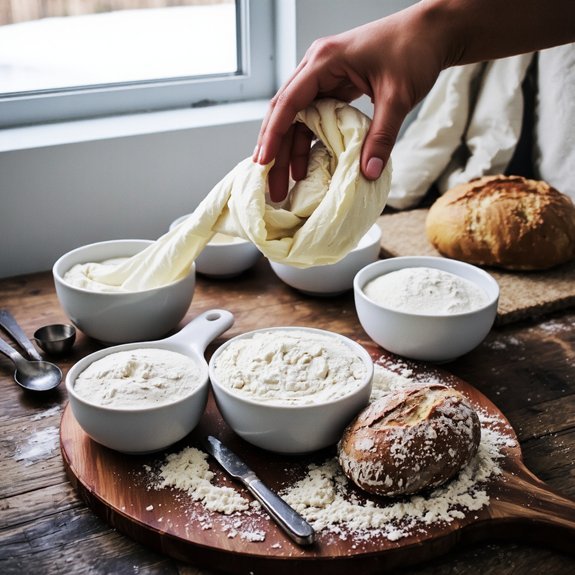
When you’re selecting flour for bread, protein content is the primary factor that determines your dough’s structure and final crumb.
Protein content is the primary factor determining your dough’s structure and final crumb when selecting flour for bread.
Higher protein flours—typically 12-14%—develop stronger gluten networks, which you’ll need for chewy, open crumb structures.
You’re fundamentally building microscopic structure through hydration and kneading, creating interconnected protein strands that trap gas efficiently.
Temperature effects substantially impact gluten development.
You’ll find that warmer doughs ferment faster and develop gluten more readily, while cooler temperatures slow enzymatic activity.
This control lets you manipulate fermentation timing and flavor development.
All-purpose flour works for casual bakers, but bread flour gives you superior results.
You’re not constrained by mediocre protein content—you’ve got the freedom to choose flours that deliver predictable, professional-quality outcomes.
Understanding these mechanics puts genuine control in your hands.
Bread Flour: The High-Protein Champion
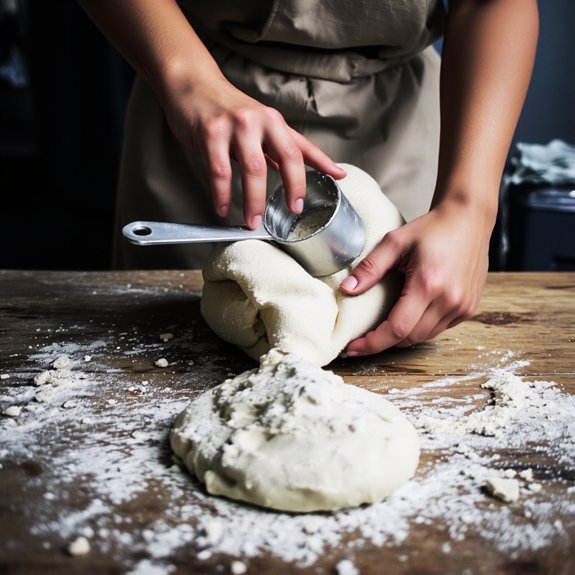
You’ll find that bread flour‘s superiority stems from its protein content, typically ranging from 12-14%, which you can leverage to develop robust gluten networks that trap gas effectively during fermentation.
This high-protein composition you’re working with directly benefits your dough’s elasticity and strength, making it ideal for yeasted breads, artisan loaves, and sandwich breads that demand structural integrity. You’ll achieve superior rise, crust development, and crumb structure with bread flour compared to lower-protein alternatives, particularly in applications where you need pronounced gluten formation.
Protein Content Explained
Why does protein matter so much in bread baking? You’re looking at the backbone of gluten development—the network that gives your bread structure, elasticity, and that satisfying chew you crave.
Bread flour typically contains 12-14% protein, considerably higher than all-purpose flour’s 10-12%. This difference isn’t trivial; it’s transformative. You’ll notice stronger gluten strands forming, better water absorption, and superior rise capabilities.
| Flour Type | Protein % | Gluten Strength |
|---|---|---|
| All-Purpose | 10-12% | Moderate |
| Bread | 12-14% | High |
| Pastry | 7-9% | Low |
Your amino profiles vary across wheat varieties, affecting dough behavior directly. Processing effects matter too—how flour’s milled influences protein accessibility and fermentation speed. You’re not just buying flour; you’re selecting your dough’s fundamental performance characteristics.
Gluten Development Benefits
Because bread flour’s elevated protein content creates superior gluten networks, you’ll achieve stronger dough that traps gas more efficiently during fermentation and baking.
This structural integrity directly enhances your bread’s volume and crumb architecture.
The tightly woven gluten matrix you’re building provides ideal enzyme accessibility, allowing amylases and proteases to break down starches and proteins at precisely controlled rates.
This biochemical activity drives fermentation efficiency, generating the carbon dioxide that inflates your loaf while developing complex flavors.
You’re not merely mixing ingredients—you’re orchestrating molecular interactions.
The robust gluten framework you’ve established resists over-proofing, granting you greater control over your baking timeline.
This reliability empowers you to produce consistent, professional-quality bread that respects your creative vision and schedule demands.
Best Bread Types
Now that you’ve grasped how gluten networks function in fermentation, understanding which bread types best capitalize on bread flour‘s high-protein advantage becomes practical.
You’ll find bread flour excels in artisan loaves, baguettes, and sourdough where strong gluten structures aren’t negotiable.
These regional classics—from French boules to Italian pagnotta—demand the robust protein content that bread flour delivers.
You’re not constrained by mediocre results; instead, you gain consistent rise, superior crumb structure, and authentic texture.
For serving suggestions, pair your high-protein creations strategically.
Crusty loaves complement hearty soups and stews.
Softer varieties work for sandwiches and toast.
You control the outcome by selecting bread flour deliberately.
This choice liberates you from disappointing, dense results, ensuring your baking ambitions translate into exceptional bread that satisfies genuine expectations.
All-Purpose Flour: The Versatile Workhorse

When you’re seeking a reliable flour that’ll perform across multiple bread applications without specialized equipment or techniques, all-purpose flour delivers consistent results.
All-purpose flour delivers consistent results across multiple bread applications without requiring specialized equipment or techniques.
Its protein content—typically 10-12%—strikes an ideal balance between structure and tenderness, accommodating everything from sandwich loaves to artisan batards.
You’ll find bleached alternatives offer slightly lighter crumb color and marginally softer texture compared to unbleached varieties.
However, unbleached options provide superior flavor development and nutritional retention.
Mastering proper sifting techniques guarantees even hydration and eliminates lumps that compromise dough consistency.
Incorporate sifting into your routine, particularly when scaling recipes or working with aged flour stocks.
All-purpose flour liberates you from purchasing specialty products while maintaining flexibility.
It’s economical, widely available, and produces reliable outcomes when you understand its characteristics and limitations.
Whole Wheat Flour: Nutty Flavor and Nutrition

Whole wheat flour delivers substantially more nutritional value than refined alternatives, retaining the bran and germ that all-purpose flour removes during processing.
You’ll gain significant fiber benefits that support digestive health and sustained energy levels.
The nutty, earthy taste profile of whole wheat flour requires thoughtful flavor pairing—it pairs excellently with honey, molasses, seeds, and robust spices.
You’re not limited to dense, heavy loaves; modern milling techniques produce finer whole wheat varieties that yield lighter textures while preserving nutrition.
However, whole wheat flour absorbs more water than all-purpose flour, so you’ll need to adjust hydration ratios in your recipes.
The bran cuts gluten strands, potentially reducing rise.
Blending whole wheat with bread flour gives you ideal results: enhanced nutrition without sacrificing structure or palatability.
You control your bread’s nutritional destiny.
Specialty Flours for Unique Bread Styles

Beyond blending whole wheat with bread flour, you’ll discover specialty flours that open up entirely different bread styles and flavor profiles. Teff, an ancient Ethiopian grain, creates injera—a spongy, fermented flatbread with distinctive sourness and nutritional density. You’ll appreciate its naturally high fiber and mineral content.
Chickpea flour delivers protein-rich alternatives like socca, a crispy Provençal pancake that demands no gluten. This legume-based option offers you complete amino acid profiles alongside bold, earthy flavors.
Specialty flours liberate you from conventional wheat constraints. They’re engineered for specific applications: buckwheat for nutty complexity, sorghum for subtle sweetness, taro for tropical notes. Each flour possesses unique hydration requirements and gluten structures that demand precision adjustments.
You’ll expand your baking repertoire substantially by mastering these alternatives, revealing global bread traditions and accommodating dietary restrictions simultaneously.
How to Choose the Right Flour for Your Recipe
You’ll want to prioritize protein content because it directly determines how much gluten you can develop for your desired crumb structure—bread flour’s 12-14% protein yields stronger networks than all-purpose flour’s 10-12%.
The ash level, which represents mineral content from the grain’s bran and germ, also influences your dough’s handling properties and final texture, making it essential to check for lower ash percentages in refined flours and higher levels if you’re working with whole grain varieties.
Protein Content Matters
When selecting flour for bread, protein content is your most critical decision point.
You’ll want to understand label interpretation to identify your flour’s protein percentage, typically ranging from 10% to 14% for bread flour.
Higher protein content develops stronger gluten networks, giving you superior rise and structure.
Your dietary implications matter too.
Protein-rich flours sustain longer fermentation and create chewier crumbs, while lower-protein options yield tender results.
You’re not locked into one choice—whole wheat flour contains roughly 14% protein, rye offers 8-10%, and all-purpose sits around 11%.
You’re free to experiment based on your desired outcome. Knowing these distinctions empowers you to make informed decisions without relying on marketing claims alone.
Gluten Development for Texture
The gluten network you create during mixing directly determines your bread’s final texture and crumb structure.
You’ll develop superior gluten by understanding key techniques:
- Implement an autolyse period—let flour and water rest 30-60 minutes before adding salt and yeast
- Use high-protein flour (12-14%) to maximize gluten potential
- Apply strategic folding techniques instead of continuous mixing to build strength without overdeveloping
- Monitor dough temperature, as warmth accelerates gluten formation
Your folding technique matters substantially.
Gentle, deliberate folds every 30 minutes during bulk fermentation create extensibility without toughness.
This approach gives you control—you’re not enslaved to aggressive mixing.
The autolyse period jumpstarts hydration, allowing flour to fully absorb water before gluten development begins.
This combination produces open crumb with balanced chew and structure you’re seeking.
Ash Level Considerations
Ash content—the mineral residue remaining after flour combustion—directly influences your bread’s flavor profile, color, and fermentation characteristics. You’ll find ash levels ranging from 0.5% in refined white flour to 2% in whole wheat varieties.
Higher ash content delivers deeper, more complex flavors and superior nutritional density, giving you greater control over your bread’s final character. However, it also affects gluten structure and water absorption rates, demanding recipe adjustments.
Modern ash testing provides precise measurements, letting you select flour matching your specific needs. Different milling methods notably alter ash levels—stone milling retains more minerals than industrial roller milling.
You’re free to experiment across the ash spectrum. Understanding these mineral concentrations empowers you to make informed choices that align with your baking objectives and desired outcomes.
Storing and Handling Flour for Optimal Results
Once you’ve selected your ideal bread flour, proper storage becomes essential to maintaining its quality and baking performance.
Proper storage is essential after selecting your ideal bread flour to maintain quality and baking performance.
You’ll want to implement these critical practices:
- Store flour in airtight containers away from light and heat
- Maintain humidity control between 50-60% to prevent moisture absorption
- Keep temperatures consistently cool, ideally below 70°F
- Establish pest prevention measures using sealed storage and regular inspections
You’re safeguarding your flour’s protein content and gluten development potential by controlling environmental factors.
Humidity fluctuations compromise hydration calculations during mixing, while temperature variations accelerate oxidation and rancidity.
Proper pest prevention protects against contamination that compromises both safety and flavor.
Your independent baking success depends on these foundational storage protocols.
You’ll notice improved dough consistency, rise patterns, and bread structure when you’ve mastered flour handling fundamentals.
Frequently Asked Questions
Can I Substitute One Flour Type for Another in Bread Recipes Without Adjusting Other Ingredients?
You can’t freely swap flour types without adjusting ingredients.
Different flours possess varying protein content, which directly impacts gluten development and your bread’s structure.
High-protein bread flour (12-14%) creates stronger gluten networks than all-purpose flour (10-12%).
You’ll need to modify hydration levels and kneading times accordingly.
Lower-protein flours require less water; higher-protein varieties demand more.
Ignoring these adjustments compromises your bread’s rise, crumb structure, and overall quality.
Why Does Flour Color Vary Between Brands, and Does It Affect Baking Results?
You’ll find flour color varies due to wheat varieties used and bleaching effects applied during processing.
Different wheat strains contain distinct pigment levels, while bleaching agents lighten the flour chemically.
These variations directly impact your baking results—darker flours absorb more water and develop stronger gluten networks, affecting dough hydration, rise time, and crust color.
You’re free to choose based on your desired outcome.
What Causes Flour to Go Rancid, and How Do I Know It’s Spoiled?
Flour deteriorates through lipid oxidation, where fats interact with oxygen over time.
You’ll detect spoilage via sensory indicators: a musty, off odor replaces flour’s neutral smell, and you’ll notice bitter or soapy tastes.
Discoloration and visible mold also signal degradation.
Storage conditions accelerate rancidity—heat, humidity, and light exposure speed oxidation.
Keep your flour sealed in cool, dark environments to maintain freshness and preserve your baking independence from premature spoilage.
Is Expensive Flour Always Better Quality Than Budget-Friendly Options for Bread Baking?
You won’t always find superior bread flour in premium-priced options. Budget-friendly flours can deliver excellent results when you understand milling methods and protein variability.
What matters most is your flour’s protein content—typically 12-14% for bread—not its price tag. You’re free to experiment with affordable brands; many use quality milling techniques producing consistent protein levels.
Compare specifications rather than relying on cost alone when selecting your flour.
How Does Altitude and Humidity Affect Flour Performance in Bread Recipes?
You’ll find that altitude and humidity directly impact your flour’s moisture absorption and proofing times. Higher elevations reduce atmospheric pressure, accelerating evaporation and drying out your dough faster.
Conversely, humid conditions increase moisture absorption, requiring you to adjust hydration levels downward. You’ve got to modify proofing times accordingly—shorter periods at altitude, longer in humid climates.
This flexibility lets you master bread-making anywhere, giving you complete control over your final product’s quality.
Leave a Comment