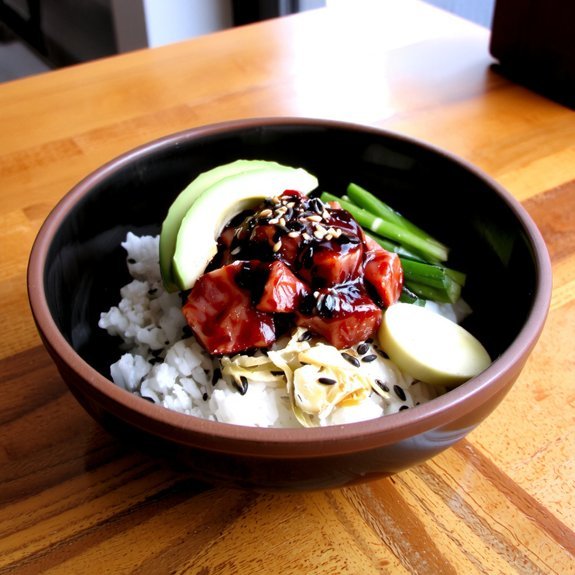

You’ll make a restaurant-quality tuna poke bowl by starting with sashimi-grade tuna, a balanced soy-sesame-ginger marinade, and a warm rice base. You’ll learn how to pick fish, prepare sauces, layer contrasting textures, and plate with purpose. Follow these steps and you’ll have a vibrant, refined bowl that’s impressive enough to serve to guests…
Ingredients & Supplies
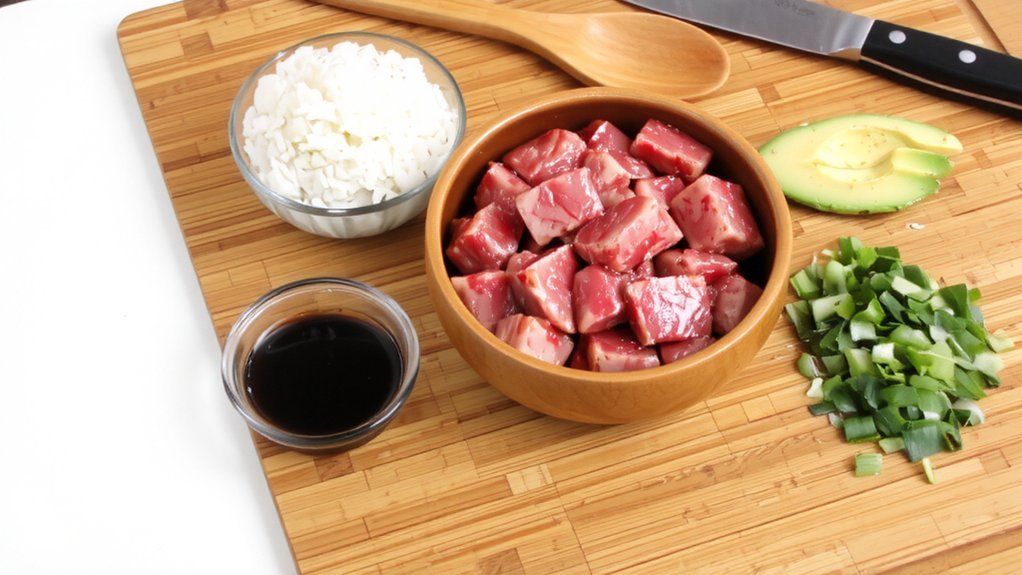
While you’ll build flavor around sushi‑grade tuna, assemble all ingredients and tools before you start: bite‑sized ahi or yellowfin, a soy‑sesame‑ginger marinade, cooked sushi or jasmine rice, and fresh add‑ins like avocado, edamame, cucumber, radish, mango or pineapple.
You’ll need a sharp knife, a marinating bowl, a rice cooker or pot, serving bowls and utensils. Prepare garnishes, sesame seeds, green onions, furikake, nori and optional tobiko, plus sauces such as spicy mayo, ponzu or unagi.
Plan flavor combinations deliberately, balancing salty, sweet, acidic and fatty elements so toppings complement the tuna. Note nutritional benefits when composing bowls: lean protein, healthy fats from avocado, fiber from vegetables and potassium from mango.
Organize ingredients by station so you’ll assemble efficiently and cleanly and serve immediately chilled. The word “poke” means slice or cut, reflecting its preparation of raw, marinated fish.
Choosing the Right Tuna
Choose sashimi-grade tuna to guarantee safety and peak flavor for raw poke.
Pick yellowfin for a mild, firm bite or bigeye for richer, fattier tenderness.
Look for bright pink/red flesh, firm texture, and no strong fishy odor as signs of freshness.
The word “poke” actually means to slice in Hawaiian, reflecting its origin.
Sashimi-Grade Requirement
Because “sashimi‑grade” isn’t a regulated term, you should treat it as a vendor claim and verify safety by checking for flash‑freezing, continuous cold‑chain handling, and the supplier’s practices; true sashimi‑quality tuna is flash‑frozen immediately after catch (or superfrozen) to preserve texture and meet FDA parasite-control recommendations (−20°C for 7 days or −35°C for 15 hours). This means choosing fish that is safe for raw consumption and handled accordingly.
It will look and smell fresh, feel firm, and come from a reputable source. When choosing tuna, follow clear sourcing guidelines and assess quality indicators: vibrant red or pink color, minimal odor, firm texture, appropriate fat content, and clean handling.
Buy from established suppliers who document freezing, maintain hygienic cutting environments, and can confirm chain-of-custody. If you can’t verify those steps, don’t use the fish raw or pass.
Yellowfin Vs Bigeye
Tuna selection hinges on understanding how yellowfin and bigeye differ: you’ll pick bigeye for richer, fattier slices—its plump body, large eyes, and deeper-red flesh stand up to bold sauces and raw preparations—and yellowfin for a firmer, milder, leaner fish that grills or sears cleanly. Note that adult bigeye often have a rounded body, which helps distinguish them from yellowfin. You should weigh yellowfin characteristics against bigeye preferences: yellowfin gives leaner texture and steady culinary uses, while bigeye tolerates richer seasonings and raw service. Consider fishing techniques and market availability when sourcing; larger specimens yield higher fat.
| Trait | Practical note |
|---|---|
| Body & fins | Use morphology for ID |
| Flavor & use | Match fat to sauce or sear |
Choose species to suit recipe intensity and supply. Buy from reputable sellers, ask about catch method, and prefer traceable supply when possible for restaurants.
Identifying Freshness
How can you tell if a cut is fresh? You inspect color indicators first: vibrant deep red or light pink is typical, but CO treatment and species variance can mask true quality.
Use smell assessment: fresh tuna should be nearly odorless with a faint iron note; avoid any fishy or ammonia odor.
Perform a texture evaluation: press—flesh should be firm, hefty like steak, not squishy, and bloodlines should be red without strong smell.
Check storage: displayed on ice or refrigerated below 40°F.
For sushi-grade, look for supplier assurances and clear handling tips: buy same day, use clean hands and utensils, keep constant temperature, and freeze if not used within recommended time.
Trust your senses and reputable sources. Also, remember that properly fresh tuna is generally nearly odorless.
Preparing the Tuna
Choose sushi-grade ahi (yellowfin or bigeye) with a reddish-pink color and no fishy odor, and keep it refrigerated at or below 40°F (4°C) until you’re ready to work.
You’ll trim away silver skin and any bloodline, then use strict cutting techniques: a very sharp knife, single smooth strokes, and uniform ½–¾-inch cubes. Cutting the tuna into uniform 1/2-inch cubes helps ensure even texture and presentation.
Handle the flesh gently so texture stays firm.
For tuna marination, plan 20–30 minutes to let flavors penetrate without breaking down the flesh; always marinate in a sealed container on the lowest fridge shelf.
Prevent cross-contamination by using dedicated boards and utensils, and keep raw tuna covered and chilled until assembly.
Use dedicated boards and utensils, and keep raw tuna covered and chilled until assembly to prevent cross-contamination.
Assemble bowls just before serving to preserve freshness and appearance.
Follow these steps and your poke will taste clean and precise.
Marinade & Sauce Recipes
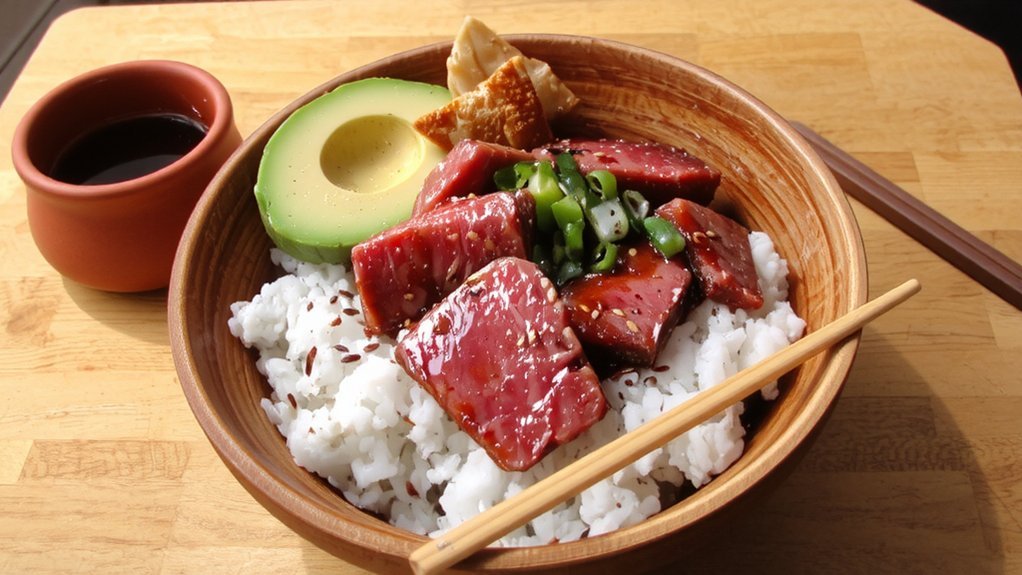
One clear rule: build your poke sauce around a salty umami base (soy sauce), a nutty fat (toasted sesame oil), and a bright acid (rice vinegar), then layer in grated ginger or garlic, a touch of sweetener, and optional heat to taste.
You’ll aim for marinade balance and clear flavor harmony so the tuna shines. Combine liquids, aromatics, and sweetener, taste, then briefly marinate cubed tuna 15 to 30 minutes chilled. Don’t over-marinate. Use sushi-grade tuna to ensure safety and the best texture.
For texture and contrast, finish with seeds and scallions. Add mirin sparingly for depth and texture.
- Warm comfort of toasted sesame
- Bright snap of rice vinegar
- Clean heat of grated ginger
- Subtle sweetness to soothe salt
- Crunch and scent from scallions and sesame seeds
Store briefly; serve immediately for best freshness.
Rice and Base Options
Choose a base that matches your flavor and nutrition goals: use sushi or short-grain rice for classic stickiness, jasmine or basmati for aromatic nuance, or brown rice for more fiber.
If you want lower carbs or more protein, use quinoa, cauliflower rice, zoodles, or a bed of salad greens.
Cook rice precisely, season sushi rice with rice vinegar, sugar and salt, cool it to warm before assembly, and spread it thin to speed even cooling.
Poke is rooted in a Hawaiian tradition.
Best Rice Types
When you pick a base for your poke bowl, focus on texture and flavor absorption rather than trends. Choose rice variations: short-grain or sushi rice gives chew and stickiness to hold sauces; jasmine adds aroma; long-grain keeps things light; brown boosts nutrients; arborio creates a creamy twist.
Poke bowls originate from Hawaii and traditionally feature marinated fish, which influenced the use of marinated fish as a central ingredient.
Use proper cooking methods to control stickiness and temperature—rinse, measure, and cool appropriately.
- Short-grain sushi rice for authentic mouthfeel
- Jasmine rice for fragrant, delicate contrast
- Long-grain white for fluffy, separated grains
- Brown rice for nutty, firmer bite and fiber
- Arborio for a decadent, creamy variation
Match rice choice to your tuna and dressings to balance texture and flavor. Train yourself to taste textures; the right base elevates every bite and memory daily.
Low-Carb Alternatives
If you want to cut carbs but keep texture and flavor, cauliflower rice and vegetable bases give you bowl volume without the starch. Choose cauliflower rice, zoodles, leafy greens or shirataki rice to lower carbs while retaining poke structure. You’ll gain nutritional benefits: more fiber, micronutrients and lower glycemic load.
Match flavor combinations—cucumber, radish, edamame and pickles—so sauces and toppings balance acidity, heat and umami. Use simple cooking methods: quick sauté, steam or serve raw to preserve crunch and nutrients.
Pay attention to ingredient sourcing; buy fresh or trusted frozen riced cauliflower and high‑quality shirataki to avoid off‑tastes. Combine several vegetable bases for texture contrast and satisfying, low‑carb tuna poke bowls.
Rotate bases to keep meals interesting and aligned with dietary goals regularly too. Remember that the traditional base is sushi rice, which you can substitute if desired.
Rice Preparation Tips
Although great poke starts with well-prepared rice or a thoughtfully chosen base, your goal is the same: reliable texture and clean flavor. For authentic texture, prefer Japanese short-grain rice when possible. Choose sushi labeled short grain or brown short grain for nuttier notes; avoid long grain.
Prioritize rice washing until water runs clear and soak 20 to 45 minutes for even moisture. You’ll use a rice cooker, stovetop, or Instant Pot. Follow tested cooking methods and a 1:1 rice to water ratio; add kombu.
Season cooked rice with sushi vinegar, fold gently while cooling, and cool to skin temperature. Store covered at temperature, refrigerate leftovers up to three days.
- Anticipation of that first perfect bite
- Comfort in glossy, firm grains
- Pride in precise technique
- Satisfaction from balanced seasoning
- Joy of effortless assembly
Toppings and Mix-Ins
Because toppings and mix-ins define a poke bowl’s balance, you should choose components that layer texture, flavor, and color without overwhelming the tuna. Use creative combinations that pair creamy avocado, sweet mango or pineapple, and crisp cucumber or daikon for clear flavor contrasts.
Add edamame or shredded carrots for protein and bite; nori strips or seaweed salad bring umami chew. Sprinkle toasted sesame seeds, tobiko, or macadamia nuts for varied crunch. Drizzle selectively with spicy mayo, ponzu, toasted sesame oil, or tamari to tie elements without saturating them.
Include optional items—marinated tofu, crab, pickled ginger, wasabi peas—to broaden profiles. Stay intentional: limit toppings to three to five complementary components so the tuna remains central. Adjust quantities to suit salt, heat, acidity, and sweetness. Always verify that the fish is labeled as sushi-grade before using it raw.
Assembly and Plating
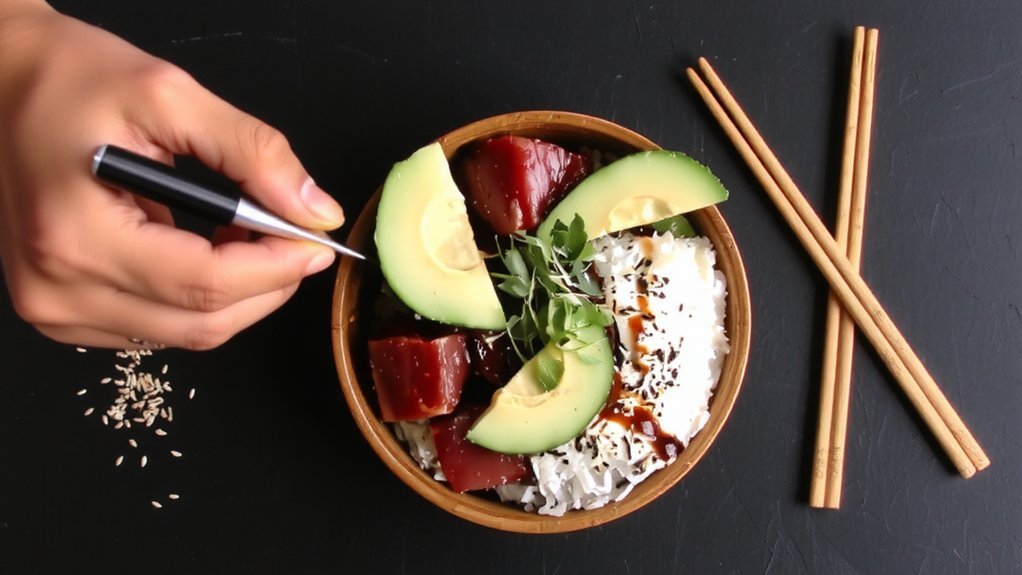
Now that you’ve selected toppings, assemble the bowl with intention: choose a wide, shallow vessel and spread a neat, chilled layer of sushi rice (or alternative) to cover the bottom evenly, patting gently and sprinkling furikake or sesame if you want hidden umami. As a reminder, poke is a traditional Hawaiian dish, so prioritize using sashimi-grade fish for raw preparations.
Use precise assembly techniques: place marinated tuna in a defined section, arrange vegetables in neat clusters, and keep garnishes deliberate to preserve contrast and structure. Maintain clean edges and avoid overcrowding; chilled base preserves texture.
- Anticipation: bright reds and greens lift the spirit.
- Calm: orderly sections promise composed bites.
- Excitement: scattered sesame and roe spark joy.
- Relief: clean rims signal professional care.
- Pride: a balanced, seasonal bowl invites admiration.
You control plating aesthetics with restraint, rhythm, contrast and negative space.
Serving Suggestions and Temperature
How you balance temperatures will make or break the poke experience: serve sushi rice warm (about 55–65°C) and keep raw tuna chilled at refrigerator temperature (4–7°C) to preserve texture, flavor and safety. Poke bowls are best enjoyed fresh. You’ll create a purposeful temperature contrast by pairing steaming rice with fridge-cold tuna; keep cooked vegetables warm and raw veg cool to maintain texture.
Balance temperatures: serve sushi rice warm (55–65°C) and keep raw tuna chilled (4–7°C) for optimal texture, flavor and safety.
Use chilled bowls for longer cold-holding and warm plates or a brief rice rest to hold heat. Dressings are best at room temperature for easy drizzling.
For safety, hold raw fish 0.5–5°C and discard seafood left over two hours at room temp. These serving tips guarantee peak mouthfeel, aroma release and consumer confidence without compromising food safety.
In commercial settings, monitor temperatures with calibrated thermometers regularly and logs.
Variations and Dietary Swaps
You can swap ahi tuna for salmon, hamachi, seared tuna, tofu, or cooked shrimp to change flavor and meet dietary needs.
For the base, choose sushi or short-grain rice, sticky brown rice, quinoa, cauliflower rice, or mixed greens depending on fiber, carb, and keto goals.
Mix and match proteins with these grain options to balance texture, protein content, and dietary restrictions.
They are also high in protein, providing healthy fats like omega-3s for heart health.
Protein Swaps
Although tuna is the classic choice, plenty of protein swaps let you tailor a poke bowl to taste, diet, or safety needs: sushi‑grade salmon or snapper for a similar raw texture, cooked shrimp or seared salmon and grilled chicken for those avoiding raw fish, and plant options like firm tofu, tempeh, edamame, or pea‑protein fish alternatives for vegans.
For safety, choose sushi‑grade tuna from a trusted seafood market.
You’ll choose swaps based on plant based proteins versus cooked seafood, balancing nutritional benefits, texture enhancements, and flavor profiles while respecting food safety. Marinate firmly, add crunch, and adjust sauces to match the protein.
- Searing warms and soothes.
- Tempeh delivers nutty comfort.
- Tofu absorbs bright marinades.
- Edamame adds playful pop.
- Grilled chicken feels familiar.
Pick proteins deliberately to satisfy cravings, allergies, and dietary goals every time.
Grain & Rice Alternatives
When you want to rethink the rice in a poke bowl, pick a base that matches your nutrition goals and texture preferences: whole-grain brown or sticky brown for fiber and chew, cauliflower rice or shredded cabbage for a low‑carb crunch, quinoa or millet for gluten‑free protein, and black rice or barley when you need lower glycemic impact. Poke bowls are versatile and made at home with minimal effort.
| Base | Benefit | Best for |
|---|---|---|
| Brown rice | Whole grain fiber, B-vitamins | Whole grain, everyday |
| Cauliflower rice | Low-calorie, crunchy | vegetable substitutes, low-carb |
| Quinoa | Protein, gluten free options | Gluten free options, protein |
| Black rice | Low GI, antioxidants | low GI, diabetic-friendly |
You’ll favor whole grain bases, use vegetable substitutes like cauliflower or cabbage, choose gluten free options such as quinoa or millet, pick low GI black rice, try pasta alternatives sparingly.
Storage and Food Safety
If you plan to keep tuna poke, store fresh seafood at 40°F (4°C) or below and use a clean refrigerator thermometer to confirm it. Purchase fish that is refrigerated or displayed on fresh ice. Follow strict storage guidelines and safety measures: refrigerate tightly wrapped tuna for up to two days or freeze at 0°F (-18°C) for long-term storage.
Prevent cross-contamination by separating raw and cooked seafood, washing hands 20 seconds after handling, and sanitizing surfaces and utensils. Freeze leftovers in freezer-safe containers for up to three months.
Be aware that improper temperatures can enable histamine formation and bacterial hazards; choose reputable, sashimi-grade fish and verify proper freezing history. Always check labels; avoid packages with frost present.
- Heart-sinking risk avoided
- Relief knowing you acted
- Confidence in every bite
- Frustration turned into control
- Calm about leftovers
Leave a Comment