

Key Takeaways
- Cream butter and sugar until fluffy, then add eggs one at a time before alternating dry ingredients with buttermilk for cake layers.
- Bake two 9-inch round pans at 350°F for 30–35 minutes until a toothpick emerges clean from the chocolate cake layers.
- Cook evaporated milk, butter, and brown sugar for exactly 12 minutes, then add vanilla, coconut, and pecans for the signature frosting.
- Apply thin crumb coating first, then layer cakes with ¼ inch frosting between layers and ½ inch thick final coat.
- Vegan substitutions include coconut oil for butter, flax eggs for eggs, and almond milk with lemon juice for buttermilk.
Ingredients You’ll Need
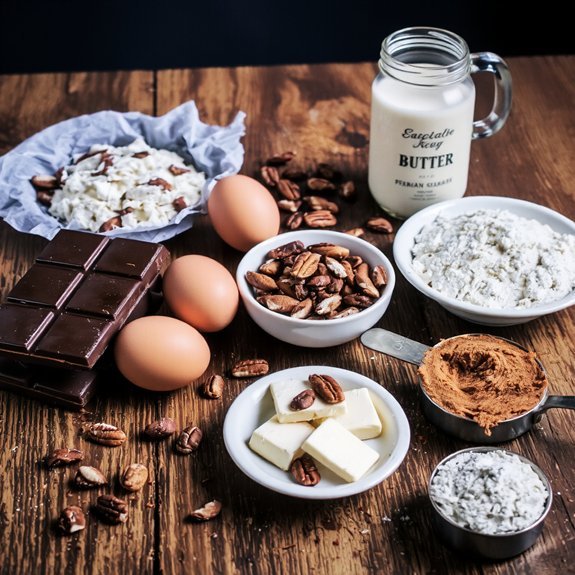
You’ll need two cups of all-purpose flour, one teaspoon of baking soda, one-half teaspoon of salt, one cup of unsalted butter, two cups of granulated sugar, four large eggs, one teaspoon of vanilla extract, and one cup of buttermilk for the cake layers. Additionally, source high-quality cocoa powder—one cup—for rich chocolate flavor.
You’ll also require one cup of shredded coconut, one can of evaporated milk, three-quarters cup of margarine, and one cup of pecans for the signature topping.
For vegan alternatives, substitute butter with coconut oil, eggs with flax eggs, and buttermilk with almond milk mixed with lemon juice. Replace the traditional topping’s margarine with vegan butter and evaporated milk with coconut cream. These substitutions maintain authentic German chocolate cake characteristics while respecting dietary preferences.
Preparing the Chocolate Cake Layers
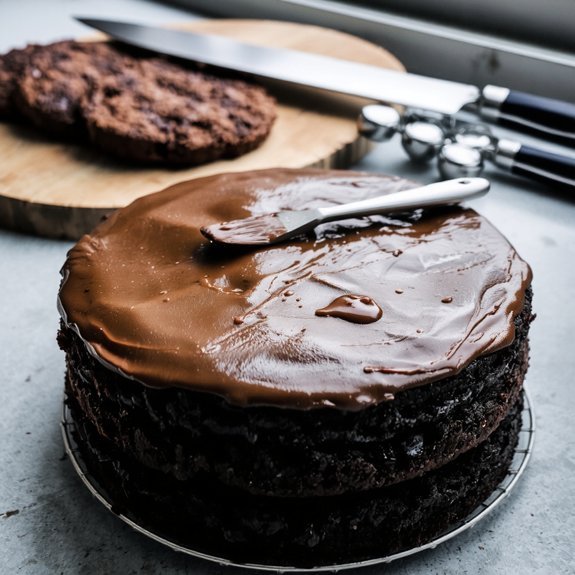
With your ingredients assembled, it’s time to transform them into rich, moist cake layers. Start with pan preparation by greasing two 9-inch round cake pans with butter, then dust them lightly with flour.
In a large bowl, cream together 2 cups sugar and ½ cup butter until fluffy. Add 4 egg yolks one at a time, beating well after each addition.
Combine 2 cups flour, ¾ cup cocoa powder, 2 teaspoons baking soda, and ½ teaspoon salt. Alternate adding dry ingredients and 1 cup buttermilk to your mixture, beginning and ending with dry ingredients.
Stir in 1 teaspoon vanilla extract. Your batter consistency should be smooth and pourable.
Divide evenly between prepared pans. Bake at 350°F for 30-35 minutes until a toothpick emerges clean.
Making the Coconut-Pecan Frosting
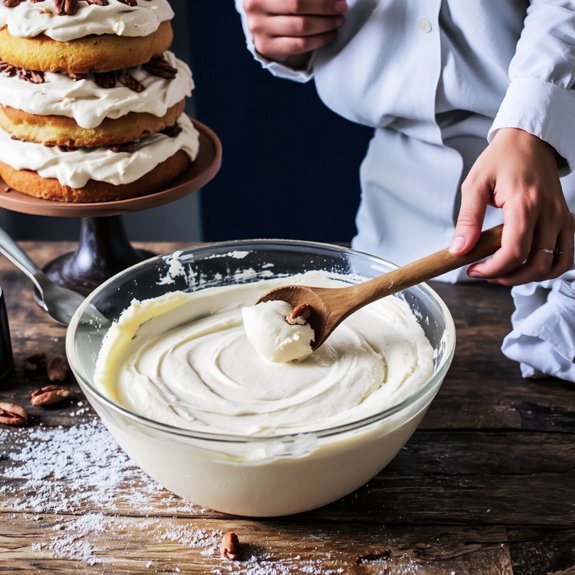
Creating this distinctive frosting requires combining 1 cup evaporated milk, ¾ cup butter, and 1 cup brown sugar in a saucepan over medium heat.
Stir constantly until the mixture reaches a gentle boil, then continue cooking for exactly 12 minutes while maintaining steady heat.
This Texas origins recipe demands precision—don’t rush this step.
Remove from heat and immediately add 1 teaspoon vanilla extract, 1⅓ cups shredded coconut, and 1 cup chopped pecans. Stir thoroughly until you’ve distributed ingredients evenly throughout the warm frosting.
Regional variations exist across Texas and beyond, with some cooks adjusting coconut-to-pecan ratios or adding extra vanilla for deeper flavor. You’ll notice the frosting thickens as it cools, reaching perfect spreadable consistency within minutes. Apply while still slightly warm for ideal adhesion to your cake layers.
Assembling and Frosting Your Cake
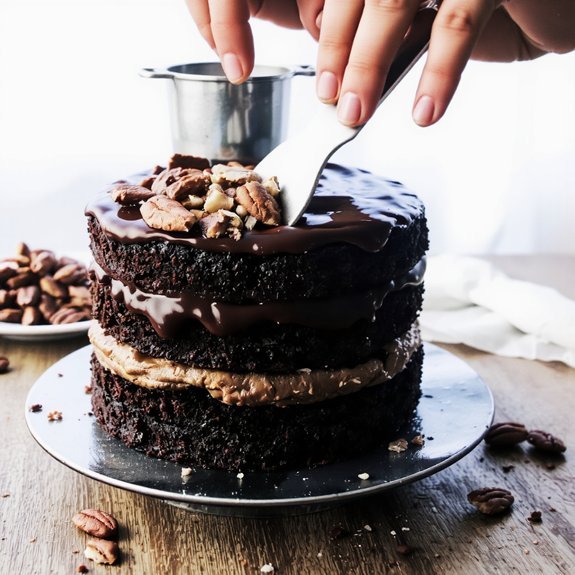
Once your coconut-pecan frosting has cooled to a spreadable consistency, it’s time to layer and frost your cake.
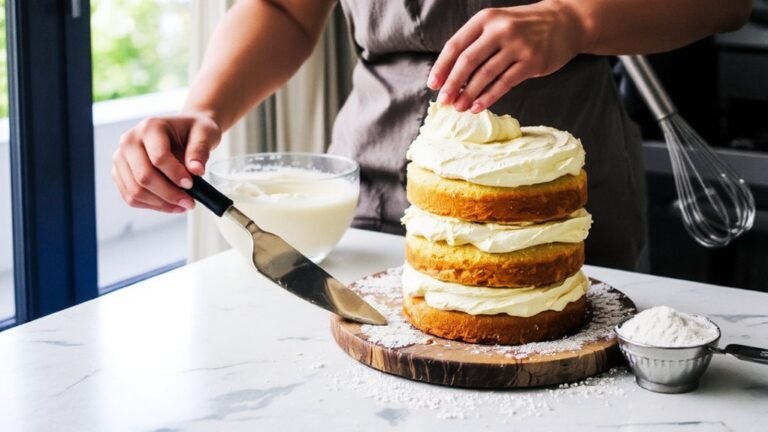
Start with a crumb coating—a thin initial layer that seals in loose crumbs and creates a clean surface for your final frosting layer.
A crumb coating seals loose crumbs and creates the perfect clean surface for your final frosting layer.
Place your first cake layer on a serving plate, apply approximately ¼ inch of frosting, then stack the second layer.
Repeat this process with the third layer.
Now apply your generous final frosting coat, working roughly ½ inch thickness across all surfaces.
For decorative piping, transfer remaining frosting to a pastry bag fitted with your preferred tip.
Pipe borders around the cake’s top edge and base, creating definition and visual appeal.
You’re free to customize your design—stars, rosettes, or beaded patterns all work beautifully.
Chill your finished cake for thirty minutes before serving to set the frosting completely.
Tips for Baking Success
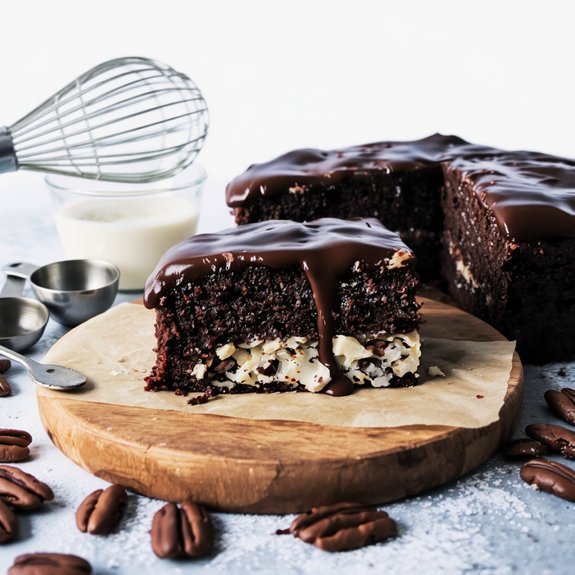
Since German chocolate cake demands precision in both ingredients and technique, you’ll achieve superior results by measuring your dry ingredients by weight rather than volume.
Invest in a reliable kitchen scale to eliminate guesswork entirely.
Maintain your Equipment Maintenance standards by ensuring your mixing bowls, beaters, and baking pans are scrupulously clean and dry.
Any residual grease compromises cocoa powder’s performance and undermines your frosting’s texture.
When Recipe Scaling becomes necessary, adjust all components proportionally—cocoa, chocolate, and leavening agents alike.
Don’t arbitrarily modify single ingredients, as this destabilizes the chemical balance your cake requires.
Room-temperature ingredients blend more effectively than cold ones, so remove eggs and buttermilk from refrigeration thirty minutes before mixing.
This deliberate approach grants you complete control over your baking outcome.
Frequently Asked Questions
Can I Make German Chocolate Cake Ahead of Time and Freeze It?
You can absolutely freeze your German chocolate cake for up to three months. Wrap each slice individually in plastic wrap, then aluminum foil to prevent freezer burn.
Don’t frost it beforehand; instead, freeze the unfrosted layers. After thawing at room temperature for two hours, you’ll apply fresh frosting, which guarantees ideal texture and flavor. This method gives you complete control over your dessert’s timing and quality.
Why Is It Called German Chocolate Cake if It’s Not From Germany?
You’re naming this cake after Samuel German, who wasn’t from Germany—he’s an American baker who developed a specific chocolate liquor product in 1852.
Baker’s Chocolate Company trademarked his name on their baking chocolate, and when recipes started using “German’s Chocolate,” folks eventually dropped the possessive apostrophe.
That trademark naming convention stuck, cementing your freedom to call it German Chocolate Cake despite its purely American origins and ingredient specifications.
What’s the Best Way to Store Leftover German Chocolate Cake?
You’ll want to store your leftover cake in airtight containers to maintain ideal freshness. Keep it at room temperature for up to two days, or refrigerate for five days maximum.
For longer storage, freeze individual portions in airtight containers for up to three months. Make sure you’ve got moisture control by placing parchment between layers.
This approach preserves the frosting’s texture and cake’s density without compromising quality or your independence in timing consumption.
Can I Substitute Ingredients for Dietary Restrictions or Allergies?
You can absolutely customize your cake for dietary needs.
Swap butter with coconut oil at 1:1 ratio.
Replace milk with almond, oat, or coconut dairy alternatives—maintain the same volume.
For gluten concerns, use 1:1 gluten-free flour blends, adding 1/2 teaspoon xanthan gum per cup.
Substitute eggs with flax eggs (1 tablespoon ground flax plus 3 tablespoons water per egg).
These modifications let you enjoy German chocolate cake without compromise.
How Long Does German Chocolate Cake Typically Last Before Going Stale?
Your German chocolate cake’s shelf life depends on storage conditions.
At room temperature, you’ll notice the staling process beginning within 2-3 days due to moisture loss in the cake’s crumb structure.
You’re better off refrigerating it, where the coconut-pecan frosting and chocolate layers maintain ideal texture for 5-7 days.
Freezing extends shelf life to 2-3 months, preserving the cake’s moisture content and ingredient integrity when properly wrapped.
Leave a Comment