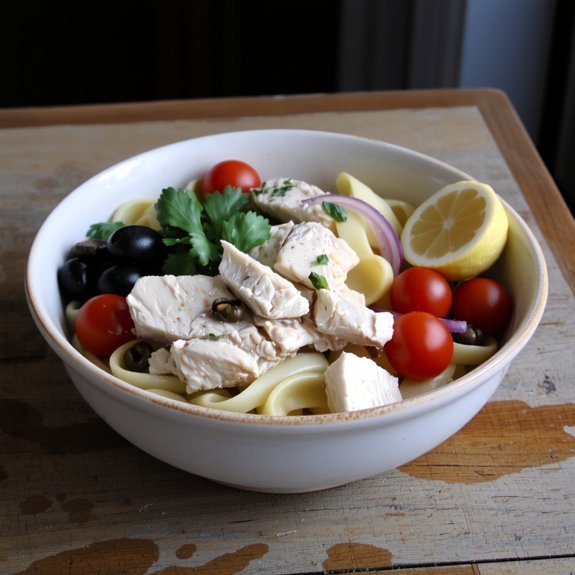

If you want a quick, balanced dinner that holds up for leftovers, you’ll like tuna pasta salad. You combine al dente pasta, flaked tuna, crunchy veg, and a simple dressing for a meal that’s high in protein and easy to portion. I’ll give you exact ratios, dressing choices, and storage tips—keep going to get the practical details.
Ingredients You’ll Need
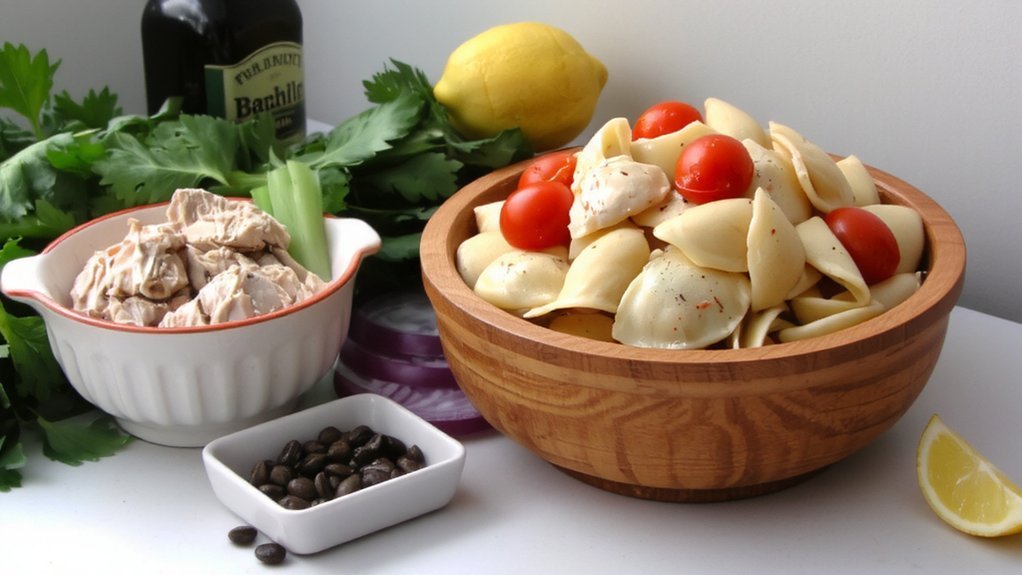
Start with a sturdy pasta (small shells or elbow, about 3.5–10 oz dry) or a gluten-free brown rice fusilli, cook it al dente and cool it before mixing; you’ll choose pasta types for texture and whole‑grain options.
For protein options, use 2–3 cans of tuna (albacore or chunk light), drained and flaked.
Add 1–2 stalks celery, about 1 cup peas, 1/3 cup chopped red onion and optional bell pepper or carrots for crunch.
For dressing, mix 1/3–1/2 cup mayonnaise with Greek yogurt, 1 tablespoon vinegar or lemon juice, and 1 tablespoon Dijon.
Season with salt, pepper and a teaspoon dried dill; garnish with fresh parsley or chives.
Quantities serve 3–4 people.
Keep ingredients chilled and toss just before serving to preserve texture and flavor nicely. When you have leftovers, be sure to store leftovers in a tightly sealed container in the refrigerator for up to five days to maintain freshness.
Nutrition Facts Per Serving
Now that you’ve picked your pasta, tuna and mix-ins, look at what a typical serving delivers: calories range widely depending on ingredients and portion size—about 180 calories for a lighter whole‑grain zesty version up to roughly 400+ calories for richer mayo‑based salads (common estimates: 180–408 kcal per serving).
Use the caloric breakdown to choose portion and dressing: lighter zesty recipes sit near 180 kcal with about 31g carbs, 12g protein and 2g fat; mayo‑based bowls often approach 326–408 kcal with roughly 65% carbs, 24% protein and 11% fat (example: 326 kcal = 65% carbs, 24% protein, 11% fat).
Check labels: sodium and fiber vary—whole‑grain versions boost fiber and lower sodium.
This macronutrient analysis helps you tailor servings to goals. Adjust portions for calorie targets. This recipe serves 4 people.
Step-by-Step Preparation Instructions
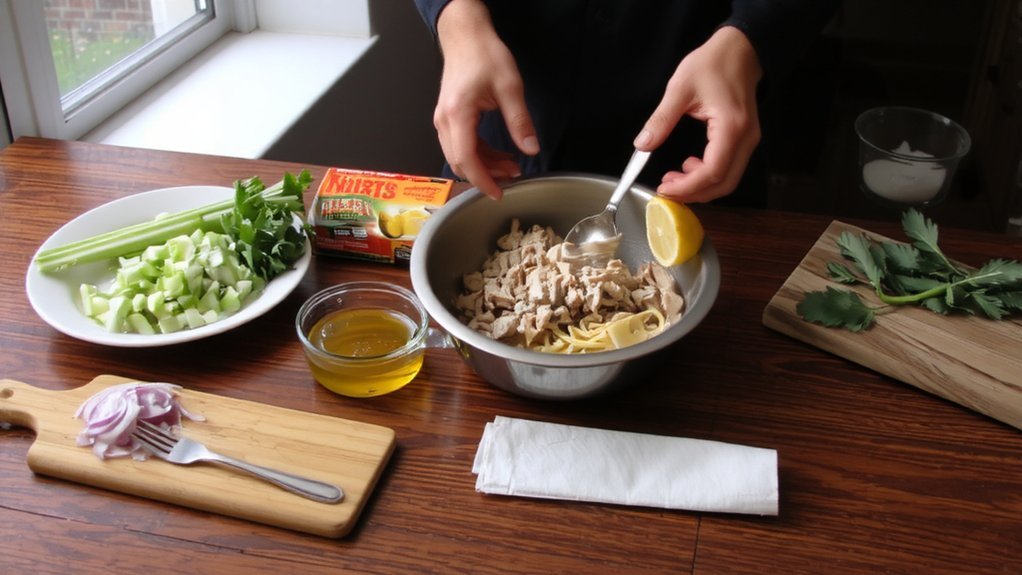
Begin by cooking the pasta to an al dente texture following package directions, then drain and rinse it under cold water to halt cooking and strip excess starch; shake off any remaining water and let the pasta cool to room temperature (or chill it) before mixing to prevent a watery, over‑soft salad. This recipe was inspired by childhood memories.
Transfer the drained pasta to a bowl and use proven preparation techniques: shake off excess water, refrigerate if making ahead, and avoid adding dressing until serving to preserve texture.
Dice vegetables, blanch peas during the last minute of cooking when using, and finely chop herbs for even distribution.
Drain and flake canned tuna thoroughly, then fold tuna and vegetables into the cooled pasta to combine; taste and adjust seasonings for flavor enhancements.
Vinaigrette and Dressing Options
Once your pasta, tuna, and vegetables are combined and cooled, pick a dressing that complements their textures and flavors—an oil‑based vinaigrette will keep the salad light, while a mayo or yogurt blend gives a creamier mouthfeel.
Use extra‑virgin olive oil for richness and choose vinegar or lemon for brightness; Dijon mustard helps emulsify and adds depth. For vinaigrette techniques, whisk oil into acid slowly to form a stable emulsion, or shake in a jar.
Use extra‑virgin olive oil and lemon or vinegar; add Dijon and whisk slowly to emulsify.
Add garlic, herbs, capers or a touch of honey to balance acidity, making precise flavor adjustments by tasting and tweaking oil‑to‑vinegar ratio, salt, and heat.
Make dressings ahead and store separately; toss gently to preserve tuna flakes and texture. They’re lighter and help absorb fat‑soluble vitamins from vegetables and fruit. For best results, let the salad rest before serving for about 30 minutes to allow flavors to meld.
Variations and Add-Ins
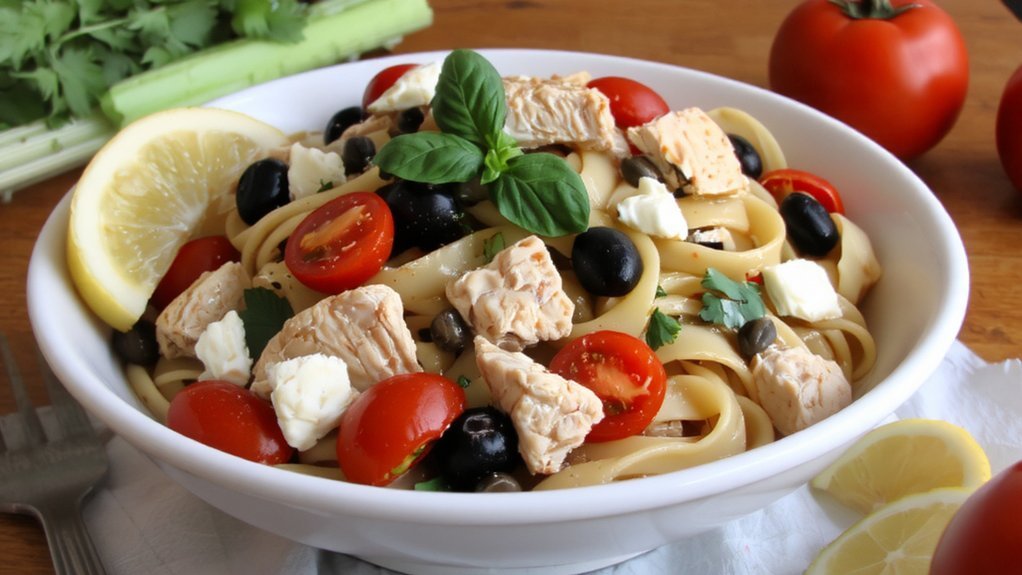
You can switch creamy bases—mayonnaise, Greek yogurt, or avocado—each changes calorie, fat, and tang profiles.
Add veggie boosters like bell peppers, peas, blanched asparagus, or cucumbers for fiber, color, and crunch.
For protein alternatives, swap in chickpeas, hard‑boiled egg, smoked salmon, or grilled chicken to alter texture and nutrient balance.
This recipe can be made in about 30 minutes.
Creamy Dressing Options
Although a mayo–sour cream blend is the classic base, you can tailor creaminess, tang and nutrition by swapping in Greek yogurt, stirring in Dijon mustard, or brightening with lemon juice or apple cider vinegar. It’s versatile enough to serve as a main or side at backyard barbecues.
For a lighter creamy texture and improved flavor balance use Greek yogurt:mayo 1:1, add lemon to cut richness, and a spoonful of Dijon to emulsify and add depth.
Season with garlic powder, salt and pepper; sugar or a touch of honey will soften yogurt’s acidity if needed. For thicker cling, chill the dressed salad several hours.
If you want more protein, fold in chopped hard‑boiled egg or increase yogurt. Add fresh herbs like dill or parsley sparingly to brighten without overpowering, you’ll
Veggie Boosters
To boost texture, flavor and nutrients, pick two or three veggies from different categories—crunchy celery or bell pepper (about 1 cup), a sharp red onion (1 cup diced) or scallion (1/4 cup) for bite, and a fresh element like grape or cherry tomatoes (1 cup) or cucumber for juiciness. This salad is high-protein.
Use veggie sources across Classic, Bright, and Hearty groups to maximize colorful nutrients and texture contrasts. Aim for measured additions: 1 cup crunchy, 1/2 cup hearty, and small flavor accents (capers, olives, herbs).
These flavor combinations keep the salad balanced without overpowering tuna or dressing. Mix cold or briefly blanch broccoli/cauliflower for bite, add shredded kale sparingly, and adjust salt from olives or capers.
Swaps and proportions let you customize.
- Celery
- Cabbage
- Broccoli
- Cucumber
- Kale
Protein Alternatives
When you swap or add proteins, aim for one or two ingredients that complement the tuna’s texture and the dressing’s flavor while boosting nutrition.
| Option | Benefit |
|---|---|
| Chickpea | Protein |
| Salmon | Omega3 |
This salad typically provides 20 g protein per serving, making it a satisfying option. Choose plant based proteins like chickpea pasta or lentil pasta for more fiber and satiety. Use seafood substitutes — salmon or shredded chicken — if you want omega-3s or a similar texture. Add flavorful legumes such as white beans or chickpeas to increase protein and fiber. Consider high protein grains like quinoa pasta or protein-enriched pasta as a base. Enhance creaminess with Greek yogurt or cottage cheese instead of mayo. Hard-boiled eggs, egg whites, nuts, or seeds provide targeted boosts. Keep combinations simple: balance taste, texture, and nutrient density for a satisfying dinner salad.
Serving Suggestions and Pairings
Pairing tuna pasta salad with complementary sides and beverages improves balance, texture, and overall satisfaction: choose crusty bread or garlic‑roasted nuts for crunch, a green or caprese salad for freshness, roasted vegetables or grilled prawns for extra substance, and iced tea, fresh lemonade, or a dry Sauvignon Blanc to cleanse the palate. For best flavor and texture, consider using Wild-caught albacore tuna in the salad.
For an ideal tuna salad serving, keep portions moderate, add a crisp caprese or mixed green as salad pairings, and select one protein side if you want more substance.
Finish with lemon sorbet or fruit salad to refresh the palate.
- Crusty baguette or garlic‑roasted nuts for crunch.
- Roasted vegetables or grilled prawns to boost protein.
- Iced tea, fresh lemonade, or Sauvignon Blanc to cleanse.
- Light desserts like lemon sorbet or fruit salad.
Storage, Reheating, and Make-Ahead Tips
Because you’ll want leftovers that stay safe and flavorful, refrigerate tuna pasta salad in an airtight glass container within 2 hours of making it and keep your fridge at or below 40°F (4°C).
Label the container with the date and place it in the coldest part of the fridge, away from the door. Under proper storage conditions the salad lasts 3–5 days; factors like ingredient quality and handling affect that window. Refrigerated tuna salad made with cooked or canned tuna typically remains safe to eat for 3–4 days.
Use small shallow containers as cooling methods to chill large batches quickly.
Don’t freeze—mayonnaise and veg lose texture.
Serve cold or at room temperature rather than reheating; reheating risks sogginess and flavor loss. If you must reheat, keep temp under 140°F (60°C).
Discard any salad with off odors or slimy texture and enjoy.
Dietary Modifications and Substitutions
How can you adapt tuna pasta salad to fit gluten-free, low‑calorie, heart‑healthy, allergy‑friendly, or plant‑based diets? Choose gluten substitutes like chickpea, lentil, or brown rice pasta, spiralized zucchini, quinoa, or cauliflower rice, and always check tuna labels for additives. Keep in mind a typical serving contains 326 calories, so adjust portions as needed.
Adapt tuna pasta salad for gluten‑free, low‑calorie, heart‑healthy, or plant‑based diets using smart swaps.
For weight control swap mayo for nonfat Greek yogurt, use olive oil sparingly, and bulk with vegetables.
- Use chickpea, lentil, or brown rice pasta as gluten substitutes.
- Spiralized zucchini or cauliflower rice for low‑carb or grain‑free needs.
- Replace tuna with tofu, chickpeas, or tempeh for allergies or plant‑based diets.
- Opt for tuna in water, lemon‑olive oil dressings, and reduced salt for heart health.
Adjust portions and ingredients to match dietary preferences and maintain balanced nutrition.
Test packaged items for hidden allergens and read nutrition labels.
Leave a Comment