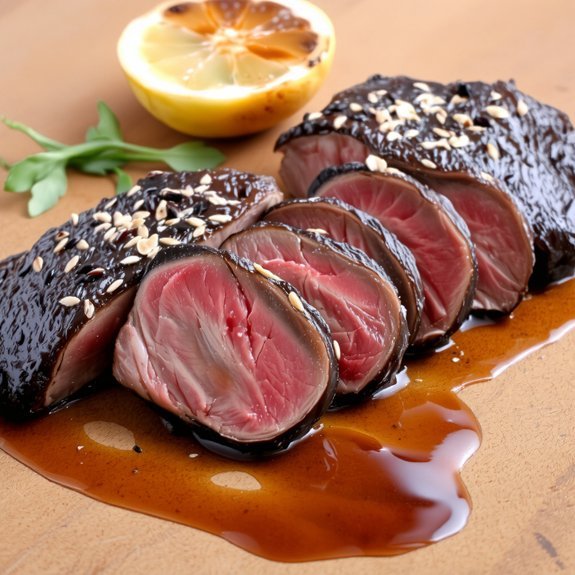

You’ll start by choosing a firm, bright, sushi‑grade tuna and treat it simply so the flavor stands out. You’ll season, sear quickly over high heat, and aim for a warm, pink center. I’ll show exact temperatures, timing, and a finishing sauce that lifts the fish—plus one technique that guarantees a perfect sear.
Choosing the Best Tuna Steak
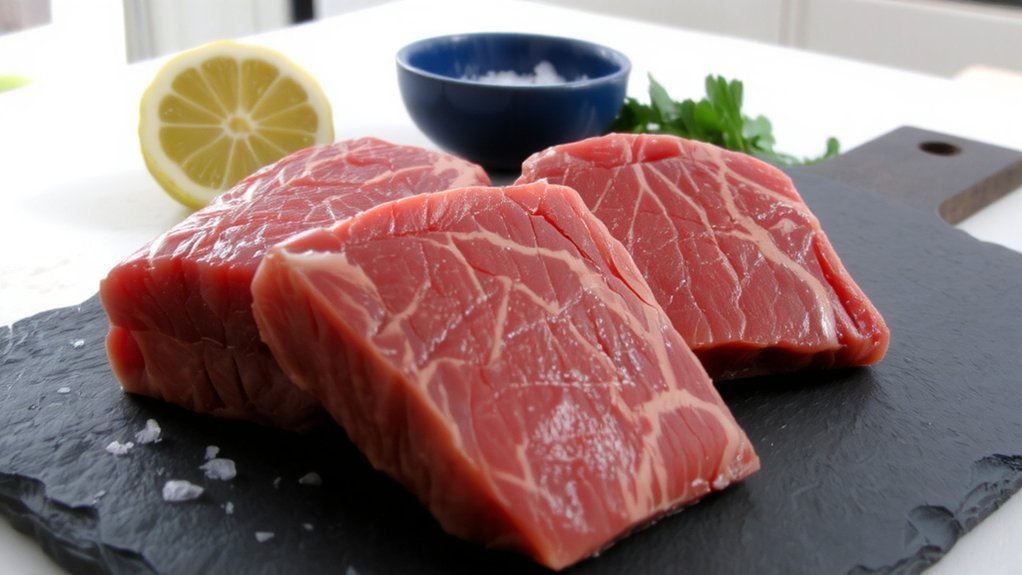
How do you pick a top-quality tuna steak?
Look for vibrant, deep red to pink flesh with uniform coloration and no brown streaks or rainbow sheen. Smell should be cleanly oceanic, not fishy; press lightly — the flesh should spring back, not feel mushy. Tuna is also an excellent source of protein.
Choose moist, not slimy, surfaces and favor cuts with slight shine and transparency if you plan to eat raw.
Match species to use: bluefin and bigeye give rich, fatty flavor profiles; yellowfin and albacore suit milder, lean preparations.
Prioritize grade 1 or sushi-grade for raw service; grade 2 works for cooking.
Verify proper cold-chain handling and buy from high-turnover fishmongers.
Seek certifications and traceability to guarantee sustainable sourcing.
Ask questions about catch date, vessel, quota compliance, and certification documentation before purchase.
Prepping and Cleaning Your Steaks
Before you cook, clean and prep your tuna steaks precisely: remove any fins and scales with a sharp knife, rinse under cold running water to clear blood and slime, then pat completely dry with paper towels to guarantee a proper sear. Tuna is also an excellent source of omega-3 fatty acids, which support heart and brain health.
Next, trim the dark bloodline along the lateral line to eliminate metallic flavors; reserve trimmings for other uses. Inspect and remove any bone fragments or cartilage, and portion steaks to uniform thickness—at least one inch—for even cooking.
Use a clean, sharp fillet knife and maintain a clutter-free workspace. Employ cleaning techniques and follow strict safety measures: keep steaks chilled until just before cooking, sanitize tools and surfaces, wash hands thoroughly, and don’t keep any fish with off odors or slimy texture immediately thereafter.
Essential Seasonings and Marinades
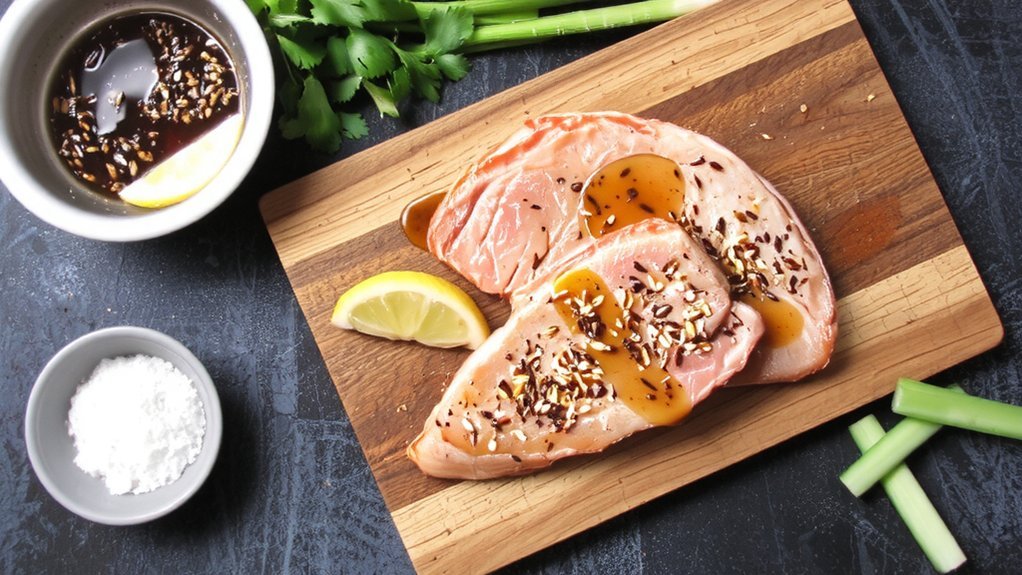
You’ll start with kosher or sea salt and freshly ground black pepper to season tuna steaks evenly.
You’ll marinate briefly in a soy–sesame blend with ginger, garlic, and a touch of honey for a richer profile.
You’ll finish with citrus and fresh herbs—lemon or lime juice plus parsley or cilantro—for brightness and balance.
Tuna steaks are high in omega-3s, which provide heart-healthy fats.
Basic Salt and Pepper
When you rely on nothing more than salt, pepper, and a little oil, you’ll still bring out tuna’s clean, meaty flavor—use kosher or sea salt for good adherence and freshly ground black pepper (or cracked peppercorns) for a pronounced crust. You’ll control salt balance by seasoning generously but testing a small corner; citrus at service offsets excess.
Choose pepper varieties for crust and aromatics—coarse cracked peppercorns for texture, freshly ground black for direct heat, or lemon pepper for brightness.
Pat steaks dry, press seasonings to adhere, and let them rest 5 to 10 minutes or refrigerate up to overnight for deeper seasoning. This method is practical for busy cooks because it usually takes about 20 minutes from start to finish.
Sear in a hot pan 2 to 4 minutes per side, avoiding burned spices. Finish with a light oil drizzle or finishing salt.
Asian Soy–Sesame Marinade
If you appreciate the clean, meaty focus of salt and pepper, push the flavor profile toward soy and sesame for a savory, aromatic alternative that still respects the tuna’s texture. Ahi tuna is high in protein and rich in omega-3s and vitamin B12.
You’ll combine soy sauce, sesame oil, fresh grated ginger, rice vinegar, garlic and green onion, balancing salt and acid precisely. Use wasabi or Sriracha for heat; discard excess marinade before searing.
- Toasted sesame seeds: nutty crunch that excites.
- Fresh ginger: warm lift, vibrant clarity.
- Sliced tuna: silky center, seared edge.
Marinate minutes to an hour, press seeds on before searing, and sear briefly to keep rare interior.
Consider marinade variations to tune intensity; prioritize flavor balancing between salty, sweet and acidic elements.
You’ll serve immediately to preserve contrast between crust and interior perfectly now.
Citrus and Herb Finish
While citrus brightens the tuna, a focused blend of citrus juices, fresh herbs, garlic and olive oil gives it balance and depth.
Use lemon and lime for bright acidity and zest, add orange for sweetness and rounded tones; the combined citrus benefits tenderize flesh and layer flavor.
Chop parsley, cilantro, and a touch of thyme or oregano for herb freshness that cuts fishiness and complements citrus.
Minced garlic, black pepper, and a drizzle of honey or olive oil harmonize acidity and promote caramelization.
Mix in a nonreactive bowl, marinate 20–30 minutes at room temperature or slightly chilled, then pat dry before searing.
Lightly baste while grilling to reinforce flavor without overwhelming the tuna’s natural character.
Serve immediately to preserve texture and maximum flavor impact.
To avoid overcooking, grill the tuna for 2 to 5 minutes per side depending on thickness.
Asian-Inspired Marinade Options
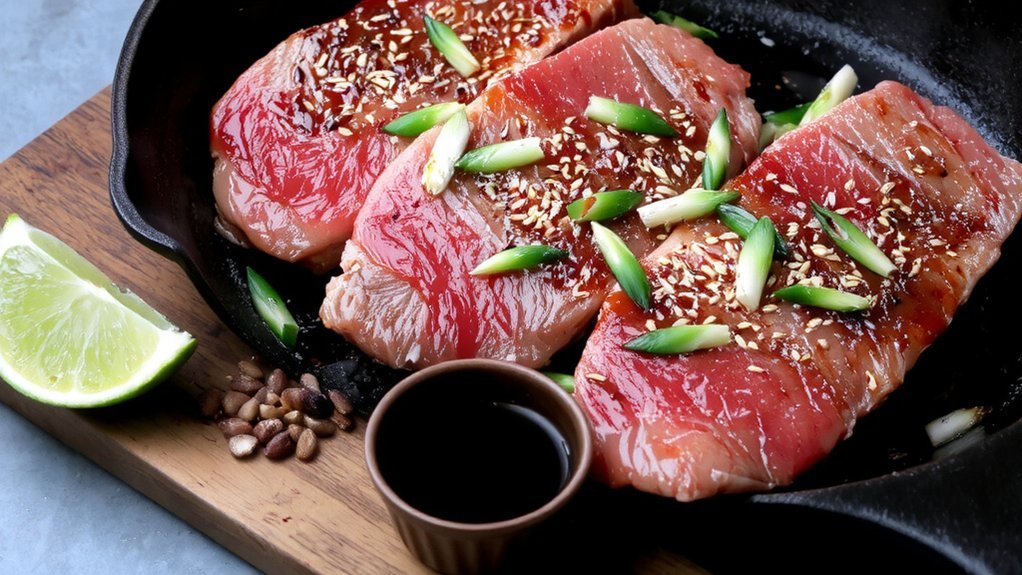
Because soy sauce brings deep umami and saltiness, build your Asian-inspired marinade around it, adding sesame oil for nutty depth, rice vinegar for brightness, and a touch of honey or sugar to promote caramelization. This approach works especially well with ahi tuna.
You’ll use ginger, garlic, and a squeeze of lime to lift flavors; adjust chili elements to match heat tolerance. Focus on Marinade balance so salt, acid, fat, and sweet support the tuna, and remember Tuna variations (ahi, bluefin, yellowfin) demand slight time adjustments.
Use sesame seeds and scallions for texture and color. Press reserved marinade or a sesame-tamari drizzle on finish.
- Sear for contrast, savor the crust.
- Let aromatics sing.
- Taste and tweak for your perfect bite.
Don’t overmarinate; short contact preserves fresh tuna character and texture.
Heat Management and Pan Selection
You should choose a heavy pan—preferably cast iron or heavy‑bottomed stainless steel—since nonstick won’t deliver the high, even sear tuna needs. Searing creates a flavorful crust through the Maillard reaction.
You should preheat the pan thoroughly to about 400–450°F and add oil only once it’s smoking lightly so the surface browns instantly.
You should use a high smoke‑point oil (peanut, avocado, grapeseed), ventilate the kitchen, and add the tuna away from your body to control smoke and splatter.
Choose the Right Pan
Though cast iron holds heat best for an intense sear, choose the pan that matches your stove, handling preferences, and willingness to preheat. You’ll weigh pan materials, basic characteristics and practical advantages: cast iron for sear quality and heat stability, stainless steel for even heat distribution, hybrids for balance. Ahi tuna, which includes yellowfin and bigeye, is often cheaper than bluefin.
- Confidence: a solid, restaurant-quality crust
- Control: even heat, precise timing
- Pride: steak that wows
Consider cooking surface—smooth for full contact, ridged for grill marks. Note weight impact on maneuverability and safety considerations; follow handling tips like using heat-resistant grips.
Match oil choices to smoke point so the pan performs without burning and preserves the tuna’s rare-to-medium-rare center. Don’t crowd the pan; choose a size that lets each steak sear evenly and flip comfortably with confidence.
Preheat for Even Sear
When searing tuna, preheat your skillet until it’s very hot—3–5 minutes for cast iron, about 1 minute for nonstick—so the surface reaches roughly 400–450°F (200–230°C) and the oil just begins to smoke; this gives you an even, golden crust while keeping the center rare to medium-rare.
Use proven preheating methods: start empty, heat steadily, test with water. Choose pan size to avoid crowding so the temperature doesn’t plunge when you add steaks.
Pay attention to Importance of temperature—maintain medium-high to high heat suited to your pan; adjust for nonstick to prevent burning. Aim for consistent surface heat so you get a uniform, golden sear in 1–2 minutes per side on a 1‑inch steak.
Bring steaks to room temperature and pat dry before searing promptly. Also, for best results, bring to room temperature before searing.
Manage Oil and Smoke
Three things matter most: oil choice, pan heat, and ventilation.
You’ll use a neutral, high-smoke-point oil—grapeseed, avocado or canola—and add it only after the pan is fully heated.
Use cast iron or a heavy-bottomed sauté pan for even heat; nonstick needs lower heat.
Also, choose fresh sushi-grade tuna to preserve the rare interior.
Keep medium-high to high heat for a fast sear, reduce immediately if smoke becomes bitter, and run your hood on high.
- Sear fast, taste pure, stay alert.
- Choose pan, keep calm, control smoke.
- Protect flavor, avoid burned oil, finish clean.
Use about a tablespoon of oil per two steaks, apply to the pan, not the fish.
Consider oil alternatives if needed and follow sauce suggestions sparingly to prevent excess smoking.
Lower heat for nonstick and ventilate to protect indoor air quality.
Searing Techniques for Perfect Crust
Because a perfect crust depends on extreme, consistent heat, you should use a heavy-bottomed pan or cast iron, preheat it until it’s very hot (around 400–450°F), then add a high smoke-point oil just before laying in thoroughly dried, at least 1″ tuna steaks; press a soy- or amino-coated spice or seed mix firmly onto the fish, sear 30–60 seconds per side for rare to medium-rare while watching for golden browning, and rest briefly to redistribute juices.
Use Searing tips: avoid adding oil too early, lay steaks gently to minimize splatter, press with a spatula for full contact, and manage seeds with a splatter guard.
For Crust techniques, dry fish, press seasonings firmly, choose seeds and sugar for caramelization, and slice with a sharp knife.
For best results, employ a cast iron skillet for optimal heat retention and searing success.
Timing and Internal Temperature Guide
You’ll aim for specific internal temperatures—remove rare at 65–70°F (finishing around 95–100°F from carryover), target ~48°C (118°F) for medium‑rare, and 130–140°F for medium—because tuna cooks very quickly and residual heat matters. Cook quickly over high heat to lock in flavor and achieve a brown crust. For timing, use a 1‑inch steak as your baseline: about 90 seconds per side for rare and roughly 4-5 minutes total for medium, increasing or decreasing time with thickness. Use a fast instant‑read probe in the thickest part and rest steaks 2–3 minutes to allow the typical 10–20°F carryover rise.
Doneness Temperatures
How rare do you want your tuna — and how will you control it? You choose by mastering temperature nuances and practicing safe cooking: pull at 65–70°F for rare, target just above that for medium-rare, and avoid 145°F unless safety requires well-done. Remember that sushi-grade is a marketing term rather than a regulated designation, so verify handling and source.
Use a fast sear, a reliable Thermapen, and rest briefly so residual heat evens the interior to about 95–100°F.
- Anticipation of the first bite
- Pride in perfect color and texture
- Confidence in food safety
Measure at the thickest point, remove early to prevent overcooking, and chill properly before handling to reduce scombroid risk.
Short marinades and immediate searing preserve texture and flavor. Trust your thermometer, train your timing, and serve tuna that showcases its natural richness and delicate mouthfeel.
Cooking Times by Thickness
Now that you’ve settled on target internal temperatures and resting goals, use the steak’s thickness as your timing map: thinner steaks (around 1 inch) need short, high-heat sears—roughly 45–90 seconds per side for rare to medium-rare—while thicker cuts (1.5–2 inches) require longer contact time, edge searing, and occasional quarter turns to cook evenly without overdoing the center.
For a 1-inch steak aim for 90 seconds first side and 60 seconds second side; 1–1.5 inches generally cook with a flip and about 2–3 minutes per side.
Two-inch steaks need roughly 2 minutes per side plus a 30-second edge sear; grill flips and 45° turns improve marks.
Use high-smoke-point oil, cast iron, and an instant-read thermometer. Factor 3–5 minute resting times for carryover and juice redistribution.
For best results, choose steaks that are seared on the outside while keeping the interior rare.
Resting, Slicing, and Presentation
While the pan cools, let the tuna rest 3–5 minutes on a rack (or tent loosely with foil if it’s on a plate) so juices redistribute, carryover heating stays minimal, and the interior firms for cleaner slicing. Cook tuna so it’s seared outside but still raw inside, targeting an internal temperature of 48°C to keep it tender with a rare center.
Use proven resting techniques: a rack keeps the bottom ventilated and prevents extra warming; tenting on a plate is acceptable if you need one.
For slicing, prioritize slicing precision with a very sharp, non-serrated knife; slice when slightly cooled, wiping the blade between cuts. Arrange slices fanned or overlapping, sear marks up, on a simple plate and wipe edges for a professional finish.
- Anticipation
- Satisfaction
- Pride
Keep tuna chilled until cooking, clean surfaces thoroughly, and serve promptly to maintain safety and peak texture, and avoid over-resting altogether.
Suggested Sauces and Side Pairings
Choose one or two well‑matched sauces and a complementary side to elevate the tuna: pick bright, acidic or umami‑forward sauces (lemon‑Dijon cream, garlic‑soy, spicy or Korean dipping sauces) and balance them with a side that adds texture and temperature contrast—roasted or grilled vegetables, sesame‑ginger rice or stir‑fried noodles for an Asian profile, or lemon‑herb quinoa and a Greek salad for a Mediterranean pairing.
Pair tuna with one or two bright, umami sauces and a contrasting side—roasted veg, sesame rice or lemon‑herb quinoa
For sauce ideas choose lemon Dijon cream for richness, garlic soy or rice vinegar dipping sauce for umami, or a spicy dipping sauce or Korean yangnyeom jang for heat and tang.
For side pairings select roasted vegetables, grilled asparagus, or sautéed spinach for simplicity; use sesame‑ginger rice, edamame, or couscous salad for body.
Finish with sesame seeds, lemon zest, and fresh herbs. This dish serves 6 and each serving contains approximately 335 calories, making it suitable for low‑carb, high‑protein meals.
Storage, Reheating, and Nutrition Notes
If you want to keep tuna steak safe and flavorful, store it in the coldest part of your refrigerator (≤40°F) in an airtight container or tightly wrapped and use it within 1–2 days of purchase. Also, remove from store packaging and absorb excess moisture with a paper towel before refrigerating to reduce bacterial growth. Pat dry before storing, label with date, and transport on ice.
For freezing, portion, double-wrap, and freeze at 0°F (-18°C); best quality three months. Thaw overnight in fridge or use cold-water method; never thaw at room temperature.
When reheating, use gentle reheating techniques: low-heat pan with oil or broth, or sous vide at 130–140°F (54–60°C); avoid microwave. Verify internal temp reaches 145°F (63°C).
Nutrition: high-quality protein, omega-3s, B vitamins; moderate consumption advised for mercury-prone groups.
Follow these storage tips and reheating techniques confidently.

Leave a Comment