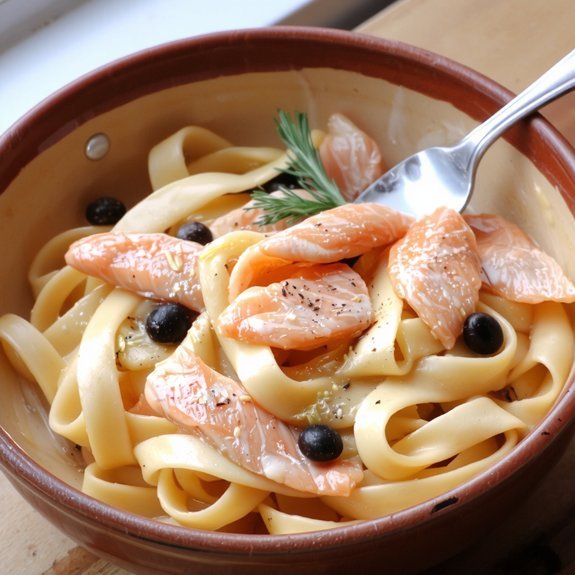

You’ll work with al dente pasta, cold- or hot-smoked salmon, cream or Greek yogurt, garlic, shallot, lemon and fresh herbs. Sauté aromatics, deglaze with wine or lemon, stir in cream, then fold in salmon and herbs. The balance of smoky, creamy and bright is everything — here’s how.
Ingredients and Quantities
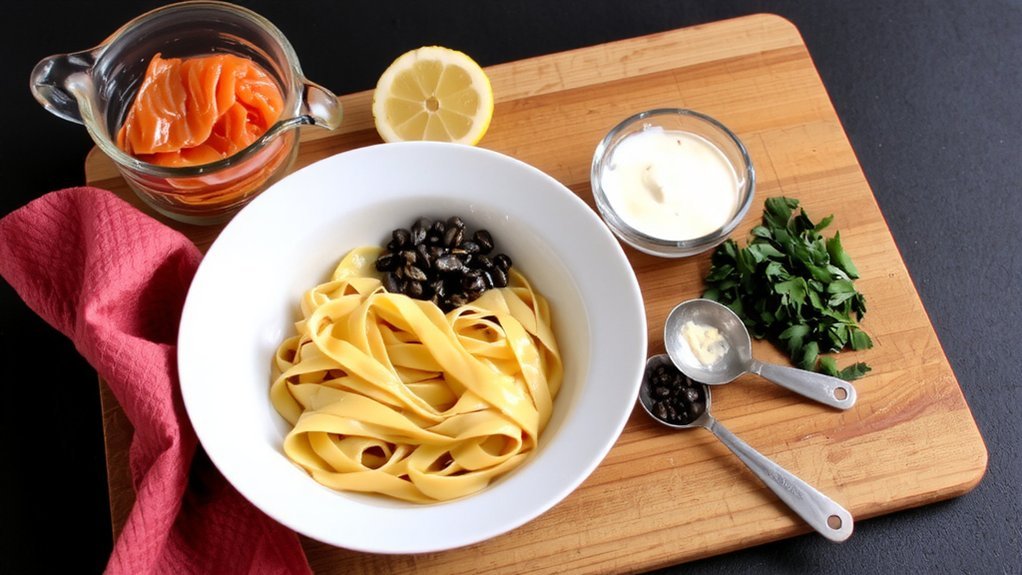
For 4 servings, plan roughly 400 g pasta, 200–250 g cold-smoked salmon (or 200 g hot-smoked/alternative fish), and 300 ml cream or 250 g Greek yogurt as your sauce base.
Choose pasta shape—linguine for silkiness, penne or rigatoni for chunkier bites—and weigh it to match sauce. Slice smoked salmon thinly for delicate flakes or cube hot-smoked for texture. Measure aromatics: 1–2 cloves garlic, one shallot, a tablespoon butter and olive oil.
Add 50–100 ml white wine or a squeeze lemon to brighten. Stir in peas or capers sparingly. Finish with grated Parmesan and chopped dill or parsley.
These ingredient measurements guarantee proper flavor balance and a coherent, well-textured dish. You’ll season lightly with salt, pepper and lemon zest, tasting and adjusting for perfect seasoning. This dish is quick and easy to prepare, making it ideal for busy weeknights.
Equipment and Prep
You’ll need a large pot for boiling pasta and peas, a large skillet to build the sauce and toss, plus a colander, measuring cups and spoons, and a zester for bright lemon.
You should prep ingredients—measure the cream, chop herbs, zest the lemon and flake the smoked salmon—so everything’s ready when the skillet hits the heat.
Start with about 10 minutes of mise en place, then boil and sauce together for roughly 15 minutes so the cream reduces to the right thickness and flavors meld. The recipe calls for 10 oz. linguine to serve four.
Essential Cookware & Tools
When you want glossy, al dente pasta tossed with silky smoked-salmon sauce, start by gathering the right tools: a large pasta pot and colander for perfect boiling and draining, a heavy frying pan to gently sear salmon and bloom garlic, a saucepan or blender to emulsify pesto or cream, and a sharp knife and cutting board for zesting lemon and slicing herbs. For rolling sheets consider the Marcato Atlas 180 for its wider roller. Focus on cooking techniques and essential gadgets: pasta pot, heavy pan, blender, grater and tongs. Use a saucepan for sauce control, a wooden spoon to finish emulsions, and a thermometer for precise heat. Below is a quick gear guide.
| Tool | Purpose | Tip |
|---|---|---|
| Pasta pot | Boil pasta | Use plenty of water |
| Frying pan | Sear salmon | Medium heat |
| Blender | Emulsify sauce | Pulse gently |
Keep graters, cutters, drying racks and storage containers within reach to finish and store for presentation and longevity.
Ingredient Prep Steps
Start by mise en place: mince shallots and garlic finely, grate Parmesan, zest and juice the lemon, and flake cold-smoked salmon into bite-sized pieces so everything hits the pan at the right moment. Use hot smoked salmon when you prefer a fully cooked texture, since hot smoked salmon is fully cooked and pairs well with cream-based sauces. Lay out pasta choice—linguini or penne—so you can salt boiling water efficiently. Measure cream or Greek yogurt; note ingredient benefits like cream’s richness versus yogurt’s tang. Chop parsley, dill, and chives; reserve zest for brightness. Toast pine nuts if using. Keep dry white wine, cognac, capers, olive oil, and butter within reach. Grate extra Parmesan for finishing. Save a cup of pasta water to adjust sauce texture. Arrange tools: sauté pan, tongs, microplane, wooden spoon. These prep steps amplify texture and highlight complementary flavor profiles and boost layered savory citrus notes.
Timing and Workflow
Because the salmon’s delicate flake and the cream’s silky finish demand gentle timing, set up your large pot, skillet, tongs, strainer, and a cup for reserved pasta water before lighting the stove so each step flows into the next.
Boil pasta to al dente, watch pasta texture, and sauté aromatics while water heats.
Simmer cream briefly until the sauce consistency just thickens; don’t let it boil. Reserve 1/4–1/2 cup pasta water, drain, then toss pasta with sauce off heat to bind flavors.
Fold in chopped smoked salmon and herbs last to preserve flake and brightness.
- Prep equipment and mise en place for smooth pacing.
- Time sauce finish to coincide with pasta doneness.
- Use tongs and reserved water to fine-tune coating and mouthfeel and texture.
This dish can be prepared in under 30 minutes.
Prep-Ahead Tips
If you want to cut time on service day, measure and combine sauce ingredients and refrigerate them, simmer cream or crème fraîche with aromatics then cool, and chop garlic and shallots up to three days ahead; keep cooked pasta and pre-blanched vegetables chilled (toss pasta with a little oil) and reserve sauce and pasta separately so you can finish by tossing hot pasta with reserved water, adding smoked salmon and fresh-dill and lemon zest/juice only at the last moment to preserve texture and brightness. Also, remember to cook pasta to al dente so it holds up when tossed with the sauce.
| Prep | When |
|---|---|
| Sauce mix | Refrigerate 1–2 days |
| Chopped aromatics | Up to 3 days |
| Blanched veg | 1 day chilled |
Prioritize ingredient freshness and prep time optimization: refrigerate salmon, herbs separate, chill dressings, warm sauce and fold salmon at serving just before.
Cooking the Pasta
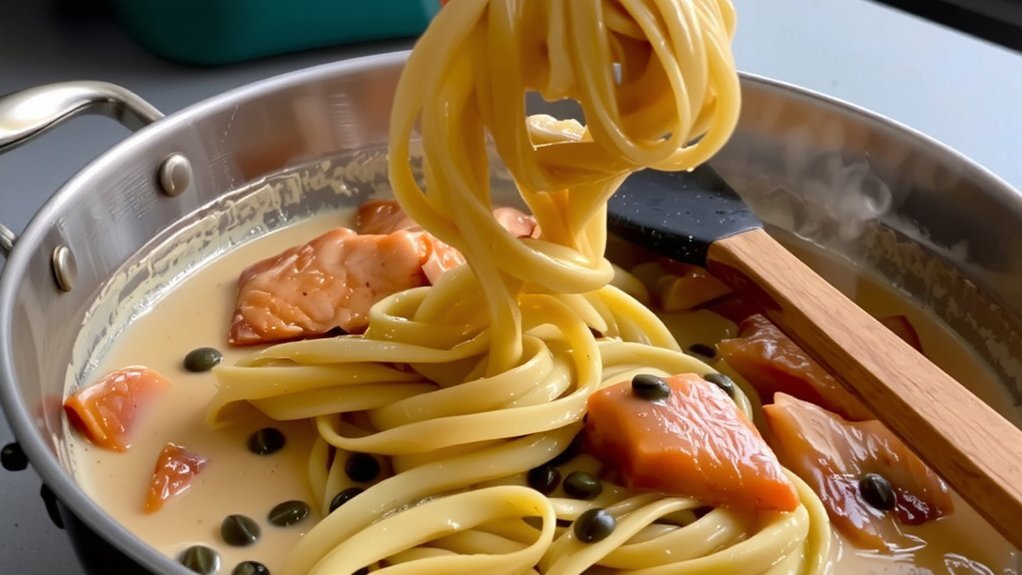
When you bring a large pot three-quarters full of well-salted water to a rolling boil, add your chosen pasta—linguine, fettuccine, or tagliatelle for a silky cling with creamy sauce, or bronze-die shapes for extra grip—and stir to separate.
- Long flats for silkiness
- Bronze-die or rough shapes for grip
- Reserve pasta water for sauce adjustment
Choose pasta types that suit texture and follow cooking techniques: boil vigorously, stir occasionally, and time to al dente. Reserve a cup of starchy pasta water before draining. Because smoked salmon can be high in sodium, remember to avoid oversalting when seasoning the pasta and sauce.
Drain promptly to halt cooking, don’t rinse, and let the pasta rest a minute so it firms and better absorbs sauce when you toss. Stir early and often, bite a piece near the end to verify al dente texture and correct timing.
Making the Cream Sauce
Although it looks indulgent, a silky cream sauce really comes down to technique and a few quality ingredients: sweat minced shallots and garlic in butter until soft, deglaze with a splash of white wine or cognac, then stir in heavy cream and, if you want extra body, a small roux or dusting of flour to thicken.
Focus on heavy cream and butter for richness; add a little milk or reserved pasta water to loosen if it over-thickens. Brighten with lemon juice or zest and balance saltiness with Parmesan or a tri-salt blend.
Finish with fresh dill or parsley, cracked black pepper and a pinch of red pepper flakes for heat. Taste constantly—cream sauce techniques demand careful simmering and precise flavor balancing before you plate. Additionally, smoked salmon contributes protein and beneficial omega-3 fatty acids.
Incorporating the Smoked Salmon
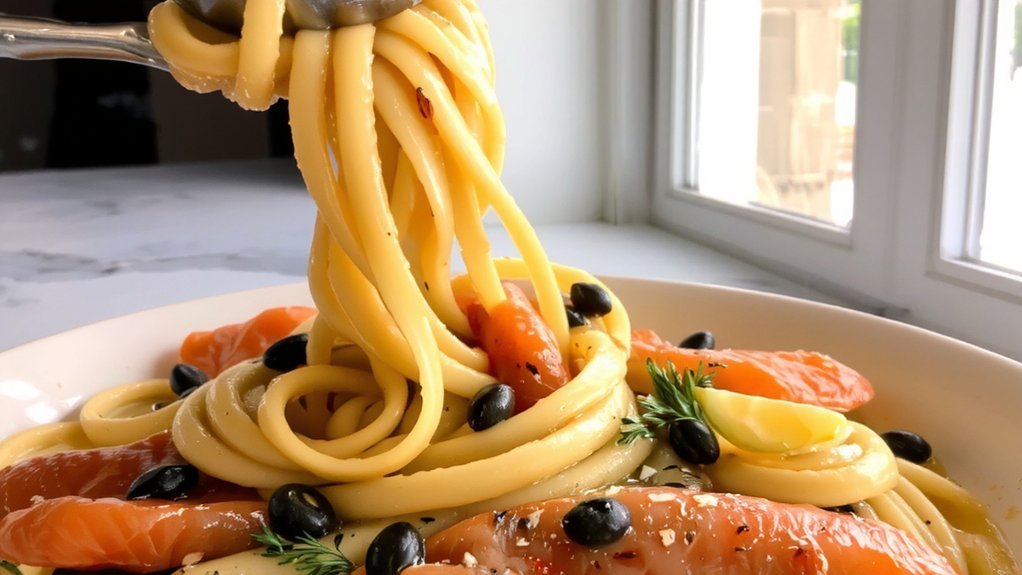
Because smoked salmon is already cured and delicately flavored, add it near the end of cooking so you gently warm and integrate it without drying or overpowering the cream sauce. This recipe is designed to serve two.
Smoked salmon is already cured and delicate—add it at the end to gently warm without overpowering the sauce.
When you’re ready, flake or roll and chop the fish to suit texture: flaked for silkiness, chunks for bite.
Consider smoked salmon types — cold-smoked for smoothness, hot-smoked for robust, firmer pieces — and how regional methods influence flavor profiles.
Gently fold pieces into the warm sauce off heat, allowing residual heat to finish warming without further cooking.
Handle the salmon with a light touch to keep structure.
Choose pasta shape that holds sauce and salmon evenly so each forkful balances texture and taste and mouthfeel too.
- Flake for integration
- Chunk for texture
- Tear for presentation
Finishing Touches and Serving
After you’ve gently folded the salmon into the warm cream, finish by brightening and balancing the flavors: zest a lemon over the pasta, scatter chopped dill or parsley, and sprinkle a few capers where you want pops of brine. Remember that cold-smoked salmon is smoked at temperatures not exceeding 85°F, which helps keep its smooth texture and delicate flavor that complements the cream.
Sprinkle grated Parmesan, then season lightly with salt and freshly cracked black pepper; taste and adjust. Use finishing garnishes sparingly so each element sings—herb, citrus, brine, cheese.
Plate with attention: twirl nest-like portions or use a large serving platter for drama. Serve immediately at the ideal temperature so the cream clings but the salad accompaniments stay crisp.
Offer simple sides—asparagus or a watercress salad—and present on elegant china to elevate the meal. Let guests add extra capers or cheese at the table if desired too.
Variations and Add-Ins
Boost the pasta with vegetable add-ins—blanched asparagus, sautéed shallots, or sweet peas—so you get freshness and crunchy contrast. Many Italian recipes use cold smoked salmon in pasta for its silky texture. Finish with cheese and herbs: grated Parmesan or a spoonful of ricotta for creaminess, and chopped parsley or dill for bright, herbal lift. Toss vegetables into the sauce off the heat and fold in cheese slowly so you preserve texture and balance the smoky salmon.
Vegetable Add-Ins
While asparagus and peas shine in spring, you’ll want to pick vegetables that complement smoked salmon’s smoky richness and pasta—think tender asparagus spears, snap peas or sugar snaps for a sweet crunch, sliced zucchini or grilled bell peppers for a smoky note, and edamame for extra protein, bite. For a creamy finish, consider finishing the dish with crème fraîche to echo the sauce base.
Focus on vegetable pairings and seasonal selections: steam or blanch asparagus and peas briefly for color and snap; sauté zucchini or green beans to concentrate sweetness; grill bell peppers and zucchini for char and depth. Choose textures that balance fish and pasta.
Simple techniques preserve nutrients and flavor. Consider combos for contrast and structure:
- Zucchini + peas: tender and bright
- Asparagus + green beans: crisp, vegetal lift
- Edamame + snap peas: protein, pop
Cheese and Herb Options
Choose cheeses and herbs that play off smoked salmon’s smoky richness and use simple techniques to get big flavor: crumble goat cheese into just-warmed pasta for tangy pockets, whisk cream cheese with a splash of milk or white wine into a silky sauce, or grate Parmesan into the finished pasta for savory umami lift. Best of all, this dish can be prepared in just 30 minutes. You’ll explore cheese pairings like Boursin for herbed creaminess, mozzarella for melt and structure, and Parmesan for depth. Herb combinations—dill, parsley, basil, chives—define distinct flavor profiles.
Focus on texture differences when combining soft and aged cheeses. Recipe tweaks include adding capers, lemon zest, or white wine. Consider dietary alternatives such as dairy-free spreads.
Note regional influences and simple cooking techniques to balance richness and brightness for an elegant, balanced result.
Wine and Side Pairings
Three elements—acidity, texture, and herb brightness—determine the best wine and side pairings for smoked salmon pasta, so you’ll want wines (Champagne, unoaked Chardonnay, dry Riesling, Loire Sauvignon Blanc, or a bolder rosé) that cut the richness and sides that echo or contrast the smoky, fatty flavors. Remember that cold-smoked salmon is not cooked, so pairing choices should account for its delicate texture.
For wine selection aim for high acidity, moderate body and low tannin to preserve flavor balance; match citrus or mineral notes to lemon, dill or caper accents.
Choose sides that add contrast or reinforcement: a sharp vinaigrette salad to refresh, crusty bread to sop sauce, or pickled vegetables to echo brine and smoke. These choices emphasize technique pairing precisely.
- Arugula with lemon vinaigrette for brightness.
- Crusty bread to absorb creamy sauce.
- Pickled cucumbers or capers for saline counterpoint.
Storage and Reheating Tips
After you’ve matched that lemony brightness and saline bite with a crisp wine and a simple side, pack any leftover smoked salmon pasta into an airtight container and chill it promptly—refrigerate for 3–5 days depending on the sauce and salmon type, or freeze for up to 2–3 months if you must. Also, coat cooled pasta lightly with 1–2 tablespoons of oil per pound to prevent sticking.
For leftover storage, cool quickly, label containers with date, and keep salads with arugula separate until serving to preserve texture. When freezing guidelines call for it, avoid greens and expect cream sauces to separate; thaw overnight in the fridge.
Reheat gently on the stove over medium-low, adding a splash of pasta water, milk, or cream to re-emulsify sauce and loosen noodles. Taste and adjust seasoning, avoid overcooking the salmon, and never reheat repeatedly again.
Leave a Comment