
Key Takeaways
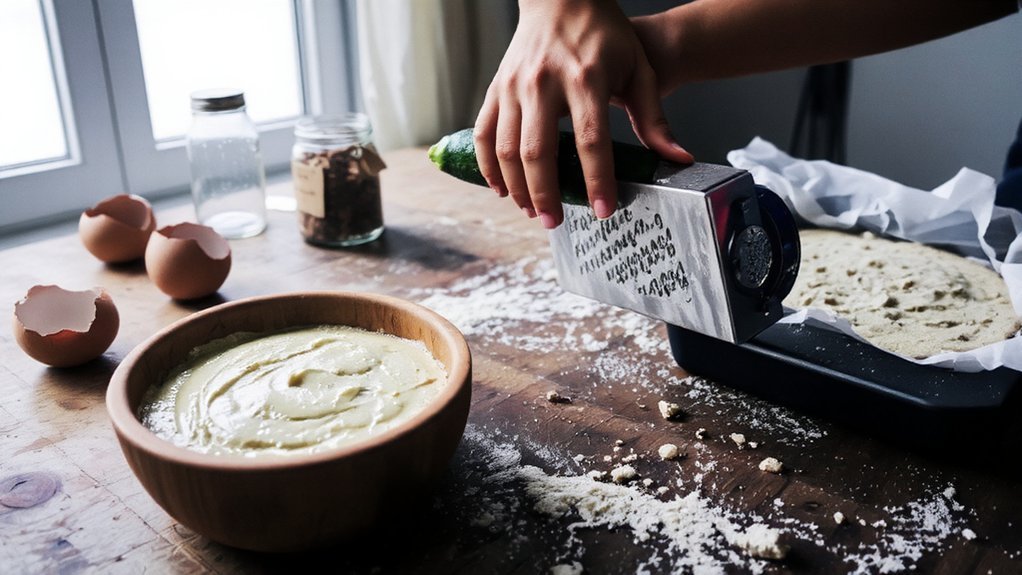
- Choose medium zucchini (6–8 inches), salt grated zucchini 15 minutes, then squeeze dry using cheesecloth.
- Whisk dry ingredients (flour, baking soda, cinnamon, nutmeg, salt) separately from wet (eggs, oil, vanilla, zucchini).
- Fold wet into dry with 12–20 spatula strokes until no flour streaks remain; avoid overmixing.
- Bake at 350°F for 45–60 minutes until internal temperature reaches 205–210°F or toothpick shows moist crumbs.
- Store in airtight container up to 3 days at room temperature or freeze wrapped up to 3 months.
Selecting and Preparing Your Zucchini
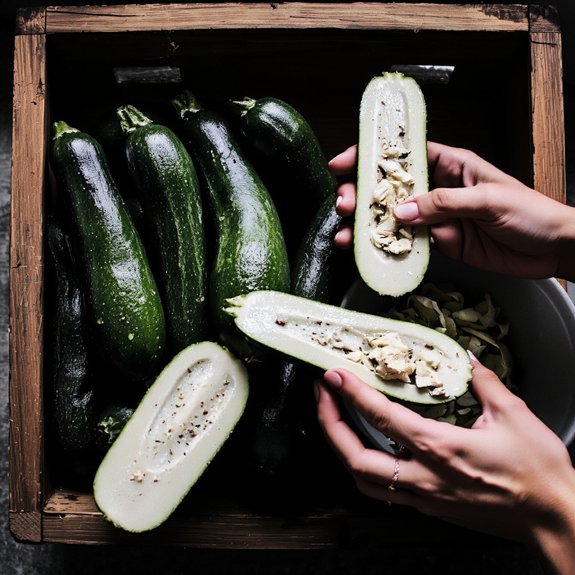
Choosing the right zucchini sets the foundation for successful bread. You’ll want medium-sized specimens, approximately 6–8 inches long, as larger zucchini contain excessive moisture content that’ll compromise your bread’s texture. Avoid oversized varieties that yield watery results.
Wash your zucchini thoroughly under cool water, then trim both ends. You’ve got two preparation methods: grating whole or halving lengthwise first. Grating whole preserves skin nutrients; halving allows you to scoop out excess seeds, reducing moisture content further.
After grating, salt your zucchini generously and let it sit 15 minutes. This extraction process draws out water. Squeeze the grated zucchini firmly using cheesecloth or paper towels—this step’s essential for preventing soggy bread. You’re now ready for mixing.
Gathering Your Ingredients
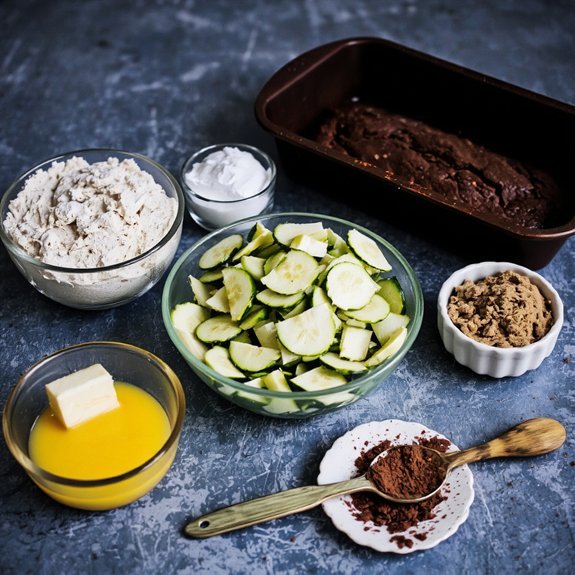
Before you begin mixing, gather all your ingredients to guarantee a smooth baking process.
Start with your pantry inventory to identify what you already have on hand.
This approach gives you autonomy over your baking timeline and prevents mid-process interruptions.
You’ll need two cups all-purpose flour, one teaspoon baking soda, one-half teaspoon salt, one teaspoon cinnamon, one-quarter teaspoon nutmeg, three-quarters cup vegetable oil, two cups granulated sugar, three large eggs, and two teaspoons vanilla extract.
Additionally, procure two cups shredded zucchini and one-half cup chopped walnuts or pecans if desired.
Measure each ingredient into separate bowls before combining.
This mise en place method assures accuracy and streamlines your workflow.
Organize your components in the order you’ll use them, maximizing efficiency and minimizing errors during the mixing phase.
Mixing Your Batter
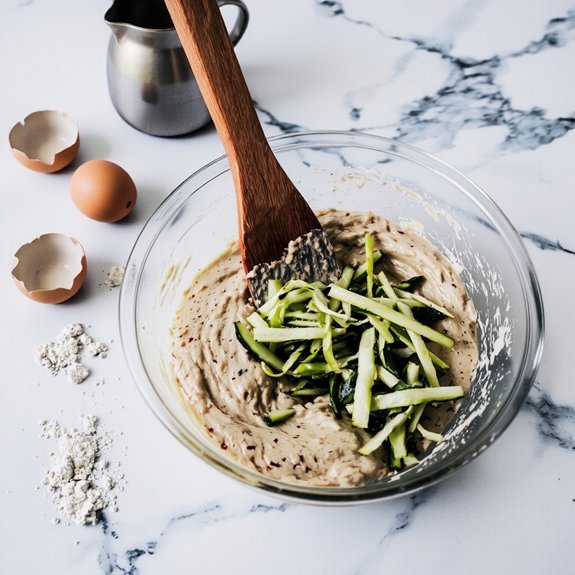
You’ll start by whisking together your dry ingredients—flour, baking soda, salt, and cinnamon—in a medium bowl until evenly distributed.
In a separate bowl, combine your wet ingredients: shredded zucchini, oil, eggs, and vanilla extract, mixing until fully incorporated.
Then fold the wet mixture into the dry ingredients using a spatula, stirring just until the batter comes together without overmixing.
Dry Ingredients Combination
Once you’ve prepared your wet ingredients, it’s time to combine the dry components in a separate mixing bowl. You’ll want to whisk together 2 cups all-purpose flour, 1 teaspoon baking soda, and ½ teaspoon baking powder.
This flour ratios and leavening balance guarantees proper rise and texture. Add 1 teaspoon cinnamon, ½ teaspoon nutmeg, and ¼ teaspoon salt, whisking thoroughly to distribute spices evenly throughout. Don’t skip this step—even distribution prevents pockets of concentrated flavor or baking soda taste.
Once your dry mixture is homogeneous, fold it into your wet ingredients using a spatula. Work methodically, making about 15-20 strokes until you’ve just combined everything.
You’re looking for a thick batter with no visible flour streaks. Overmixing develops gluten, resulting in dense bread, so exercise restraint and stop immediately when dry ingredients disappear.
Wet Ingredients Incorporation
To create the wet ingredient base, you’ll combine 3 large eggs, ⅔ cup vegetable oil, 1 teaspoon vanilla extract, and 2 cups grated zucchini in a separate bowl.
| Ingredient | Measurement | Function |
|---|---|---|
| Eggs | 3 large | Binding agent; emulsification |
| Vegetable oil | ⅔ cup | Moisture; fat component |
| Vanilla extract | 1 tsp | Flavor enhancement |
| Grated zucchini | 2 cups | Moisture; texture |
Whisk these components vigorously for 2-3 minutes to achieve proper emulsification techniques, ensuring the oil and eggs fully integrate. Monitor your mixture’s viscosity adjustment—it should reach a homogeneous consistency without separation. Pour your wet mixture into the dry ingredients bowl, then fold together using 12-15 deliberate strokes until just combined. Don’t overmix; you’re seeking a unified batter with minimal lumps. This methodical approach guarantees even moisture distribution throughout your final product.
Choosing Your Mix-Ins
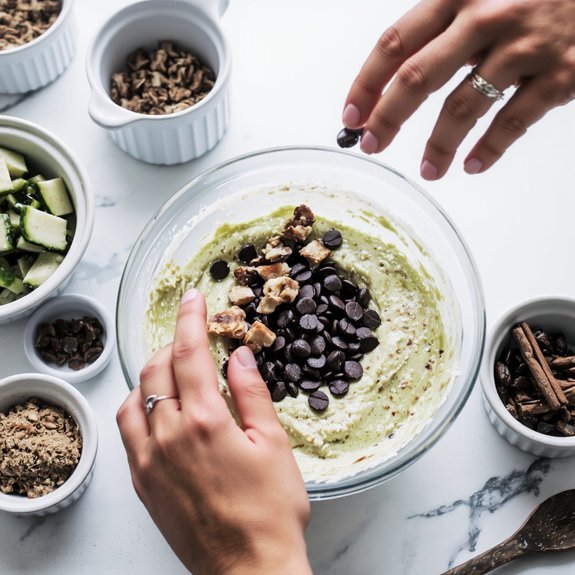
While zucchini bread’s base provides a neutral canvas, your mix-in selections determine the final flavor profile and texture. You’ll want to take into account texture contrast by incorporating nuts—walnuts or pecans add 1/4 cup per loaf—for structural variety. Seeds like sunflower or pumpkin work equally well at similar volumes.
For sweetness, you’re not limited to chocolate chips. Sweet alternatives include dried cranberries, raisins, or chopped dates at 1/2 to 3/4 cup measurements. These distribute moisture evenly throughout your batter.
Layer your mix-ins strategically: reserve half for folding into the batter during the final mixing stage, then sprinkle the remainder directly into your greased pan before pouring batter. This prevents settling and guarantees consistent distribution. Your customization freedom means no two loaves need be identical—experiment methodically with ratios to achieve your preferred balance.
Baking and Testing for Doneness
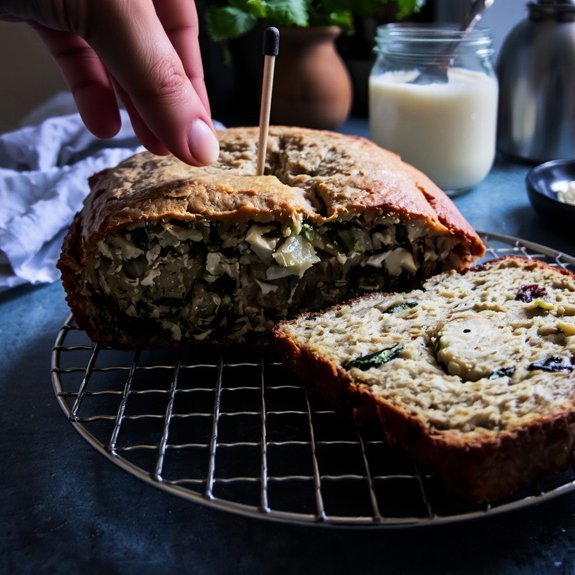
Preheat your oven to 350°F and position a rack in the center before you’ve finished preparing your batter. Pour your mixture into a greased loaf pan and place it directly into the heated oven.
| Baking Time | Internal Temperature |
|---|---|
| 45 minutes | 190°F |
| 50 minutes | 200°F |
| 55 minutes | 205°F |
| 60 minutes | 210°F |
| 65 minutes | 215°F |
Check your oven calibration with a thermometer to verify accuracy. At approximately 45 minutes, insert a toothpick into the center—it should emerge with moist crumbs, not wet batter. The crumb texture indicates doneness: a tender, slightly moist interior signals completion. Remove your bread when it reaches 205-210°F internally. This precision guarantees you’ll achieve the ideal moisture-to-structure balance, giving you freedom to enjoy consistently perfect results every time you bake.
Storage and Serving Tips
You’ll preserve your zucchini bread at room temperature for up to three days by wrapping it tightly in plastic wrap or storing it in an airtight container.
For longer storage, you can freeze your loaf for up to three months by wrapping it securely in plastic wrap followed by aluminum foil, then placing it in a freezer-safe bag.
To thaw, you’ll remove the bread from the freezer and let it sit at room temperature for approximately two to three hours before serving.
Room Temperature Storage
Most zucchini bread stays fresh at room temperature for up to 3 days when stored properly in an airtight container or wrapped tightly in plastic wrap. You’ll want to control moisture and temperature to minimize bacterial growth. Choose packaging materials that create an effective seal—glass containers with tight lids or heavy-duty plastic wrap work best. Position your bread on a cool, dry countertop away from direct sunlight and heat sources.
| Storage Method | Duration | Effectiveness |
|---|---|---|
| Airtight glass container | 3 days | Superior moisture control |
| Plastic wrap (multiple layers) | 2-3 days | Good bacterial protection |
| Paper bag | 1 day | Minimal protection |
You’ll maintain ideal texture and flavor by avoiding temperature fluctuations. Once three days pass, transfer leftover bread to the freezer for extended preservation.
Freezing and Thawing Methods
Extending your zucchini bread’s shelf life requires freezing it within the three-day room temperature window.
You’ll achieve the best results by following these precise techniques:
- Wrap cooled loaves tightly in plastic wrap, then aluminum foil
- Use vacuum sealing for maximum freshness preservation up to three months
- Label packages with freeze dates for inventory management
- Store at 0°F or below in your freezer
For quick thawing, transfer your zucchini bread to the refrigerator 24 hours before serving.
This methodical approach prevents condensation and maintains texture integrity.
Alternatively, you can thaw at room temperature for 2-3 hours if you’re pressed for time.
Sliced portions thaw faster—approximately 30-45 minutes.
Once thawed, consume within 48 hours.
This freedom-focused storage strategy lets you enjoy homemade zucchini bread whenever you choose, without compromise.
Frequently Asked Questions
Can I Freeze Zucchini Bread, and if So, for How Long?
You can freeze zucchini bread for up to three months.
Wrap your loaf tightly in plastic wrap, then aluminum foil for ideal freezer packaging. Label it with the date.
When you’re ready, use gradual thawing methods by transferring it to your refrigerator for 4-6 hours, or leave it at room temperature for 2-3 hours.
This controlled approach preserves moisture and texture, giving you complete autonomy over your baking schedule.
Why Does My Zucchini Bread Turn Out Dense or Gummy Inside?
Your zucchini bread turns dense or gummy because you’re likely overmixing your batter, which overdevelops gluten and compacts the crumb structure.
You’ll also want to verify you’re using sufficient leavening—baking soda and baking powder in proper ratios.
Measure your ingredients precisely using a scale for accuracy.
Don’t skimp on leavening agents; they’re critical for achieving an airy, tender crumb that resists that undesirable gummy texture you’re experiencing.
Can I Substitute Oil With Applesauce or Butter in This Recipe?
You can substitute oil with applesauce or butter, though you’ll need precise measurements.
Replace oil 1:1 with applesauce for applesauce benefits like reduced fat content, though you’ll yield denser bread. For butter richness, use a 1:1 ratio by weight, but reduce it by 20% since butter contains water.
Both alter texture markedly—applesauce creates moisture issues; butter adds density. Adjust your baking time accordingly, checking doneness with a toothpick. Your choice determines the final crumb structure substantially.
What’s the Best Way to Prevent My Zucchini Bread From Browning Too Quickly?
You’ll prevent excessive browning by lowering your oven temperature to 325°F instead of the standard 350°F.
Monitor your bread at the 45-minute mark.
If you’re noticing dark edges, tent foil loosely across the top—don’t seal it completely, as you need steam circulation.
This technique reduces radiant heat exposure while maintaining interior moisture.
You’re in control; adjust timing based on your oven’s quirks.
Your zucchini bread’ll bake evenly without sacrificing that perfect golden crust.
How Do I Know if My Zucchini Is Too Watery for Baking?
You’ll perform a squeeze test to determine excess moisture. Cut your zucchini into pieces and firmly compress them in your palm—if substantial liquid drains out, you’ve got too much water.
Visual cues matter too: look for a translucent, glistening appearance indicating high moisture content. You’re in control here.
Grate your zucchini and salt it heavily, then let it sit thirty minutes before squeezing out remaining liquid through cheesecloth. This gives you freedom from dense, soggy bread.





Leave a Comment