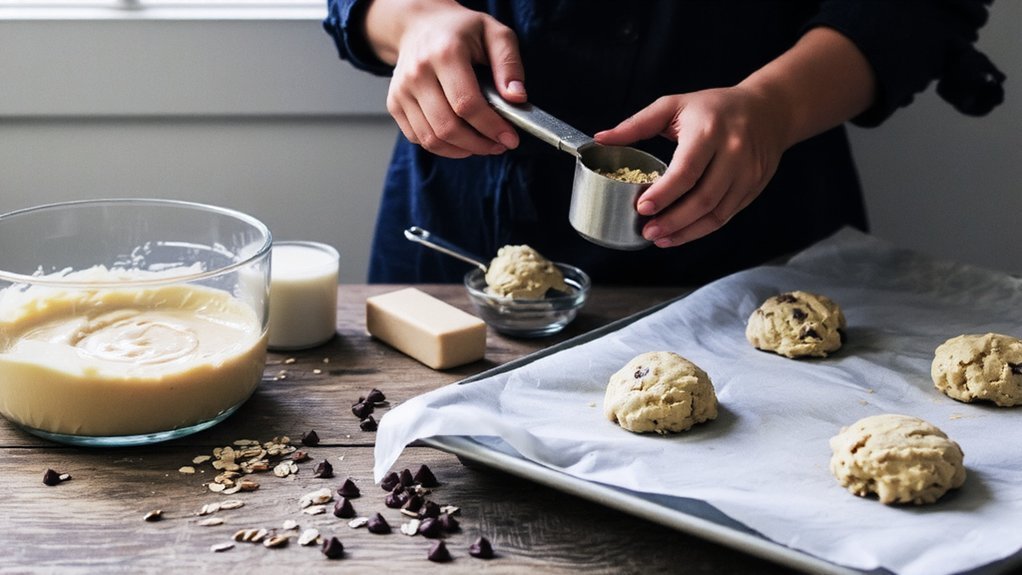

Key Takeaways
- Replace eggs with flax eggs (1 tablespoon ground flaxseed + 3 tablespoons water) or aquafaba (3 tablespoons per egg) for binding and leavening.
- Use non-dairy butter or coconut oil at 1:1 ratios, selecting solid fats for chewier textures and liquid oils for crispier results.
- Chill dough 30–60 minutes before baking to reduce spread and create denser crumbs with improved texture and structure.
- Verify oven temperature with an independent thermometer; most ovens run 25°F hotter than displayed, causing burnt bottoms or uneven baking.
- Monitor internal cookie temperature at 190–205°F for doneness; avoid overmixing to prevent tough cookies or undermixing to prevent crumbly texture.
Essential Vegan Baking Ingredients
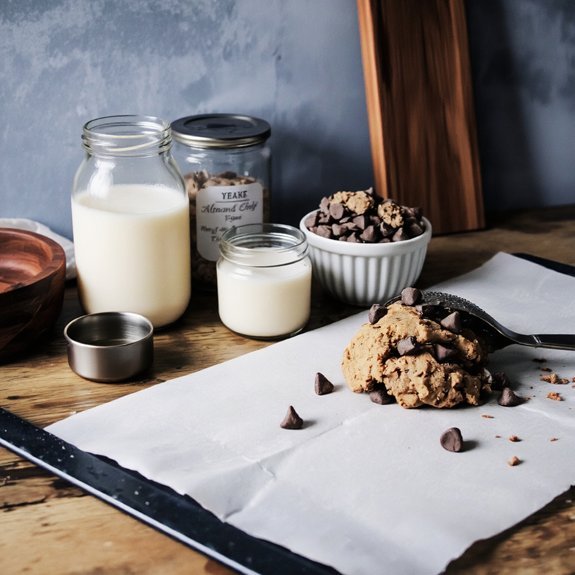
The foundation of successful vegan baking hinges on understanding how plant-based ingredients function as direct replacements for their conventional counterparts.
You’ll want to stock your pantry staples with all-purpose flour, cornstarch, and baking soda—these form your structural base.
Natural sweeteners like coconut sugar, maple syrup, and agave nectar provide sweetness while maintaining moisture retention critical for vegan formulations.
You’ll need binding agents such as ground flaxseed or aquafaba to replace eggs’ emulsifying properties.
Incorporate non-dairy butter or coconut oil at precise ratios matching traditional recipes’ fat content.
Vanilla extract, cocoa powder, and spices remain unchanged, yet their potency matters notably in plant-based applications.
Stock unsweetened almond or oat milk for liquid ratios.
These ingredients grant you complete autonomy over your baking process, delivering results that rival conventional methods while honoring your dietary principles.
Egg Replacers and How to Use Them
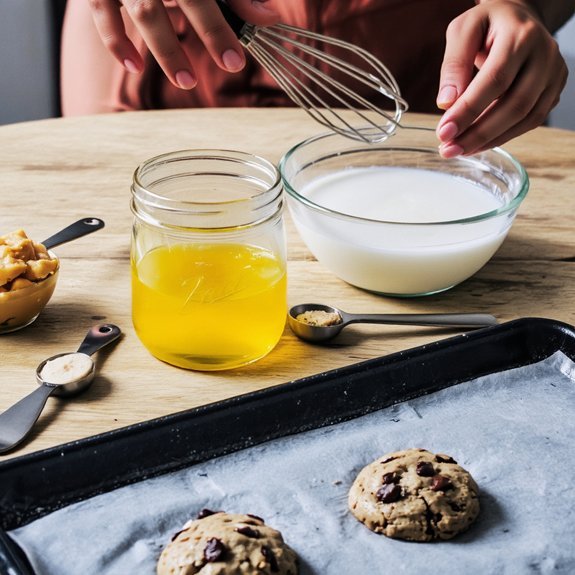
Since eggs serve multiple functions—binding, leavening, and moisture retention, you’ll need to understand which egg replacer suits your specific cookie formula.
Eggs serve multiple functions in baking—binding, leavening, and moisture retention—so choosing the right replacer matters for your specific formula.
You’ve got freedom to experiment with various options based on your preferences and sustainability comparison priorities.
- Flax eggs (1 tablespoon ground flax + 3 tablespoons water) provide superior binding and omega-3 content
- Aquafaba (3 tablespoons per egg) delivers excellent leavening properties with minimal flavor impact
- Commercial egg replacers offer consistent results across regional varieties and climates
- Applesauce (¼ cup per egg) enhances moisture while reducing overall fat content
Your cookie’s texture directly correlates with replacer selection.
Binding-focused recipes benefit from flax or commercial blends, while leavening-dependent formulas favor aquafaba.
Match ratios precisely to achieve ideal structure, rise, and crumb development without compromising your vegan baking integrity.
Choosing the Right Fats and Oils
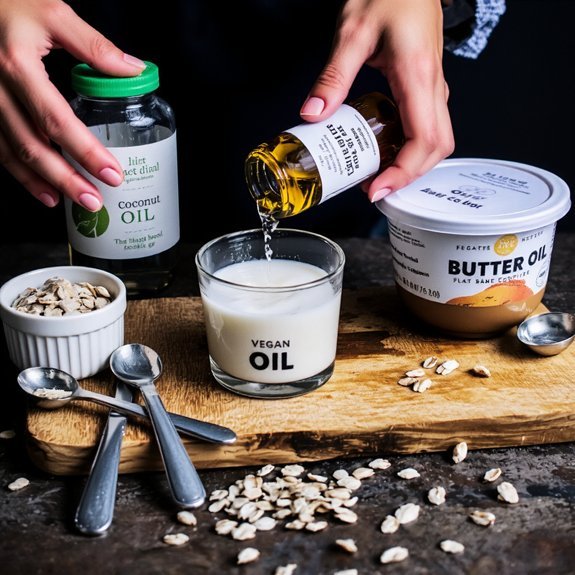
While egg replacers handle binding and structure, fats and oils determine your cookies’ richness, spread rate, and final texture.
You’ll want to understand smoke points—coconut oil (350°F) suits lower-heat baking, while refined vegetable oil (450°F) handles higher temperatures without degrading.
Consider your flavor profiles carefully.
Coconut oil imparts subtle sweetness; neutral oils won’t compete with spice or chocolate notes.
Vegan butter provides traditional cookie structure and taste, though it contains water, affecting spread.
Use a 1:1 ratio when substituting.
Cold-pressed oils introduce distinctive flavors—walnut or sesame—demanding strategic deployment.
Solid fats at room temperature yield chewier textures; liquid oils create crispier results.
Match your fat selection to your recipe’s requirements.
This precision guarantees consistent, superior vegan cookies without compromise.
Techniques for Perfect Cookie Texture
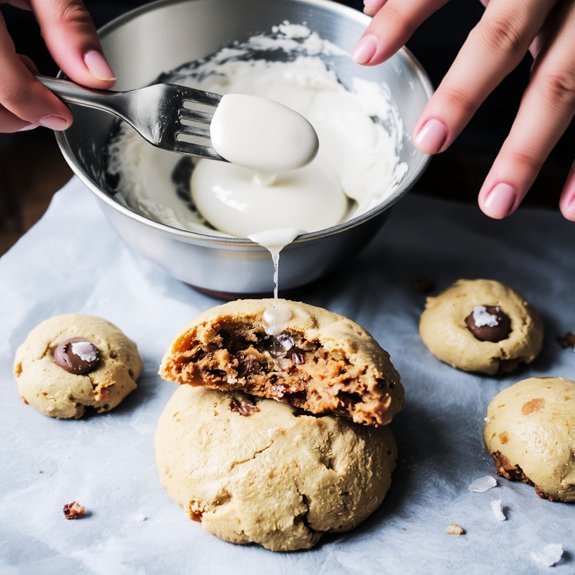
Mastering cookie texture requires understanding how moisture content, mixing intensity, and baking temperature interact with your chosen fats and egg replacers.
You’ll achieve superior results by implementing these critical techniques:
- Dough chilling for 30-60 minutes reduces spread and creates denser crumbs
- Oven calibration using an independent thermometer guarantees precise heat distribution
- Creaming fats and sweeteners for 2-3 minutes incorporates air without overdevelopment
- Monitoring internal temperature (190-205°F) determines doneness beyond visual cues
Your mixing speed directly impacts gluten development—overmixing yields tough cookies while undermixing produces crumbly texture.
Control your dough temperature; cold dough spreads less, yielding thicker cookies.
Conversely, warm dough promotes spread and chewier interiors.
Temperature differential between room-temperature dough and oven calibration determines your final product’s structural integrity and mouthfeel.
Troubleshooting Common Vegan Baking Issues
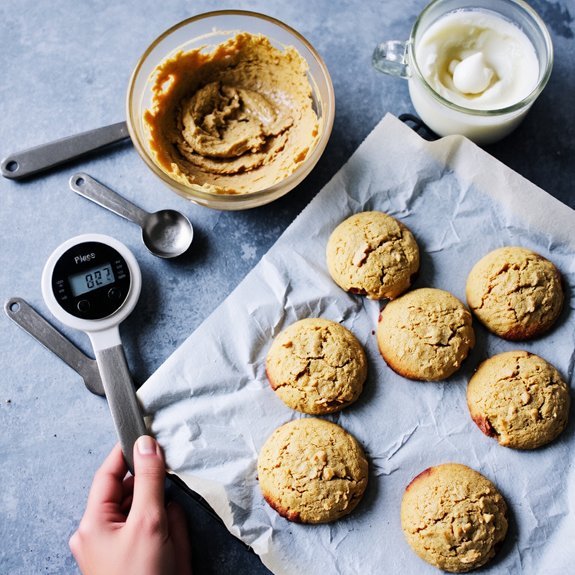
Why do your vegan cookies sometimes turn out dry, spread excessively, or fail to rise? The culprit often lies in improper binding agent ratios. You’ll need to balance flax eggs or aquafaba precisely—too little compromises structure, causing soggy middles and inadequate rise. Conversely, excess moisture creates flat, spreading dough.
Burnt bottoms indicate oven temperature miscalibration or rack placement issues. Position your baking sheet in the center rack and verify your oven’s actual temperature with an independent thermometer. Many ovens run 25°F hotter than displayed.
You can prevent dryness by reducing flour quantities slightly and ensuring adequate fat content. Vegan butter ratios should mirror conventional recipes. If your dough lacks cohesion, increase your binding agent incrementally. Master these variables, and you’ll eliminate guesswork, achieving consistent, professional-quality results every batch.
Frequently Asked Questions
Can I Use Regular Cookie Recipes by Simply Replacing Eggs and Dairy?
You can’t simply swap ingredients without understanding substitution ratios and binding alternatives.
Replace one egg with a flax egg (1 tablespoon ground flaxseed plus 3 tablespoons water) or aquafaqua (3 tablespoons per egg).
For dairy, use plant-based milk at 1:1 ratios and vegan butter maintaining exact measurements.
These binding alternatives require precision—moisture content varies considerably.
You’ll achieve superior texture by mastering these technical specifications rather than making arbitrary substitutions, liberating you from failed batches.
How Do Vegan Cookies Compare in Taste and Texture to Traditional Cookies?
You’ll find vegan cookies deliver comparable flavor profiles through precise ingredient substitution ratios. Texture contrast emerges from alternative binders—flax eggs create chewier structures, while aquafaba produces lighter crumbs.
The flavor comparison reveals minimal deviation when you maintain proper fat-to-flour ratios and use quality vegan butter. Your cookies develop identical browning through Maillard reactions.
You control the outcome entirely by adjusting hydration levels and leavening agents to match your preferred bite and structure.
What Is the Shelf Life of Homemade Vegan Cookies?
Your homemade vegan cookies maintain peak quality for 5-7 days at room temperature in airtight containers.
You’ll want to watch for spoilage signs like mold, off-odors, or texture degradation.
For extended preservation, freezing tips include wrapping individual cookies in parchment, placing them in freezer-safe containers, and storing at 0°F for up to three months.
This method preserves structural integrity and flavor profile without compromising your baked goods’ sensory characteristics.
Do Vegan Cookies Require Different Baking Temperatures or Times?
You’ll generally bake vegan cookies at standard temperatures (350°F), though you’ll need oven calibration verification since plant-based batters behave differently than conventional doughs.
Altitude adjustments are critical—higher elevations require temperature increases of 15-25°F and reduced baking times by 5-10 minutes.
Your ingredient ratios demand precision; vegan binding agents (flax, aquafaba) require exact measurements.
Monitor your cookies closely, as they’ll set faster without dairy fat’s thermal properties, ensuring you maintain complete control over your baking outcomes.
Where Can I Find Vegan Cookie Recipes and Inspiration Online?
You’ll find extensive vegan cookie formulations on Pinterest Boards, where you can curate specialized collections organized by ingredient ratios and baking specifications.
Vegan Bloggers provide detailed technical documentation, including precise measurements and substitution protocols for binding agents and leavening compounds. These resources offer you freedom to experiment with alternative flours, plant-based fats, and egg replacers while maintaining ideal texture and rise characteristics throughout your baking endeavors.






Leave a Comment