
Key Takeaways
- Choose sweeteners based on baking needs: erythritol for browning, allulose for sugar-like behavior, stevia for potency.
- Adjust liquid ratios by 2–3 tablespoons per cup depending on sweetener hygroscopic properties to maintain moisture.
- Reduce oven temperature by 25°F and baking time by 10–15% since sugar substitutes brown differently.
- Use binders like xanthan gum, psyllium husk, or extra eggs to compensate for altered crumb structure.
- Test at 75% target sweetness incrementally; enhance perceived sweetness with vanilla, spices, and acid adjustments.
Understanding Sugar Substitutes
Why do some sugar substitutes work better in baking than others?
You’ll discover that molecular structure determines how each sweetener behaves under heat.
Stevia and erythritol dissolve differently than sucralose, affecting texture and browning.
Understanding these chemical properties gives you freedom to choose replacements matching your recipe’s requirements.
The regulatory landscape varies globally, influencing which options you can access.
Some substitutes face restrictions in certain countries, while others remain widely available.
Researching your region’s approval status guarantees you’re making informed choices.
Environmental impact matters too.
You should consider production methods—some alternatives require less water and pesticides than sugar cane cultivation.
Stevia grows sustainably in specific climates, whereas synthetic sweeteners involve chemical processing.
Evaluating these factors empowers you to bake responsibly while maintaining delicious results.
Types of Sweeteners and Their Properties
Now that you understand how sweeteners function chemically, you’ll benefit from knowing the specific properties that distinguish each type.
Stevia and monk fruit offer zero calories and don’t trigger insulin responses through distinct metabolic pathways, making them ideal for blood sugar management.
Sugar alcohols like xylitol and erythritol contain fewer calories than sugar and exhibit lower glycemic impact, though some cause digestive sensitivity.
Allulose behaves similarly to sugar in baking applications while maintaining minimal metabolic effect.
Your regulatory status matters too—stevia’s approval varies internationally, while monk fruit enjoys broader acceptance in most markets.
Sucralose and aspartame provide intense sweetness at minimal quantities, though they’re synthetic compounds.
Understanding each sweetener’s metabolic pathway and regulatory standing empowers you to select options aligning with your health objectives and local regulations, ensuring your sugar-free baking succeeds without compromise.
Essential Ingredients for Sugar-Free Baking
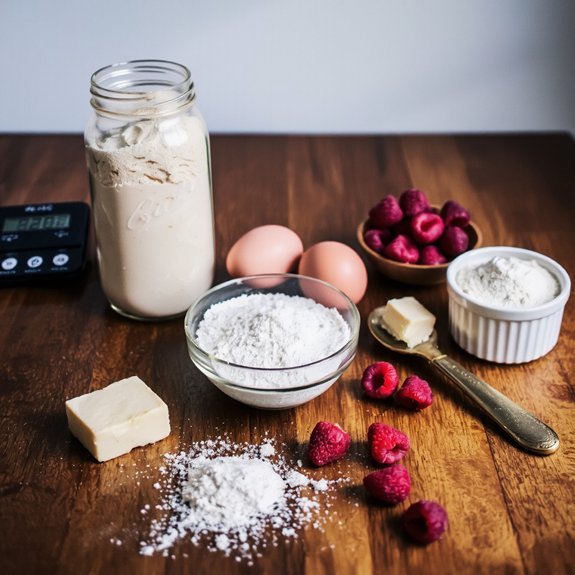
You’ll need to select sugar substitutes and sweeteners that match your recipe’s moisture content and browning requirements, since they behave differently than conventional sugar.
Flour alternatives and binders become critical in sugar-free baking because they must replicate the structure and moisture retention that sugar typically provides.
Finally, you’ll want to adjust your leavening agents and flavorings carefully, as sugar substitutes can affect rise rates and mask or amplify certain flavor notes in your finished baked goods.
Sugar Substitutes and Sweeteners
How you choose your sweetening agents fundamentally shapes your sugar-free baking results. You’re selecting from multiple options, each with distinct properties affecting texture, flavor, and metabolic impact.
| Sweetener | Regulatory Status | Environmental Footprint |
|---|---|---|
| Stevia | FDA-approved | Low; minimal processing required |
| Erythritol | GRAS designation | Moderate; fermentation-based production |
| Monk fruit | GRAS designation | Low; natural extraction methods |
| Allulose | FDA-approved | Moderate; requires enzymatic conversion |
You’ll find that stevia and monk fruit deliver zero glycemic response, though they’re potent—you’ll need less volume. Erythritol provides bulk and browning capability, making it ideal for cookies and cakes. Allulose behaves most like sugar, caramelizing effectively. Understanding each sweetener’s thermal stability and hygroscopic properties guarantees you’re not compromising your baked goods’ structural integrity. You’re empowered to experiment strategically rather than accept conventional sugar’s limitations.
Flour Alternatives and Binders
While sweeteners establish your sugar-free baking’s flavor profile, the structural foundation depends entirely on flour selection and binding agents.
You’ll find nut flours like almond and coconut offer excellent texture while adding nutritional value—they’re naturally lower in carbohydrates than wheat flour.
These alternatives absorb moisture differently, so you’ll need to adjust your liquid ratios accordingly.
For binding, aquafaba binders—the liquid from canned chickpeas—replicate egg functionality without animal products.
You’ll use three tablespoons of aquafaba to replace one egg.
Psyllium husk and xanthan gum also work effectively, creating the structural integrity your baked goods require.
Combine these elements strategically.
Your flour blend should balance texture and moisture retention while your binder provides cohesion.
This precise approach guarantees you’re not just eliminating sugar—you’re crafting treats that deliver genuine satisfaction and superior results.
Leavening Agents and Flavorings
Because sugar contributes to browning, moisture retention, and rise in traditional baking, leavening agents become even more critical in sugar-free formulations.
You’ll rely on chemical leaveners like baking soda and baking powder to achieve proper lift and structure without sugar’s assistance.
These agents require careful measurement—too much creates metallic flavors, too little yields dense results.
For flavor complexity, you’ll incorporate aromatic extracts such as vanilla, almond, and citrus to compensate for sugar’s natural sweetness and depth.
These concentrated flavorings deliver bold taste without adding calories or carbohydrates.
You should also consider spices like cinnamon, nutmeg, and ginger, which enhance perceived sweetness and add sophistication.
When you balance your chemical leaveners with quality aromatic extracts and complementary spices, you’ll create baked goods that taste intentionally crafted, not compromised.
Adjusting Recipes for Sugar Substitutes
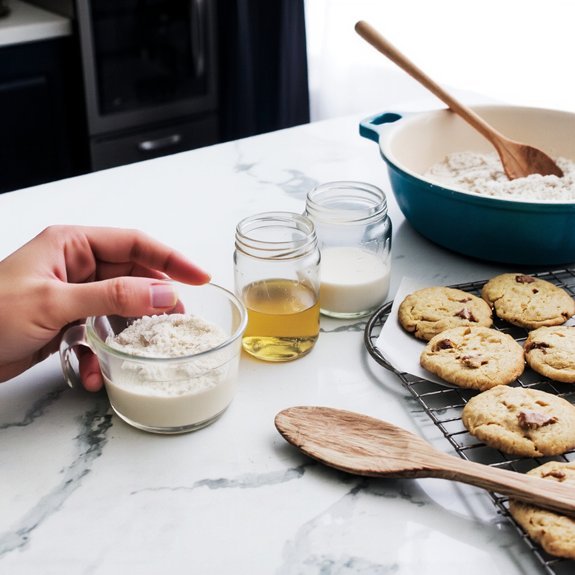
When you substitute sugar, you’ll need to master conversion ratios specific to each sweetener, as they vary substantially in sweetness intensity and volume.
You must adjust your recipe’s liquid and fat components to compensate for texture and moisture changes that different sweeteners produce, since some absorb moisture while others caramelize differently than sugar.
Finally, you’ll want to test your batches carefully, tasting for flavor balance and checking for off-notes that certain sweeteners can introduce, especially in delicate baked goods.
Conversion Ratios and Measurements
How do you accurately translate traditional sugar measurements into sugar-free alternatives without compromising texture and moisture?
You’ll need metric precision and scale calibration to succeed.
Each sweetener behaves distinctly—erythritol, stevia, and monk fruit require different conversion ratios.
Here’s your conversion framework:
- Start with a 1:1 replacement for erythritol in most recipes, maintaining your original sugar weight
- Use 0.5 to 0.75 teaspoons of stevia per cup of sugar, adjusting incrementally for sweetness tolerance
- Apply 0.75 cups of monk fruit concentrate per cup of conventional sugar for balanced moisture retention
You’ll want to recalibrate your measurements across batches since sweetener potency varies by brand.
Invest in a digital scale for precise gram-level accuracy rather than relying on volume measures.
This disciplined approach empowers you to create reliably excellent sugar-free baked goods.
Texture and Moisture Adjustments
Once you’ve nailed your sweetener ratios, you’ll discover that sugar substitutes behave fundamentally differently during baking—they won’t caramelize, brown, or retain moisture the way conventional sugar does. You’ll need to adjust your hydration management carefully to maintain proper crumb structure.
| Sweetener Type | Moisture Adjustment |
|---|---|
| Erythritol | Add 2-3 tablespoons liquid per cup |
| Stevia | Reduce liquid by 1/4 cup |
| Monk Fruit | Add 1-2 tablespoons liquid per cup |
| Allulose | Minimal adjustment needed |
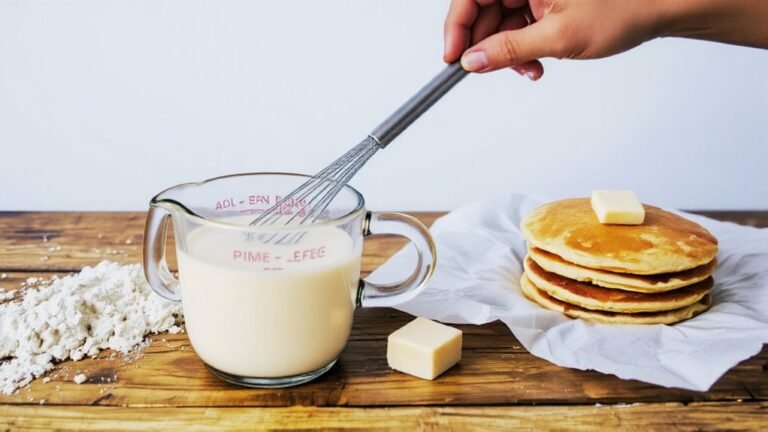
Since sugar substitutes don’t absorb liquid identically to sugar, your batter consistency will differ. You’ll compensate by increasing eggs, applesauce, or water to prevent dry results. Monitor your dough closely—texture adjustments depend entirely on your chosen sweetener’s hygroscopic properties. This precision guarantees you’ll achieve the tender crumb and moist interior you’re pursuing.
Flavor Balance and Testing
Because sugar substitutes vary dramatically in sweetness intensity and flavor profiles, you’ll need to reformulate your recipes systematically rather than rely on direct one-to-one conversions.
Your testing protocol should include:
1. Palate mapping — Document each sweetener’s taste characteristics (cooling sensation, metallic notes, aftertaste) across temperature ranges
to identify which works best for your application.
2. Acid calibration — Adjust citric acid or buttermilk quantities to mask off-flavors and enhance natural sweetness perception
without overwhelming the recipe.
3. Concentration adjustments — Start at 75% of recommended sweetness levels, then incrementally increase until you achieve your target profile
while maintaining structural integrity.
This methodical approach guarantees consistent results and prevents batch failures, giving you control over your baking outcomes.
Texture and Moisture in Sugar-Free Baked Goods
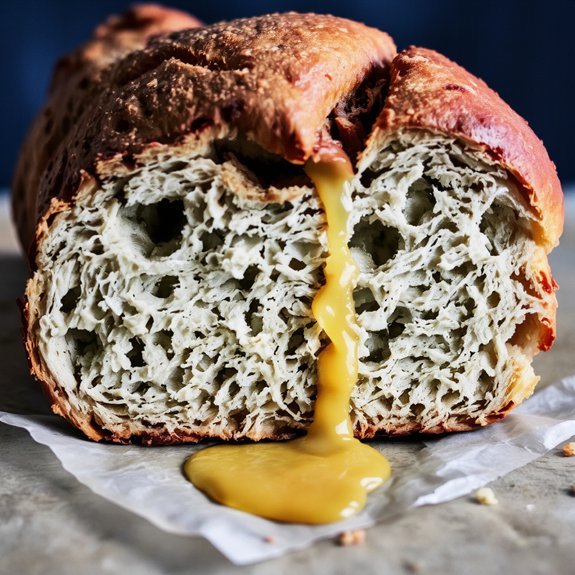
Since sugar plays a crucial role in moisture retention and browning reactions, replacing it requires careful ingredient selection to achieve the desired crumb elasticity and hydration in your baked goods. You’ll want to experiment with sugar alcohols like erythritol or xylitol, which absorb moisture differently than sucrose, affecting your final product’s texture.
Adding ingredients like applesauce, Greek yogurt, or extra eggs compensates for lost moisture and binding properties. You’re balancing crumb structure while managing surface tackiness—a common challenge with sugar substitutes.
Reduce oven temperature slightly to prevent excessive browning before interiors set properly.
Monitor your batches closely. You may notice denser crumbs initially, but adjusting liquid ratios and leavening agents helps you achieve lighter, more tender results that rival traditional recipes.
Mastering Temperature and Baking Times
Sugar substitutes like erythritol and xylitol don’t caramelize at the same temperatures as sucrose, requiring you to adjust your oven settings and timing strategies accordingly.
You’ll benefit from precise oven calibration to guarantee consistent results across batches.
- Reduce your baking temperature by 25°F, as sugar-free batters brown faster due to altered sugar chemistry
- Implement thermal mapping of your oven’s hot spots to identify uneven heating zones
- Monitor baking times closely—most sugar-free goods require 10-15% less time than traditional recipes
You’ll discover that these substitutes won’t provide the same browning cues you’re accustomed to.
Instead, rely on toothpick tests and internal temperature measurements.
Your independence in the kitchen demands understanding these fundamental differences, giving you complete control over your baking outcomes.
Achieving the Perfect Brown and Rise
You’ll need to recalibrate how you interpret visual cues when browning sugar-free batters, since erythritol and xylitol don’t develop the same golden-brown exterior that sucrose does.
The Maillard reaction occurs differently without traditional sugar, requiring you to rely on internal temperature and crumb structure rather than color alone.
Skip visual cues when baking sugar-free. Trust internal temperature and crumb structure instead of color for accurate doneness.
Pan selection substantially impacts rise and browning. Choose light-colored metal pans that distribute heat evenly, preventing over-browning on edges while centers remain underbaked. Dark pans absorb excessive heat, compromising your final product’s texture.
Monitor baked goods at two-thirds of your standard baking time. Sugar-free formulations often bake faster due to altered sugar content affecting moisture retention. Insert a toothpick to verify doneness—your cakes should pull away from pan edges while maintaining structural integrity.
Storage and Shelf Life of Sugar-Free Treats
Because sugar-free sweeteners like erythritol and xylitol don’t provide the preservative properties of traditional sugar, you’ll need to adjust your storage approach to maintain freshness and prevent moisture degradation.
Your baked goods demand strategic handling.
Consider these essential practices:
- Packaging Options: Use airtight containers or vacuum-sealed bags to create barriers against humidity and oxidation, which accelerate staleness in sugar-free formulations.
- Refrigeration Guidelines: Store most sugar-free treats at 35-40°F for extended shelf life, typically doubling their stability compared to room temperature storage.
- Moisture Control: Include food-grade silica packets within containers to absorb excess humidity that sugar-free baked goods readily absorb.
These techniques preserve your treats’ texture and taste integrity.
You’ll maintain quality for 1-2 weeks refrigerated or 3-4 months frozen, giving you freedom to batch-bake without compromise.
Popular Sugar-Free Recipes to Try
Now that you’ve mastered proper storage techniques, it’s time to put your skills to work with recipes that showcase sugar-free baking’s true potential.
You’ll find that almond flour brownies deliver rich, fudgy textures without compromised taste.
Vanilla bean cheesecake with erythritol works beautifully for party platters, impressing guests who don’t expect such quality from sugar-free options.
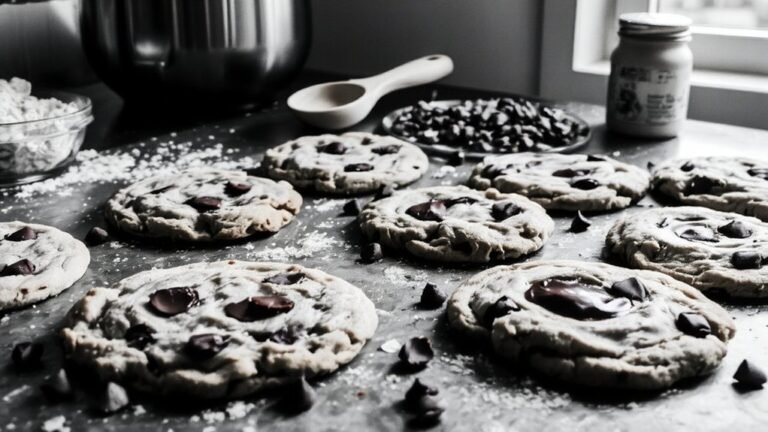
Chocolate chip cookies using monk fruit sweetener maintain authentic crispness and flavor complexity.
Lemon bars provide bright, invigorating alternatives perfect as gift ideas—packaged elegantly, they communicate thoughtfulness and health-consciousness.
These recipes rely on precise sweetener ratios and quality ingredients like coconut oil and vanilla extract.
You’ll appreciate how sugar alcohols and natural sweeteners eliminate guilt while preserving indulgence.
Master these foundational recipes, and you’ll unleash confidence for creative variations that celebrate dietary freedom without sacrificing excellence.
Frequently Asked Questions
Are Sugar-Free Treats Safe for People With Diabetes and Blood Sugar Concerns?
You’ll find sugar-free treats can support your blood sugar management, but you’re responsible for monitoring your glycemic response.
Different sweeteners—erythritol, stevia, and sugar alcohols—produce varying metabolic effects.
You must verify medication interactions with your healthcare provider, as some ingredients may interfere with diabetes medications.
Ingredient transparency matters; scrutinize labels carefully.
You’re empowered to make informed choices when you understand how specific sweeteners affect your body’s insulin response.
Can Children Safely Consume Baked Goods Made With Artificial Sweeteners?
You can safely offer children artificial sweetener-based baked goods, though pediatric recommendations suggest moderation.
Current research hasn’t established developmental effects from approved sweeteners like sucralose or aspartame at typical consumption levels.
You’ll want to check ingredient labels and choose products using FDA-approved sweetening agents.
Consider rotating between various sweetener types and balancing treats with whole foods, giving your kids flexibility without compromising their nutritional foundation.
Why Do Some Sugar Substitutes Leave a Bitter Aftertaste in Baked Goods?
You’ll experience bitterness because certain sugar substitutes—like saccharin and aspartame—interact differently with your taste receptors than sucrose does.
Their molecular interactions trigger receptors that perceive bitter compounds alongside sweetness. You’re basically getting conflicting signals.
Sucralose and stevia face similar challenges.
You can minimize this by blending multiple sweeteners, reducing individual substitute quantities, or choosing newer options like erythritol that won’t compromise your baked goods’ flavor profile.
How Do Sugar-Free Treats Compare Nutritionally to Traditional Sugar-Based Desserts?
You’ll find sugar-free treats typically deliver lower calorie counts through sugar alcohol or artificial sweetener substitution. However, your micronutrient profile remains largely unchanged—you’re still consuming flour, fats, and eggs in comparable amounts.
The real nutritional advantage lies in reduced blood sugar impact and decreased caloric density. You’re gaining metabolic freedom without sacrificing taste, though ingredient substitutions may alter mineral absorption slightly depending on your chosen sweetening agent.
What’s the Cost Difference Between Baking With Sugar Versus Sugar Substitutes?
You’ll find sugar substitutes typically cost 2-3x more initially than conventional sugar.
However, you’re gaining purchasing freedom through bulk pricing options that substantially reduce per-unit expenses.
Stevia and erythritol boast superior shelf life—lasting years versus sugar’s moisture susceptibility—so your ingredient investment remains viable longer.
When you calculate actual cost-per-use across extended storage periods, sugar substitutes become economically competitive, delivering better long-term value for your baking independence.

Leave a Comment