
Key Takeaways
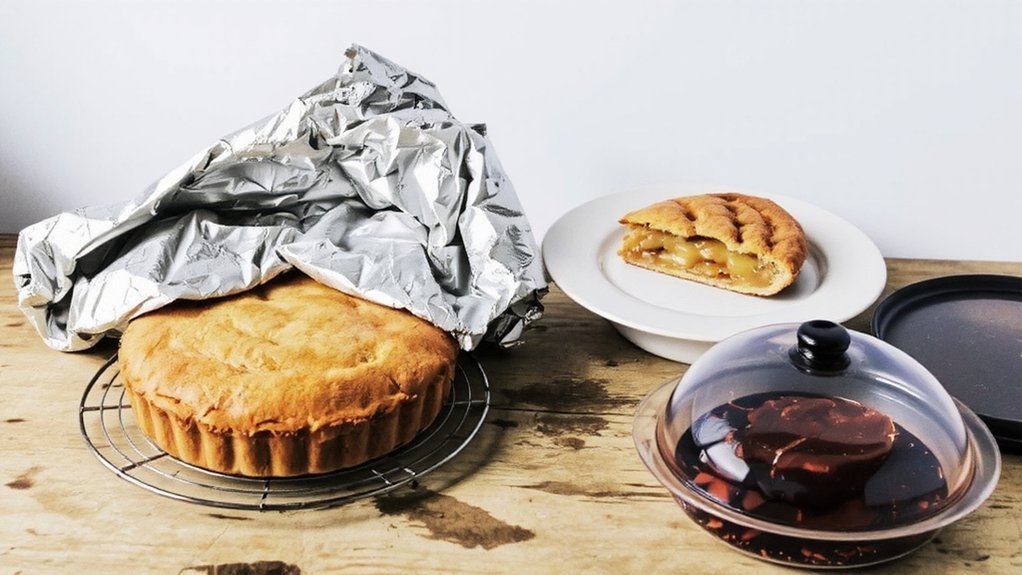
- Store fruit pies refrigerated at 40°F or below for up to four days in airtight containers away from odorous foods.
- Keep cream and custard pies constantly refrigerated; never leave unrefrigerated longer than two hours due to high perishability.
- Freeze cooled pies wrapped tightly in plastic wrap and foil at 0°F or below for up to three months.
- Place pies on refrigerator shelves rather than doors to avoid temperature fluctuations and maintain filling integrity and topping stability.
- Discard pies showing mold, off-odors, discoloration, or watery filling; revive texture by reheating at 350°F for 10–15 minutes.
Room Temperature Storage Guidelines
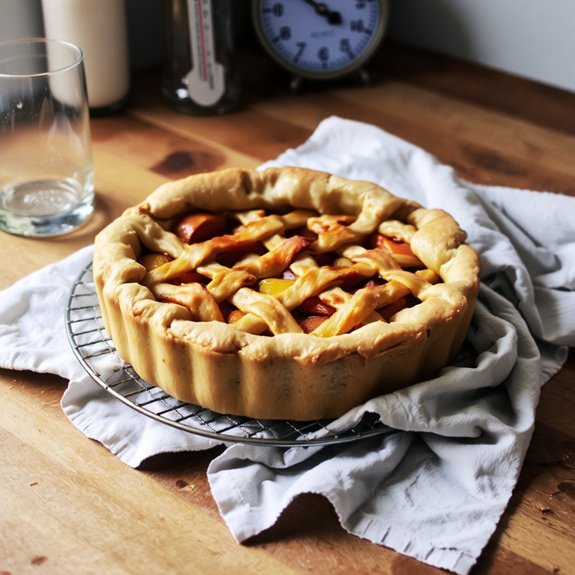
If you’ve just baked a pie or brought one home from the bakery, you’ll want to store it properly at room temperature for short-term enjoyment.
Keep your pie on a counter placement away from direct sunlight and heat sources. A cool kitchen works best, ideally between 68-72°F.
Cover your pie loosely with foil or plastic wrap to protect it from dust while allowing air circulation. Don’t seal it tightly, as trapped moisture can compromise the crust’s texture.
Monitor ambient humidity levels in your home. High humidity can soften crusts and encourage mold growth. In humid climates, consider using an airtight container with a paper towel to absorb excess moisture.
Most fruit and cream pies remain fresh for 1-2 days at room temperature. Pecan and custard pies deteriorate faster, so consume within 24 hours.
Refrigeration Methods for Different Pie Types
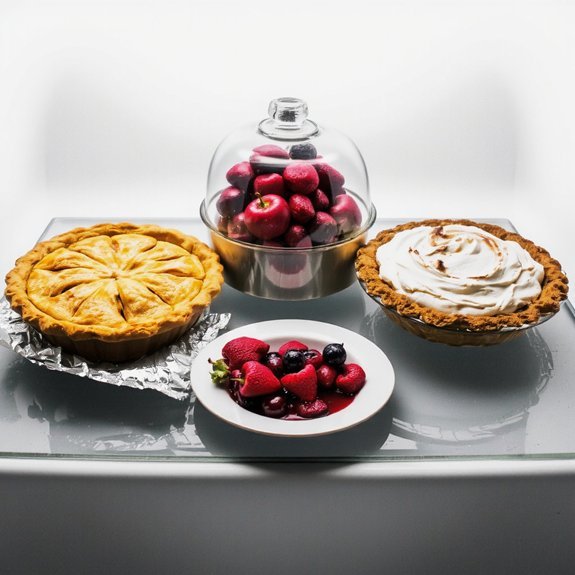
You’ll want to refrigerate fruit pies to preserve their freshness and prevent bacterial growth.
Keep them at 40°F or below for up to four days.
Cream pies require immediate chilling and must stay refrigerated at all times.
Their custard and whipped toppings are highly perishable and can spoil within two to three days.
Understanding these distinct storage needs guarantees you’ll maintain both safety and quality for each pie variety.
Fruit Pies Cold Storage
Refrigerating fruit pies requires understanding how different fillings and crusts respond to moisture and temperature changes.
You’ll want to store your pie at 40°F or below to maintain freshness and safety.
Key storage considerations:
- Date labeling: Mark your pie with the storage date to track freshness accurately
- Portion control: Cut only what you need to minimize air exposure on remaining slices
- Airtight covering: Use plastic wrap or aluminum foil to prevent moisture loss and odor absorption
- Shelf placement: Position pies on middle refrigerator shelves away from temperature fluctuations
Most fruit pies stay fresh for three to four days when properly refrigerated.
Berry and cherry pies are particularly prone to mold, so monitor them closely.
You can extend storage life by freezing fruit pies for up to four months, ensuring you enjoy your baking investment without waste.
Cream Pies Proper Chilling
Cream pies demand different refrigeration strategies than their fruit counterparts because their custard, whipped cream, and meringue components can’t tolerate the same handling.
You’ll want to refrigerate cream pies immediately after purchase or preparation, maintaining temperatures between 35–40°F.
Store them on a shelf rather than the door, where temperature fluctuations compromise topping stability and filling integrity.
When you’re transporting cream pies, prioritize transport cooling by using insulated containers with ice packs.
Never leave them at room temperature for more than two hours. You shouldn’t stack items on top of the pie, as pressure damages delicate toppings and crusts.
Check your cream pie daily for signs of spoilage. Most cream pies last 3–4 days refrigerated. You can freeze certain cream pies for extended storage, though texture changes may occur.
How Long Fruit Pies Last in the Fridge
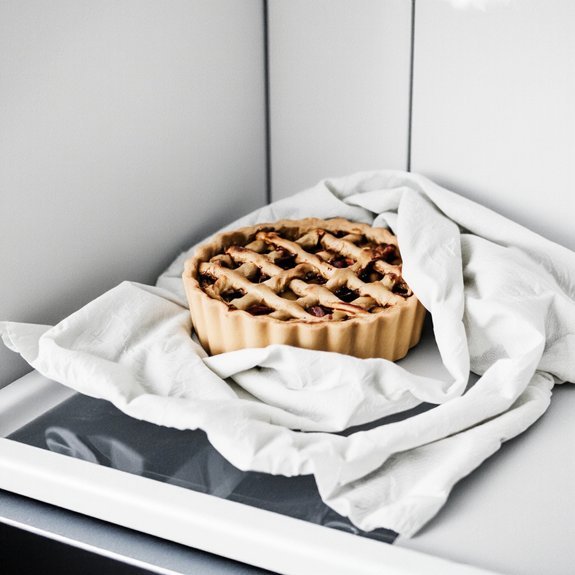
Because fruit pies contain perishable fillings and minimal preservatives, they’ll typically stay fresh in the refrigerator for three to four days.
You’ll want to label dates on your container so you know exactly when you baked it—this simple step prevents guesswork and waste.
To maximize flavor retention, store your pie in an airtight container rather than leaving it loosely covered. Here’s what you need to know:
- Keep your refrigerator at 40°F or below for peak freshness
- Store pies away from odorous foods that’ll compromise taste
- Check for mold or off-smells before eating
- Consider freezing for extended storage beyond four days
You’re in control of your pie’s lifespan.
Monitor these guidelines closely, and you’ll enjoy quality fruit pies throughout the week without compromising safety or taste.
Keeping Cream Pies Fresh and Safe
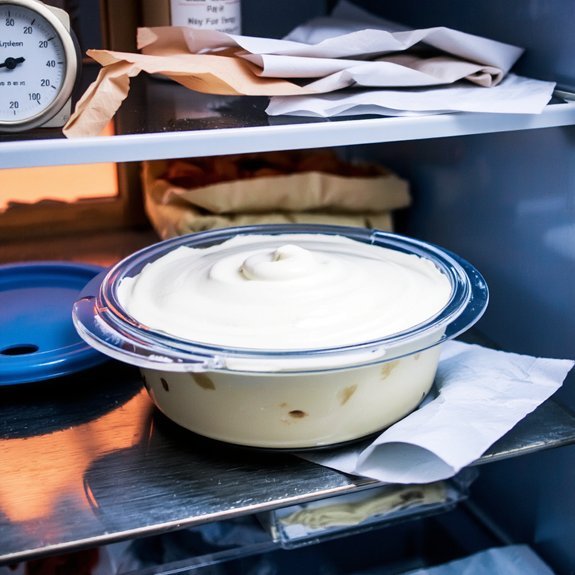
You’ll want to keep your cream pie at a consistent 40°F or below to prevent bacterial growth and maintain food safety.
Watch for signs of spoilage like off odors, discoloration, or a watery filling, which typically appear within three to four days of storage.
Covering your pie tightly with plastic wrap or placing it in an airtight container will protect it from absorbing refrigerator odors and help extend its freshness.
Refrigeration Temperature Guidelines
Maintaining proper refrigeration temperature is essential for preventing bacterial growth and foodborne illness in cream pies, which contain perishable ingredients like eggs, milk, and whipped cream.
You’ll want to keep your refrigerator at 40°F (4°C) or below.
Here’s what you need to know:
- Check your thermostat calibration monthly with an appliance thermometer to verify accuracy
- Store cream pies on middle shelves where temperature’s most consistent
- Keep pies away from the door, where fluctuations occur frequently
- Monitor energy efficiency by avoiding overcrowding, which restricts air circulation
You shouldn’t leave cream pies at room temperature for more than two hours.
If you’re uncertain about your fridge’s temperature, invest in a reliable thermometer.
Proper temperature control directly impacts your pie’s safety and shelf life, protecting you and your family from potential foodborne pathogens.
Shelf Life and Spoilage Signs
Cream pies stored at proper refrigeration temperatures typically remain fresh for three to four days, though you’ll want to consume them sooner for ideal flavor and texture.
Beyond this window, microbial growth accelerates, compromising both safety and quality.
Watch for spoilage signs: off odors, visible mold, or unusual discoloration indicate you should discard the pie immediately. Ingredient impact plays a vital role in shelf life—custard-based fillings spoil faster than fruit fillings due to their egg content and higher moisture levels.
You’ll notice texture degradation as the crust absorbs moisture, becoming soggy rather than crisp. If you’re unsure about freshness, err on the side of caution. Trust your senses: if something seems off, don’t risk it. Proper storage maximizes your freedom to enjoy pie safely throughout its brief window.
Proper Container and Covering Methods
Since exposure to air and contaminants accelerates spoilage, selecting the right storage container and covering method is essential for maintaining your cream pie’s safety and quality.
You’ll want to choose containers that offer complete protection while preserving freshness:
- Airtight plastic containers with secure lids prevent bacterial growth and odor absorption
- Eco-friendly covers made from beeswax wraps or compostable materials protect your pie sustainably
- Dome cake carriers shield pies from refrigerator contaminants while allowing visibility
- Transport packaging designed for pies ensures protection during movement without compromising integrity
You should avoid leaving your cream pie uncovered or loosely wrapped.
Store it away from strong-smelling foods that can transfer odors.
If you’re moving your pie, use sturdy transport packaging to prevent shifting and damage.
These practices guarantee your cream pie remains safe, fresh, and delicious throughout its storage period.
Storing Custard and Egg-Based Pies
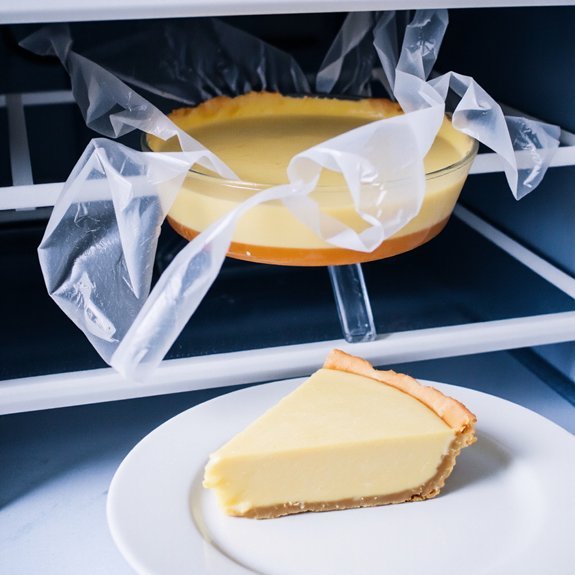
How should you handle custard and egg-based pies to keep them fresh and safe?
You’ll want to refrigerate these pies immediately after cooling, as their eggs and dairy fillings spoil quickly at room temperature.
Store them in airtight containers or wrap them tightly with plastic wrap to prevent contamination and odor absorption.
For make ahead convenience, custard pies stay fresh for three to four days when properly refrigerated.
If you’re considering travel packaging, place your pie in a sturdy, insulated container with ice packs to maintain consistent cold temperatures during transport.
Never leave custard or egg-based pies unrefrigerated for more than two hours.
Avoid freezing these pies, as the custard filling becomes grainy and separates when thawed.
Prioritize food safety by discarding any pie showing signs of mold, off-odors, or unusual texture changes.
Freezing Pies for Long-Term Storage
Extending your pie’s shelf life through freezing offers practical advantages for batch baking and meal planning.
You’ll maximize your time and resources by preparing pies when convenient, then thawing them when needed.
Here’s what you need to know:
- Cool your pie completely before wrapping to prevent condensation and ice glazing on the crust
- Wrap tightly in plastic wrap, then aluminum foil to protect against freezer burn
- Label with the pie type and freezing date for easy identification
- Store at 0°F or below for up to three months
You can also consider ingredient substitution with freeze-stable alternatives if you’re concerned about texture changes.
Most fruit and cream pies freeze well, though custard-based varieties require careful handling.
Thaw your pie overnight in the refrigerator for best results.
Proper Wrapping and Container Techniques
The wrapping method you choose directly impacts your pie’s quality during storage, whether you’re freezing for months or refrigerating for days.
The wrapping method you select directly determines your pie’s storage quality, whether freezing long-term or refrigerating short-term.
You’ll want to prioritize material sourcing, selecting food-grade plastic wrap, aluminum foil, or freezer paper that won’t compromise your pie’s integrity.
Start by wrapping your cooled pie tightly in your chosen material, ensuring no air exposure that causes freezer burn.
For double protection, place your wrapped pie in an airtight container or freezer bag.
Don’t overlook wrap aesthetics—label your package with the pie type and storage date so you’re not guessing later.
You’ve got flexibility here: some prefer rigid containers for stability, while others favor vacuum-sealed bags for space efficiency.
Choose what aligns with your storage capacity and retrieval preferences.
Proper wrapping prevents odor absorption and maintains your pie’s original flavor profile.
Signs Your Pie Has Gone Bad
When should you discard your stored pie?
Trust your instincts and sensory observations to determine freshness.
Several clear indicators signal that your pie’s time has passed.
Your pie’s quality deteriorates when you notice:
- Mold growth on the crust or filling, appearing as green, blue, or black spots
- Crust sogginess that’s developed an unpleasant texture despite proper storage methods
- Filling separation where liquid pools beneath a shrunken filling layer
- Unpleasant odors ranging from sour to fermented smells emanating from the pie
Don’t compromise your health by consuming questionable pie.
Room-temperature pies last 1-2 days; refrigerated pies last 3-4 days.
Frozen pies maintain quality for several months when properly wrapped.
When in doubt, throw it out.
Your freedom to enjoy food safely depends on recognizing these warning signs before consumption.
Reviving Leftover Pie for Better Taste
Even if your pie’s been sitting in the refrigerator for a few days, you can restore much of its original appeal with simple reheating techniques. Oven crisping revitalizes your crust’s texture—reheat at 350°F for 10-15 minutes until you achieve that desired crispness. Pairing your revived pie with complementary sauce pairings elevates the entire experience.
| Method | Temperature | Duration |
|---|---|---|
| Oven Crisping | 350°F | 10-15 minutes |
| Microwave Warming | Medium Power | 1-2 minutes |
| Toaster Oven | 325°F | 8-12 minutes |
You’ll notice improved flavor and texture when you take control of the reheating process. Fresh whipped cream, vanilla ice cream, or fruit compote serve as excellent sauce pairings. Don’t settle for stale pie—reclaim its quality through strategic reheating and thoughtful accompaniments.
Frequently Asked Questions
Can I Store Pie in the Freezer Before Baking It Completely?
Yes, you can freeze your pie before completing the baking process.
For part baked storage, you’ll bake it partially, cool it completely, then freeze it in an airtight container.
Alternatively, unbaked freezing works excellently—assemble your pie, wrap it securely, and freeze it raw.
When you’re ready to finish, you’ll thaw it slightly and complete the baking, though you may need to add extra time.
Both methods preserve your pie’s quality effectively.
Should I Store Pie in a Pie Box or Regular Container?
You’ll find pie boxes superior to regular containers when storing your pie.
Specialized pie boxes offer better material durability and withstand temperature fluctuations without warping.
For airtight comparison, you’ll need to seal regular containers separately, whereas pie boxes provide integrated structural protection.
You’re free to choose either option, but pie boxes deliver ideal preservation.
They prevent moisture loss and maintain your pie’s quality longer, giving you independence from frequent replacements.
Does Storing Pie Crust Separately From Filling Affect Quality?
Storing your pie crust separately from filling preserves texture and prevents sogginess. You’ll maintain your crust’s crisp integrity while avoiding flavor transfer between components.
Keep the crust in an airtight container and the filling separately refrigerated. This method gives you freedom to assemble your pie fresh or store components longer.
You’re choosing quality over convenience, ensuring each element stays at its best.
Can I Store Multiple Pies Stacked on Top of Each Other?
You shouldn’t stack multiple pies directly on top of each other.
Crust crushing will compromise your pie’s structural integrity and presentation.
Additionally, flavor transfer between stacked pies can occur, creating unwanted taste combinations.
Instead, store your pies on separate shelves in your refrigerator or freezer, allowing adequate space between them.
This approach preserves both the quality of your crusts and the distinct flavors you’ve carefully crafted.
What’s the Best Way to Store Pie With Delicate Toppings?
You’ll want to store your pie uncovered or loosely wrapped to protect delicate toppings.
For meringue preservation, keep it at room temperature and consume within two days—refrigeration causes weeping.
With fruit garnishes, add them just before serving rather than storing them on the pie.
If you must refrigerate, use a cake box or cover loosely with plastic wrap, elevating it above the filling to prevent contact and preserve texture.





Leave a Comment