
Key Takeaways
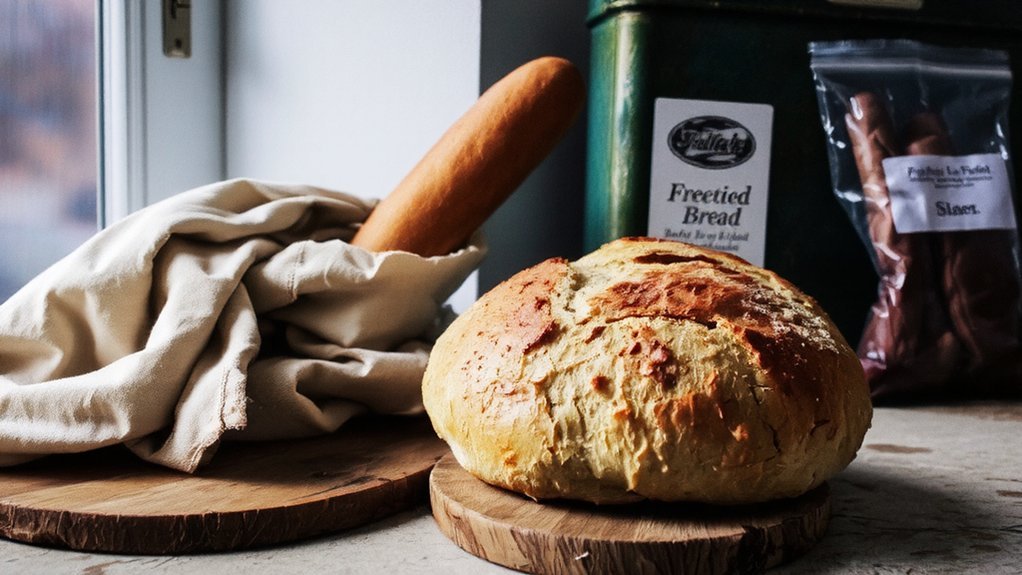
- Store bread in a breadbox or paper bag at 68–72°F for consumption within 1–2 days; avoid plastic bags at room temperature.
- Freeze bread tightly wrapped in plastic and foil for up to 2–3 months; slice before freezing for convenient single-piece access.
- Refrigerate only when necessary in airtight containers, as cold accelerates staling despite slowing mold growth.
- Discard bread immediately if you detect visible mold, soft spots with odor, or sour smells indicating bacterial fermentation.
- Revive stale bread by lightly spritzing with water, wrapping in foil, and baking at 350°F for approximately 10 minutes.
Understanding Bread Staling and Moisture
When you store bread, you’re fundamentally managing two competing processes: staling and moisture loss.
Bread storage requires balancing two fundamental challenges: preventing staling while managing moisture loss effectively.
Understanding staling chemistry helps you make informed decisions about storage methods.
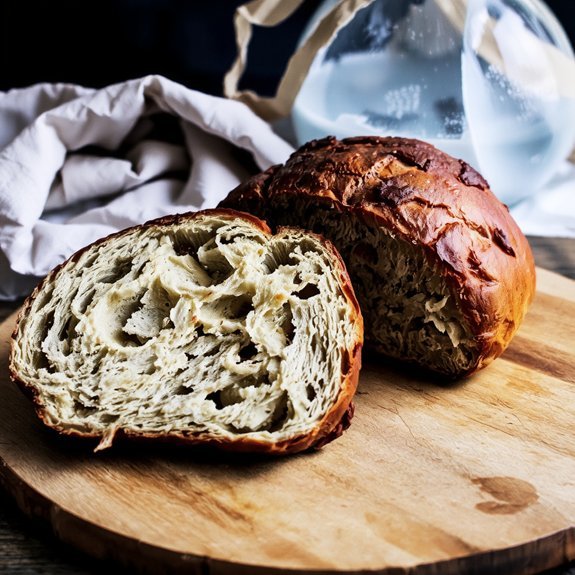
Staling occurs when bread’s crumb structure crystallizes, making it firm and crumbly—a process independent of moisture content.
Moisture migration complicates storage further.
Your bread loses moisture to the environment while simultaneously absorbing it from surrounding air.
This dual action determines texture and shelf life.
In humid conditions, you’ll experience faster mold growth.
In dry conditions, you’ll get accelerated staling.
You control these variables through strategic storage choices.
Room temperature accelerates staling chemistry.
Freezing halts moisture migration and staling entirely.
Refrigeration paradoxically speeds staling while preserving moisture.
Your specific climate and usage patterns determine which method serves your needs best, giving you freedom to choose your ideal storage approach.
Room Temperature Storage Methods
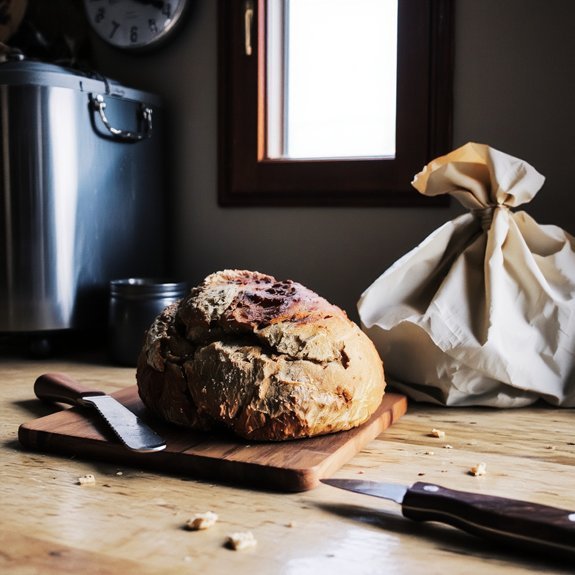
Because bread stales fastest at room temperature, you’ll want to use this storage method only for bread you plan to consume within 1-2 days.
Keep your loaf in a breadbox or paper bag—both options maintain adequate air circulation while preventing excessive moisture loss.
Avoid plastic bags, which trap humidity and accelerate mold growth.
For storage aesthetics, choose a breadbox that complements your kitchen décor while keeping bread accessible.
Position it away from direct sunlight, heat sources, and drafty areas.
Implement a labeling schedule by marking your bread’s purchase date on the bag or box, helping you track freshness at a glance.
This straightforward approach gives you complete control over your bread’s condition, ensuring you consume it at peak quality before deterioration becomes unavoidable.
Refrigerator Storage: When and How
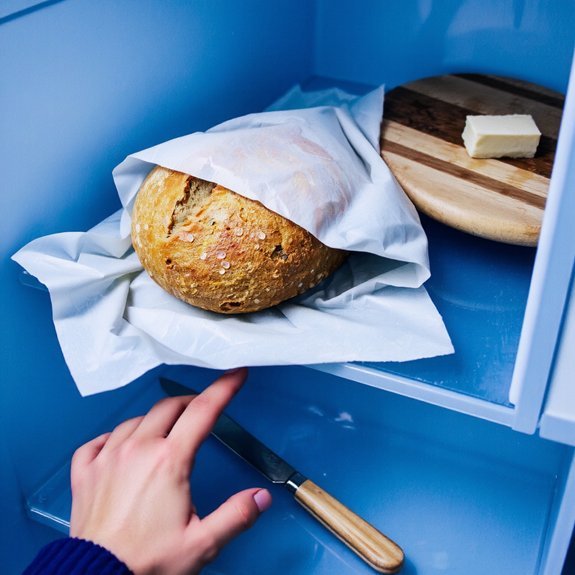
Refrigeration presents a paradox for bread preservation: while cold temperatures dramatically slow mold and staleness, they also accelerate the staling process itself through accelerated starch retrogradation.
You’ll want to refrigerate only when necessary—typically when you’re in humid climates or can’t consume bread within 2-3 days.
Store your bread in airtight containers for odor prevention and energy efficiency; this stops your fridge from absorbing bread moisture and stale flavors.
Wrap loaves tightly in plastic wrap or place them in sealed bags before refrigerating.
You should freeze bread instead if you need longer storage.
Remove refrigerated bread before eating; allow it to reach room temperature for the best texture.
Avoid the refrigerator’s main compartment if possible—use the coldest zone to minimize staling while maintaining your independence from frequent bakery trips.
Freezing Bread for Long-Term Storage
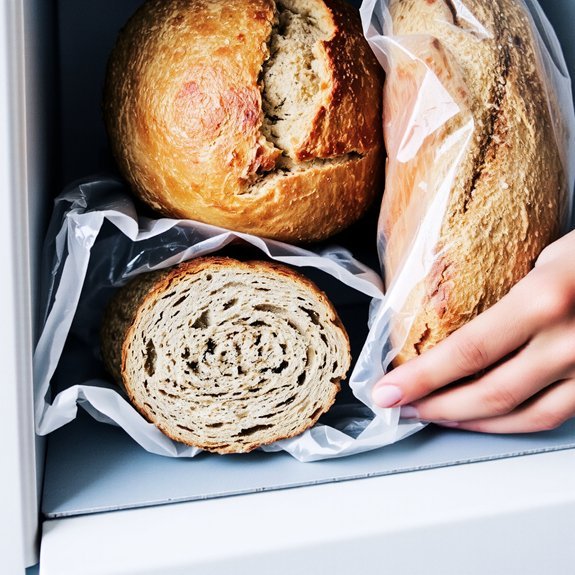
Freezing offers you the most effective long-term bread storage solution, bypassing the staling acceleration that refrigeration causes. You’ll maintain bread quality for up to three months by implementing smart freezer organization and portioning strategies.
| Method | Timeline | Best For |
|---|---|---|
| Whole loaves | 2-3 months | Minimal handling |
| Sliced portions | 1-2 months | Quick access |
| Half loaves | 2-3 months | Flexible usage |
| Individual slices | 3 months | Single servings |
Wrap your bread tightly in plastic wrap, then aluminum foil to prevent freezer burn. Label containers with dates. Slice bread before freezing for convenient thawing—you’ll grab what you need without defrosting everything. Thaw at room temperature for 2-3 hours, or toast directly from frozen. This approach gives you complete control over your bread supply, eliminating waste and extending freshness indefinitely.
Storage Solutions for Different Bread Types
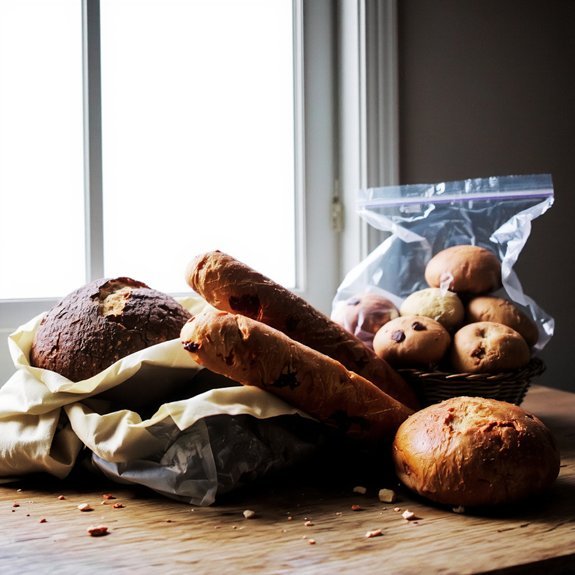
You’ll find that different bread types require distinct storage approaches based on their moisture content and crumb structure. Crusty artisan breads and specialty loaves benefit from freezing to preserve their texture, while soft varieties like sandwich bread actually deteriorate faster in the refrigerator due to accelerated staling from cold temperatures.
Room temperature storage works best for bread you’ll consume within 2-3 days, keeping the crumb soft while maintaining the crust’s integrity.
Room Temperature Bread Storage
Because different bread varieties have distinct moisture contents and crumb structures, they’ll require tailored storage approaches at room temperature.
You’ll maximize bread freshness by implementing these strategies:
- Portion planning – Slice only what you’ll consume within 2-3 days, keeping remainder whole to retain moisture and slow staleness
- Labeling system – Mark purchase dates on bags to track shelf life and prevent waste
- Container selection – Use paper bags for crusty varieties to maintain texture; employ bread boxes for soft loaves to regulate humidity
- Air circulation – Store at 68-72°F away from direct sunlight and heat sources
You’ll preserve ideal texture and flavor by matching storage method to bread type.
Dense varieties withstand countertop exposure longer than delicate artisanal loaves. Your freedom to choose storage reflects understanding your household’s consumption patterns and bread preferences.
Freezing Artisan and Specialty
When you’re dealing with high-quality artisan and specialty breads, freezing becomes your most reliable preservation method for extending shelf life beyond 2-3 days. You’ll maximize freshness by implementing portion control—slice bread before freezing to access individual pieces without thawing entire loaves. Wrap sections tightly in plastic wrap, then place them in airtight freezer bags to prevent freezer burn.
| Bread Type | Freezing Duration | Thawing Method | Best Practice |
|---|---|---|---|
| Sourdough | 3 months | Room temperature | Slice before freezing |
| Focaccia | 2 months | Oven reheat | Wrap individually |
| Ciabatta | 3 months | Toast directly | Use labeling tips |
| Rye | 4 months | Microwave brief | Date all packages |
You’ll prevent confusion by applying labeling tips—mark bread type and freeze date clearly. This approach preserves your investment in premium breads while maintaining quality.
Refrigeration for Soft Varieties
While freezing works best for artisan breads, soft varieties like brioche, challah, and sandwich loaves demand a different approach.
Refrigeration preserves these delicate breads without compromising texture, though you’ll need to balance mold prevention with aroma retention.
- Store soft breads in airtight containers between 35-40°F to slow staling and inhibit mold growth
- Wrap loaves in parchment paper before sealing to maintain crust flexibility and prevent moisture condensation
- Keep refrigerated bread away from strongly-scented foods that’ll transfer odors and diminish your bread’s natural aroma
- Plan consumption within 5-7 days; refrigerated soft varieties deteriorate faster than room-temperature storage despite preservation benefits
This method gives you ideal freshness while maintaining the tender crumb structure that defines premium soft breads.
Reviving Stale Bread and Knowing When to Discard
You can restore stale bread’s texture through moisture reintroduction and heat application. Spritz your loaf lightly with water, wrap it in foil, and bake at 350°F for 10 minutes. This method revives crumb structure effectively.
| Sign | Assessment | Action |
|---|---|---|
| Visible fuzzy growth | Mold Identification—discard immediately | Remove entirely |
| Sour smell | Bacterial fermentation | Discard without hesitation |
| Hard, dry texture | Staleness only | Revive with moisture method |
| Slight discoloration | Surface oxidation | Acceptable for consumption |
| Soft spots with odor | Advanced decay | Edibility Criteria—unsafe |
Trust your instincts on Edibility Criteria. When uncertain, discard it—your health matters more than waste concerns. Don’t compromise your freedom by consuming questionable bread.
Frequently Asked Questions
Can I Store Bread in a Bread Box With Other Foods?
You shouldn’t store bread with other foods in a bread box.
Odor transfer occurs readily in enclosed spaces, compromising your bread’s taste.
Flavor contamination risks developing when aromatic items like onions, garlic, or cheese sit adjacent to your loaf.
Keep your bread isolated to maintain its integrity.
You’ll preserve ideal freshness and prevent unwanted taste absorption by dedicating your bread box exclusively to bread storage, giving you complete control over your food’s quality.
Does Bread Storage Method Affect Its Nutritional Value?
Your storage method directly impacts nutrient loss in bread. You’ll want to keep bread in airtight containers to minimize oxidation, which degrades B vitamins and antioxidants.
Freezing preserves vitamin retention better than room-temperature storage, slowing enzymatic degradation. Avoid humid environments that encourage mold growth and nutrient breakdown.
You’ve got control here—choose freezing for long-term vitamin preservation or cool, dry conditions for short-term storage. Your choices determine whether you’re maximizing your bread’s nutritional benefits.
What Temperature Is Ideal for Storing Homemade Versus Store-Bought Bread?
You’ll want to keep homemade bread at room temperature for 3-4 days—it’ll stay fresher without refrigeration’s staling effects.
Store-bought varieties, containing preservatives, also do best at room temperature initially.
For long-term storage, you’ve got freedom to use freezer storage for both types; wrap them tightly and they’ll last 3 months.
Thaw at room temperature when ready.
Avoid refrigerators entirely—they accelerate staling rapidly.
How Do I Prevent Mold Growth in Bread Storage Containers?
You’ll prevent mold by prioritizing container disinfection—wash your storage container with vinegar or bleach solution, then dry it completely.
Control humidity levels rigorously; you’re aiming for 50-60% relative humidity.
Don’t seal bread while it’s warm, as trapped moisture breeds mold.
You’ve got freedom to choose breathable cloth bags or paper containers over plastic.
Store containers in cool, dark spaces away from direct sunlight and temperature fluctuations that compromise your bread’s integrity.
Is It Safe to Eat Bread Stored in Paper Versus Plastic?
You’ll find paper safer than plastic for bread storage. Paper allows moisture to escape, preventing mold and bacterial growth that thrive in humid environments.
Plastic containers risk chemical leaching from condensation, especially when bread’s warm. Paper’s breathability maintains your bread’s integrity without compromising safety.
You’re free to choose paper bags or bread boxes lined with cloth—both protect your loaf while respecting your health. Avoid plastic’s moisture retention trap.
Leave a Comment