
Key Takeaways
- Bent handle prevents hand scraping and enables precision work without knuckle interference on stovetops.
- Tempered stainless steel blade should flex under pressure while resisting complete folding during use.
- Ergonomic silicone or rubberized grip reduces hand fatigue and improves control during extended tasks.
- Choose shorter spatulas for tight spaces and longer ones for reach; adjust offset angle for heat protection.
- One-piece construction with secure blade-to-handle connection ensures durability and eliminates weak glued joints.
Why the Bent Handle Makes All the Difference
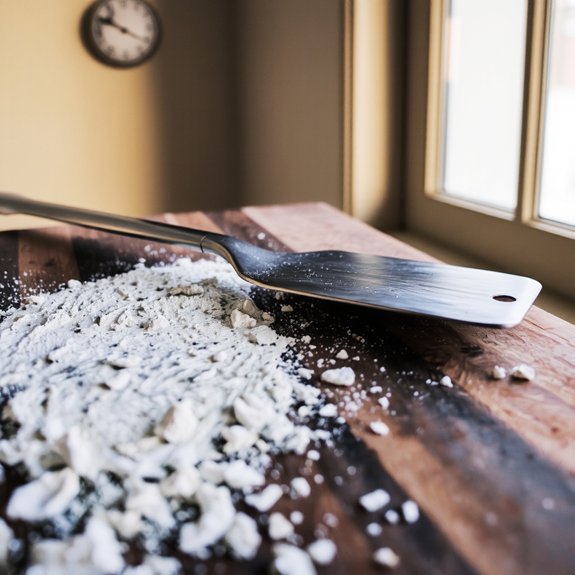
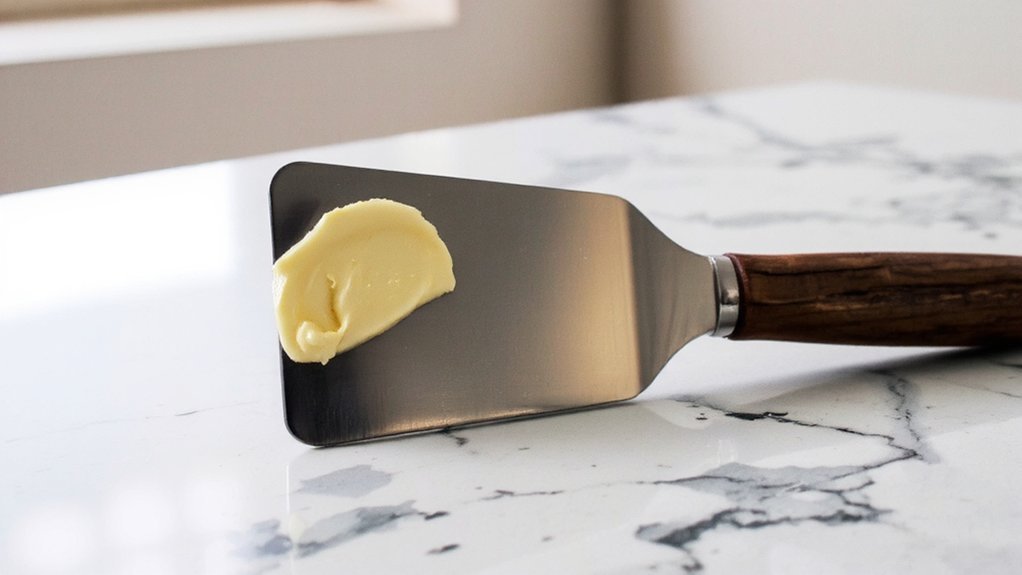
The bent handle’s the game-changer that sets an offset spatula apart from its straight-edged cousins. When you’re working in the kitchen, you need tools that don’t get in your way, and this design gives you exactly that. You’ll find yourself reaching for an offset spatula repeatedly because it lets you work with precision without your hand scraping against the stovetop or cake pan.
The bent handle sets offset spatulas apart—letting you work with precision without your hand scraping against stovetops or cake pans.
What makes a truly great offset spatula comes down to blade flexibility and handle comfort. You want a blade that bends slightly under pressure but won’t fold completely when you’re flipping pancakes or frosting a layer cake. The best models use stainless steel that’s tempered just right, giving you that responsive feel without sacrificing durability. Your hands’ll appreciate handles made from ergonomic materials like silicone or rubberized grips that won’t slip when things get messy.
You’ve got choices when shopping for the right one. Some spatulas are short and stubby, perfect for precision work in tight spaces like cookie sheets. Others stretch longer, giving you reach and leverage for larger projects. Consider what you’ll actually be doing most often—frosting cakes demands different specs than flipping fish or moving roasted vegetables.
The angle of the bend matters more than you’d think. A shallow offset means you’re closer to your work surface, ideal for detailed frosting jobs. A steeper angle keeps your knuckles higher and away from heat sources, which you’ll appreciate when retrieving hot items from ovens or grills. You’re basically choosing between accessibility and protection based on your specific needs.
Quality construction separates the tools you’ll use for years from ones destined for landfills. Look for spatulas where the blade’s actually connected securely to the handle, not just glued on. Some premium options feature one-piece construction, eliminating weak points entirely. Weight matters too—you don’t want something so heavy it causes hand fatigue, but too light feels flimsy and unreliable.
When you’re buying an offset spatula, you’re investing in freedom from frustration. You won’t wrestle with awkwardly shaped edges anymore, and you’ll navigate tight corners without scraping knuckles. The right offset spatula becomes an extension of your hand, letting you work faster and cleaner. Don’t settle for subpar tools that make cooking tedious. Get yourself a proper offset spatula with excellent blade flexibility and genuine handle comfort, and you’ll wonder how you ever worked without it.
Frequently Asked Questions
What Materials Are Best for Offset Spatula Blades and Handles?
You’ll want stainless steel blades because they’re corrosion-resistant and won’t rust when you’re washing up.
They’re durable and won’t stain from acidic ingredients.
For handles, you’ve got freedom to choose—wooden handles give you a classic grip that won’t conduct heat, keeping your hands comfortable.
Wooden handles also won’t slip when wet, unlike plastic alternatives.
This combination delivers the best performance and longevity.
How Do I Clean and Maintain My Offset Spatula Properly?
You’ll keep your offset spatula performing like a pro by hand-washing it immediately after use—never toss it in the dishwasher, which dulls the blade. For blade care, wipe it dry to prevent rust and corrosion.
Store it flat in a drawer or hanging rack rather than crammed in a utensil container. Compare this approach to neglected tools: proper maintenance extends your spatula’s lifespan considerably, giving you the freedom to work without equipment failures.
Are Offset Spatulas Dishwasher Safe or Hand Wash Only?
Most offset spatulas you’ll find are hand wash only, despite what some label interpretations suggest.
You’re better off avoiding the dishwasher—high heat warps handles and dulls edges fast.
Consumer reviews consistently confirm hand washing extends your tool’s life substantially.
You’ll want to rinse immediately after use, scrub gently with warm soapy water, and dry completely. This approach gives you total control over your kitchen equipment’s longevity.
What Size Offset Spatula Works Best for Different Baking Tasks?
You’ll want a mini precision spatula for delicate decorating work and intricate icing details.
For cake smoothing, you’re better off choosing a larger, wider blade—typically 8-10 inches—that gives you full control over frosting application.
Medium sizes work great for general tasks like flipping cookies or spreading fillings.
Your choice of blade width directly impacts your freedom to execute different techniques efficiently without unnecessary frustration or wasted effort.
Can I Use an Offset Spatula for Tasks Beyond Baking?
You’ve absolutely got freedom beyond baking with your offset spatula.
Spread paint across surfaces with the same precision you’d use frosting—the angled blade gives you control.
Try sushi plating, where the thin edge glides under delicate rolls without damaging them.
You’ll find it invaluable for spreading spreads, moving food, even applying glazes.
The versatility’s remarkable; you’re not locked into pastry work.
This tool breaks conventional limits whenever you need finesse.




Leave a Comment