

Key Takeaways
- Too many eggs cause protein coagulation, creating excessive structure and an airy, cake-like crumb instead of fudgy texture.
- Overmixing with electric mixers incorporates excess air; use a spatula or wooden spoon for 20–45 seconds instead.
- Scooping flour directly from the bag packs it down, adding up to 20% extra flour; weigh or spoon and level instead.
- Oven temperatures +25°F above recipe create dense, dry crumbs; use an oven thermometer and bake until a toothpick shows moist crumbs.
- Insufficient fat relative to flour creates rigid structure; maintain a 1:1 flour-to-fat ratio and consider adding vegetable oil for fudginess.
Too Many Eggs in Your Batter

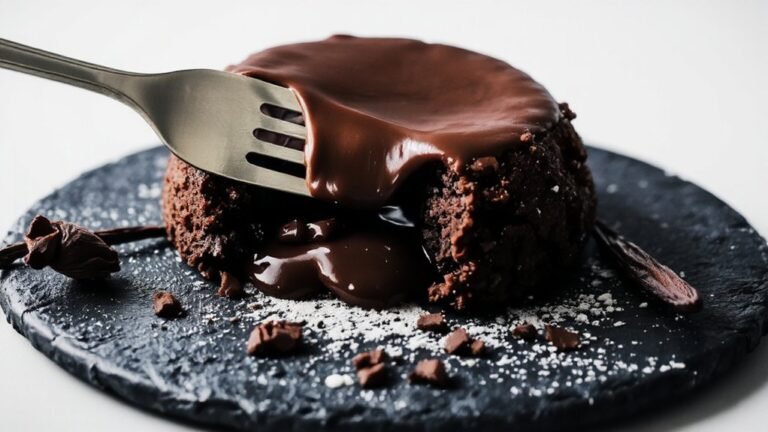
If you’re wondering why your brownies turn out cakey rather than fudgy, excess eggs are likely the culprit.
Too many eggs are likely why your brownies turn out cakey instead of fudgy.
You control the texture through ingredient ratios, and egg dominance disrupts this balance.
Eggs provide structure through protein coagulation, which you want—but only in moderation.
Too many eggs mean excessive protein networks form during baking, creating a crumb structure that traps air and mimics cake’s light texture.
You’re basically building too much structural integrity.
Standard brownie recipes call for one to two eggs per batch. If you’re using three or more, you’re overdoing it. Reduce your eggs to the recipe’s specified amount, and you’ll restore that dense, fudgy texture you’re after. Your brownie’s fate rests on respecting proper egg ratios.
Overmixing Your Brownie Mixture
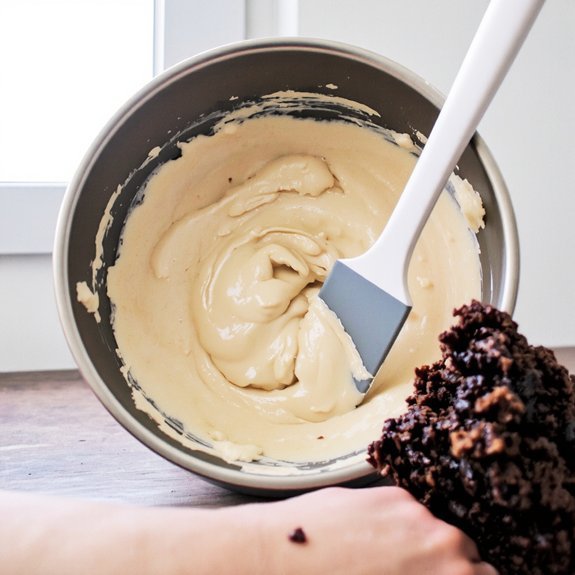
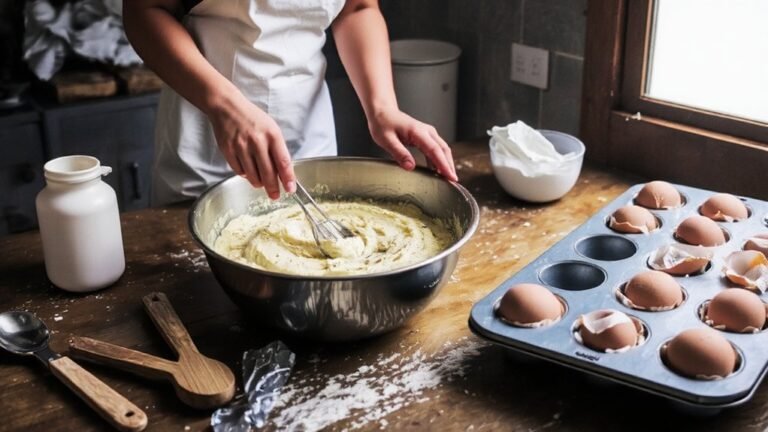
Beyond controlling your egg count, the mixing method itself determines whether you’ll achieve that coveted fudgy crumb or an unwanted cake-like structure. Overmixing incorporates excess air into your batter, which creates a lighter, airier crumb—the opposite of what you want.
Your mixing duration matters critically. Extended beating develops gluten strands in flour, transforming brownies into cake. Tool choice impacts this directly: hand whisks introduce more air than wooden spoons stirring gently.
| Mixing Tool | Duration | Air Introduction | Texture Result | Recommendation |
|---|---|---|---|---|
| Electric mixer | 2-3 min | High | Cakey | Avoid |
| Whisk | 1-2 min | Moderate | Semi-cakey | Limit use |
| Wooden spoon | 30-45 sec | Minimal | Fudgy | Ideal |
| Spatula | 20-30 sec | Very low | Dense fudgy | Best choice |
| Fork | 45-60 sec | Low | Fudgy | Good alternative |
Stir just until ingredients combine. You’re done when you don’t see dry flour streaks.
Using the Wrong Flour Ratio

You’ll find that too much flour throws off the critical flour-to-fat balance, creating a dense crumb structure instead of the fudgy texture you’re after.
Your measuring technique matters enormously—spooning flour directly into the measuring cup packs it down and increases the ratio, while the proper method of leveling a cup you’ve filled by scooping prevents this problem.
Getting this balance right guarantees your brownies stay moist and tender rather than drying out into that unwanted cakey consistency.
Flour-to-Fat Balance
The most common culprit behind caiky brownies is an excess of flour relative to fat.
When you use too much flour, you’re increasing protein content and starch gelatinization, both of which absorb moisture and create a rigid crumb structure.
Fat, conversely, inhibits gluten development and keeps your brownies fudgy and dense.
You’ll want to maintain a balanced ratio—typically one part flour to one part fat by weight.
This proportion allows the fat to coat flour particles effectively, preventing excessive starch absorption.
If you’ve been measuring flour by scooping directly from the bag, you’re likely packing it down and adding more than intended.
Weigh your ingredients instead.
Use a kitchen scale to guarantee accuracy and reclaim control over your brownie’s texture.
This single adjustment transforms your results dramatically.
Measuring Techniques Matter
While weighing ingredients provides the foundation for success, how you measure flour specifically can still undermine your efforts.
Your tool selection directly impacts measurement consistency, which determines your brownie’s final texture.
When you scoop flour directly from the bag, you compress it, adding up to 20% more flour than intended.
This excess flour absorbs moisture, creating that unwanted cake-like crumb.
Instead, spoon flour into your measuring cup and level it off—this technique gives you accurate amounts without compaction.
Better yet, use a kitchen scale for complete control.
Weighing flour eliminates the guesswork that scooping introduces.
You’ll achieve repeatable results every time, ensuring your brownies stay fudgy and dense rather than morphing into cake.
Precision in measurement consistency transforms your baking outcomes fundamentally.
Baking at Incorrect Temperatures

If your oven runs hot or cold, you’re likely altering the Maillard reaction that should occur on your brownie’s surface while the interior crumb sets. Proper oven calibration guarantees consistent brownie texture development.
| Temperature Variance | Result |
|---|---|
| 25°F too hot | Dense, dry crumb; burnt edges |
| 25°F too cold | Cakey, underbaked center; pale crust |
| Uneven heating (hot spots) | Inconsistent browning; some areas cake, others fudgy |
You’ll find that even minor deviations prevent cocoa solids and butter from emulsifying correctly during baking. Hot spots create uneven moisture distribution, forcing some portions to bake faster than others. This thermal inconsistency compromises the brownie’s structural integrity.
Invest in an oven thermometer. Position it centrally on your middle rack. Cross-check your oven’s displayed temperature against the actual reading. Adjust baking time accordingly if your oven consistently runs off-calibration. This precision protects your brownie’s intended texture profile.
Leaving Brownies in the Oven Too Long
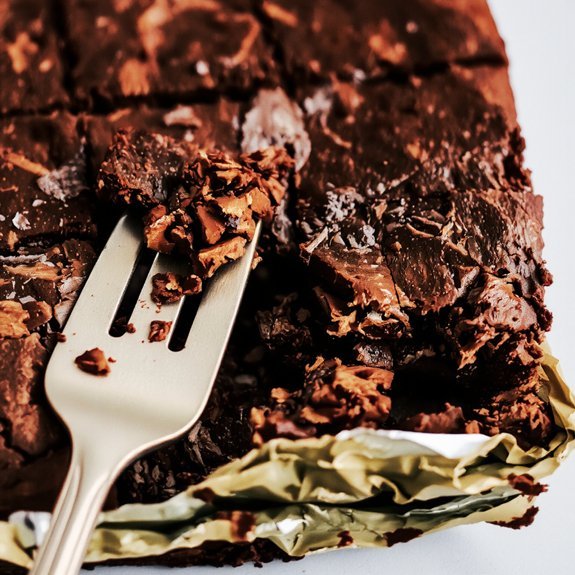
Overbaking transforms your brownies’ crumb structure by continuing moisture evaporation and protein coagulation well beyond the point where fudgy density sets.
Overbaking transforms your brownies’ crumb structure through excessive moisture evaporation and protein coagulation beyond fudgy density.
You’ll notice dry edges creeping inward as water content drops below ideal levels, leaving you with a disappointing cake-like texture throughout.
The culprit? Those extra minutes in the oven accelerate gluten development and eliminate the fat’s ability to create that signature dense, moist crumb. Your brownies lose their structural integrity, becoming brittle rather than chewy.
Rescue methods exist, though prevention’s your best strategy. Set a timer for the lower end of your recipe’s range, then test using the toothpick method—it should emerge with moist crumbs, not clean. Remove brownies when the center still jiggles slightly. Residual heat continues cooking even after removal, delivering perfectly fudgy results you’re after.
The Importance of Fat Content in Brownie Texture
Beyond timing, the fat you choose determines whether your brownies stay fudgy or turn cake-like.
Your butter choice and fat types directly impact crumb structure and moisture retention.
Here’s what controls your brownie’s destiny:
- Butter choice—unsalted butter provides pure fat content without water interference, keeping brownies dense
- Oil addition—vegetable oil adds fluidity, preventing the airy crumb that develops with butter alone
- Fat ratios—higher fat-to-flour ratios yield fudgier results; lower ratios encourage cake-like structure
- Cocoa butter—premium cocoa percentages contribute natural fats that stabilize that coveted chewy center
You’re not just mixing ingredients; you’re engineering texture.
Prioritize quality butter and balance oil content to maintain that fudgy interior you’re after.
Don’t sacrifice fat content for perceived “healthiness”—it’s essential to your brownie’s freedom from cakiness.
Frequently Asked Questions
Can I Substitute Butter With Oil in My Brownie Recipe?
You can absolutely swap butter for oil in your brownie recipe.
Oil enhances moisture retention better than butter, giving you denser, fudgier brownies instead of cakey ones. Use a 1:1 ratio by volume.
However, you’ll notice a shift in your flavor profile—oil creates a more neutral taste, while butter adds richness. Experiment with your preferred oil type to dial in the exact texture and taste you’re after.
Does the Type of Chocolate I Use Affect the Cake-Like Texture?
You’re absolutely right—chocolate type directly impacts your brownie’s texture.
Higher cocoa percentage chocolates contain less cocoa butter, yielding denser, fudgier results.
Conversely, lower percentages or compound chocolate add more fat, promoting that undesired cake-like crumb.
You’ve got freedom here: choose 70-85% cocoa chocolate for authentic fudginess.
Avoid compound chocolate substitutes that’ll sabotage your texture goals.
Your chocolate selection matters as much as your flour ratio.
How Does Altitude Affect Brownie Baking and Texture Outcomes?
At higher altitudes, you’ll encounter lower air pressure, which causes liquids to evaporate faster and leavening agents to expand more aggressively.
You’ve got to reduce baking powder or soda by 25%, increase liquid slightly, and lower your oven temperature by 15-25°F.
These adjustments prevent over-leavening that’d make your brownies cakey.
You’re fundamentally combating physics—recalibrating your ratios keeps that fudgy, dense crumb intact.
Should I Use a Glass or Metal Baking Pan for Brownies?
You’ll want metal pans for superior heat conductivity and even baking.
Metal distributes heat faster than glass, preventing excessive edge browning while your center sets properly.
Glass heats slower and retains temperature longer, which’ll push your brownie edges toward that unwanted cakey texture.
Dark metal pans work best—they’re forgiving and deliver consistent results.
Skip glass if you’re serious about fudgy, properly textured brownies that won’t overcook at the edges.
Does Cooling Time Impact Whether Brownies Stay Fudgy or Turn Cakey?
You’ll want to let residual heat work for you—don’t rush cooling.
A shorter chill duration keeps your brownies fudgy because the fat and chocolate won’t fully set, maintaining that dense, moist crumb structure.
Conversely, extended cooling allows complete fat crystallization, creating a firmer, cake-like texture.
Your move: cool brownies briefly at room temperature, then refrigerate just 15-20 minutes for ideal fudginess.
You’ve got the control here.
Leave a Comment