
Key Takeaways
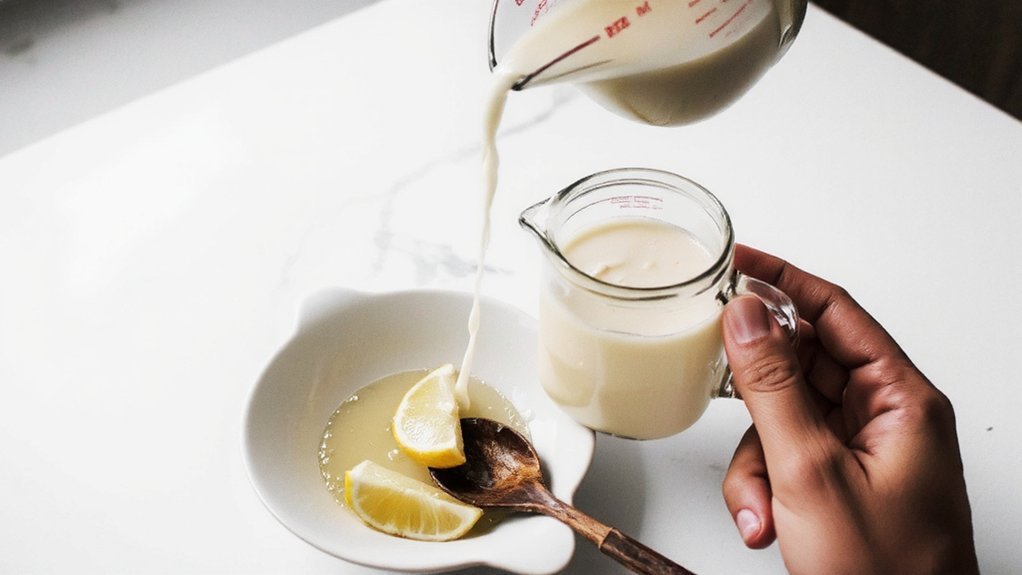
- Mix one tablespoon white vinegar or lemon juice with one cup whole milk and wait five to ten minutes for curdling.
- Combine one cup whole milk with one-quarter cup Greek yogurt for immediate buttermilk that thickens within minutes.
- Dilute one cup sour cream with one-quarter cup water, adjusting the ratio based on desired consistency.
- Maintain temperature between 68–72°F for predictable results and consistent acid concentration during buttermilk formation.
- Taste test regularly to determine preferred tanginess level and strain through cheesecloth for thicker buttermilk if desired.
The Milk and Vinegar Method
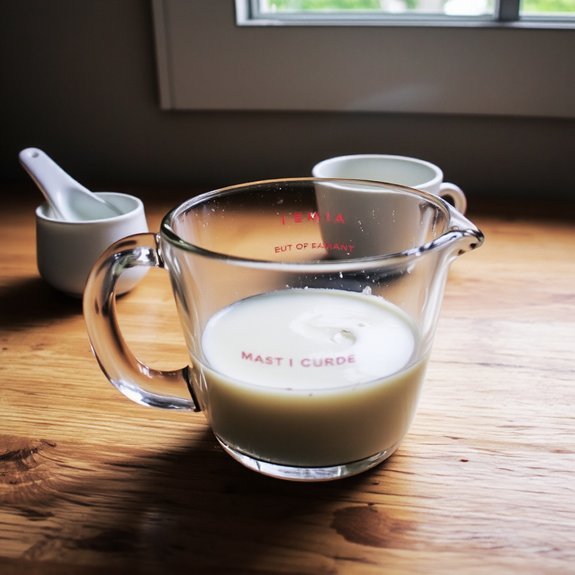
You’ll create buttermilk by combining one tablespoon of white vinegar or lemon juice with one cup of whole milk, then letting the mixture stand for five to ten minutes until it curdles and thickens.
Combine one tablespoon of vinegar or lemon juice with one cup of milk, then wait five to ten minutes until it curdles.
This straightforward method works because the acid denatures milk proteins, producing the tangy liquid you need for baking.
The acidity balance is critical—too little acid won’t sufficiently curdle the milk, while excess acid can over-thicken the mixture.
Vinegar varieties matter.
White vinegar provides consistent results, though apple cider vinegar or distilled varieties work equally well.
Each imparts subtle flavor differences worth experimenting with based on your recipe requirements.
The acid-milk reaction is irreversible and complete within minutes.
You’re now free to use your homemade buttermilk immediately in pancakes, biscuits, or any recipe demanding this essential ingredient.
No dairy alternatives required.
The Milk and Lemon Juice Method
Because lemon juice delivers a more predictable acid concentration than vinegar, it’s the preferred choice for consistent buttermilk production.
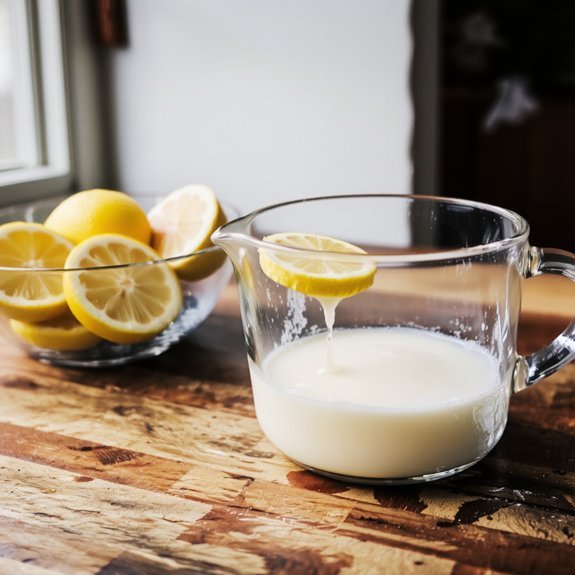
You’ll combine one tablespoon of fresh lemon juice with one cup of whole milk, stirring thoroughly to distribute the acid evenly throughout.
Curdling time typically ranges from five to ten minutes at room temperature.
Temperature effects substantially influence this process—warmer milk accelerates curdling, while cold milk extends it considerably.
You should maintain temperatures between 68-72°F for ideal, reproducible results.
The lemon juice method produces buttermilk with reliable tanginess and texture.
You can verify readiness by observing slight thickening and a subtly sour aroma.
This approach grants you precise control over your buttermilk’s final characteristics, making it ideal for bakers demanding consistency in their results.
Using Yogurt as a Buttermilk Substitute
While the lemon juice method offers reliable results through acid-induced curdling, yogurt provides an alternative approach that doesn’t require waiting for fermentation to occur. You’ll find that Greek yogurt works exceptionally well due to its higher protein concentration and existing acidic profile.
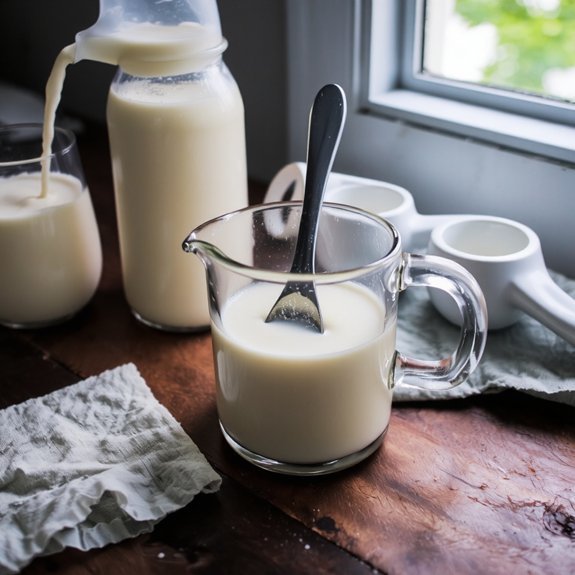
For ideal results, you’ll want to combine one cup of whole milk with one-quarter cup of Greek yogurt, stirring thoroughly until the mixture achieves uniform consistency. This method delivers superior texture modification compared to other substitutes, creating a buttermilk that performs reliably in baking applications. The acid in yogurt activates your leavening agents immediately, giving you freedom to proceed with your recipe without delay. You’ll notice the resulting liquid thickens slightly within minutes, indicating successful buttermilk formation.
The Sour Cream Approach
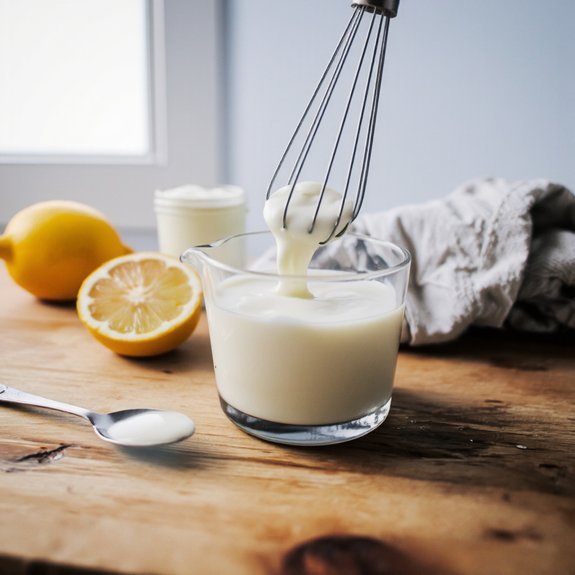
Substituting sour cream for buttermilk offers another viable option when you’re working with acidic dairy products already in your kitchen. You’ll need to dilute sour cream with water to achieve the proper consistency, as sour cream’s density differs considerably from buttermilk’s.
Mix one cup of sour cream with roughly one-quarter cup of water, adjusting based on your texture adjustment requirements for your specific recipe.
Mix one cup of sour cream with one-quarter cup of water, adjusting the ratio to match your recipe’s specific texture needs.
This method works particularly well in baked goods where you’re seeking tang without relying on traditional buttermilk. The flavor pairing complements cakes, biscuits, and quick breads effectively.
Sour cream contains lactic acid, delivering the chemical reaction necessary for leavening. Since you control the water ratio, you maintain complete freedom over your final product’s consistency and acidity level, making this approach reliable for most applications.
Tips for Perfect Homemade Buttermilk
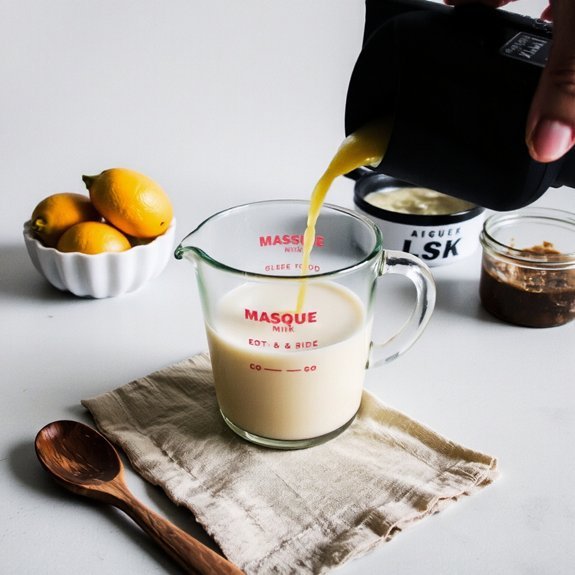
How do you make sure your homemade buttermilk achieves ideal acidity and consistency? Follow these evidence-based practices:
- Temperature control maintains ideal bacterial fermentation between 68-72°F, ensuring predictable results within 12-24 hours
- Culture quality matters—use active, viable starter cultures from reputable sources for reliable outcomes
- Straining techniques remove excess whey if you prefer thicker buttermilk; cheesecloth works effectively
- Taste testing at regular intervals lets you determine your preferred tanginess level
- Container selection influences fermentation; glass vessels prevent unwanted flavor absorption
You’ll achieve consistent results by monitoring these variables closely.
Temperature fluctuations disrupt fermentation timing, while proper straining gives you control over final texture.
Your freedom to customize buttermilk’s acidity and thickness depends on mastering these fundamentals.
Don’t settle for inconsistent outcomes—precision yields superior homemade buttermilk every time.
Frequently Asked Questions
How Long Does Homemade Buttermilk Last in the Refrigerator?
You’ll find your homemade buttermilk stays fresh for seven to ten days when properly refrigerated.
Check expiration labeling you’ve marked on the container for accuracy.
Watch for spoilage indicators: sour smell, mold, or separation beyond normal consistency.
Store it in airtight glass containers away from your fridge door’s temperature fluctuations.
You’re in control—trust your senses and documentation to determine safety.
Don’t let corporate timelines dictate your food choices; use your judgment.
Can You Freeze Homemade Buttermilk for Later Use?
You can freeze homemade buttermilk, though you’ll experience texture changes upon thawing.
Separation typically occurs since buttermilk contains solids that don’t freeze uniformly.
For best results, use thawing techniques like refrigerator thawing overnight rather than rapid methods.
Shake vigorously after thawing to reincorporate separated components.
Frozen buttermilk works best for baking and cooking applications where texture variations don’t markedly impact your final product’s quality.
What Type of Milk Works Best for Buttermilk Substitutes?
You’ll achieve ideal results with whole milk, which provides the fat content necessary for authentic buttermilk’s tangy richness.
If you’re choosing plant milks, you’ll want full-fat coconut or oat varieties that deliver comparable fat content.
Avoid skim options—they won’t produce the desired texture or flavor profile.
You can also experiment with half-and-half for enhanced creaminess.
Your choice of milk fundamentally determines your substitute’s success, so prioritize fat content above all else.
Is Homemade Buttermilk Suitable for All Baking Recipes?
Your homemade buttermilk works well for most recipes, but you’ll encounter limitations.
Texture differences mean it won’t perfectly replicate commercial buttermilk’s consistency, potentially affecting rise and crumb structure.
You may need acidity adjustment—add lemon juice or vinegar if your substitute isn’t tangy enough.
It’s reliable for pancakes, biscuits, and cakes, though delicate batters demand careful consideration.
Test small batches first to confirm results match your expectations.
Can You Make Buttermilk Without Vinegar or Lemon Juice?
You can absolutely make buttermilk without vinegar or lemon juice.
Your best option is using a yogurt substitute—plain yogurt works excellently as a direct replacement.
Alternatively, you’ll want cultured buttermilk, which you can create by adding mesophilic culture directly to milk and letting it ferment at room temperature for 12-24 hours.
This method produces authentic cultured buttermilk with superior leavening properties compared to acid-based substitutes, giving you superior baking results without commercial additives.
Leave a Comment