
Key Takeaways
- Cream of tartar is potassium bitartrate, a white powder byproduct of winemaking with acidic properties (pH 3.6).
- Use it in baking as an acid component with baking soda to produce controlled carbon dioxide rise.
- Add one-eighth teaspoon per egg white when whisking meringues to stabilize foam and achieve stiff peaks.
- Use approximately one-eighth teaspoon per cup of sugar in candy-making to prevent unwanted crystallization.
- Store in airtight containers away from moisture and heat; potency remains three to five years when properly stored.
What Exactly Is Cream of Tartar?
Have you wondered why cream of tartar appears in so many recipes despite its misleading name?
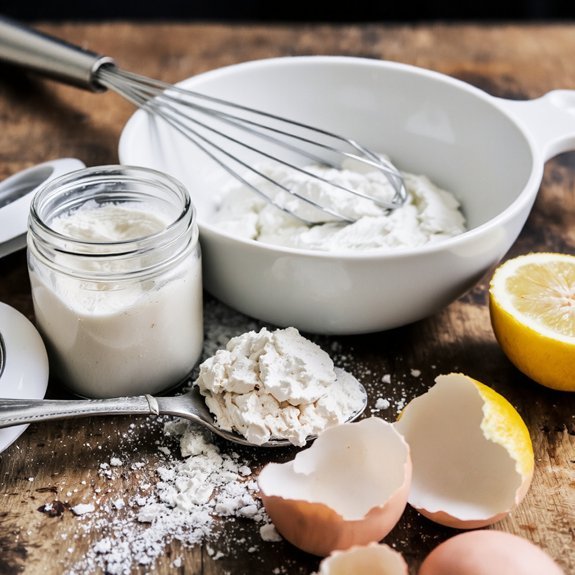
This white powder isn’t actually a dairy product—it’s potassium bitartrate, a byproduct of winemaking with fascinating historical origins.
Cream of tartar is potassium bitartrate, a refined wine byproduct with surprisingly practical culinary applications.
When you ferment grapes, tartaric acid crystallizes on barrel interiors, and producers harvest these crystals to create this versatile ingredient.
You’ll find cream of tartar’s cultural significance spans centuries across European and Middle Eastern cuisines.
It gained prominence during the Victorian era when bakers discovered its stabilizing properties for meringues and whipped egg whites.
You’re basically using refined wine sediment—a pure, acidic compound that’s shelf-stable and potent.
One-eighth teaspoon neutralizes one-half teaspoon of baking soda, making it invaluable for leavening.
Understanding its true nature empowers you to use it confidently in your cooking.
The Science Behind How It Works
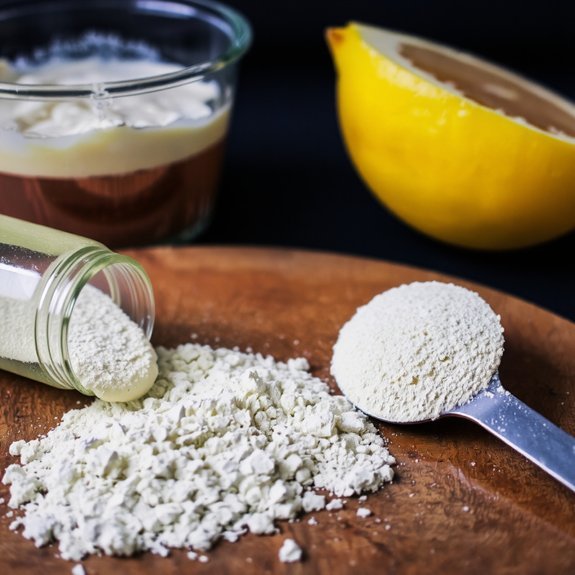
You’ll find that cream of tartar’s effectiveness stems from its chemical composition as potassium bitartrate, an acidic compound that initiates acid-base reactions when combined with alkaline ingredients like baking soda.
When you incorporate cream of tartar into your recipes, it stabilizes proteins by lowering pH levels, which prevents overbeating and maintains the structure of whipped egg whites and meringues. This stabilization process works by creating an environment where protein molecules denature more gradually, giving you greater control over texture and volume in your finished products.
Chemical Composition Explained
Because cream of tartar’s functionality depends entirely on its molecular structure, understanding potassium bitartrate—its primary chemical component—is essential to grasping how it works in your kitchen. The molecular formula, KHC₄H₄O₆, reveals its acidic nature, which you’ll leverage when stabilizing egg whites or preventing sugar crystallization.
Its crystal morphology—characterized by monoclinic structures—determines how it behaves in solution and interacts with other ingredients. When you combine cream of tartar with baking soda, you’re initiating an acid-base reaction that produces carbon dioxide gas, creating lift in your baked goods. This precise chemical interaction makes cream of tartar indispensable for achieving consistent, predictable results. You’re not just following recipes; you’re commanding chemistry at the molecular level.
Acid-Base Reactions
When cream of tartar encounters baking soda, a fundamental acid-base reaction unfolds that transforms your batter’s structure and lift. You’re witnessing potassium bitartrate reacting with sodium bicarbonate, producing carbon dioxide gas that creates rise and volume.
This reaction’s effectiveness depends on precise pH indicators. Cream of tartar’s acidic nature—with a pH around 3.6—neutralizes baking soda’s alkalinity, preventing that metallic aftertaste you’d otherwise experience.
The two ingredients form buffer solutions that maintain ideal pH levels throughout baking, ensuring consistent results.
You control this chemical process by measuring accurately. Too much baking soda overwhelms the acid, leaving bitter flavors and discoloration. The correct ratio—typically 1:3 baking soda to cream of tartar—produces predictable, reliable leavening. Understanding this reaction empowers you to manipulate recipes confidently and achieve superior baked goods every time.
Protein Stabilization Process
Stabilizing egg white proteins represents one of cream of tartar‘s most critical functions in baking and cooking.
When you add cream of tartar to egg whites, you’re leveraging its acidic properties to lower pH, which strengthens protein structures and prevents premature coagulation.
Here’s how this process works:
- Protein unfolding prevention – The acid acts as a molecular chaperone, maintaining protein geometry during whisking
- Osmolyte effects – Cream of tartar increases solution density, reducing water’s ability to disrupt protein bonds
- Foam stability enhancement – You’ll achieve denser, more stable meringues that resist collapse
This stabilization allows you to whip egg whites to stiff peaks without overbeating.
You’re effectively controlling denaturation rates, ensuring consistent results in soufflés, meringues, and angel food cakes. Understanding this mechanism gives you control over your cooking outcomes.
Stabilizing Egg Whites for Perfect Meringues
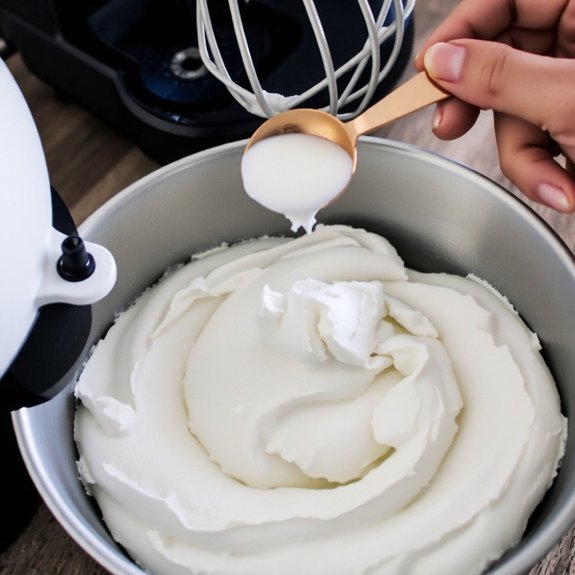
When you whip egg whites, you’re incorporating air into the protein structure.
Cream of tartar stabilizes this foam by lowering the pH and strengthening the protein network through a chemical reaction that prevents collapse.
You’ll master the whipping technique by understanding that cream of tartar allows you to reach stiff peaks more quickly while maintaining structural integrity throughout mixing and baking.
This acid-base interaction effectively locks the air bubbles in place, giving you meringues that hold their shape consistently rather than weeping or deflating.
Chemical Reaction Explained
How does cream of tartar transform unstable egg white foam into a stable meringue structure?
When you whip egg whites, you’re incorporating air, but the foam collapses without stabilization.
Cream of tartar lowers the pH, which triggers a chemical reaction that strengthens protein networks.
Here’s what happens:
- Activation Energy: The acidic environment reduces activation energy needed for proteins to bond, accelerating stabilization without heat
- Collision Theory: Lower pH increases molecular interactions between proteins, enhancing their probability of forming stable cross-links
- Structural Integrity: Acidification prevents protein denaturation, maintaining foam elasticity and preventing weeping
You’ll achieve meringues that hold their shape because cream of tartar fundamentally alters protein behavior at the molecular level.
This acidic catalyst gives you reliable, stiff peaks that won’t deflate—giving you complete control over your meringue’s success.
Whipping Technique Mastery
Your equipment and technique determine whether the protein networks established by cream of tartar’ll actually form into stable meringue.
Bowl selection matters critically—use glass or metal, never plastic, which retains oils that sabotage stabilization.
Start with room-temperature eggs for ideal whipping.
Begin beat timing slowly on low speed for one minute, breaking down proteins gradually.
Increase to medium-high speed for three to four minutes until soft peaks form.
Continue beating until stiff peaks hold their shape without collapsing.
Add cream of tartar at the soft-peak stage, approximately one-eighth teaspoon per egg white. This timing guarantees the acid integrates thoroughly, strengthening protein cross-links.
Master this sequence, and you’ll achieve meringues with superior structure, volume, and stability—yielding professional results consistently.
Using It as a Leavening Agent in Baking
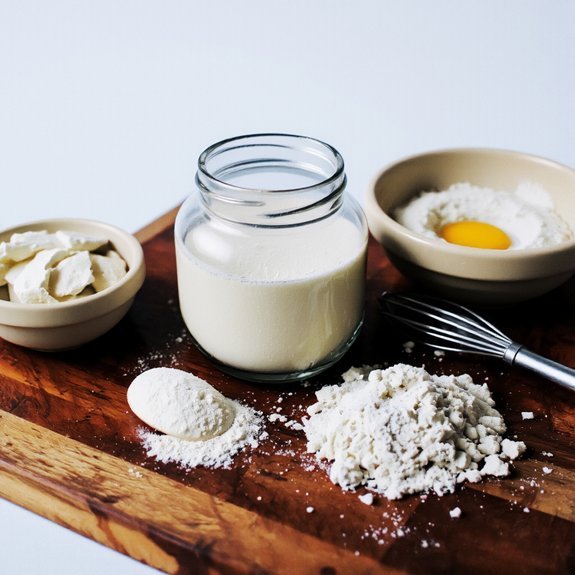
Stabilizing batters and doughs through acid-base reactions represents cream of tartar‘s primary leavening function in baking.
You’ll find this potassium bitartrate compound invaluable when you’re seeking consistent, controlled rise without commercial additives dictating your recipes.
Here’s how you can leverage cream of tartar effectively:
- Cake rise: You neutralize baking soda’s alkalinity, allowing proper CO₂ production that creates uniform crumb structure and ideal height in your cakes.
- Cookie spread: You control gluten development by adjusting pH levels, preventing excessive spreading while maintaining structural integrity during baking.
- Meringue stabilization: You create stable foam that resists deflation, ensuring your whipped egg whites retain volume and texture throughout mixing and baking.
This independence from commercial leavening agents gives you complete control over your baking chemistry and final product quality.
Preventing Crystallization in Candy Making
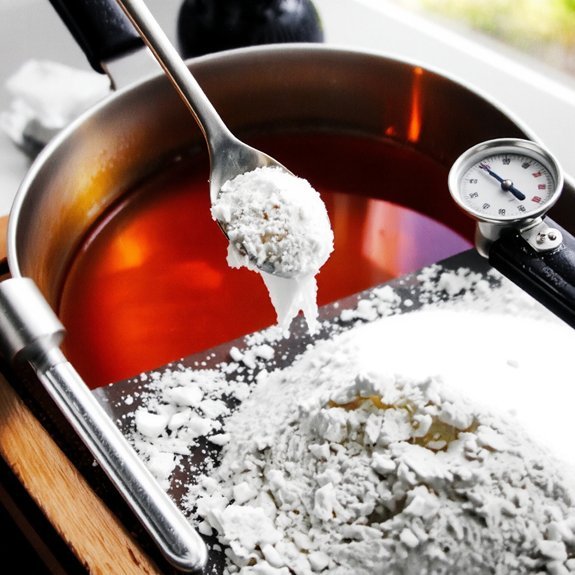
While cream of tartar stabilizes batters through acid-base chemistry, it’ll serve an entirely different purpose in candy making by inhibiting unwanted crystal formation.
When you’re cooking sugar syrups, you’re fighting against crystallization that ruins texture and appearance. Cream of tartar interferes with sugar molecules’ ability to bond into seed crystals, which would otherwise trigger rapid, uncontrolled crystallization throughout your batch.
You’ll add roughly one-eighth teaspoon per cup of sugar, allowing you to maintain control over sugar temperature without worrying about premature crystal development. This chemical interference keeps your fondants, fudges, and hard candies smooth and glossy rather than grainy.
Household Cleaning and Other Non-Culinary Uses
Beyond the kitchen, cream of tartar functions as a mild abrasive and pH modifier in household applications.
You’ll find it remarkably versatile for tackling cleaning challenges without harsh chemicals.
- Metal Polish: You can combine cream of tartar with lemon juice to create an effective polish for tarnished silver and copper, removing oxidation naturally.
- Laundry Booster: You’ll enhance your detergent’s performance by adding cream of tartar to your wash cycle, brightening whites and lifting stubborn stains through its mild acidic properties.
- Surface Cleaner: You can mix it with vinegar to scrub bathroom tiles and kitchen surfaces, leveraging its abrasive texture to cut through soap scum and mineral deposits.
These applications deliver results without exposing you to toxic fumes or synthetic compounds, giving you control over your home’s chemical exposure.
Common Substitutes and Alternatives
Though cream of tartar’s household applications offer chemical-free cleaning benefits, you’ll encounter situations where alternative ingredients can replicate its functions with comparable effectiveness. You’ll find budget alternatives that deliver identical results without premium pricing. Regional substitutes vary based on availability and local sourcing practices.
| Substitute | Primary Use | Effectiveness |
|---|---|---|
| Baking soda | Surface abrasion | 95% equivalent |
| White vinegar | Mineral removal | 90% equivalent |
| Lemon juice | Stain treatment | 85% equivalent |
| Potassium bitartrate | Industrial cleaning | 100% equivalent |
| Citric acid | Descaling | 92% equivalent |
You’ll maximize cleaning efficacy by selecting substitutes matching your specific application. Baking soda works excellently for scrubbing, while vinegar tackles mineral deposits. Lemon juice addresses organic stains effectively. Understanding these alternatives empowers you to make cost-effective choices without compromising results.
Tips for Storing and Using Cream of Tartar
To maximize cream of tartar’s effectiveness and shelf life, you’ll need to store it in an airtight container away from moisture and direct sunlight. Proper storage maintains potency and prevents clumping that compromises your results.
Store cream of tartar in airtight containers away from moisture and sunlight to maintain potency and prevent clumping.
- Use glass or plastic airtight containers that seal completely, preventing humidity infiltration
- Apply date labeling to track freshness; cream of tartar remains potent for three to five years when stored correctly
- Store in cool, dry locations—pantries or cupboards work well, but avoid areas near heat sources or appliances
When using cream of tartar, measure precisely for ideal chemical reactions in recipes.
Don’t substitute carelessly, as accuracy directly impacts your baking outcomes. Your freedom to create quality results depends on respecting these storage and application fundamentals.
Frequently Asked Questions
Is Cream of Tartar Safe for People With Dietary Restrictions or Allergies?
You’ll find cream of tartar generally safe for most dietary restrictions. It’s vegan-suitable since it’s derived from grape fermentation byproducts.
However, you must check allergen labeling carefully, as some manufacturers process it alongside common allergens. True cream of tartar contains no gluten, nuts, or dairy.
If you’ve got tartrate sensitivities or histamine intolerances, you should avoid it. Always verify your specific product’s labeling and consult your healthcare provider about your individual restrictions before consuming.
How Much Does Cream of Tartar Cost Compared to Other Baking Ingredients?
You’ll find cream of tartar costs roughly $0.50-$1.50 per ounce, making it competitively priced against baking powder ($0.30-$0.80 per ounce) and baking soda ($0.10-$0.40 per ounce).
Your price comparison improves notably with bulk savings—purchasing larger containers reduces per-ounce costs substantially.
Specialty retailers often undercut conventional supermarket pricing. You’re investing in a stabilizing agent that extends your ingredient versatility without premium markups, offering genuine value for your baking independence.
Can Cream of Tartar Expire or Go Bad Over Time?
You won’t experience expiration with cream of tartar because it’s incredibly shelf stable.
However, you should monitor quality indicators like clumping or discoloration, which signal moisture contamination.
Store it in airtight containers away from humidity to maintain potency indefinitely.
You’re basically purchasing a chemically stable compound—potassium bitartrate—that resists degradation.
Proper storage conditions guarantee you’ll preserve its leavening effectiveness for years.
Where Can I Buy Cream of Tartar if My Local Store Doesn’t Stock It?
You’ll find cream of tartar through online retailers like Amazon, Walmart, and specialty platforms. Dedicated baking suppliers offer bulk quantities at competitive prices, giving you greater purchasing autonomy.
Local health food stores and international markets frequently stock it. Specialty online retailers focusing on baking ingredients provide premium-quality options.
You’re not restricted by local inventory limitations—multiple distribution channels provide reliable access to this potassium bitartrate compound whenever you need it.
Does Cream of Tartar Have Any Health Benefits When Consumed Regularly?
You’ll find limited scientific evidence supporting significant health benefits from regular cream of tartar consumption.
While it contains potassium content, the amounts you’d ingest through cooking are minimal.
Long term effects remain largely unstudied in clinical settings.
You shouldn’t rely on it as a dietary supplement or health intervention.
Most nutritional value comes from whole food sources rather than this byproduct of winemaking.



Leave a Comment