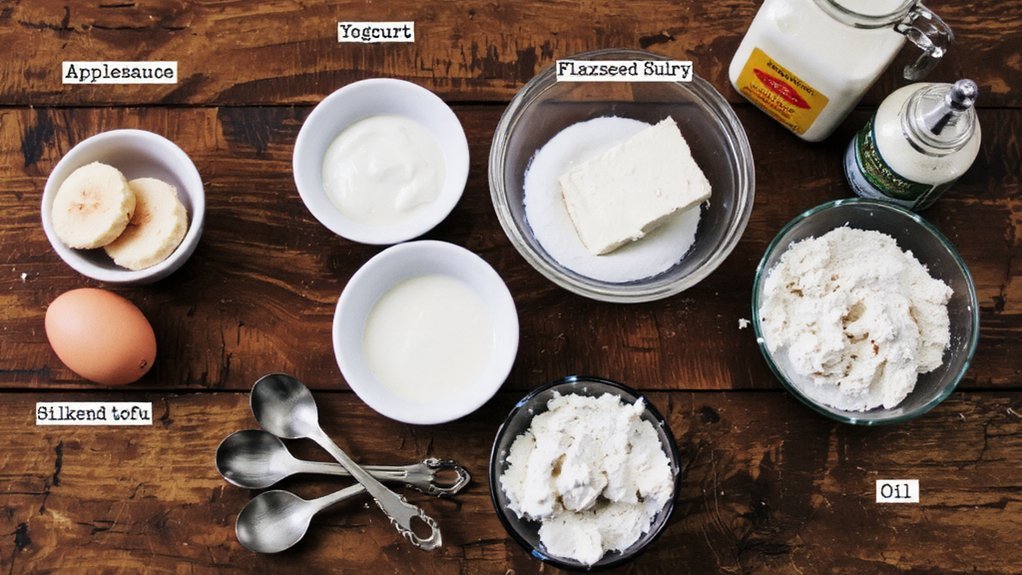

Key Takeaways
- Egg replacements like flax slurries, applesauce, and aquafaba each provide specific binding or structural properties depending on recipe type.
- Flour substitutions require blended mixes rather than single alternatives to balance protein, moisture absorption, and binding properties effectively.
- Convert butter to oil using a 3:4 ratio and reduce oven temperature by 25°F for delicate baked goods.
- Leavening agents work differently: baking soda needs acid activation, baking powder contains acid already, and yeast adds fermentation flavor.
- Sugar substitutes impact browning and texture; dense cakes tolerate alternatives better than delicate items requiring caramelization or specific rise properties.
Egg Replacements for Every Baking Need
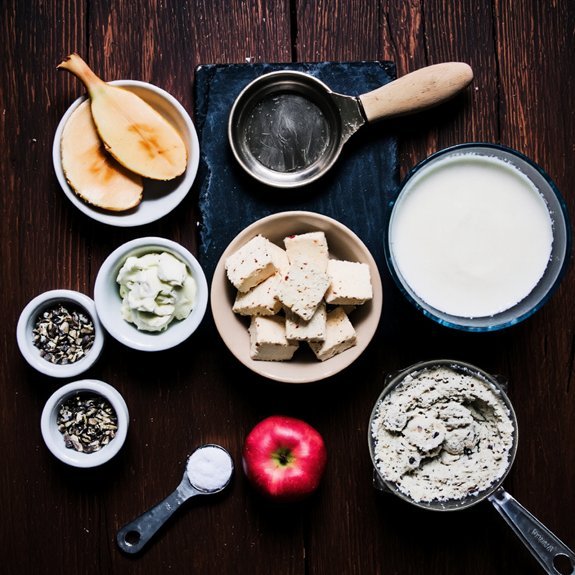
Whether you’re accommodating dietary restrictions or managing ingredient shortages, you’ll find that eggs serve multiple functional roles in baking—binding, leavening, emulsifying, and adding moisture.
You can replace eggs using several effective options depending on your recipe’s requirements.
Flax or chia seed slurries work well for binding comparisons, offering similar cohesive properties to whole eggs in dense baked goods.
Applesauce provides moisture and binding in cakes and brownies.
Aquafaba—the liquid from canned chickpeas—replaces eggs in meringues and mousses, delivering structure and volume.
For storage recommendations, keep flax seeds in cool, dry conditions and mix them fresh before use.
Store applesauce in the refrigerator after opening.
Aquafaba maintains quality in sealed containers for up to three days refrigerated.
Match your substitute to your recipe’s primary function for best results.
Flour Alternatives and Gluten-Free Options
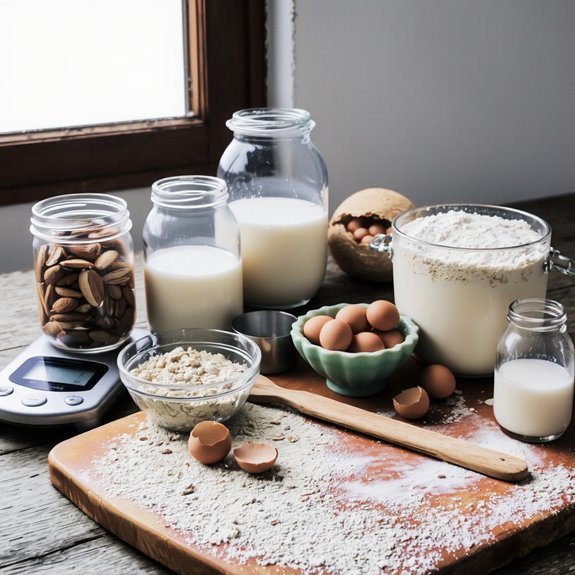
As traditional wheat flour serves multiple structural and textural functions in baking, you’ll need to understand how alternative flours perform differently to achieve comparable results.
Traditional wheat flour’s multifaceted role in baking demands understanding how alternative flours perform to achieve comparable results.
Here’s how you can navigate gluten-free substitutions:
- Ancient grains like quinoa and amaranth offer superior nutritional profiles and distinct flavor complexity
- Nut flours—almond and coconut—deliver richness but absorb moisture differently, requiring liquid adjustments
- Starches such as tapioca and arrowroot provide structure without gluten’s elasticity
- Blended flour mixes combine multiple alternatives to replicate traditional wheat’s binding properties
You’ll discover that single-flour substitutions rarely work effectively.
Instead, you’ll want to experiment with strategic blends that balance protein content, moisture absorption, and binding capacity.
This approach gives you control over your final product’s texture and rise, ensuring you’re not compromising your baking standards while embracing dietary freedom.
Butter Substitutes and Oil Swaps

When you’re substituting butter in baking, you’ll need to understand oil-to-butter conversion ratios, which typically run at 3:4 (use 3/4 cup oil for every 1 cup butter) to account for butter’s water content.
You can explore dairy-free options like coconut oil, vegetable oil, or applesauce, each of which you’ll want to select based on your recipe’s specific requirements.
The butter substitute you choose will meaningfully impact your final product’s flavor profile, texture, and browning characteristics, so you should consider these factors before making your swap.
Oil-to-Butter Conversion Ratios
Since butter and oil have different moisture and fat contents, you’ll need to adjust quantities when substituting one for the other. Here’s your conversion framework:
- Use 3/4 cup oil for every 1 cup butter (oil contains more fat, requiring less volume)
- Apply Temperature Compensation by reducing oven heat 25°F when using oil in delicate baked goods
- Implement Viscosity Adjustment by selecting neutral oils for precise mixture consistency
- Account for moisture differences—oil lacks water, so your batter may require slight liquid reduction
This conversion preserves your recipe’s structural integrity while respecting ingredient chemistry.
You maintain complete control over your baking outcomes by understanding these ratios.
Remember: not all oils perform identically, so choose based on your desired flavor profile and bake time requirements.
Dairy-Free Baking Options
Many plant-based alternatives can replicate butter’s functional properties in baking, though each carries distinct implications for texture, flavor, and rise. When you’re sourcing ingredients for dairy-free baking, you’ll discover various options that demand careful consideration.
| Substitute | Best Uses |
|---|---|
| Coconut oil | Cookies, pie crusts |
| Applesauce | Cakes, brownies |
| Aquafaba | Meringues, mousses |
| Nut butters | Dense cakes, bars |
You’ll achieve ideal results by maintaining kitchen hygiene standards and understanding each substitute’s moisture content. Coconut oil delivers richness but imparts flavor; applesauce reduces fat while increasing moisture; aquafaba provides structure for whipped applications. Your ingredient sourcing decisions directly impact final product quality. Experiment methodically, adjusting liquid ratios based on your chosen substitute’s density. This precision guarantees consistent, satisfactory outcomes across your dairy-free creations.
Flavor Impact Considerations
Each substitute you choose carries distinct flavor profiles that’ll either complement or compete with your recipe’s intended taste.
When you swap butter for oil, you’re trading richness for lightness—coconut oil introduces tropical notes while neutral oils disappear into background.
Applesauce and yogurt add subtle sweetness, requiring you to adjust sugar levels accordingly.
Consider these critical factors:
- Extract Strength increases when substituting dairy, demanding you amplify vanilla or almond extracts
- Salt Influence shifts dramatically; some oils contain sodium while butter typically doesn’t
- Acidity levels change with yogurt-based swaps, affecting rise and texture
- Moisture content varies substantially between substitutes, altering final crumb structure
You’ll maintain control over your baking outcomes by understanding how each swap fundamentally alters your recipe’s flavor foundation and chemical balance.
Leavening Agents and Rising Solutions
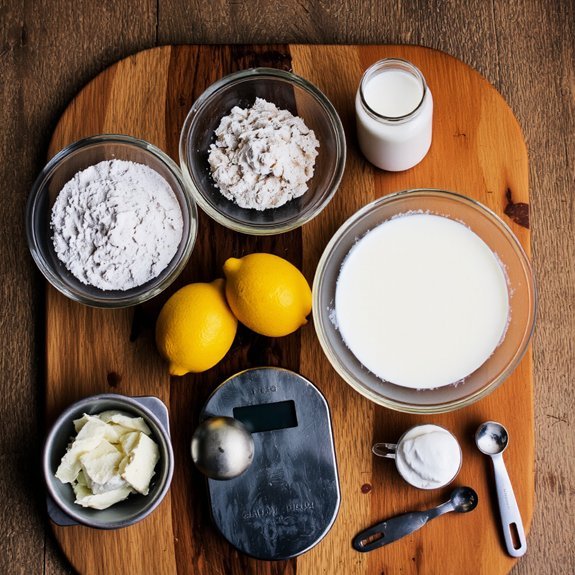
When you’re baking, leavening agents are what create lift and texture in your final product by generating gas bubbles throughout the batter or dough. You’ve got several options to choose from, each with distinct chemical properties.
| Agent | Primary Action |
|---|---|
| Baking soda | Requires acid activation |
| Baking powder | Contains acid already |
| Yeast | Produces CO₂ through fermentation |
Mechanical aeration—achieved through whipping or folding—incorporates air directly into your mixture. Steam leavening relies on moisture converting to vapor during heating, expanding trapped air pockets. You can substitute baking soda with potassium bicarbonate for sodium reduction, though you’ll need acid adjustment. Yeast substitution demands careful consideration since fermentation creates flavor compounds beyond lift. Understanding your leavening mechanism helps you maintain structural integrity and rise consistency across recipes.
Dairy Substitutions for Milk and Buttermilk

Dairy products in baking serve multiple functions—they provide moisture, fat, protein, and acidity that affect texture, tenderness, and rise—so you’ll need to take into account these properties when selecting substitutes.
When you’re evaluating alternatives, consider these options:
- Plant-based milks (almond, oat, soy) offer varying fat content and require nutrition comparison for protein levels
- Coconut milk delivers richness comparable to whole milk with higher saturated fat
- Greek yogurt replaces buttermilk while adding tanginess and density
- Cashew cream provides neutral flavor and superior fat composition
You’ll want to match substitutes to your recipe’s moisture and acid requirements.
Storage tips matter—shelf-stable options like UHT plant milks offer convenience, while fresh alternatives demand refrigeration.
Adjust quantities based on fat content; thinner substitutes may require reduction through simmering.
Your selection directly impacts crumb structure and rise, so precision in substitution guarantees consistent results across batches.
Sugar Alternatives and Sweetener Swaps
Because sugar performs critical functions beyond sweetness—affecting browning, texture, moisture retention, and fermentation—you’ll need to understand how each substitute behaves chemically in your recipes.
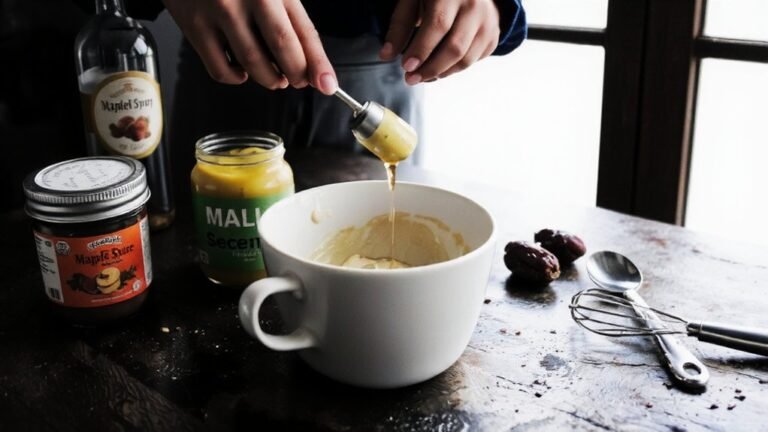
Honey and maple syrup add moisture and caramelization behavior differs from granulated sugar, requiring you to reduce liquid and oven temperature slightly.
Stevia and monk fruit deliver sweetness without glycemic impact, though they won’t brown or caramelize traditionally.
Coconut sugar mimics regular sugar’s properties more closely but costs more.
Erythritol and xylitol offer lower glycemic impact but may cause cooling sensations and digestive effects in larger quantities.
Your choice depends on what you’re baking—dense cakes tolerate substitutes better than delicate meringues.
Experiment systematically, adjusting ratios incrementally until you achieve your desired results.
Frequently Asked Questions
Can I Substitute Ingredients Mid-Bake if I Realize I’m Missing Something?
You shouldn’t substitute mid-bake—it’ll compromise your results.
Instead, use rescue techniques: if you’re missing an ingredient, pause and reassess.
Employ equipment alternatives where possible, like using a cast-iron skillet instead of a cake pan.
Your best move? Stop, review your recipe, and make strategic substitutions before baking begins. This approach maintains structural integrity and flavor balance, giving you control over your final product’s quality.
How Do Substitutions Affect Baking Time and Oven Temperature Requirements?
Your substitutions directly impact baking outcomes through thermal conductivity and heat capacity variations.
You’ll need to adjust temperatures and times when you’re swapping ingredients—denser substitutes require higher heat or extended baking, while lighter ones bake faster at lower temperatures.
You’re responsible for monitoring your results closely.
Different ingredients absorb and conduct heat differently, demanding your vigilant observation to achieve ideal texture and doneness without compromising your baked goods’ structural integrity.
What Substitutions Work Best for Specific Baked Goods Like Cookies Versus Cakes?
You’ll find that fat swaps work brilliantly in cookies, where you’re substituting butter with oils or applesauce without compromising texture.
Cakes demand more precision—you’re balancing moisture and structure carefully.
For cookies, flour blends offer flexibility; you can experiment with almond or coconut flour freely.
Cakes require exact flour blends to maintain their crumb structure.
You’ve got more room to improvise with cookies than cakes, where ratios determine success.
Will Ingredient Substitutions Change the Texture or Taste of My Final Product?
Yes, you’ll definitely notice changes.
When you substitute ingredients, you’re altering your batter’s composition, which directly impacts Crumb Density and Mouthfeel Alteration.
Swapping butter for oil creates a different texture—denser, more tender crumbs.
Replacing eggs affects structure and rise.
Sugar substitutes change browning and sweetness profiles.
You’re in control of your outcome, so choose substitutions strategically.
Understanding these technical shifts guarantees you’ll achieve your desired results rather than leaving texture and taste to chance.
Are There Substitutions That Don’t Work Together or Create Dangerous Chemical Reactions?
You’ll want to avoid toxic pairings like baking soda with acidic substitutes in excessive amounts—they won’t create dangerous chemical reactions, but they’ll compromise your bake.
However, metal corrosion becomes a concern when you substitute acidic ingredients like vinegar or lemon juice in aluminum bowls; the acid reacts with the metal, potentially contaminating your mixture. Stick with glass or stainless steel vessels when using acidic substitutes to guarantee safety.

Leave a Comment