
Key Takeaways
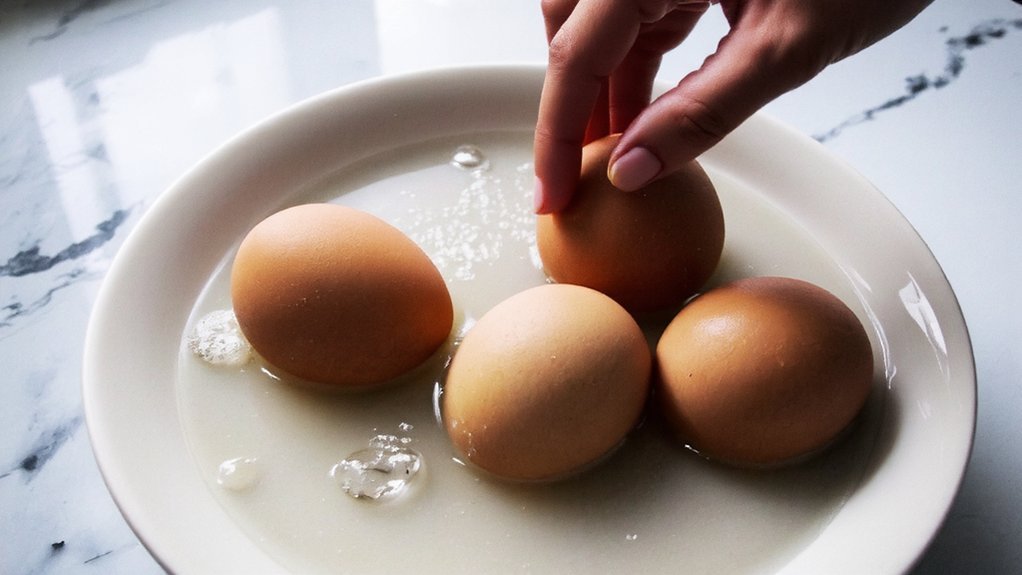
- Running warm water is the fastest method, reaching room temperature in a few minutes by holding eggs under 100–110°F water for 30–60 seconds each.
- Microwave pulse heating at 20–50% power in 5–15 second bursts with 30–45 second resting intervals prevents cracking and uneven cooking.
- Warm water bath method takes 5–10 minutes; submerge eggs in 90–110°F water in a stainless steel or ceramic container, replacing water as needed.
- Salt or uncooked rice methods warm eggs in 5–10 minutes through superior thermal conductivity and direct contact without electricity or monitoring.
- Oven method: preheat to 200°F, place eggs on middle rack, and check after five minutes for gentle, controlled warming when time-pressed.
The Warm Water Bath Method

If you’re short on time, you’ll find that a warm water bath is the quickest way to bring eggs to room temperature.
Fill a container with water heated to approximately 110°F (43°C)—warm to your touch but not hot. Your container selection matters; choose a vessel with good thermal conductivity, like stainless steel or ceramic, to facilitate efficient heat transfer.
Submerge your eggs in the water for 5-10 minutes, depending on their size.
The thermal conductivity of the container guarantees consistent heat distribution around each egg.
Larger eggs may require the full ten minutes, while smaller ones reach room temperature faster.
This method beats leaving eggs on the counter for hours.
You’ll achieve the desired temperature quickly and reliably, giving you freedom to move forward with your recipe without delay.
Using Your Microwave Safely

You’ll want to adjust your microwave’s power setting to 30-50% to prevent the eggs from cracking or cooking.
Keep your timing short—just 5-10 seconds at a time, checking the shells frequently to avoid overheating.
If you’re hesitant about microwaving, the water bath method remains a safer, more reliable option for bringing eggs to room temperature.
Microwave Power Settings Matter
Because microwave ovens heat food rapidly through radiation, using the correct power setting is essential to bringing eggs to room temperature without cooking them.
You’ll want to master wattage calibration and pulse heating techniques to maintain complete control over your eggs’ temperature.
Here’s your approach:
- Set your microwave to 20-30% power, which prevents rapid heat buildup that’d scramble your eggs
- Use pulse heating—activate the microwave for 5-10 second intervals, then pause to allow heat distribution
- Check egg temperature between pulses with a kitchen thermometer, adjusting timing as needed
This deliberate method gives you the freedom to heat eggs precisely without overcooking.
Your microwave’s wattage matters substantially; lower settings on high-wattage units demand shorter pulse durations.
You’re commanding the process, not letting automation dictate your results.
Timing Prevents Overheating Eggs
While mastering power settings gives you the tools to heat eggs safely, precise timing forms the actual foundation of success.
You’ll want to microwave eggs in short 10-15 second bursts, checking their temperature between intervals. This approach prevents temperature gradients that cause sudden cooking or cracking.
Your resting intervals between microwaving sessions are equally critical. Allow 30-45 seconds between each burst so heat distributes evenly throughout the egg.
You’re not just warming the exterior—you’re gradually raising the entire egg’s internal temperature.
Don’t rush this process. Patience prevents costly mistakes. When you feel slight warmth to the touch, you’ve likely achieved room temperature. If an egg feels noticeably warm, you’ve overshot. This methodical timing strategy gives you complete control over results and protects your eggs from damage.
Water Bath Method Works
Immersing eggs in warm water offers a gentler alternative that sidesteps microwave risks entirely.
This method leverages thermal conductivity to warm your eggs safely without the danger of cracking or cooking them prematurely.
Fill a bowl with water between 90-100°F and submerge your eggs completely.
The gradual equilibration process takes roughly 5-10 minutes, depending on your eggs’ initial temperature and the water’s warmth.
You’ll maintain complete control over the process without worrying about unexpected heat damage.
Here’s what you’ll need:
- A bowl large enough to hold your eggs with room for water circulation
- A thermometer to verify water temperature stays within safe range
- A timer to track the warming process
This straightforward approach gives you reliable, damage-free results every time.
The Bowl of Warm Water Technique
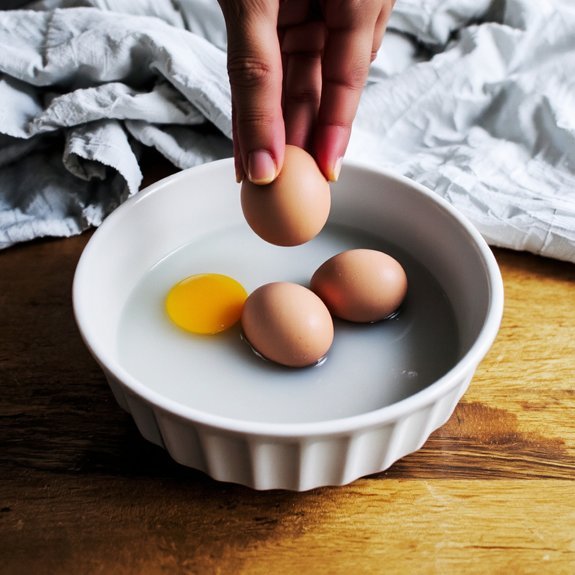
If you’re short on time, the bowl of warm water method is your fastest option for bringing eggs to room temperature.
The bowl of warm water method is your fastest option for bringing eggs to room temperature when you’re short on time.
Fill a bowl with warm (not hot) water—aim for 90-100°F. Choose a clean bowl material like ceramic or stainless steel to maintain sanitary practices and prevent contamination.
Submerge your eggs directly into the water for 5-10 minutes. The warm water transfers heat quickly to the shells, raising the eggs’ internal temperature rapidly.
You’ll gain complete control over the process and can monitor progress easily. Replace the water if it cools noticeably during soaking.
This method beats countertop sitting by hours, making it ideal when you’re ready to bake immediately. Dry your eggs thoroughly before cracking to prevent water interference with your recipes.
Placing Eggs in Sunlight
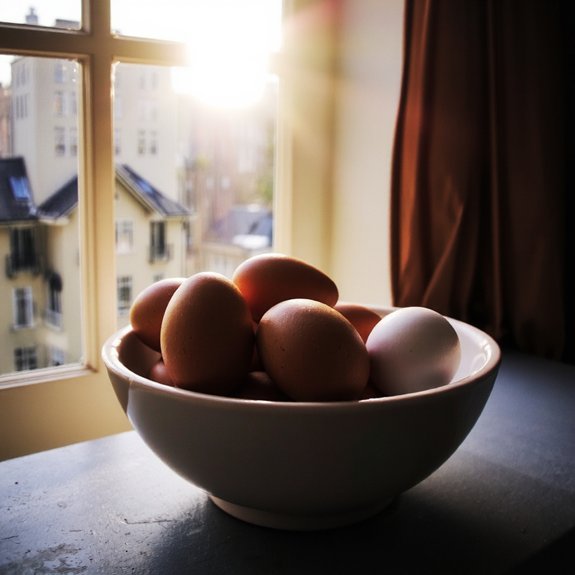
Though slower than the warm water method, you can naturally bring eggs to room temperature by placing them in direct sunlight.
This passive approach requires minimal effort while harnessing solar energy.
Position your eggs strategically:
- Place them on a windowsill receiving unobstructed sunlight for 30-45 minutes
- Choose a sheltered location away from wind that might cause rolling
- Monitor UV effects by checking eggs periodically for even warming
This technique works best on clear, warm days.
However, be cautious about wildlife attraction—avoid leaving eggs unattended outdoors where birds or other animals might investigate.
Keep your eggs visible and secure.
While this method demands patience, it’s ideal for those who prefer minimal intervention and value self-directed, natural processes in their cooking preparations.
The Oven Method for Quick Warming
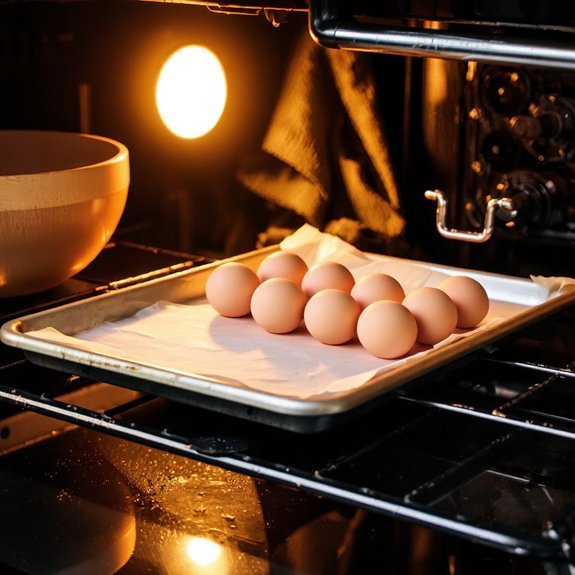
Preheat your oven to its lowest setting—typically 200°F (93°C)—and you’ll have eggs at room temperature in just 5-10 minutes.
Place your eggs on the middle oven rack positioning to guarantee even, gentle heat distribution without risk of cooking them.
For best results, wrap your carton in foil insulation to create a protective barrier that moderates temperature fluctuations.
Don’t leave eggs unattended; check them after five minutes to assess progress.
This method gives you complete control over the warming process without relying on external conditions or lengthy waiting periods.
Once they’ve reached room temperature, remove them immediately to prevent accidental cooking.
This approach proves ideal when you’re pressed for time and need eggs ready for baking or cooking applications right now.
Wrapping Eggs in a Towel
While the oven method works quickly, you’ll find that wrapping eggs in a towel offers a simpler, no-heat alternative that requires minimal monitoring.
Start by selecting a clean fabric towel—cotton works best for heat retention without overheating your eggs.
Maintain towel hygiene by using a freshly laundered option, free from detergent residue that might affect your eggs.
Here’s your process:
- Place room-temperature eggs in the towel’s center
- Wrap the fabric snugly around them, creating an insulating layer
- Let them sit undisturbed for 5-10 minutes
This method leverages the eggs’ residual warmth while the towel traps ambient heat, gradually raising their temperature.
You maintain complete control—no machinery, no temperature settings. Simply unwrap and use when ready.
This straightforward approach gives you the independence to prepare eggs exactly as you need them.
Running Eggs Under Warm Water
Running eggs under warm water provides the quickest method for bringing them to room temperature in just a few minutes.
Running eggs under warm water is the quickest method for bringing them to room temperature in just a few minutes.
You’ll want to use water that’s comfortably warm—around 100-110°F—rather than scalding hot, which could cook the eggs prematurely.
Hold each egg under the running water for 30-60 seconds, rotating it to guarantee even warming.
This approach beats waiting passively and gives you control over the process.
For shell sanitation, rinse your eggs thoroughly beforehand under clean running water to remove any debris or bacteria.
This dual-purpose action keeps your eggs safe while warming them simultaneously.
To practice water conservation, use a shallow bowl of warm water instead.
Submerge your eggs for 5-10 minutes, rotating occasionally.
This method uses considerably less water while achieving identical results, allowing you complete freedom to warm your eggs efficiently without waste.
The Rice or Salt Method
You can use rice or salt to rapidly bring eggs to room temperature by surrounding them in either medium for 5-10 minutes, which conducts heat efficiently without the need for running water. Rice works through direct contact transfer, while salt accelerates the process even faster due to its superior thermal conductivity and hygroscopic properties.
Both methods deliver consistently room-temperature eggs in roughly half the time required by water-based approaches.
How Rice Works
Since uncooked rice and salt are excellent thermal conductors, they’ll absorb and distribute heat far more effectively than air alone.
Different grain varieties possess varying amylose content, which directly impacts their heat-retention capabilities.
Higher amylose content means better thermal absorption, making certain varieties superior for this method.
Here’s how you’ll experience results:
- Fill a bowl with uncooked rice, creating a dense thermal mass that surrounds your eggs completely
- Bury your eggs within the grain bed, allowing maximum contact between the rice and eggshell surface
- Wait 5-10 minutes as the rice’s molecular structure rapidly transfers ambient warmth to your eggs
You’re fundamentally using nature’s heat exchange system—one that operates independently from your kitchen’s air temperature.
This method gives you complete control over timing without electricity or special equipment.
Salt Method Explained
Why’s salt equally effective at this task?
You’ll harness osmotic principles to transfer heat directly to your eggs.
Fill a bowl with salt and nestle your eggs inside, allowing the mineral’s thermal conductivity to warm them rapidly—typically within 5-10 minutes.
Salt absorbs and distributes ambient heat more efficiently than rice, accelerating the warming process.
You’re not constrained by traditional methods; mineral alternatives like sand or even kosher salt work exceptionally well.
The key’s ensuring complete contact between eggs and your chosen medium.
This method demands minimal preparation and delivers consistent results without complicated equipment.
You’ll achieve room-temperature eggs faster, freeing you from prolonged waiting periods.
For those valuing efficiency and independence in the kitchen, the salt method represents an ideal solution requiring only basic pantry staples.
Timing and Results
How quickly can eggs reach room temperature using rice or salt?
You’ll notice results vary based on statistical variability in your kitchen’s ambient temperature and egg size.
Most eggs reach room temperature in 5-10 minutes using either method.
Your sensory perception guides the process—feel the shell’s warmth directly.
Here’s what to expect:
- Minutes 0-3: Eggs shift from cool to lukewarm; outer shells warm noticeably
- Minutes 3-7: Consistent heat transfer occurs; shells feel comfortably warm to touch
- Minutes 7-10: Eggs achieve proper room temperature; internal temperature stabilizes
You’re in control of your cooking outcomes.
This method frees you from time constraints while delivering reliable results.
Test eggs periodically by holding them; you’ll develop confidence recognizing when they’re ready without guesswork.
Planning Ahead: Prevention Tips
You’ll save yourself time and frustration by planning ahead when you’re working with eggs. Strategic purchase timing makes certain you’re never caught off guard when a recipe demands room-temperature eggs. Implement proper storage rotation by keeping newer purchases behind older ones, guaranteeing consistent freshness.
| Strategy | Action | Benefit |
|---|---|---|
| Purchase Timing | Buy eggs 3-5 days before use | Ideal temperature response |
| Storage Rotation | Move older eggs forward | Prevents waste |
| Batch Preparation | Remove eggs 30 minutes early | Ready when needed |
Take control of your kitchen workflow by removing eggs from refrigeration before you begin cooking. This deliberate approach eliminates last-minute scrambling and delivers reliable results. You’re not bound by conventional timing—you dictate your cooking schedule through intentional preparation and strategic foresight.
When Room Temperature Eggs Truly Matter
Room temperature eggs aren’t just a preference—they’re a practical requirement in specific baking and cooking applications.
You’ll find that warm eggs perform distinctly different functions than cold ones, particularly in baking chemistry where temperature directly impacts your results.
Here’s where room temperature eggs truly matter:
- Cake batters and emulsions—You need proper emulsion stability when combining fats and liquids; cold eggs won’t incorporate smoothly, creating dense, grainy textures.
- Custards and sauces—Warm eggs cook evenly and thicken predictably, preventing curdling or lumpy consistency.
- Mayonnaise and hollandaise—Cold eggs’ll cause these delicate emulsions to break, ruining your sauce entirely.
You’re not overthinking this requirement—it’s pure science.
When you master temperature control, you’re taking command of your kitchen’s outcomes.
Frequently Asked Questions
Can I Use Room Temperature Eggs Straight From the Refrigerator in Baking Recipes?
No, you shouldn’t use cold eggs straight from the refrigerator in baking recipes. Cold eggs won’t achieve best whisking efficiency, compromising your batter’s structure.
You’ll struggle with proper batter emulsification, resulting in dense, separated textures. Room temperature eggs blend seamlessly with other ingredients, creating stable emulsions that trap air effectively.
Take control of your baking outcomes by allowing eggs to warm beforehand. This simple step guarantees superior rise, texture, and overall quality in your finished baked goods.
How Long Do Eggs Stay at Room Temperature Before They Become Unsafe to Eat?
You’ve got about two hours before your eggs become unsafe at room temperature. Temperature thresholds matter—anything above 68°F accelerates bacterial growth.
Don’t rely on expiration dates once you’ve removed them from refrigeration. Watch for spoilage indicators: a sulfurous smell, cloudy whites, or unusual discoloration.
Trust your senses. When in doubt, toss them. You’re better off staying safe than risking foodborne illness.
Are Brown Eggs and White Eggs the Same Temperature When Left Out?
You’ll find that brown and white eggs reach the same temperature when left out—shell pigmentation doesn’t affect thermal conductivity. Both varieties conduct heat identically, so they’ll warm up at matching rates.
The eggshell’s color is purely cosmetic, determined by the hen’s breed. You’re free to store either type using identical guidelines without worrying about temperature variations between them.
Can I Speed up the Process by Mixing Warm and Cold Water Together?
Yes, you can accelerate the process by submerging your eggs in lukewarm water.
This creates a temperature gradient effect that transfers heat efficiently.
However, avoid drastic temperature swings—don’t use hot water, as thermal shock risk can crack shells and compromise your eggs.
Stick with water around 90-100°F, replacing it every few minutes.
You’ll reach room temperature in roughly 5-10 minutes.
This method gives you control and freedom over your preparation timeline.
Do Eggs Need to Be Room Temperature for All Types of Cooking Methods?
You don’t need room temperature eggs for every cooking method. For frying, you’ll get superior frying texture with cold eggs straight from the fridge.
However, room temperature eggs improve poaching outcomes considerably, giving you better control and more consistent results.
Baking requires room temperature eggs for proper incorporation. You’re free to choose based on your specific dish—cold eggs work fine for scrambling and omelets too.




Leave a Comment