
Key Takeaways
- Mix 1/4 teaspoon baking soda with vinegar; vigorous fizzing indicates potency, weak fizz signals replacement needed.
- Add baking powder to hot water and observe bubbling intensity; robust bubbling confirms leavening activity.
- Check for clumping, discoloration (yellowing/browning), or hard clumps indicating moisture damage and degraded potency.
- Inspect packaging for tears, dents, or seal breaches that accelerate decomposition and potency loss.
- Test baked goods for proper rise; flat, dense results with few bubbles suggest agent degradation.
Why Leavening Agents Expire

Because baking powder and baking soda are chemical compounds, they’ll gradually lose their potency through moisture absorption and decomposition.
You’re dealing with molecular instability—these agents break down when exposed to humidity and temperature fluctuations.
Once opened, your baking soda absorbs ambient moisture, which triggers chemical reactions that diminish its leavening capacity.
Baking powder faces additional challenges.
You’ll notice impurity buildup occurs as moisture causes acid and base components to prematurely react.
This degradation accelerates in humid environments, rendering your leavening agent ineffective before its printed expiration date.
Storage conditions directly impact shelf life.
You can extend potency by keeping containers sealed and stored in cool, dry locations.
Ultimately, understanding this chemical breakdown empowers you to maintain reliable baking results and avoid wasting ingredients on expired agents.
Signs Your Baking Powder Has Gone Bad
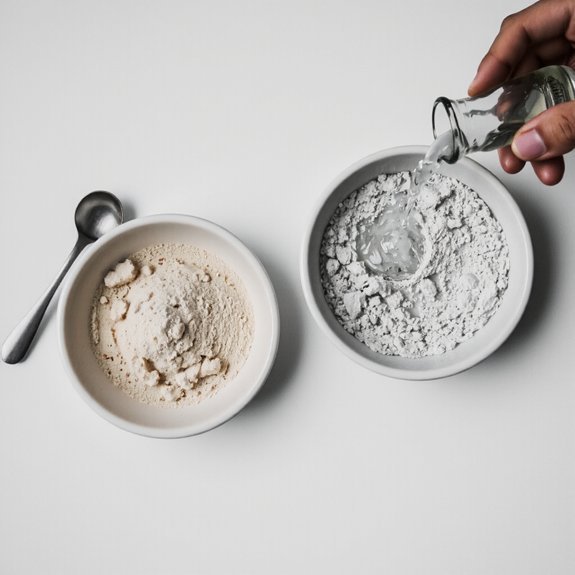
You’ll notice your baking powder has deteriorated when you observe clumping, discoloration, or a caked appearance in the container—indicators that moisture has compromised the powder’s chemical structure.
Loss of potency manifests when your baked goods fail to rise properly or produce fewer bubbles during the initial mixing stage, even when you’re using the correct measurements.
These physical and functional changes signal that the leavening agent’s active compounds have degraded and will no longer perform reliably in your recipes.
Clumping and Discoloration
When baking powder absorbs moisture from the air, it’ll form hard clumps that won’t dissolve during mixing.
You’ll notice these lumps compromising your batter’s texture and rising capability.
Humidity hotspots in your kitchen—near sinks or dishwashers—accelerate this deterioration.
Discoloration signals chemical breakdown.
Fresh baking powder appears bright white or cream-colored.
You’ll observe yellowing or browning when moisture triggers reactions between the acid and base components.
Manufacturing residues can sometimes complicate this assessment, so compare your powder against a fresh container for accurate comparison.
Store your baking powder in airtight containers away from moisture sources.
If you detect clumping or color changes, discard it.
Your baked goods depend on reliable leavening agents that function as intended.
Loss of Potency Signs
How can you determine if baking powder’s leavening power has diminished?
Test its reactivity by mixing one teaspoon with hot water.
A vigorous fizz indicates potency; weak or absent bubbling signals degradation.
You’ll notice yield variations when using expired baking powder—your baked goods won’t rise properly, resulting in dense, flat products.
Cookies spread excessively while cakes remain sunken.
Color changes also suggest compromised potency.
Fresh baking powder appears bright white; yellowing or browning indicates moisture absorption and chemical breakdown.
When you detect these signs, you’re forced into recipe adaptation.
Increase leavening agent quantities by 25-50% to compensate for reduced effectiveness, though this method proves unreliable.
Your safest option: replace expired baking powder entirely.
Don’t compromise your baking results through experimentation.
Signs Your Baking Soda Has Gone Bad
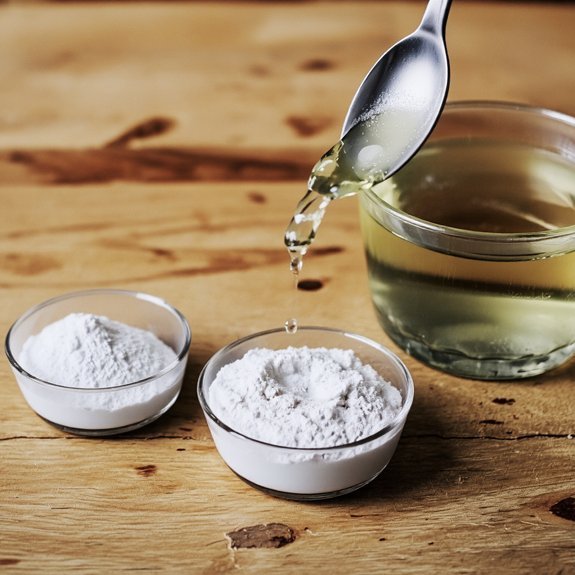
Baking soda doesn’t expire in the traditional sense, but it’ll lose its potency over time through exposure to moisture, acidic substances, and air.
Baking soda loses potency over time through exposure to moisture, acidic substances, and air, though it doesn’t truly expire.
You’ll notice several telltale indicators that your supply’s compromised. Clumping signals moisture infiltration—your baking soda should remain free-flowing and granular. Odor changes represent another red flag; fresh baking soda carries minimal scent, while aged batches develop off-odors from environmental absorption.
Packaging damage directly accelerates degradation, so inspect containers for tears, dents, or seal breaches that allow contamination. You can independently verify potency by combining a teaspoon with vinegar; vigorous fizzing confirms effectiveness, while minimal reaction indicates replacement is necessary.
Store your baking soda in airtight containers away from humidity and strong-smelling foods to maximize shelf life.
The Vinegar Test for Baking Soda
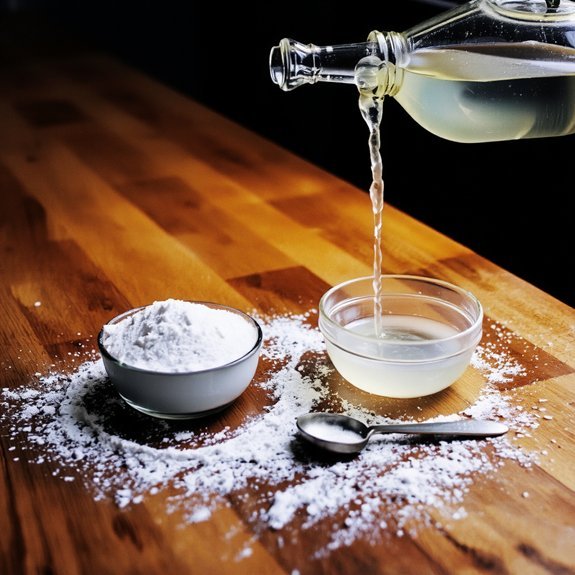
Why does vinegar reveal baking soda’s true potency? The acid-base reaction between vinegar and baking soda produces immediate, observable results that indicate freshness and efficacy.
Follow this step by step procedure: Place ¼ teaspoon baking soda in a small bowl. Pour vinegar over it.
A vigorous fizzing reaction confirms your baking soda remains active and potent. Weak or absent fizzing signals degradation.
You’ll find video demonstration resources online showing this chemical interaction in real-time, allowing you to compare your results against established benchmarks.
The reaction’s intensity directly correlates with your baking soda’s leavening power.
This test takes seconds and requires no special equipment—just vinegar and baking soda. You’re liberated from guessing whether your ingredients will perform in recipes.
The evidence appears instantly, giving you concrete data before you commit ingredients to your baking projects.
The Water Test for Baking Powder
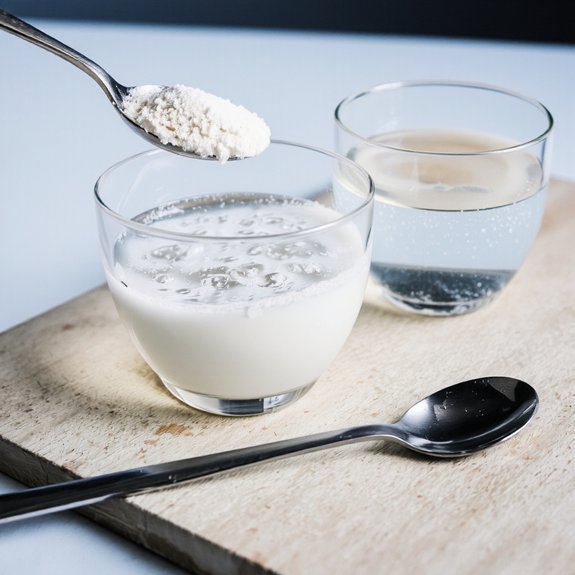
When can you trust your baking powder to deliver consistent rise? You’ll want to test it independently.
When can you trust your baking powder to deliver consistent rise? Test it independently before your next baking project.
Here’s your procedure:
Procedure Steps:
- Fill a glass with room-temperature water
- Add ½ teaspoon of baking powder
- Observe the immediate reaction
- Look for vigorous fizzing and bubbling
- Note reaction intensity and duration
Temperature Effects matter substantially.
Cold water may slow initial reaction rates, while warm water accelerates them. Active baking powder produces immediate, visible carbonation. Weak or expired powder yields minimal bubbling or delayed response.
You’re not bound by manufacturer dates—this empirical test confirms actual potency.
Strong, immediate fizzing indicates reliable leavening capability for your baking projects. Sluggish or absent reactions signal replacement is necessary. This direct assessment gives you control over your baking outcomes, ensuring consistent, predictable results every time.
How to Store Baking Powder and Baking Soda Properly
Once you’ve confirmed your leavening agents are potent through direct testing, you’ll want to preserve that effectiveness through proper storage. Store both baking powder and baking soda in airtight containers away from moisture and heat.
A cool pantry provides ideal conditions, maintaining their chemical stability and extending shelf life considerably.
Keep containers sealed tightly after each use—exposure to humidity accelerates deterioration.
Avoid storing near your stove, oven, or dishwasher where temperature fluctuations occur. Glass jars with rubber gaskets or plastic containers with locking lids work effectively.
Label containers with purchase dates to track potency. Baking soda remains stable longer than baking powder, which contains acid components that break down over time. Replace baking powder every six months and baking soda annually for best leavening performance in your baking projects.
When to Replace Your Leavening Agents
How’ll you know if your baking powder or soda’s lost its punch?
Your leavening agents have finite shelf lives, and replacing them on schedule promotes consistent results. Establish a purchase frequency that aligns with your baking habits—typically every 6-12 months for baking powder and 2-3 years for baking soda. Implement expiration tracking by labeling containers with purchase dates.
Replace your leavening agents when you notice:
- Flat, dense baked goods lacking rise
- Clumpy texture indicating moisture absorption
- Off-odors suggesting chemical breakdown
- Expired dates on original packaging
- Inconsistent performance across batches
Don’t compromise your baking freedom by using degraded agents. Fresh leavening guarantees reliable leavening action, superior crumb structure, and predictable outcomes. Maintaining a replacement schedule demands minimal effort while maximizing your baking success rate.
Frequently Asked Questions
Can I Use Expired Baking Powder or Baking Soda in Recipes Anyway?
You shouldn’t use expired baking powder or baking soda without testing them first.
These leavening agents lose potency over time, creating safety concerns through incomplete chemical reactions that can leave residual sodium bicarbonate in your food.
You’ll also experience flavor changes—metallic or bitter tastes may develop.
Your baked goods won’t rise properly, resulting in dense, unpalatable products.
Test expired supplies by mixing with vinegar or lemon juice; vigorous fizzing indicates they’re still viable for your recipes.
What Is the Difference Between Baking Powder and Baking Soda Chemically?
You’re dealing with two distinct chemical agents.
Baking soda’s ionic composition—sodium bicarbonate—reacts immediately when you combine it with acidic ingredients, releasing CO2 instantly.
Baking powder contains baking soda plus acidic salts, controlling its reaction mechanisms through delayed-release formulations.
Double-acting baking powder gives you two separate reactions: one when wet, another when heated.
You’ll get different leavening profiles depending which agent you choose.
How Long Do Baking Powder and Baking Soda Typically Last Unopened?
You’ll find unopened baking soda remains potent indefinitely when stored properly, as it’s chemically stable.
Baking powder, conversely, typically lasts 18-24 months from manufacture dates due to moisture absorption.
Your packaging type matters substantially—airtight containers extend shelf life considerably beyond standard cardboard boxes.
Check manufacture dates on packaging before purchasing.
Store both in cool, dry environments to maximize longevity and maintain your baking independence without relying on replacements.
Can I Make My Own Baking Powder at Home Using Baking Soda?
You can absolutely make your own baking powder by combining baking soda with acid alternatives like cream of tartar or citric acid. Mix one part baking soda with two parts acid alternative. This gives you complete control over your leavening agents without commercial additives.
However, homemade versions won’t store as long as commercial products.
Consider taste impact when selecting your acid—cream of tartar’s neutral profile works best for most applications.
Does Humidity Affect the Shelf Life of Baking Powder and Baking Soda?
Yes, humidity dramatically shortens shelf life. You’ll find that excess moisture degrades both products’ efficacy.
Store them in cool, dry environments—ideally below 50% relative humidity. Maintain packaging integrity by using airtight containers; you’ll prevent moisture absorption that causes clumping and chemical breakdown.
Proper storage conditions let you preserve potency for months longer, giving you control over your baking success without premature degradation.
Leave a Comment