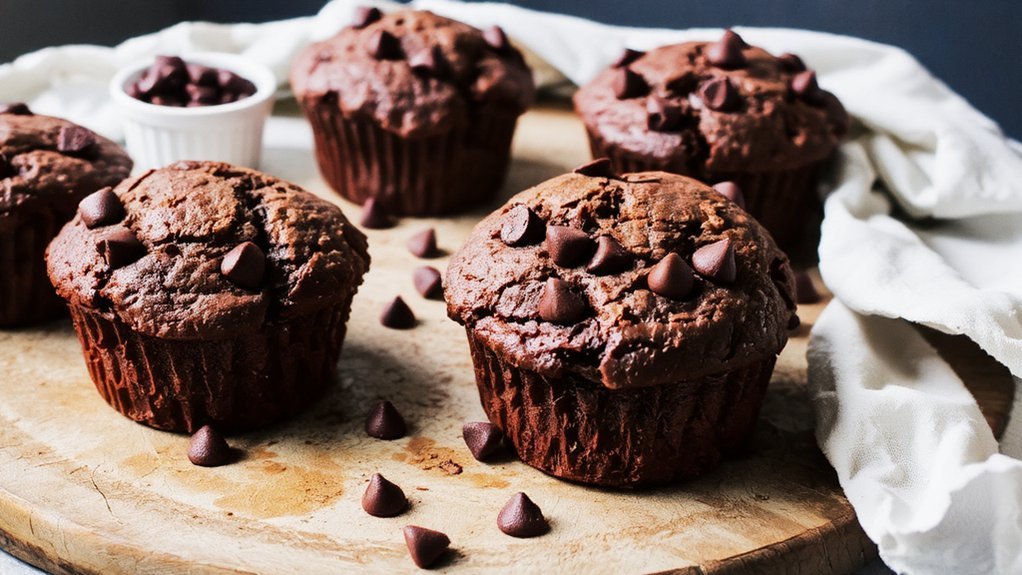

Key Takeaways
- Combine 1¾ cups flour, ½ cup cocoa powder, baking powder, and sugar; whisk dry ingredients for one minute to aerate and eliminate lumps.
- Whisk eggs with vegetable oil, add melted chocolate and vanilla, then fold wet mixture into dry ingredients until just combined to avoid denseness.
- Bake at 375°F for 20–25 minutes until golden; use toothpick test or 205–210°F internal temperature to confirm doneness without overbaking.
- Cool muffins in pan for five minutes, then transfer to wire rack to prevent sogginess and maintain optimal crumb texture and moisture balance.
- Customize with ¾ cup toasted nuts, fresh berries, or citrus zest; store in airtight container for three days or freeze for three months.
Ingredients You’ll Need
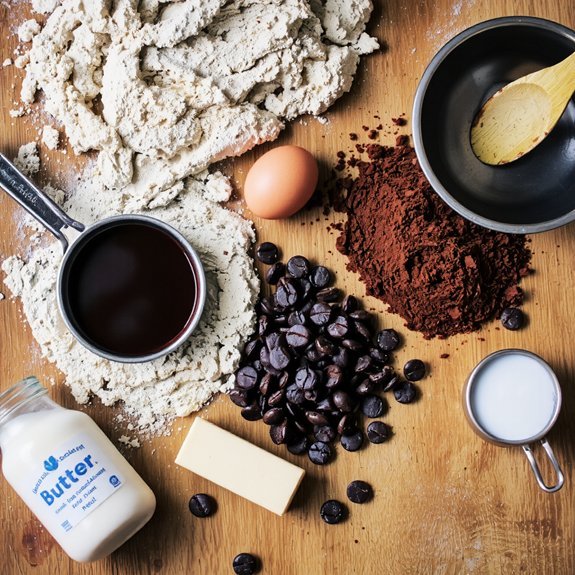
You’ll need just a handful of essentials to prepare these muffins: 1¾ cups all-purpose flour, ½ cup unsweetened cocoa powder, 1½ teaspoons baking powder, ½ teaspoon salt, ½ cup granulated sugar, ⅓ cup brown sugar, ⅓ cup vegetable oil, 2 large eggs, ¾ cup whole milk, 1 teaspoon vanilla extract, and 1 cup semi-sweet chocolate chips.
You’ll need just a handful of essentials: flour, cocoa powder, baking powder, sugars, eggs, milk, oil, vanilla, and chocolate chips.
When sourcing ingredients, you’ll want premium cocoa powder and quality chocolate chips for best flavor.
Check all packaging for allergen information—this recipe contains eggs and may include traces of tree nuts or soy depending on your chocolate brand.
You’re free to substitute all-purpose flour with alternatives if you prefer, though your muffin texture may vary.
For dairy-free versions, you’ll swap whole milk with almond or oat milk.
Make sure your baking powder and cocoa powder haven’t expired for best results.
Step-by-Step Instructions
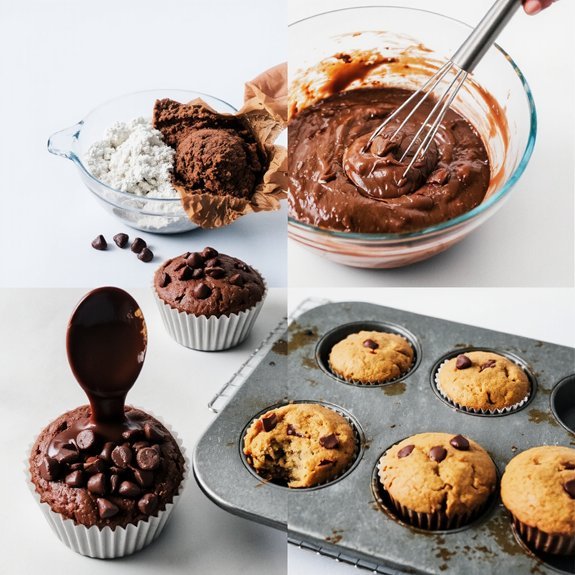
You’ll start by whisking together your dry ingredients—flour, cocoa powder, baking powder, baking soda, and salt—in a medium bowl to guarantee even distribution.
Next, you’ll combine your wet components in a separate bowl, blending eggs, melted butter, sugar, vanilla extract, and buttermilk until fully incorporated.
Finally, you’ll fold the wet mixture into the dry ingredients until just combined, then divide the batter into muffin cups and bake until a toothpick inserted in the center emerges with a few moist crumbs.
Preparing Your Dry Ingredients
To create the foundation for your muffins, combine 2 cups all-purpose flour, ¾ cup unsweetened cocoa powder, 2 teaspoons baking powder, ½ teaspoon baking soda, and ½ teaspoon salt in a medium bowl.
Whisk these ingredients together for about one minute.
This process accomplishes two critical functions: flour aeration and clump prevention. Whisking incorporates air into your dry mixture, which promotes even rise during baking. Simultaneously, you’re breaking apart any cocoa powder lumps that could create bitter pockets in your finished muffins.
Pay particular attention to the cocoa powder, as it’s prone to clumping.
Use a whisk with firm, deliberate strokes to make sure of complete incorporation. Don’t skip this step—properly combined dry ingredients distribute leavening agents uniformly throughout your batter, guaranteeing consistent muffin texture and rise.
Mixing Wet Components Together
Combining your wet ingredients requires careful attention to temperature and sequencing.
Start by cracking your eggs into a mixing bowl, then whisk them thoroughly for roughly thirty seconds. You’ll want room-temperature eggs to achieve ideal emulsion stability when you add your oil.
Drizzle your vegetable oil slowly while whisking continuously—this gradual incorporation prevents separation and guarantees a homogeneous mixture.
Pour in your melted chocolate and vanilla extract, whisking until fully blended. Don’t rush this stage; proper air incorporation at this point creates the light, tender crumb you’re after in your finished muffins.
Your mixture should appear glossy and unified before you combine it with your dry ingredients in the next step.
Baking and Testing Doneness
When should your muffins come out of the oven?
Bake them at 375°F for 20-25 minutes until they’re golden brown on top.
You’ll know they’re done when you perform the toothpick test—insert a toothpick into the center of a muffin, and it should come out clean or with just a few moist crumbs clinging to it.
Avoid pulling them out too early; undercooked muffins won’t have proper structure.
For precision, check the internal temperature using a meat thermometer.
Your double chocolate muffins should reach 205-210°F at their centers.
This temperature guarantees the batter’s fully set while maintaining moisture from the chocolate.
Remove them from the oven immediately once they’re done.
Let them cool in the pan for five minutes before turning them out onto a wire rack, preventing them from becoming dense or soggy.
Tips for Perfect Muffins
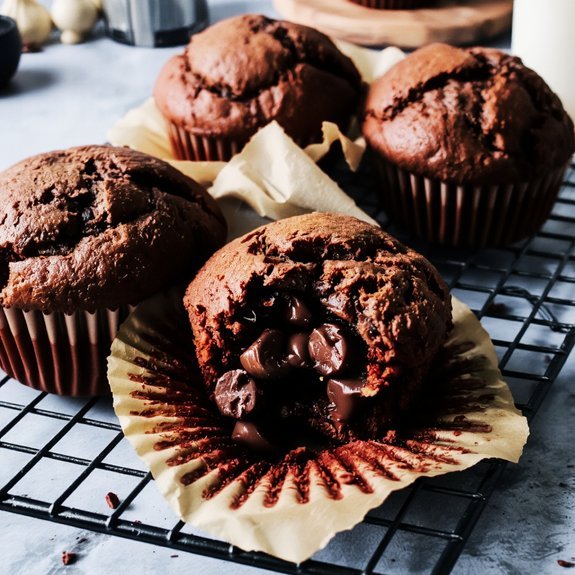
You’ll consistently achieve superior double chocolate muffins by mastering a few critical techniques that center on ingredient quality and mixing methodology. Prioritize freshness indicators—check expiration dates on cocoa powder and chocolate chips, as rancid ingredients compromise flavor and texture.
Avoid common mistakes by resisting overmixing your batter, which develops gluten and yields dense, tough muffins. Follow these essential practices:
- Use room-temperature eggs and dairy to guarantee even incorporation and ideal rise
- Sift dry ingredients together to eliminate lumps and incorporate air
- Fold wet ingredients into dry components using minimal strokes for tender crumbs
Don’t fill cups beyond three-quarters capacity—overflow creates uneven browning. Invest in quality chocolate; it directly impacts your final product’s richness and satisfaction.
Variations to Try
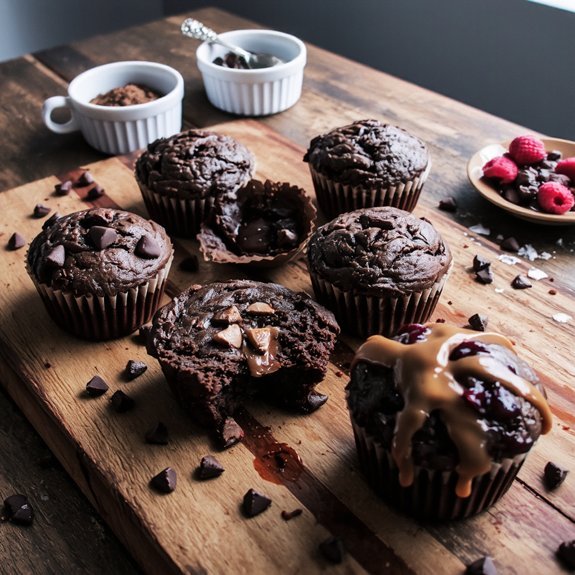
You can elevate your double chocolate muffins by incorporating nutty flavor additions like chopped almonds, walnuts, or toasted pecans, which provide textural contrast and complement the cocoa profile.
Fruity mix-in options such as raspberries, cherries, or diced strawberries introduce tartness that balances the sweetness and richness of the chocolate base.
Experiment with combining both elements—perhaps pairing dark chocolate with hazelnuts and dried cranberries—to create complex flavor layers that distinguish your muffins.
Nutty Flavor Additions
Incorporating nuts into your double chocolate muffin batter elevates both texture and flavor complexity.
You’ll achieve superior results by selecting premium varieties aligned with your sourcing ethics and ingredient standards.
Consider these additions:
- Toasted walnut pieces – contribute earthy notes and structural crunch; toast at 350°F for 8 minutes to maximize flavor development
- Roasted macadamia nuts – deliver buttery richness that complements cocoa without overpowering; use finely chopped for even distribution
- Pecans – provide warm, slightly sweet undertones; pair exceptionally well with dark chocolate compounds
You’ll maintain allergen awareness by clearly labeling your finished product.
Source nuts from reputable suppliers offering transparency on harvest and processing methods.
Add 3/4 cup chopped nuts to your dry ingredients before combining with wet components.
This approach preserves your freedom to customize while ensuring consistent, technically superior muffins.
Fruity Mix-In Options
While nuts provide textural contrast, dried and fresh fruits introduce natural sweetness and moisture that can substantially enhance your double chocolate muffins’ flavor profile.
Consider incorporating dried cherries or cranberries for tartness that balances cocoa’s intensity.
Raspberries add delicate flavor without overwhelming chocolate notes.
Blueberries contribute subtle earthiness and antioxidants.
Banana slices create moisture and mild sweetness, while diced pears offer sophisticated complexity.
Regional traditions favor local fruits—Mediterranean bakers prefer figs, while American variations commonly include strawberries.
Flavor psychology explains why fruit-chocolate combinations work: complementary taste compounds trigger enhanced sensory perception.
You’ll discover that citrus zest—lemon or orange—brightens chocolate’s depth considerably.
Layer dried apricots with cocoa for unexpected richness.
Fresh fruit releases juices during baking, distributing moisture evenly throughout your muffins.
Strategic fruit selection transforms your recipe into a refined, personalized creation.
Storage and Make-Ahead Options
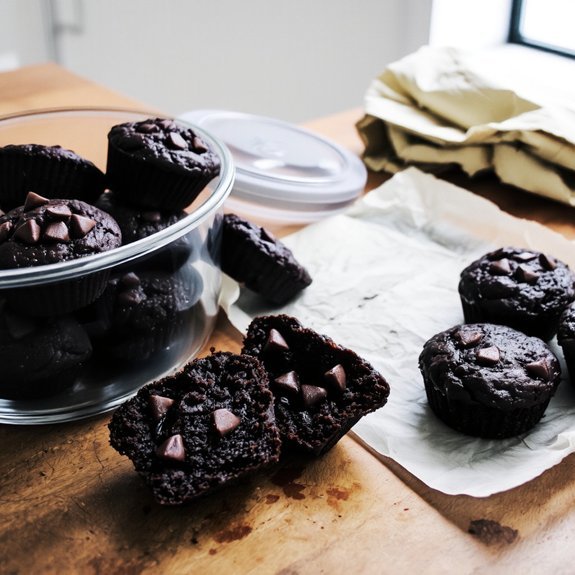
Proper storage hinges on understanding how the cocoa solids and moisture content interact within your muffins’ crumb structure. You’ll maximize freshness by implementing these strategies:
- Room temperature storage in an airtight container for up to three days
- Refrigeration to extend shelf life to five days while preserving chocolate intensity
- Freezing instructions that maintain crumb quality for three months
For freezing instructions, wrap cooled muffins individually in parchment, then seal in freezer bags.
When you’re ready, apply reheating methods by thawing at room temperature for two hours or microwaving unwrapped muffins for 45 seconds.
You’ll find that double chocolate muffins actually benefit from freezing—the cocoa compounds stabilize, enhancing flavor complexity upon reheating.
Make-ahead preparation means you’re never without fresh muffins, giving you ultimate breakfast freedom.
Serving Suggestions
Your double chocolate muffins deserve thoughtful presentation that honors both their texture and flavor profile.
You’ll find that beverage pairings notably enhance the eating experience—consider pairing with cold milk to contrast the cocoa intensity, or hot coffee to amplify chocolate notes.
For afternoon service, pair with tea varieties like Earl Grey or chamomile.
Your plating options range from minimalist to elaborate.
You can serve muffins whole on simple ceramic plates, or slice them to showcase the crumb structure and chocolate distribution.
Dust with powdered sugar or cocoa powder for visual refinement.
Add fresh berries or whipped cream to create dimension without overwhelming the muffins’ inherent richness.
Temperature matters: serve slightly warm or at room temperature, never cold, to optimize flavor release and texture appreciation.
Frequently Asked Questions
Can I Use Cocoa Powder Instead of Melted Chocolate in This Recipe?
You can absolutely substitute cocoa powder for melted chocolate, but you’ll need precise ratio conversion to maintain your muffin’s structure.
Replace each ounce of melted chocolate with three-quarters ounce cocoa powder.
You’ll need fat compensation since cocoa lacks chocolate’s butter content—add one teaspoon butter or oil per tablespoon cocoa powder used.
This adjustment preserves moisture and texture while delivering that rich chocolate flavor you’re after.
What’s the Difference Between Dutch Cocoa and Regular Cocoa Powder?
Dutch cocoa powder undergoes an alkalized process that neutralizes its natural acidity, giving you a darker color and smoother flavor profile compared to regular cocoa powder.
You’ll find Dutch cocoa delivers richer, more complex notes with less bitterness.
Regular cocoa retains its original acidic punch and earthier taste.
For your muffins, Dutch cocoa creates a more refined chocolate experience, while regular cocoa provides sharper intensity.
Choose based on your desired depth and chocolate character.
How Do I Know When Muffins Are Fully Baked Without Overbaking?
You’ll nail perfect muffins using the toothpick test—insert one into the center, and you’re done when it emerges with just a few moist crumbs. Visual cues matter too: watch for golden-brown tops and edges that pull slightly from the pan’s sides.
You’ve got roughly 18-22 minutes at 375°F for standard muffins. Don’t rely solely on time; every oven varies. Trust these indicators, and you’ll achieve tender crumbs without that dry, overdone texture.
Can This Recipe Be Made Gluten-Free or Vegan?
You can absolutely adapt this recipe both ways. For gluten-free, you’ll swap all-purpose flour with specialized flour blends designed for baking—they’re formulated to replicate gluten’s binding properties.
For vegan versions, you’ll replace eggs with reliable egg replacers like flax eggs or commercial alternatives. These substitutions maintain your muffins’ structural integrity and moisture content.
You’re empowered to customize without sacrificing quality or texture, giving you full control over your baking choices.
Why Do My Muffins Sink in the Middle While Baking?
Your muffins sink because you’re likely overmixing batter, which overdevelops gluten and creates excess air pockets that collapse during baking.
You’ll want to fold ingredients gently until just combined.
Additionally, your cooling technique matters—don’t remove muffins immediately from the pan. Let them set five minutes before transferring to a wire rack.
This stabilizes the structure and prevents that frustrating center collapse you’re experiencing.





Leave a Comment