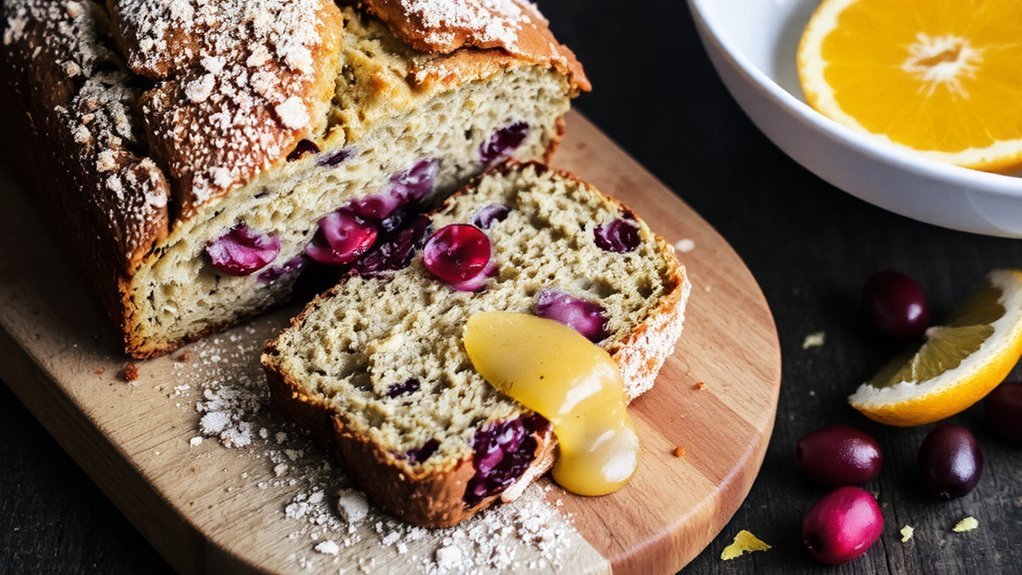

Key Takeaways
- Combine two cups flour, two teaspoons baking powder, one teaspoon baking soda, salt, sugar, cinnamon, and orange zest thoroughly.
- Whisk one cup fresh orange juice, two eggs, one-third cup melted butter, and vanilla extract until well emulsified.
- Fold wet and dry ingredients gently together, then fold in chopped cranberries as final step before baking.
- Bake at 350°F for 55–65 minutes until toothpick emerges clean; cool in pan 15 minutes then on wire rack.
- Store airtight at room temperature up to three days, refrigerate for extended freshness, or freeze wrapped up to three months.
Why Cranberry Orange Is the Perfect Flavor Combination
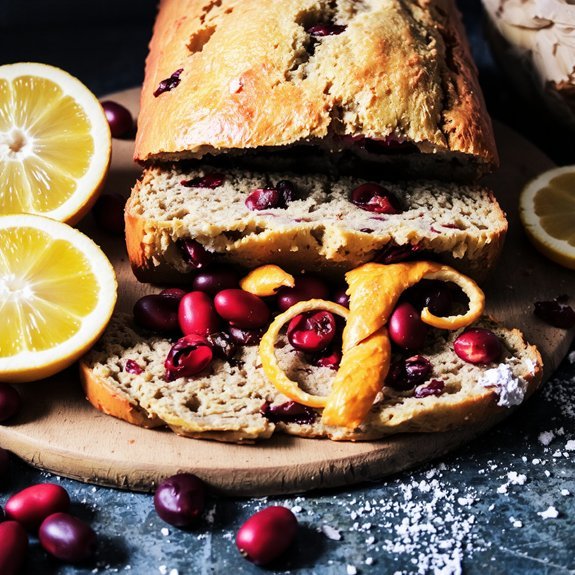
When you combine cranberry’s tart bite with orange’s bright sweetness, you’re tapping into one of baking’s most harmonious pairings.
Cranberry’s tart bite meets orange’s bright sweetness—one of baking’s most harmonious flavor pairings.
This sensory contrast creates complexity that keeps your palate engaged—the tartness cuts through richness while citrus brightness lifts every bite.
You’re not just mixing flavors; you’re orchestrating a dynamic balance that transforms ordinary bread into something memorable.
Beyond taste, this combination carries seasonal symbolism.
Cranberries and oranges peak during autumn and winter, evoking cozy gatherings and festive traditions.
You’ll find these flavors naturally complement each other because they share citric notes, yet their intensity levels oppose perfectly.
When you bake cranberry orange bread, you’re choosing bold, unapologetic flavors that refuse to hide.
There’s no timidity here—just pure, liberated taste that celebrates what makes each ingredient distinctive while creating something entirely new.
Ingredients You’ll Need
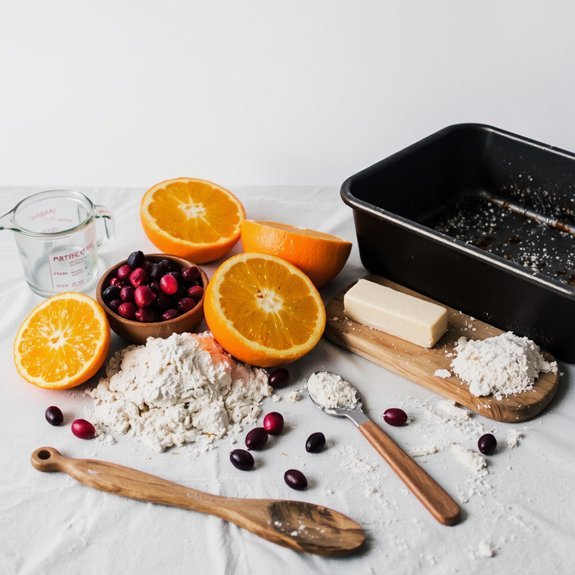
You’ll start by whisking together your dry ingredients—flour, baking powder, salt, and a hint of cinnamon—to create the foundation of your bread.
Next, you’ll combine your wet ingredients in a separate bowl, blending together eggs, oil, sugar, fresh orange zest, and tart cranberry juice until fully incorporated.
Once both mixtures are ready, you’ll fold them together gently, being careful not to overmix, which yields a tender, moist crumb.
Dry Ingredients Mix
To build the foundation of your cranberry orange bread, you’ll want to gather several key dry components that work together to create the perfect crumb structure and subtle sweetness.
You’ll’ll need two cups of all-purpose flour with proper particle sizing for ideal texture and rise. Add two teaspoons of baking powder—your primary aeration method—to guarantee your loaf lifts beautifully in the oven.
Include one teaspoon of baking soda for additional lift and moisture control. You’ll also want half a teaspoon of salt to enhance flavors without overpowering them.
Finally, mix in one tablespoon of granulated sugar and the zest of one orange for brightness and natural flavor complexity. Whisk these components together thoroughly before incorporating your wet ingredients, guaranteeing even distribution and maximum aeration throughout your batter.
Wet Ingredients Combine
Bringing moisture and richness to your batter requires four essential wet components that’ll bind your dry ingredients into a cohesive, tender crumb.
You’ll need one cup of fresh orange juice, which adds bright acidity and natural sweetness.
Two eggs contribute structure and emulsion science, creating that perfect balance between moisture and lift.
One-third cup of melted butter or oil provides viscosity control, ensuring your batter flows smoothly without becoming greasy.
Finally, one teaspoon of vanilla extract deepens the flavor profile with subtle complexity.
Combine these ingredients in a separate bowl, whisking vigorously until fully integrated.
This deliberate mixing activates the emulsifying properties of your eggs, creating a stable base ready to receive your dry mixture.
You’re building the foundation for bread that’s moist, flavorful, and structurally sound—no compromise required.
Step-by-Step Baking Instructions
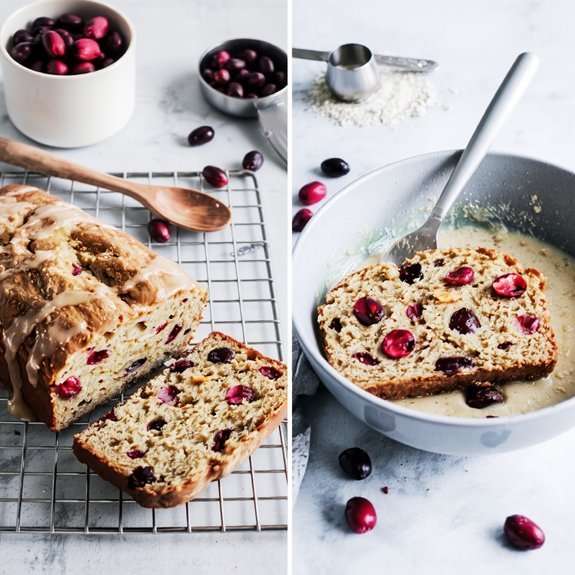
You’ll start by prepping your ingredients—zesting the orange, chopping the cranberries, and measuring out your dry components so everything’s ready to combine.
Once you’ve got everything organized, you’ll mix your wet and dry ingredients separately before folding them together, then pour the batter into your prepared pan and slide it into the oven. This straightforward process transforms simple components into a moist, vibrant loaf that fills your kitchen with an irresistible citrus aroma.
Preparing Your Ingredients
Gathering and prepping your ingredients before you begin mixing guarantees a smooth, organized baking process.
Start by assembling your utensil checklist: measuring cups, mixing bowls, a zester, and baking pans.
You’ll want everything within arm’s reach so you’re not scrambling mid-bake.
Next, establish your prep timeline.
Measure out two cups of flour, one cup of sugar, and your dried cranberries at least fifteen minutes before mixing.
Zest your oranges fresh—don’t settle for bottled juice.
Chop the cranberries if they’re particularly large.
Soften your butter at room temperature; cold butter won’t incorporate properly.
Have your eggs cracked into a separate bowl, ready to go.
This preparation method eliminates delays and keeps your momentum strong throughout the entire baking experience.
Mixing and Baking Process
Cream together your softened butter and sugar until the mixture becomes light and fluffy—about three minutes of steady beating.
Add eggs one at a time, ensuring each incorporates fully before adding the next.
Alternate adding your dry ingredients and orange juice mixture, beginning and ending with dry ingredients—this technique prevents overmixing.
Fold in your cranberries gently to avoid crushing them.
Pour the batter into your prepared loaf pan, smoothing the top evenly.
Bake at 350°F for 55-65 minutes. Monitor browning control by tenting with foil if the top darkens too quickly. You’ll know it’s done when a toothpick inserted in the center emerges clean.
Allow proper crust development by cooling in the pan for 15 minutes before turning out onto a wire rack. This waiting period strengthens the structure, preventing collapse.
Tips for the Best Results
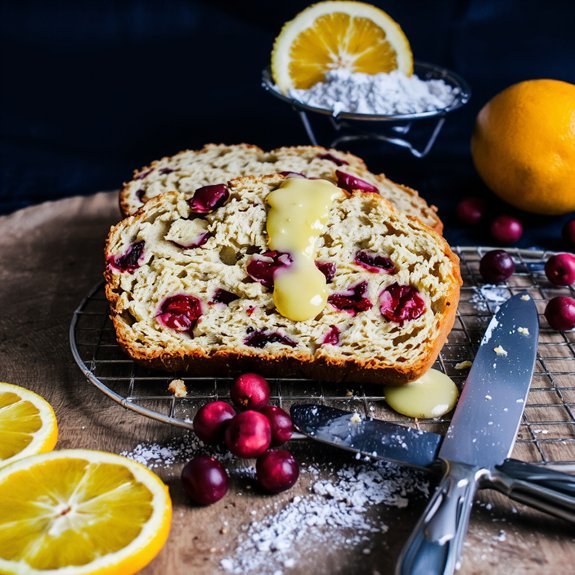
To make sure your cranberry orange bread turns out moist, tender, and bursting with bright flavor, several key techniques’ll make all the difference.
First, invest in oven calibration to guarantee accurate baking temperatures. Your bread deserves precision, not guesswork. Second, practice cooling patience—don’t slice into warm bread. Let it rest completely on a wire rack, allowing the crumb structure to set properly.
| Technique | Purpose | Result |
|---|---|---|
| Room temperature ingredients | Even mixing | Uniform texture |
| Zest before juicing | Maximum flavor | Vibrant citrus notes |
| Fold in berries last | Prevent bruising | Intact cranberries |
| Cool completely | Proper setting | Clean slices |
| Store airtight | Moisture retention | Multi-day freshness |
These practices transform ordinary bread into an exceptional loaf that respects your time and effort.
Storage and Make-Ahead Options
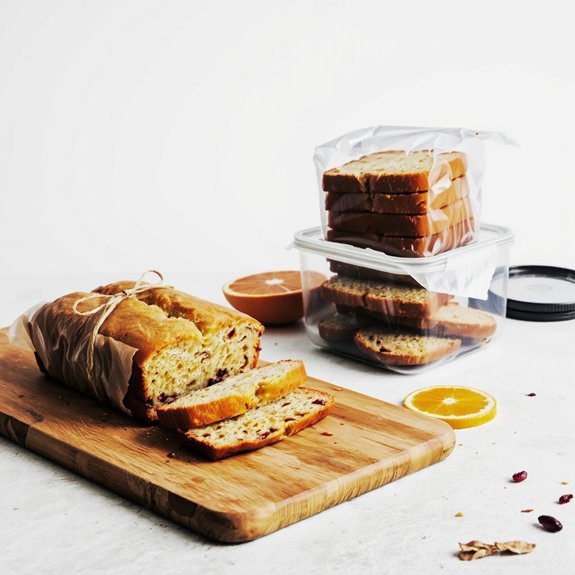
Beyond the initial baking, your cranberry orange bread’s longevity depends on smart storage strategies that’ll keep it fresh and flavorful for days.
Store cooled loaves in an airtight container at room temperature for up to three days, or refrigerate for extended freshness.
For maximum flexibility, embrace freezing methods that preserve your bread’s quality.
Wrap cooled loaves tightly in plastic wrap, then aluminum foil, and freeze for up to three months.
You can also freeze individual slices for convenient portions.
When freezing, don’t skip labeling dates on your packages.
This practice guarantees you’ll use your bread within recommended timeframes and prevents freezer waste.
Thaw frozen bread overnight at room temperature or reheat directly from frozen for freshly-baked flavor anytime you crave it.
Variations to Try
Once you’ve mastered the classic recipe, why not explore exciting flavor combinations that’ll reinvent your cranberry orange bread?
You’re free to experiment with additions that transform this versatile loaf into something uniquely yours.
Consider these creative twists:
- Spiced cranberry orange with cinnamon, nutmeg, and cloves for warming depth
- White chocolate cranberry for indulgent sweetness that balances tart berries
- Almond extract addition creating sophisticated nuttiness throughout
- Candied ginger inclusion delivering bold, zingy complexity
- Eggnog-infused version perfect for holiday themes and festive celebrations
These variations work beautifully for gift packaging, allowing you to customize loaves for different recipients.
Whether you’re crafting holiday themes or creating personalized presents, these adaptations guarantee your bread stands out.
Experiment boldly—your kitchen’s your canvas for culinary freedom.
Serving Suggestions and Pairings
Your cranberry orange bread deserves thoughtful pairings that’ll elevate every bite.
For coffee pairings, you’ve got excellent options: rich espresso balances the bread’s tartness, while medium roasts complement its citrus notes without overpowering.
Cold brew offers a smooth, invigorating contrast during warmer months.
Cheese accompaniments transform your bread into an impressive appetizer or brunch centerpiece.
Creamy goat cheese spreads beautifully across warm slices, its tang harmonizing with cranberry sharpness.
Aged cheddar provides a sophisticated savory edge, while mascarpone adds luxurious richness.
For lighter preferences, ricotta works wonderfully with a honey drizzle.
You’ll find this bread thrives at breakfast, afternoon tea, or dessert.
Toast it lightly to intensify flavors, or serve it fresh from the oven for maximum moisture and warmth.
Frequently Asked Questions
Can I Substitute Fresh Cranberries With Frozen Ones Without Thawing?
Yes, you can absolutely use frozen cranberries without thawing. They’ll work beautifully in your bread. The thawing impact’s actually minimal—frozen berries maintain their structure better during baking chemistry, preventing excessive bleeding into your batter.
You might notice slightly firmer texture in the finished loaf. Simply toss frozen berries in flour before folding them in, which prevents sinking. This substitution gives you freedom from prep work while delivering excellent results that rival fresh cranberries.
What’s the Shelf Life of Cranberry Orange Bread at Room Temperature?
You’ll find your cranberry orange bread stays fresh for 2-3 days at room temperature. Watch for mold indicators like discoloration or off-smells—humidity effects accelerate spoilage, so store it in an airtight container away from moisture.
Keep it on your counter if you’re eating it quickly, but don’t let it sit exposed. You’ve got freedom to enjoy it fresh or refrigerate it for extended shelf life when you need flexibility.
Does This Bread Freeze Well, and for How Long?
You’ll find that cranberry orange bread freezes exceptionally well for up to three months. Wrap it tightly in plastic wrap and foil to prevent freezer burn.
For thawing methods, you’ve got flexibility—let it sit at room temperature for two hours or unwrap it overnight in your refrigerator. Reheating tips include warming slices in a 350°F oven for five minutes, restoring that fresh-baked texture you crave without compromise.
Can I Use This Recipe to Make Muffins Instead of Loaf Bread?
You’ll absolutely nail muffins with this recipe—it’s a straightforward conversion!
Make your muffin adjustments by dividing the batter evenly across a standard 12-cup pan. You’ve got freedom here: fill each cup two-thirds full for perfectly risen muffins.
Reduce your baking time to 18-22 minutes, checking for doneness earlier than the loaf version requires. Pan sizing matters, so don’t overfill.
You’ll yield about 12 muffins that deliver that same tart-sweet cranberry-orange punch in portable, individual form.
Is Cranberry Orange Bread Suitable for People With Nut Allergies?
Yes, you can enjoy cranberry orange bread safely with nut allergies.
Most traditional recipes don’t contain nuts as primary ingredients.
However, you’ll want to verify allergen labeling on all packaged components—cranberries, orange zest, and flour—since cross contact risk exists during manufacturing. Check your ingredients thoroughly and choose certified nut-free products when available. You’re empowered to make informed choices that protect your health while indulging in this delicious treat.


Leave a Comment