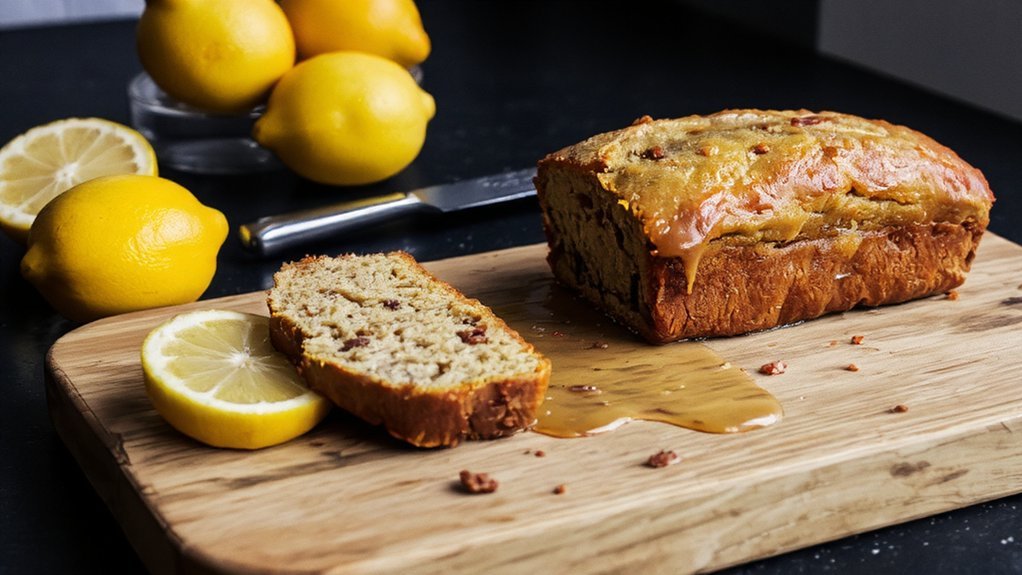

Key Takeaways
- Cream 6 oz softened butter with 1 cup sugar until fluffy, then add eggs one at a time for rich flavor.
- Alternate adding dry ingredients and sour cream to prevent overmixing; fold in 3 tablespoons each lemon juice and zest.
- Bake at 350°F for 45–50 minutes in a 9×5-inch loaf pan until a toothpick comes out clean.
- Enhance with optional variations like fresh blueberries or lavender honey while maintaining consistent baking temperature and ingredient ratios.
- Store cooled loaf in airtight containers for 3–4 days at room temperature, or freeze for up to three months.
Ingredients You’ll Need
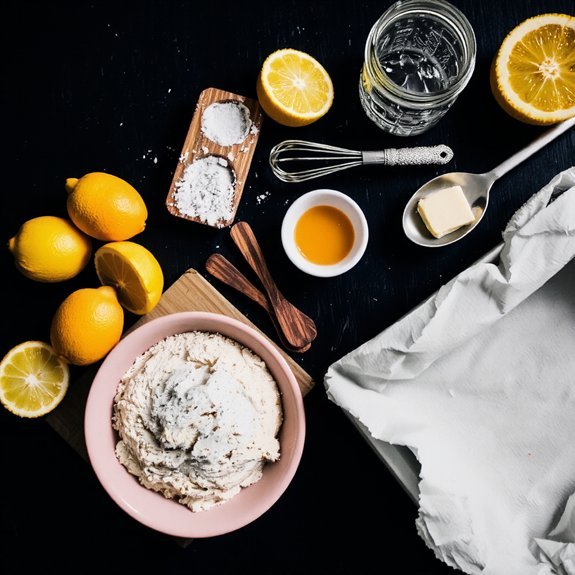
You’ll need two cups of all-purpose flour, one and a half teaspoons of baking powder, half a teaspoon of salt, and half a cup of unsalted butter softened to room temperature.
Two cups all-purpose flour, one and a half teaspoons baking powder, half teaspoon salt, and softened unsalted butter form your bread’s foundation.
These pantry essentials form your bread’s foundation.
Gather one cup of granulated sugar, two large eggs, and half a cup of fresh lemon juice for ideal flavor.
You’ll also want the zest of two lemons for intensity.
For ingredient sourcing, choose quality butter and fresh-squeezed lemon juice rather than bottled alternatives—they’ll noticeably improve your results.
The precise ratio of wet to dry ingredients promotes proper rise and texture.
Measure flour by spooning it into your cup, then leveling with a knife.
This technique prevents overworking and guarantees consistent results every time you bake.
Step-by-Step Instructions
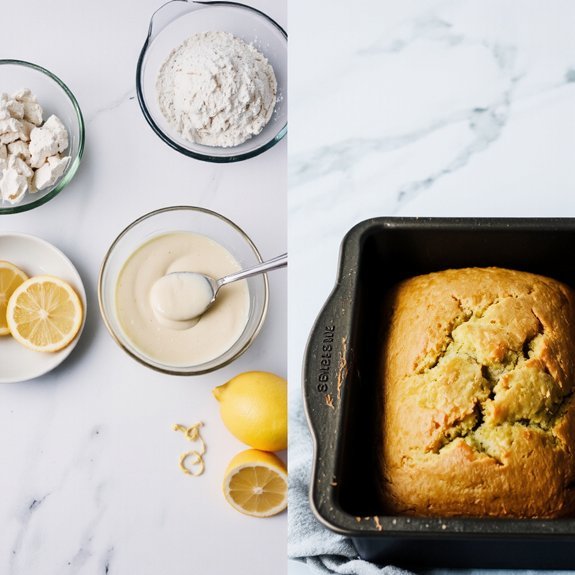
Begin by preheating your oven to 350°F and preparing a standard loaf pan with parchment paper or light greasing.
In a bowl, whisk together 1¾ cups flour, 1 teaspoon baking powder, and ½ teaspoon salt.
In another bowl, cream 6 ounces softened butter with 1 cup sugar until light and fluffy—approximately 3 minutes.
Add 2 large eggs individually, mixing thoroughly after each addition.
Incorporate the flour mixture in two additions, alternating with ½ cup sour cream.
Fold in 3 tablespoons fresh lemon zest and 3 tablespoons lemon juice.
Pour batter into your prepared pan. Bake for 45–50 minutes until a toothpick inserted in the center emerges clean—your timing cue for doneness. The top should exhibit a golden-brown appearance. Cool in the pan for 15 minutes before turning out onto a wire rack.
Tips for the Perfect Loaf
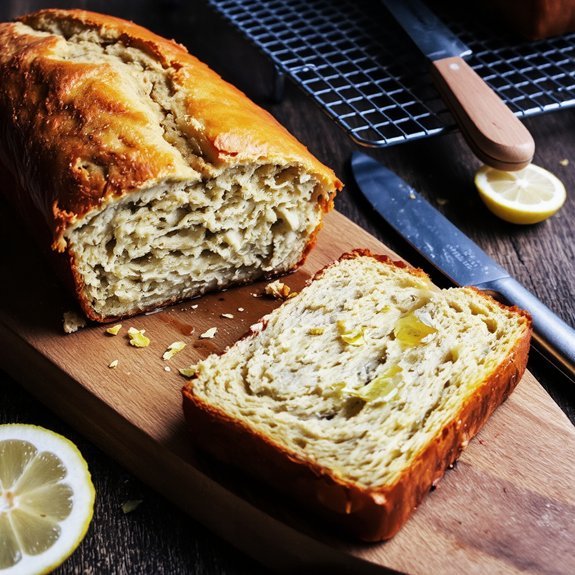
Several factors separate an ordinary lemon bread from an exceptional one, and they’re rooted in technique and ingredient quality.
Pan selection matters greatly—use a standard 9×5-inch loaf pan, and grease it thoroughly to prevent sticking.
You’ll achieve superior crumb structure by avoiding overmixing your batter; blend your dry ingredients separately, then fold them into wet ingredients with minimal strokes.
Achieve superior crumb structure by avoiding overmixing; fold dry ingredients into wet ingredients with minimal strokes.
Room-temperature ingredients combine more effectively, creating a uniform batter.
Don’t skip sifting your flour to eliminate lumps and incorporate air.
Monitor your oven temperature with an independent thermometer since many ovens run inaccurate.
Bake until a toothpick inserted in the center emerges with minimal crumbs—typically 50-55 minutes.
Cool your loaf in the pan for 15 minutes before turning it out.
These precise techniques guarantee you’ll achieve that perfect, tender crumb every time.
Flavor Variations to Try
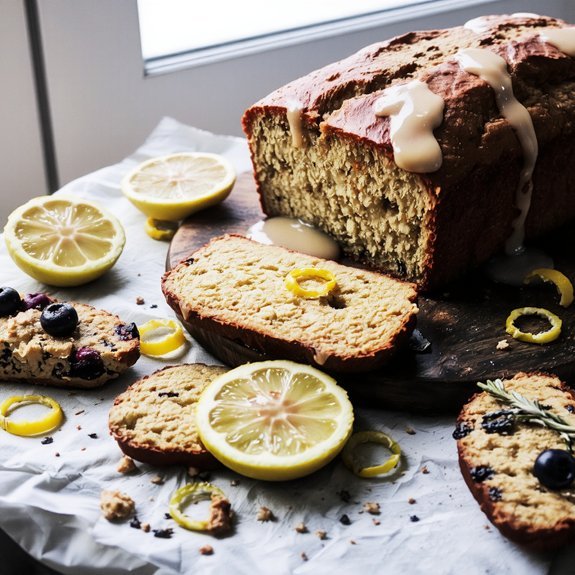
Why settle for classic lemon when you can elevate your bread with complementary flavors? You’ll discover endless possibilities by experimenting with strategic additions.
A blueberry swirl transforms your loaf into something spectacular. Fold in 1 cup fresh blueberries during the final mixing stage, distributing them evenly to prevent sinking. The tart berries balance lemon’s brightness beautifully.
You can also infuse lavender honey for sophisticated depth. Replace half your granulated sugar with 3 tablespoons lavender honey, whisking it thoroughly into your wet ingredients. This creates delicate floral notes without overpowering the lemon.
For maximum impact, combine both variations—layer blueberries with a honey-lavender batter. You’re free to adjust ratios based on your preferences.
Each modification demands precision; weigh ingredients carefully and maintain your standard baking temperature. These variations reward your creativity with professional-quality results.
Storage and Shelf Life
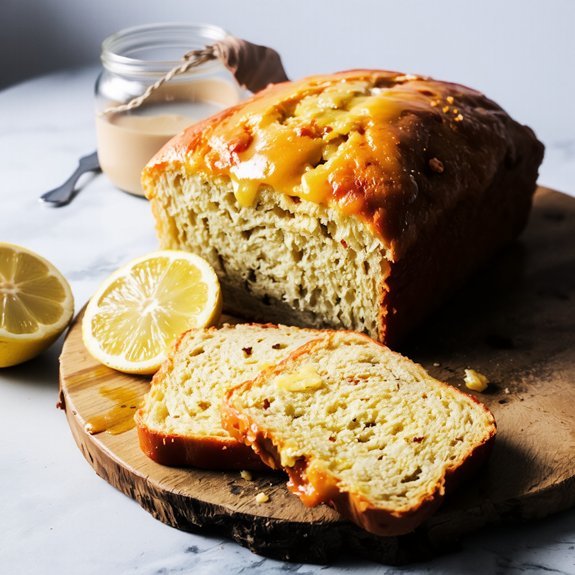
To maximize your lemon bread’s freshness, you’ll want to store it properly within two hours of cooling.
Proper storage extends your bread’s lifespan substantially:
- Room temperature storage lasts 3-4 days in an airtight container, protecting moisture and flavor integrity
- Refrigeration extends shelf life to 10 days when wrapped tightly in plastic wrap or stored in sealed containers
- Freezer duration reaches 3 months when you wrap individual slices in parchment, then seal in freezer bags
Always practice labeling dates on your containers—marking the storage date prevents guesswork and guarantees you’re consuming bread at peak quality.
Thaw frozen portions at room temperature for 2-3 hours before serving, restoring the crumb’s original texture.
This approach gives you complete control over your bread’s availability without sacrificing taste or quality.
Frequently Asked Questions
Can I Use Bottled Lemon Juice Instead of Fresh Lemons?
Yes, you can substitute bottled lemon juice for fresh lemons. However, you’ll notice a taste comparison shows bottled juice lacks fresh lemon’s brightness. The preservative impact means it contains citric acid and sodium benzoate, altering subtle flavor notes.
Use a 1:1 ratio by volume—typically 3 tablespoons bottled juice replaces one fresh lemon. For ideal results in your bread, reduce any added salt slightly, as preservatives affect your final product’s complexity and depth.
What’s the Difference Between Lemon Bread and Lemon Cake?
You’ll notice the key difference lies in texture comparison and ingredient ratios. Lemon bread contains less sugar and fat than cake, giving you a denser, more substantial crumb.
You’re working with a butter-to-flour ratio favoring flour, creating that characteristic tight structure. Lemon cake flips this—you’re using higher sugar and fat percentages, yielding a lighter, airier texture.
You’ll find bread recipes demand precision in measurements; cake allows slightly more flexibility. Both deliver lemon flavor, but you’re choosing between dense satisfaction or delicate indulgence.
How Do I Know When the Bread Is Fully Baked?
You’ll know your lemon bread’s done when you insert a toothpick into the center and it comes out clean or with just a few moist crumbs.
Check the internal temperature—you’re aiming for 205-210°F at the bread’s core.
Don’t rely solely on color; overbaking creates a dry loaf.
Remove it from the oven immediately once it passes the toothpick test to maintain that perfect, moist crumb structure you’re after.
Can I Freeze Lemon Bread for Long-Term Storage?
You can freeze lemon bread for up to three months.
Wrap it tightly in plastic wrap, then aluminum foil for ideal freezer packaging.
You’ll want to store it in an airtight container.
For thawing methods, leave it at room temperature for 2-3 hours unopened, or refrigerate overnight.
This preserves your independence to enjoy homemade bread whenever you choose, without time constraints or waste.
What Equipment Do I Need to Make Lemon Bread?
You’ll need a 9×5-inch loaf pan for proper baking structure. Grab measuring cups and spoons—precision matters for perfect ratios. A mixing bowl, whisk, and electric mixer streamline your work.
You’ll want a cooling rack to prevent moisture buildup on your finished loaf’s bottom. A zester extracts fresh lemon zest efficiently. These tools give you complete control over your baking process, ensuring consistent, professional results every time.






Leave a Comment