
Key Takeaways
- Use both oil and butter for exceptional moisture while maintaining structural integrity and preventing a dense loaf.
- Salt and pat dry shredded zucchini to remove excess water, preventing a soggy, gummy center texture.
- Fold wet and dry ingredients gently with minimal mixing to preserve air pockets and achieve tender crumb.
- Use room-temperature eggs and butter for even ingredient distribution and consistent, moist texture throughout the loaf.
- Bake immediately after mixing and check doneness with a toothpick to avoid overbaking and ensure moist results.
Why This Recipe Works
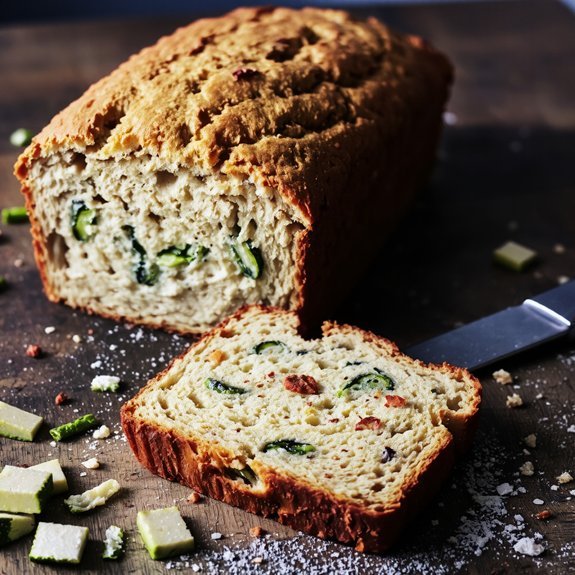
Because zucchini’s high water content can easily make baked goods soggy, this recipe salts the shredded zucchini and lets it sit—a technique that draws out excess moisture before you fold it into the batter.
This smart approach prevents a dense, waterlogged loaf.
You’ll also notice the recipe uses both oil and butter, which keeps the bread incredibly moist while maintaining structure.
The combination of these fats prevents gluten formation from becoming overdeveloped, ensuring your crumb stays tender rather than tough.
Brown sugar contributes depth that enhances flavor development, while cinnamon and nutmeg amplify the warmth throughout each slice.
The recipe’s careful balance of ingredients means you’re not sacrificing texture for moisture—you’re getting both.
That’s why this formula delivers reliable, consistently delicious results every single time you bake it.
Ingredients You’ll Need
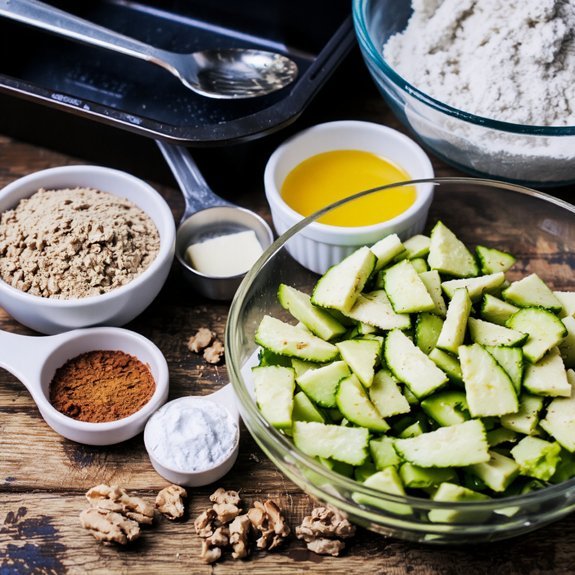
You’ll want to gather your dry ingredients first, which form the foundation of your bread’s structure and flavor.
Next, you’ll combine your wet ingredients—eggs, oil, and zucchini—to create the moist base that keeps this bread tender and delicious.
Guarantees you’ll achieve the perfect texture and taste every time.
Dry Ingredients Breakdown
The foundation of any great zucchini bread starts with the right dry ingredients, and getting this blend just right makes all the difference. You’ll combine two cups of all-purpose flour with one and a half teaspoons of baking soda and half a teaspoon of salt.
Understanding gluten impact helps you achieve that perfect tender crumb—not overdeveloping the gluten keeps your bread delicate rather than dense. Add one teaspoon of cinnamon and a quarter teaspoon of nutmeg for warmth and depth.
Consider starch ratios carefully; they determine moisture absorption and final texture. These dry components work together to create structure while letting your zucchini shine through. Whisking everything together guarantees even distribution of leavening agents throughout your batter, giving you consistent, reliable results every time.
Wet Ingredients Guide
While your dry ingredients provide structure and lift, it’s the wet ingredients that’ll truly transform shredded zucchini into moist, tender bread.
You’ll need three large eggs to bind everything together and create that luxurious crumb. Add one cup of neutral oil—vegetable or canola work perfectly—which keeps your bread incredibly moist days after baking. Include two teaspoons of vanilla extract for aroma pairing that complements the subtle earthiness of zucchini beautifully.
Don’t skip the three cups of shredded zucchini itself; it’s your secret weapon for moisture. You’ll want to gently squeeze excess water from the zucchini to achieve the right visual consistency—not soggy, but distinctly moist.
Combine these wet elements thoroughly before folding in your dry mixture. This approach gives you complete control over your bread’s final texture, ensuring that perfect balance between tender crumb and structural integrity.
Step-by-Step Instructions
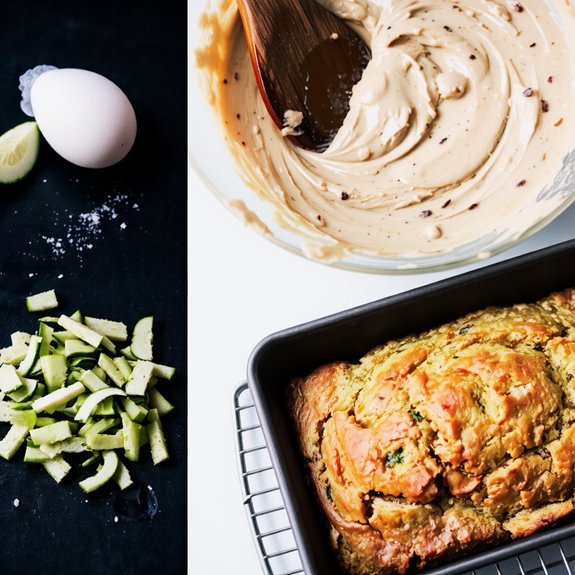
Prepare your oven and baking pan before mixing anything together—this guarantees you’re ready to bake the moment your batter’s prepared.
You’ll combine your wet and dry ingredients with confidence, following visual checkpoints that signal you’re on track.
Mix until you’ve achieved that perfect consistency without overdoing it.
Here’s your straightforward path to success:
- Fold grated zucchini into your wet mixture gently
- Combine flour, baking soda, and spices in a separate bowl
- Merge wet and dry ingredients with minimal stirring
- Pour batter into your prepared pan immediately
For those wanting extra guidance, video walkthroughs show exactly how your batter should look at each stage.
You’ll recognize when you’ve reached the right texture—not too thick, not too thin.
This approach gives you complete control over your baking outcome, ensuring that moist, delicious bread every single time.
Tips for the Perfect Texture
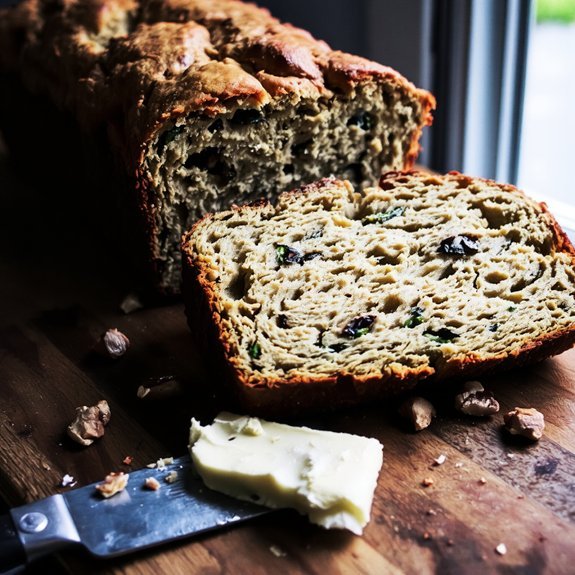
Because moisture content determines whether you’ll get a dense brick or a tender crumb, you’ll want to pay close attention to your zucchini preparation.
| Technique | Purpose | Result |
|---|---|---|
| Salt zucchini | Draws out excess water | Lighter texture |
| Pat dry thoroughly | Removes moisture | Better crumb structure |
| Fold gently | Incorporates air | Fluffy interior |
| Don’t overmix | Preserves air pockets | Tender crumb |
| Room temperature ingredients | Even distribution | Consistent texture |
You’re building air incorporation by folding rather than stirring aggressively. This technique creates tiny pockets that expand during baking, yielding that coveted tender crumb structure. Room temperature butter and eggs blend more smoothly, distributing evenly throughout your batter. Avoid overworking the mixture—you’ll compress those precious air bubbles you’ve carefully developed.
How to Store Your Zucchini Bread
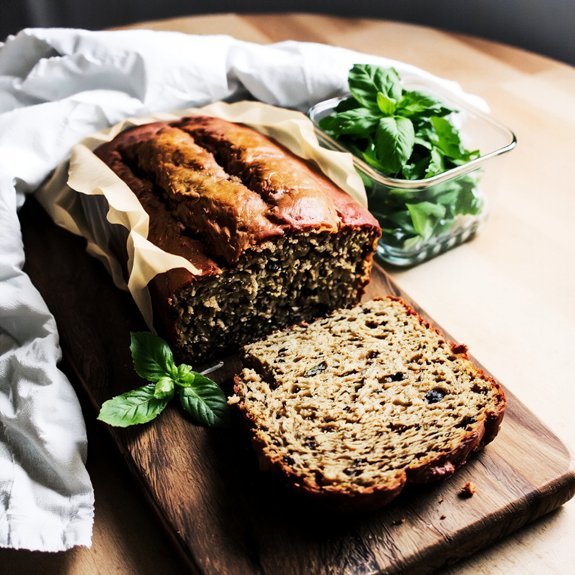
You’ll want to keep your freshly baked zucchini bread at room temperature for the first few days, where it’ll stay moist and flavorful in an airtight container.
If you’re not planning to eat it within that window, you can transfer it to the refrigerator shelf, where it’ll last up to two weeks while maintaining its tender crumb.
For maximum longevity, you can freeze your zucchini bread for several months, making it perfect for enjoying homemade slices whenever the craving strikes.
Room Temperature Storage
Most homemade zucchini bread stays fresh and moist at room temperature for three to four days when stored properly.
You’ll notice your loaf’s flavor maturation continues during this period, developing deeper, more complex notes.
The crust evolution creates that ideal balance between tender crumb and crispy exterior you’re after.
Here’s how to maximize your storage:
- Wrap it tightly in plastic wrap or foil to lock in moisture
- Use an airtight container for extended freshness without staleness
- Keep it away from direct sunlight and heat sources
- Store cut-side down if you’ve sliced into it already
You’ve earned the freedom to enjoy your creation throughout the week without rushing through it. This straightforward method preserves your zucchini bread’s quality while you savor every slice.
Refrigerator Shelf Life
Refrigerating your zucchini bread substantially extends its lifespan to 7-10 days, transforming it into a convenient grab-and-go treat throughout your week. You’ll want to wrap it tightly in plastic wrap or aluminum foil to prevent odor transfer from other foods and slow bacterial growth. Store it on a dedicated shelf away from raw ingredients.
| Storage Method | Duration | Protection Level | Best For |
|---|---|---|---|
| Plastic Wrap | 7 days | Moderate | Quick storage |
| Airtight Container | 10 days | High | Long-term keeping |
| Aluminum Foil | 8 days | Good | Freezer prep |
| Vacuum Seal | 10 days | Excellent | Maximum freshness |
You’ll maintain ideal moisture and flavor by keeping your bread in the coldest section of your refrigerator, ensuring you enjoy every slice at its best.
Freezing for Long-Term
Extending your zucchini bread’s shelf life to three months or more is entirely possible through strategic freezing.
You’ll gain independence from frequent baking while reducing energy costs associated with repeated oven use.
This approach also minimizes your environmental impact by preventing food waste.
Here’s how to freeze like a pro:
- Wrap cooled bread tightly in plastic wrap, then aluminum foil
- Label with the freezing date for easy tracking
- Store in airtight freezer containers for maximum protection
- Thaw at room temperature for four hours before serving
Frozen zucchini bread maintains its moisture and flavor remarkably well.
You’re choosing sustainability without sacrificing taste or quality.
Simply pull a loaf from your freezer whenever cravings strike, freeing yourself from the constant need to bake fresh.
Variations to Try
While the classic zucchini bread recipe’s tried-and-true formula delivers reliable results, you’ll find that experimenting with complementary flavors and ingredients can elevate your baking game considerably.
Seasonal Twists let you adapt recipes to what’s available: incorporate pumpkin spice in fall, fresh berries in summer, or cranberries during winter.
Regional Spins offer exciting possibilities—try adding Mediterranean herbs like oregano and basil, or go Southern with brown sugar and pecans.
You might experiment with chocolate chips, coconut flakes, or walnuts for texture variety. Consider swapping half the oil for applesauce for a lighter version, or add espresso powder to deepen chocolate notes. These modifications keep your baking fresh and exciting while maintaining the moist, tender crumb you love.
Troubleshooting Common Issues
Even when you’ve nailed the recipe and variations, zucchini bread can occasionally throw you a curveball.
You’re in control, so don’t panic when issues arise—they’re fixable.
You’re in control of your baking outcome—when problems arise, remember they’re completely fixable with the right adjustments.
Common problems you’ll encounter:
- Stuck loaf: Your pan wasn’t greased adequately. Next time, use parchment paper or grease generously with butter.
- Sour smell: Over-fermented batter or expired baking soda caused this. Use fresh ingredients and bake immediately after mixing.
- Dense, gummy center: You’ve either underbaked it or added too much zucchini moisture. Insert a toothpick—it should come out clean.
- Dry texture: Overbaking or insufficient oil created this. Reduce oven time by five minutes and check moisture content before baking.
Trust your instincts.
Each attempt teaches you something valuable about your oven’s temperament and your preferences.
You’ll master this.
Serving Suggestions
How you serve your zucchini bread can transform it from a simple breakfast item into a versatile centerpiece for any meal.
You’ll discover that thoughtful coffee pairings elevate the experience—pair slices with dark roast for bold contrast or smooth latte for complementary sweetness.
Your plate styling matters too. Arrange thick slices on rustic ceramic or modern white dishes depending on your aesthetic preference. Add fresh berries, a dollop of whipped cream, or a drizzle of honey for visual appeal and flavor depth.
You’re not bound by conventional breakfast service either. Serve it warm at brunch, room temperature as an afternoon snack, or toasted with cream cheese for dessert. The freedom to reimagine this bread’s presentation means you’ll keep enjoying it in new, exciting ways.
Frequently Asked Questions
Can I Use Frozen Zucchini Instead of Fresh Zucchini in This Recipe?
You can absolutely use frozen zucchini, though you’ll notice some texture differences since freezing breaks down cell walls, making it softer and more watery.
Thaw it completely and squeeze out excess moisture to prevent soggy bread.
Nutrient changes are minimal—you’ll retain most vitamins and minerals.
The trade-off? You’re gaining convenience and year-round flexibility while accepting a slightly denser, more tender crumb.
It’s your call, and honestly, many bakers find frozen zucchini works just fine.
What’s the Best Way to Remove Excess Moisture From Shredded Zucchini?
You’ll want to use the salting technique first—sprinkle your shredded zucchini generously with salt and let it sit for fifteen minutes. This draws out moisture naturally.
Then wrap your zucchini in cheesecloth pressing and squeeze firmly, wringing out every drop you can. Don’t hold back; aggressive pressing removes the excess liquid that’d otherwise make your bread soggy. This two-step approach gives you perfectly dry zucchini every time.
How Long Does Zucchini Bread Stay Fresh at Room Temperature?
You’ll find that your zucchini bread stays fresh at room temperature for about two to three days.
For ideal storage duration, keep it in an airtight container away from direct sunlight.
Check your freshness indicators—if you notice mold, off-odors, or a dry, hard texture, it’s time to toss it.
Want to extend its life? Refrigerate it for up to a week, or freeze it for months of delicious freedom from baking constraints.
Can I Make Zucchini Bread in a Muffin Tin Instead of Loaf Pan?
You can absolutely bake zucchini bread in a muffin tin—it’s a game-changer for portion control. Fill each cup two-thirds full and reduce your baking time to 18-22 minutes.
You’ll achieve beautiful, individual servings that look impressive on any plate. This method gives you presentation flexibility; serve them warm with cream cheese frosting or enjoy them grab-and-go. You’re liberated from slicing, and you’ve got perfectly portioned treats ready whenever you want them.
Is It Possible to Make This Recipe Without Eggs or Dairy Products?
You’ve absolutely got the freedom to craft this recipe without eggs or dairy.
Swap eggs with flaxseed eggs—they’ll bind your ingredients beautifully while adding nutritional punch.
For dairy, use plant-based milk and coconut oil instead.
Want an even stronger binder? Aquafaba works wonders, giving you that moist, tender crumb you’re after.
Your vegan zucchini bread will taste just as decadent and satisfying as the traditional version.






Leave a Comment