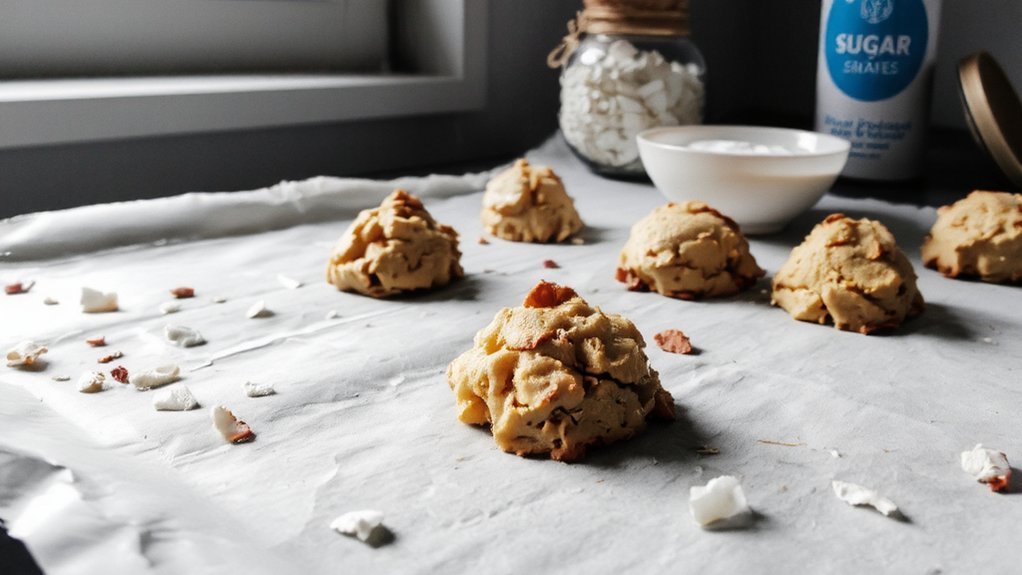

Key Takeaways
- Combine 14 oz sweetened shredded coconut, 14 oz condensed milk, 2 tsp vanilla, and 1/4 tsp sea salt until uniform.
- Portion 1-inch mounds onto parchment, spacing 2 inches apart, then bake at 325°F for 20–25 minutes until golden-brown edges form.
- Cool macaroons in pan 5 minutes, then completely on baking sheet before transferring to airtight containers for storage.
- Select medium-sized coconut shreds and verify moisture content; accurate ingredient measurement controls chewy versus dry texture outcomes.
- Store finished macaroons at room temperature up to 5 days or freeze up to 3 months with parchment separators.
Ingredients You’ll Need
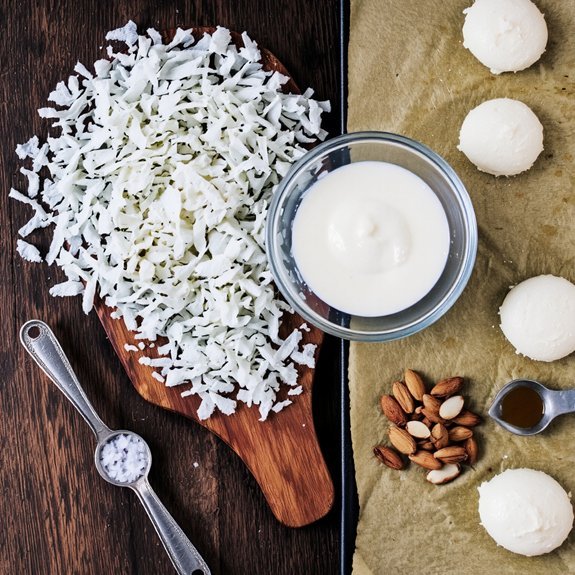
You’ll need just a handful of ingredients to prepare this coconut macaroon recipe: 14 ounces of sweetened shredded coconut, 1 can (14 ounces) of sweetened condensed milk, 2 teaspoons of vanilla extract, ¼ teaspoon of sea salt, and 6 ounces of semi-sweet chocolate for coating.
A handful of pantry staples—coconut, condensed milk, vanilla, salt, and chocolate—transform into homemade macaroons.
These pantry essentials create the foundational structure of your macaroons. The coconut provides texture and flavor complexity, while condensed milk acts as the binding agent, ensuring cohesion without additional binders.
For allergen alternatives, you’ll find substitutions readily available. Coconut cream can replace condensed milk if you’re avoiding dairy, though you’ll need to adjust ratios accordingly. Dairy-free chocolate coating accommodates lactose sensitivities without compromising quality.
Gather your ingredients before beginning preparation. Precise measurements guarantee consistent results across batches. This streamlined ingredient list eliminates unnecessary components, allowing you complete control over your final product’s composition and nutritional profile.
Step-by-Step Instructions
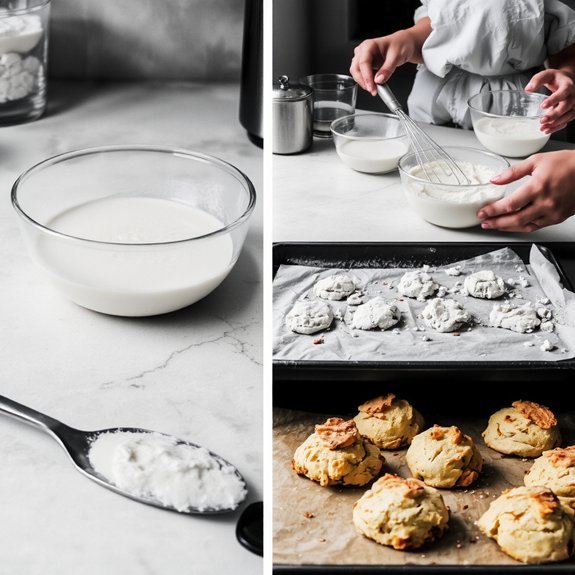
Begin by combining 14 ounces of sweetened shredded coconut, one 14-ounce can of sweetened condensed milk, 2 teaspoons of vanilla extract, and ¼ teaspoon of sea salt in a medium mixing bowl.
Stir the mixture thoroughly until you’ve achieved uniform consistency throughout the process flow.
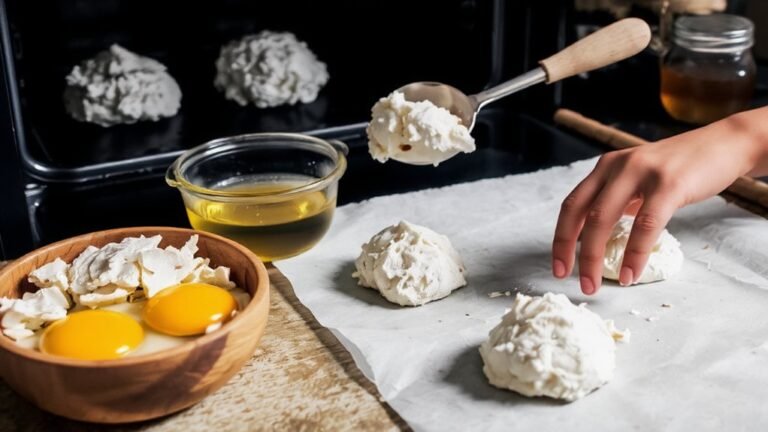
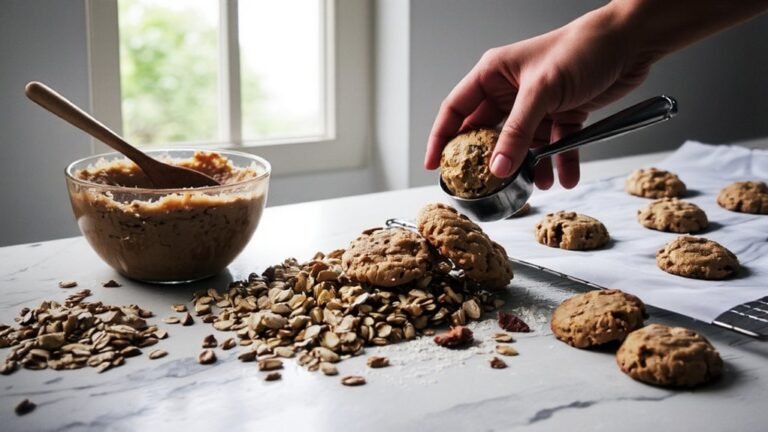
Using a cookie scoop or tablespoon, portion approximately 1-inch mounds onto parchment-lined baking sheets, spacing them 2 inches apart.
Preheat your oven to 325°F during preparation.
Safety reminders: keep your hands clean and avoid touching your face while handling ingredients.
Bake for 20-25 minutes until the macaroons display golden-brown edges.
Remove from heat and cool completely on the baking sheet before transferring to an airtight container for storage.
Tips for Perfect Macaroons

You’ll achieve consistently excellent results by mastering three critical variables: moisture control, coconut selection, and oven parameters.
Your choice of sweetened coconut affects both texture and browning rate, requiring you to understand how shred size and sugar content influence baking outcomes.
You’ll need to monitor internal temperature and adjust timing based on your specific oven’s heat distribution to prevent over-browning while ensuring proper structural set.
Moisture Control Matters Most
The difference between chewy and dry coconut macaroons hinges on moisture management throughout every production stage. You’ll control water activity by monitoring ambient humidity and ingredient ratios precisely.
Sweetened condensed milk’s moisture content directly affects your final texture—measure it accurately to prevent excessive drying.
During mixing, you’re minimizing protein denaturation by keeping temperatures moderate. Overmixing denatures egg white proteins, compromising structural integrity and moisture retention.
Bake at 325°F for 18-22 minutes; this temperature range sets the exterior while preserving internal moisture.
You’ll achieve ideal results by cooling macaroons in their baking pan for five minutes before transferring them. This gradual cooling prevents sudden moisture loss. Store finished macaroons in airtight containers with parchment separation. You control the final product’s moisture profile through each deliberate step.
Sweetened Coconut Selection Guide
Since moisture retention depends critically on coconut quality, selecting the right sweetened shredded coconut directly impacts your macaroon’s final texture and shelf stability.
You’ll want to examine flake texture carefully—medium-sized shreds bind better than fine particles, which compress excessively.
Large flakes create structural gaps that compromise density.
Brand comparisons reveal significant variations in moisture content and sweetener ratios.
Test your preferred brand by squeezing a handful; quality coconut should hold together briefly without releasing excess liquid.
Check the ingredient list for additives like propylene glycol, which artificially extends shelf life but affects authentic results.
Purchase coconut from reputable suppliers offering consistent quality batches.
Store unopened packages in cool, dry conditions.
Once opened, transfer unused coconut to airtight containers, maintaining ideal conditions for your next batch.
Baking Temperature and Timing
Precision in oven temperature and bake duration separates mediocre macaroons from exceptional ones.
You’ll want to preheat your oven to 325°F, allowing adequate thermal profiling for even heat distribution.
This temperature prevents over-browning while ensuring interior set.
Oven calibration is critical—use an independent thermometer to verify actual temperature, as many home ovens run hot or cool.
You’re aiming for 20-25 minutes of bake time, though variables like coconut moisture content and oven characteristics require vigilance.
Check macaroons at 18 minutes.
They’re done when edges turn golden-brown while centers remain slightly soft.
This balance yields chewy interiors with crisp exteriors.
Remove them promptly to prevent overcooking, which dries out the texture and diminishes quality.
Document your specific oven’s performance for consistent future batches.
Flavor Variations to Try
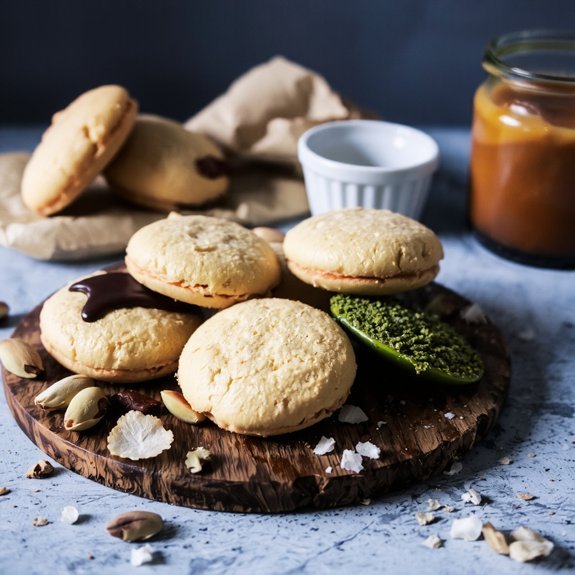
Why settle for classic coconut when you can elevate your macaroons with strategic flavor additions? You’ll discover that incorporating global inspirations and seasonal twists transforms your basic recipe into sophisticated confections.
| Flavor Profile | Key Ingredient | Measurement |
|---|---|---|
| Tropical Passion | Passion fruit extract | ½ teaspoon |
| Spiced Chai | Ground cardamom | ¼ teaspoon |
| Citrus Zest | Lemon zest | 1 tablespoon |
| Dark Cocoa | Cocoa powder | 2 tablespoons |
You’ll fold your chosen modifiers into the coconut mixture before baking, maintaining structural integrity. Start conservatively with extracts—½ teaspoon prevents flavor overpowering. Zests require no adjustment to liquid ratios. You’re free to experiment with almond extract, vanilla bean, or matcha powder. Each addition demands precise measurement to preserve texture while amplifying taste complexity. Your macaroons become personalized expressions of culinary creativity.
Storage and Shelf Life
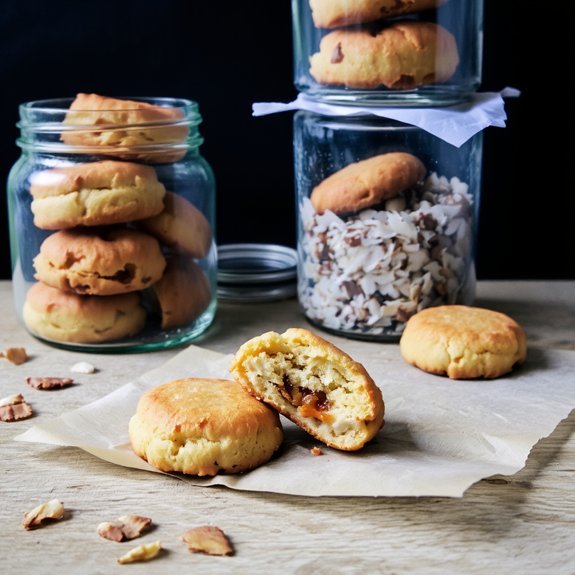
Your perfectly crafted macaroons deserve proper storage to maintain their texture and flavor integrity.
Your perfectly crafted macaroons deserve proper storage to maintain their texture and flavor integrity.
Store them in an airtight container at room temperature for up to five days.
For extended preservation, freeze your macaroons in freezer-safe containers; freezer duration extends shelf life to three months without compromising quality.
Implement labeling practices by marking containers with preparation dates and storage temperatures. This systematic approach guarantees you track freshness and rotation efficiently.
When freezing, separate layers with parchment paper to prevent sticking and structural damage.
Thaw frozen macaroons at room temperature for thirty minutes before consumption.
Avoid moisture exposure, as coconut macaroons absorb humidity readily, compromising their signature crispy exterior.
You’ll maintain ideal texture and flavor by adhering to these precise storage protocols.
Serving Suggestions
Because coconut macaroons’ delicate texture and subtle sweetness complement various beverage pairings and dessert presentations.
You’ll maximize their appeal by considering complementary flavor profiles and serving temperatures.
- Beverage Pairings: Pair macaroons with espresso, chamomile tea, or coconut milk-based coffee drinks to enhance their natural coconut essence without overwhelming delicate notes.
- Temperature Control: Serve chilled macaroons at 45-50°F for ideal textural contrast, or room temperature (68-72°F) for intensified flavor complexity.
- Plating Techniques: Arrange macaroons on elevated surfaces with complementary garnishes—toasted coconut flakes or edible flowers—to create visual hierarchy.
- Gift Packaging: Present macaroons in archival-quality boxes with moisture barriers, allowing recipients freedom to enjoy premium homemade confections at their discretion.
Frequently Asked Questions
Can I Make Coconut Macaroons Without Condensed Milk as a Substitute?
You can absolutely craft coconut macaroons without condensed milk.
Substitute with coconut cream—it’ll give you that binding richness you’re after.
Mix shredded coconut with almond paste at a 3:1 ratio, incorporating egg whites for structural integrity.
This formula yields 65-70% moisture content, critical for proper texture.
You’re not bound by traditional recipes; this approach grants you complete control over your ingredients while maintaining ideal consistency and achieving professional-grade results.
Why Do My Macaroons Spread Too Much During Baking?
Your macaroons spread excessively due to insufficient batter stiffness.
You’ll need to increase coconut density or reduce liquid content to achieve proper consistency.
Additionally, verify your oven calibration—macaroons require precise 325°F temperatures.
If your oven runs hot, they’ll spread before setting.
Use an oven thermometer for accuracy.
Make sure egg whites reach stiff peaks, providing structural integrity throughout baking.
These adjustments give you complete control over your results.
Are Coconut Macaroons Naturally Gluten-Free and Vegan-Friendly?
You’ll find coconut macaroons naturally gluten-free since they contain no wheat flour—just shredded coconut, sugar, and egg white binders.
However, you’ll need egg alternatives like aquafaba or flax eggs for vegan versions.
Watch for cross contamination risks when sourcing ingredients; verify your coconut’s processing facility doesn’t handle gluten products.
Use precise 1:1 substitution ratios for binding agents to maintain structural integrity and achieve ideal texture consistency.
How Do I Prevent the Bottoms From Burning While Baking?
You’ll prevent bottom burning by positioning your rack in the upper-middle section of your oven, allowing heat circulation beneath your pan.
Use an insulated baking sheet or double-pan technique to create a thermal barrier.
Maintain precise oven temperature at 325°F.
Monitor baking time rigorously—typically 20-25 minutes.
You’ve got the autonomy to adjust rack height based on your oven’s individual heat distribution patterns for ideal results.
Can Frozen Coconut Macaroons Be Reheated, and How Should I Do It?
You can absolutely reheat frozen coconut macaroons using two methods. For the microwave method, place macaroons on a microwave-safe plate and heat at 50% power for 30-45 seconds.
Alternatively, use oven reheating by setting your temperature to 325°F and warming them for 5-8 minutes on a lined baking sheet. Both techniques restore ideal texture and moisture content without compromising structural integrity or flavor profile.


Leave a Comment