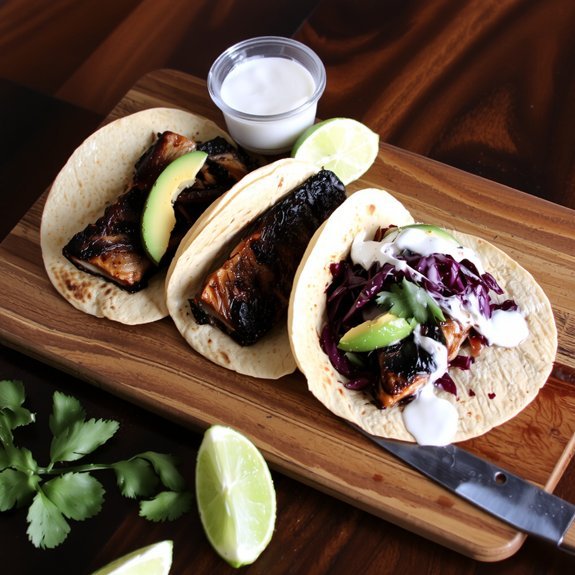

You’ll find mahi‑mahi tacos are easy to master and versatile for weeknights or entertaining. You’ll marinate firm, skinless fillets in bright lime, olive oil, and spices, then grill, pan‑sear, or bake to flaky perfection. You’ll build tacos with crunchy slaw, fresh herbs, and a creamy lime crema — and one simple trick will make them restaurant‑quality.
Ingredients You’ll Need
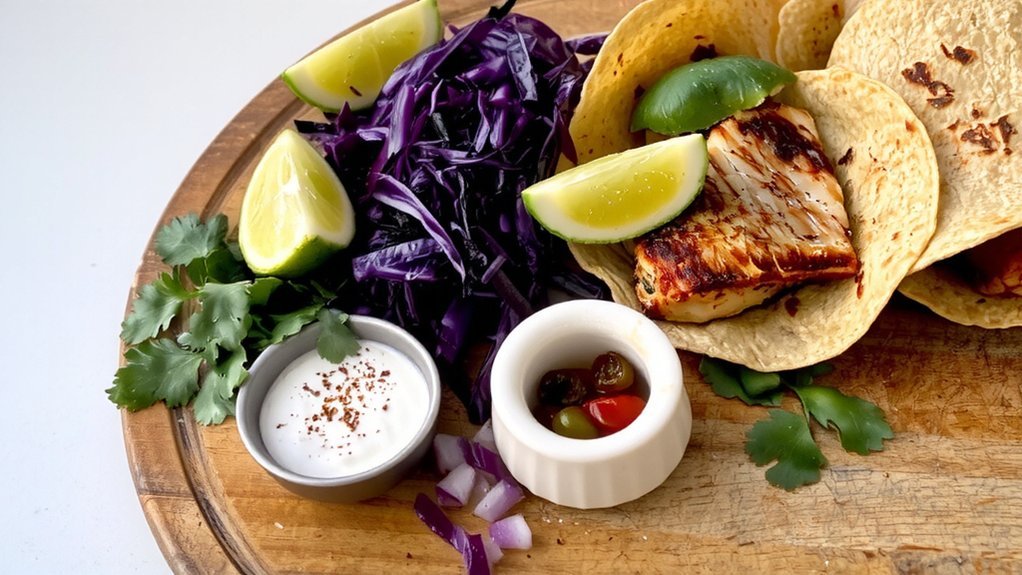
For this mahi-mahi taco recipe you’ll need a few core groups of ingredients: skinless mahi-mahi fillets (about 1–1¼ lb, portioned into 4 fillets or ~12 small pieces), a neutral or olive oil (2–3 Tbsp), fresh lime juice (2–3 Tbsp), and a spice mix—think chili powder, cumin, smoked paprika, garlic and onion powders, salt, and pepper, with optional oregano or chipotle for extra heat.
You’ll also gather tortillas (corn preferred), shredded cabbage or slaw, cilantro, radishes or jalapeños, and lime wedges.
Prepare creamy sauces—mayo or yogurt bases with chipotle or lime and smoked paprika—and fresh garnishes like avocado or pico de gallo.
Measure spices precisely; consider jalapeño or chipotle peppers to vary heat. Preparation takes about 30 minutes total.
These ingredient groups deliver Mahi Mahi Flavor Combinations for balanced, bright tacos.
Essential Equipment
A compact set of tools will make mahi‑mahi tacos fast, consistent, and delicious: a heavy skillet or griddle (or a charcoal/gas grill if you want char), an instant‑read thermometer to avoid overcooking, tongs or a spatula for gentle flipping, and a marinade container or shallow dish for even seasoning.
Supplement with a non‑stick skillet for stovetop control, a grill brush, and a tortilla warmer or foil to hold tortillas at serving temperature.
Use a cutting board and sharp knife for toppings, a blender for crema or salsa, and measuring cups, bowls, and a whisk for sauces.
Keep storage containers, labels, and a cooling rack handy.
This compact kit supports kitchen organization and maximizes cooking efficiency so you’ll assemble tacos smoothly with confidence, every time. Plan on a quick overall cook and prep time of about 25 minutes.
Preparing the Mahi‑Mahi Fillets
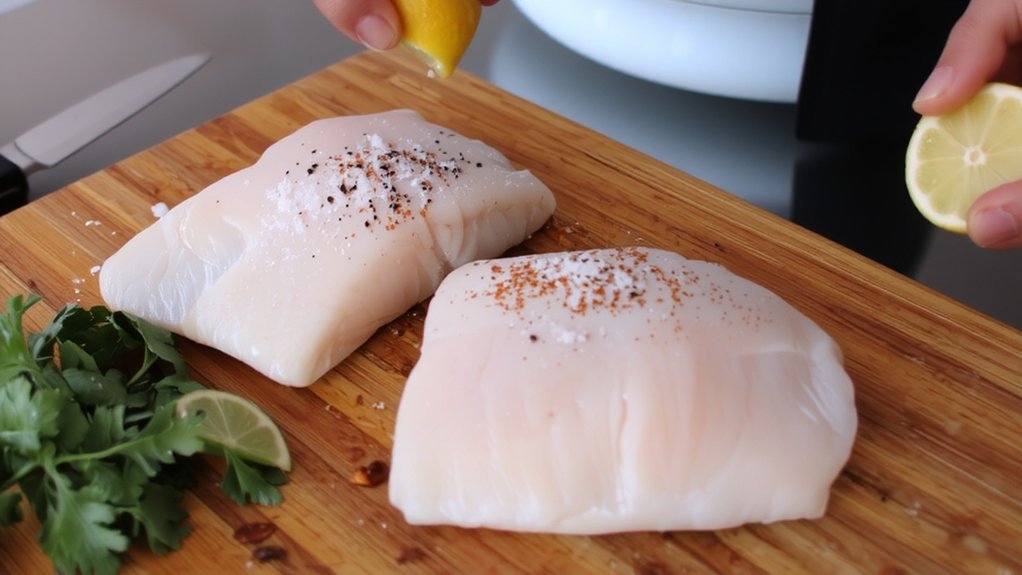
Start by drying and inspecting each fillet—pat them thoroughly with paper towels, trim any bloodline, fins, or stray bones, and check for uniform thickness so they cook evenly.
Mahi Mahi is a surface dwelling saltwater fish found in tropical climates.
You’ll use precise fillet trimming techniques to remove dark muscle and guarantee clean presentation.
Pat dry immediately before applying oil; dry surfaces prevent steaming and let seasonings stick. Handle gently to avoid compression.
- Trim: remove bloodline, pin bones; score thicker areas for even doneness.
- Dry & oil: pat, then lightly coat with olive oil to prevent sticking.
- Season: apply coarse salt and pepper evenly using established seasoning methods.
Use an instant-read thermometer to confirm 137–140°F final temperature and rest briefly before serving.
Portion to 4–6 ounce servings and keep chilled on ice prior.
Marinade and Spice Blend
While citrus brightens and tenderizes the mahi‑mahi, you’ll balance it with olive oil and a concentrated spice blend so the fish stays firm and well‑seasoned.
This makes the dish quick to prepare and well suited for busy weeknights.
Start by whisking lime juice, olive oil, salt, and pepper; add garlic and onion powder, chili powder, cumin, and smoked paprika.
Whisk lime, olive oil, salt and pepper, then add garlic, onion powder, chili, cumin and smoked paprika.
Combine dry spices first to guarantee even distribution, then emulsify with oil and citrus. Use short marination, 15 to 30 minutes, to avoid texture breakdown.
For precise seasoning, follow spice ratios: three parts chili powder, one part cumin, one part smoked paprika, half part garlic, half part onion powder, plus salt to taste.
Explore marinade variations by adding cayenne for heat, chipotle for smoke, or a splash of orange for sweetness.
Rub or brush evenly; don’t overmarinate ever.
Grilling, Pan‑Searing, and Baking Options
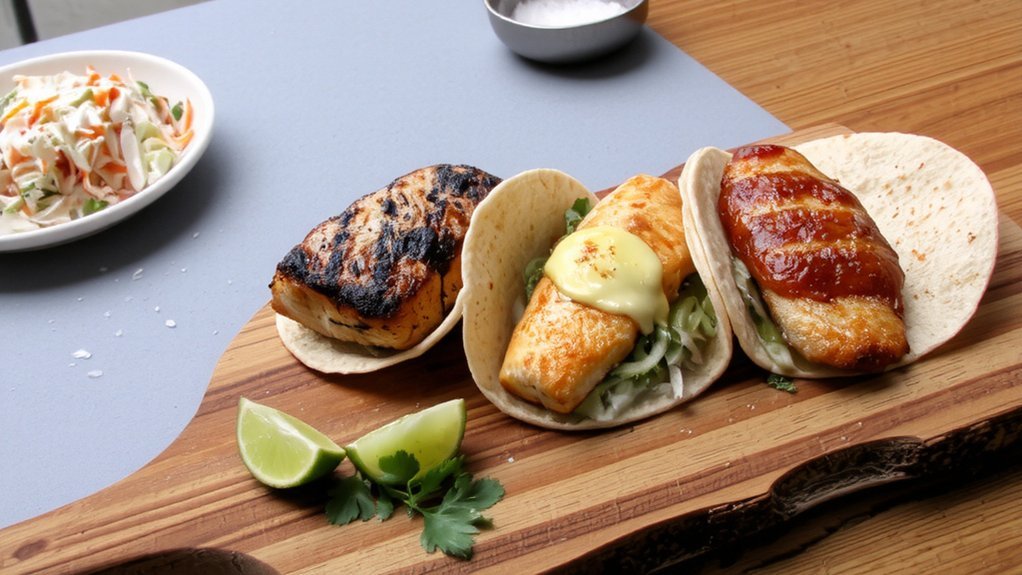
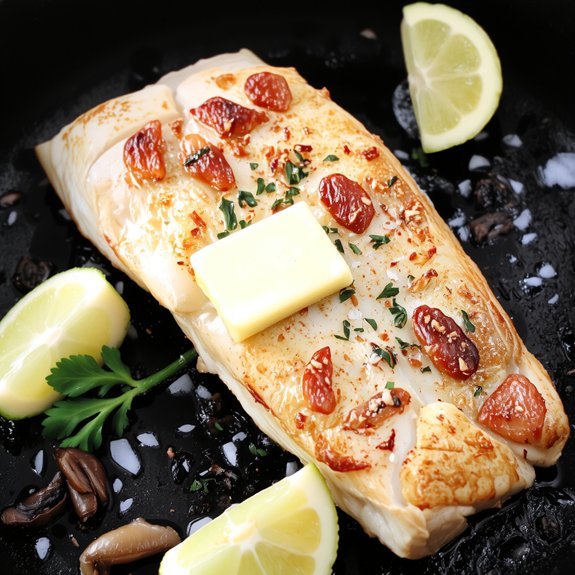
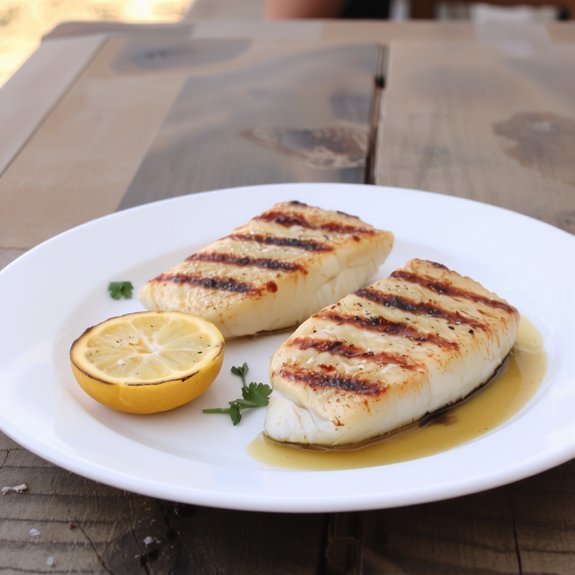
Whether you grill, pan‑sear, or bake your mahi‑mahi, choose the method that matches the texture you want—charred and smoky from the grill, a crisp crust from a hot skillet, or a hands‑off, even bake—and follow temperature and timing guidelines to avoid drying this lean fish.
It’s a mild, firm white fish that adapts well to all three cooking methods.
Preheat grill to 375–450°F, heat skillet over medium‑high, or set the oven to 400°F. Aim for an internal 135–140°F; remove early for carryover and rest briefly.
- Grilling techniques: clean and oil grates, brush fillets with oil, grill 3–5 minutes per side.
- Pan searing tips: use oil, avoid overcrowding, sear 3–4 minutes per side to form a golden crust; use an instant‑read thermometer.
- Baking: arrange single layer, brush with oil, bake 8–12 minutes for even, hands‑off cooking.
Cabbage Slaw and Fresh Toppings
If you want a crisp, balanced slaw for your mahi‑mahi tacos, use thinly shredded green cabbage as the base and add red cabbage and carrots for color, sweetness, and crunch.
Add thinly sliced green onions or soaked red onion for mild sharpness, and dice jalapeño or serrano to taste.
Brighten slaw with thin green onions or soaked red onion, and add diced jalapeño or serrano to taste
Chop cilantro finely or substitute Italian parsley when necessary.
Zest and juice lime, then season with ground cumin, coriander, salt and pepper; toss and let rest if you prefer a softer texture.
For dressing, favor light oil‑and‑lime styles or simple oil‑based vegan options. The dressing is primarily made with sour cream, giving a lighter alternative to traditional coleslaw.
Consider slaw variations for heat, herb profile, and texture.
For final topping suggestions, garnish with extra cilantro and lime wedges.
Serve immediately or chill for later.
Keep refrigerated up to three days.
Sauces, Crema, and Salsas
Mix and match sauces, cremas, and salsas to dial in your taco’s flavor profile: choose a creamy element (cilantro‑lime crema, chipotle aioli, or avocado crema) for richness, add a fruity‑spicy salsa (mango, pineapple‑jalapeño, or pico de gallo) for brightness, and bring in a Baja or poblano sauce when you want smokiness or more heat. Use fresh or thawed mahi‑mahi for best results, ensuring the fish is completely thawed if frozen so it cooks evenly and retains its texture.
You’ll use sauce pairings to balance sweet, tangy, creamy, and smoky notes; prioritize fresh ingredients and adjust heat.
Consider these focused combinations to define clear flavor profiles and make finishing simple:
- Cilantro‑lime crema + pico de gallo + grilled mahi-mahi.
- Chipotle aioli + pineapple‑jalapeño salsa + Baja sauce.
- Avocado crema + mango chutney + poblano sauce.
Adjust proportions to taste and keep sauces chilled until serving, always.
Assembly, Serving, and Storage Tips
A few precise steps will make assembly, serving, and storage straightforward: warm and stack your tortillas (foil or a warmer keeps them pliable), lay down a shredded cabbage or slaw base to absorb juices, add flaked or halved mahi‑mahi without overcrowding, and finish with sliced avocado, pickled jalapeños, cilantro, and a drizzle of crema or salsa to avoid sogginess. Because mahi‑mahi has a firm texture, it holds up well in tacos and won’t fall apart when flaked.
Use assembly techniques that start with flexible tortillas warmed by grill, oven, or microwave with a damp towel; avoid overheating. Let rested fish flake and distribute evenly to preserve structure.
For serving suggestions, offer lime, extra crema, and toppings on the side so guests customize.
Follow storage strategies: refrigerate fish up to three days, keep tortillas and slaw separate, reheat gently; never freeze assembled tacos.
Leave a Comment