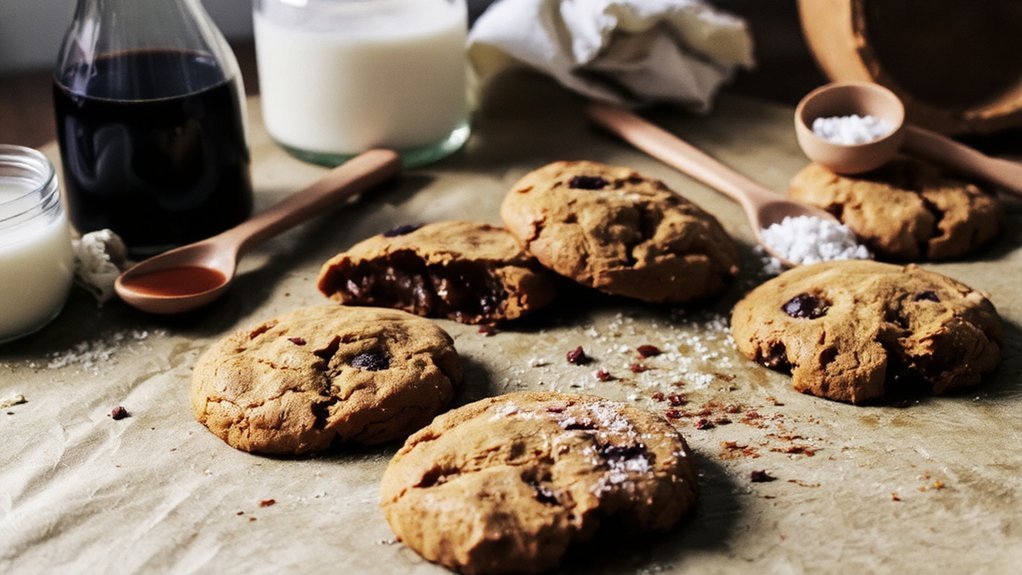

Key Takeaways
- Cream room-temperature butter and brown sugar, then add egg, molasses, and whisked dry ingredients until just combined.
- Whisk 2¼ cups flour, 2 teaspoons baking soda, 1 teaspoon ginger, ½ teaspoon cinnamon, ¼ teaspoon cloves, and salt vigorously.
- Chill dough minimum two hours to prevent excessive spreading; bake at 350°F for 10–12 minutes on middle rack.
- Remove cookies when edges are set and centers slightly soft; transfer immediately to wire rack to cool completely.
- Store in airtight containers at room temperature up to two weeks; freeze individual wrapped cookies up to three months.
Ingredients You’ll Need
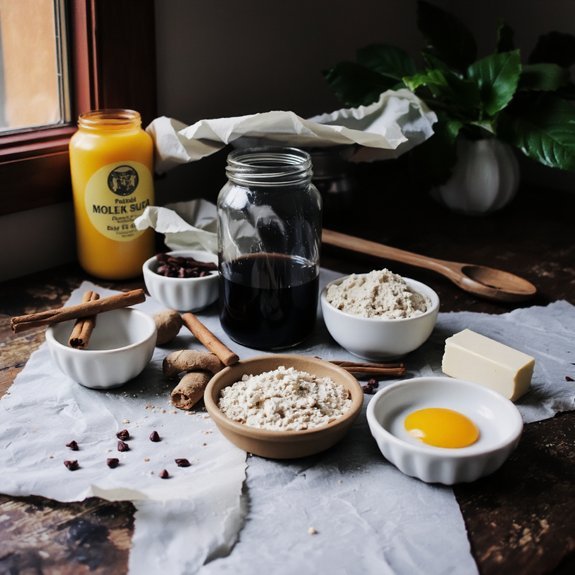
You’ll need just a handful of dry ingredients to build your molasses cookie base: all-purpose flour, baking soda, salt, and ground spices—typically cinnamon, ginger, and cloves.
A handful of dry ingredients—flour, baking soda, salt, and warm spices—form your molasses cookie foundation.
For wet components, gather unsalted butter, brown sugar, and molasses.
You’ll also want eggs and vanilla extract to bind everything together.
Consider organic options for flour and spices to maximize nutritional content and minimize chemical additives.
Quality molasses delivers superior depth and nutritional benefits, including mineral content like iron and potassium.
Brown sugar contributes molasses naturally, enhancing both flavor and trace minerals.
Your ingredient ratios matter substantially.
Precise measurements guarantee proper rise and texture.
The baking soda reacts with molasses’s acidity, creating lift.
Ground spices should be fresh for maximum potency.
Select unsalted butter for complete flavor control, letting you determine sodium levels independently.
2. Step-by-Step Instructions
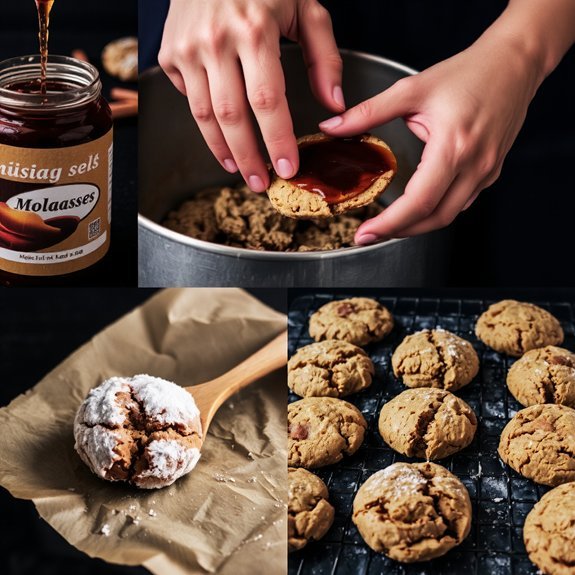
You’ll begin by whisking together your dry ingredients—flour, baking soda, salt, cinnamon, ginger, and cloves—in a medium bowl until they’re evenly combined.
Once you’ve creamed your butter and sugar, then incorporated your egg and molasses, you’ll fold the dry mixture into the wet ingredients until just combined.
After portioning your dough onto baking sheets and baking at 350°F for 10-12 minutes, you’ll transfer the cookies to a wire rack to cool completely before serving.
Mixing Dry Ingredients
Before combining wet and dry components, whisk together 2¼ cups all-purpose flour, 2 teaspoons baking soda, 1 teaspoon ground ginger, ½ teaspoon ground cinnamon, ¼ teaspoon ground cloves, and ¼ teaspoon salt in a medium bowl.
You’ll want to master proper sifting methods for effective clump prevention.
Here’s your dry ingredient breakdown:
- Flour: Forms the cookie structure; measure accurately for consistency
- Baking soda: Provides lift and browning; promotes even distribution
- Spices: Deliver molasses complexity; whisking prevents concentrated pockets
- Salt: Balances sweetness; enhances spice profiles
- Combination technique: Whisk vigorously for 30 seconds minimum
Whisking aerates your dry mixture and breaks apart any flour clumps before they’re incorporated.
This prevents dense, unevenly-spiced cookies. You’re building a foundation that’ll make your dough easier to work with and bake more consistently.
Baking and Cooling
Baking your molasses cookies at 350°F for 10-12 minutes produces that ideal texture—crispy edges with chewy centers.
Position your rack in the middle of your oven to guarantee even heat distribution and prevent excessive browning on the bottom.
Watch for your cookies’ edges to firm while centers remain slightly soft.
Don’t overbake; they’ll continue setting as they cool.
Remove them from the oven when they’re just set.
Transfer your cookies to a wire rack immediately.
This critical step prevents residual oven humidity from softening those edges you’ve worked to achieve.
Let them cool completely—typically 15-20 minutes—before storing.
You’ll notice they firm up considerably during cooling, developing that signature snap and chew that makes molasses cookies irresistible.
3. Tips for Perfect Molasses Cookies
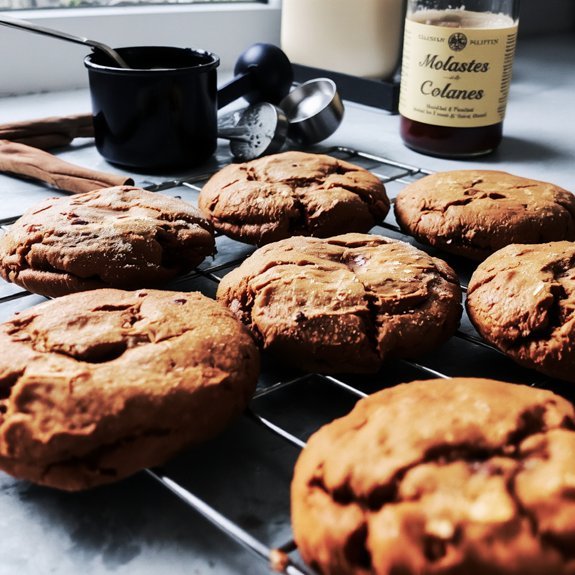
To achieve consistently excellent molasses cookies, you’ll want to focus on three critical variables: ingredient temperature, mixing technique, and baking timing.
Understanding molasses cookies’ historical origins and cultural variations helps you master authentic techniques.
Here’s what matters:
- Use room-temperature butter and eggs for proper emulsification
- Brown sugar and molasses must combine thoroughly before adding dry ingredients
- Don’t overmix; stop when streaks of flour disappear
- Chill dough minimum two hours to prevent spreading
- Bake at precise 350°F for exactly 10-12 minutes
Your ingredient ratios determine texture—too much molasses creates dense cookies, while insufficient leavening produces flat results.
Measure dry ingredients by weight when possible.
Remove cookies when edges set but centers retain slight softness; they’ll firm during cooling.
This approach yields that perfect chewy-crisp balance you’re after.
4. Storage and Shelf Life
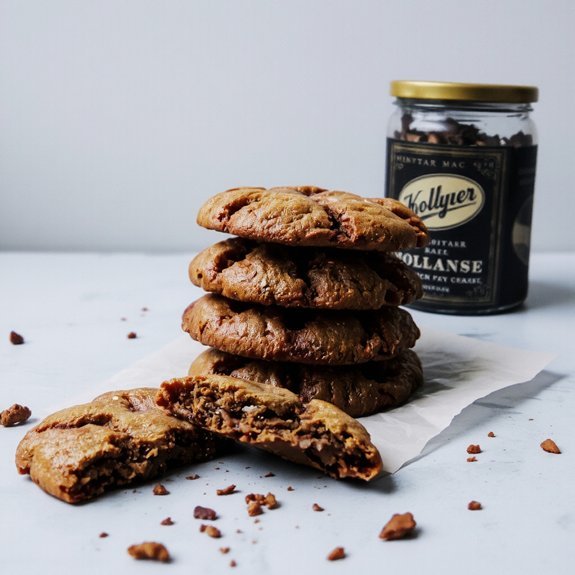
You’ll want to store your molasses cookies in an airtight container at room temperature, where they’ll maintain their soft texture and moisture for up to two weeks thanks to the hygroscopic properties of molasses.
For extended storage, you can freeze them in freezer-safe containers for up to three months, preserving both their flavor compounds and chewy consistency without compromising quality.
If you’re freezing dough instead, portioned rounds’ll stay viable for up to six months, allowing you to bake fresh cookies on demand.
Room Temperature Storage Guidelines
When molasses cookies are completely cooled, they’ll stay fresh at room temperature for up to one week when stored in an airtight container.
You’ll maximize shelf life by implementing these storage strategies:
- Place parchment paper between cookie layers to prevent sticking
- Store in glass or metal containers with tight-sealing lids for ideal humidity control
- Keep containers away from direct sunlight and heat sources
- Add a food-grade silica gel packet for moisture regulation
- Separate cookies from other baked goods to prevent odor prevention issues
Your molasses cookies maintain their characteristic chewy texture when you control environmental moisture levels.
The spices—cinnamon, ginger, and cloves—retain their potency in sealed containers.
Check cookies daily for any signs of staleness.
This straightforward approach gives you complete control over your stored batch without unnecessary interventions.
Freezing and Long-Term Preservation
Because molasses cookies freeze exceptionally well, you can extend their shelf life to three months by wrapping cooled cookies individually in plastic wrap, then placing them in freezer-safe airtight containers or freezer bags.
For maximum preservation, consider vacuum sealing your wrapped cookies before freezing—this method eliminates air exposure and prevents freezer burn more effectively than standard containers.
When you’re ready to enjoy your frozen cookies, use proper thawing techniques to maintain their texture.
Remove them from the freezer and let them thaw at room temperature for 15-20 minutes while still wrapped. This gradual temperature adjustment prevents condensation from accumulating on your cookies’ surface, which would compromise their characteristic crispy exterior and chewy center.
You’ll maintain ideal flavor and consistency with this straightforward approach.
5. Flavor Variations to Try
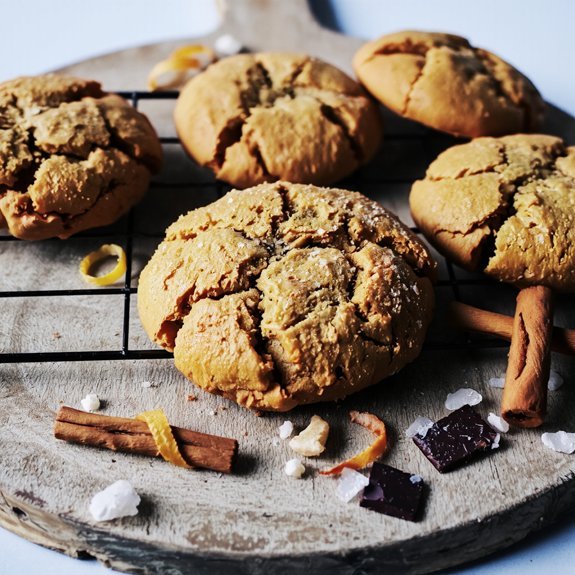
While the classic molasses cookie’s warm spice profile provides an excellent foundation, you can easily customize the recipe by adjusting both the spice blend and complementary ingredients.
Classic molasses cookies offer a warm spice foundation ready for your creative customization and flavor experimentation.
You’re free to experiment with:
- Seasonal Pairings: Add cardamom and orange zest for fall, or incorporate crystallized ginger for winter warmth
- Global Twists: Infuse black pepper and clove for Mexican-inspired depth, or blend in star anise for Asian influence
- Citrus Integration: Lemon or lime zest brightens the molasses base without compromising structure
- Heat Elements: Cayenne pepper or jalapeño powder creates sophisticated complexity
- Texture Modifications: Toast your spices beforehand to intensify volatile oils, enhancing flavor penetration
Each variation requires precise measurement adjustments.
When substituting spices, maintain your total spice weight to preserve cookie texture.
Your experimentation yields distinctly personalized results while respecting the foundational technique.
6. Serving Suggestions
Once you’ve perfected your molasses cookie recipe and explored flavor variations, the way you serve them amplifies their appeal and functionality.
Pair warm molasses cookies with cold milk or hot coffee to create complementary temperature contrasts that enhance flavor perception.
You’ll want to arrange them on festive platters featuring contrasting colors—white ceramic against dark cookies creates visual impact.
Consider pairing them with cream cheese frosting or a spiced glaze to elevate complexity.
For entertaining, stack cookies in parchment-lined boxes tied with twine, emphasizing artisanal presentation.
You can serve them alongside vanilla ice cream to showcase molasses depth, or position them as centerpieces on dessert boards with other spiced treats.
These serving strategies transform simple cookies into memorable experiences that reflect your culinary independence and attention to detail.
Frequently Asked Questions
Can I Make Molasses Cookies Without Eggs for Vegan Baking?
You can absolutely liberate your molasses cookies from eggs using two dependable substitutes.
A flax egg—one tablespoon ground flaxseed mixed with three tablespoons water per egg—delivers binding power and moisture.
Alternatively, aquafaba substitute works brilliantly; use three tablespoons of chickpea liquid per egg.
Both options maintain your cookie’s structural integrity while achieving that characteristic chew.
Flax eggs create denser, earthier cookies, while aquafaba produces lighter, airier results.
Choose based on your desired texture and commit fully to either method for consistent, vegan-friendly results.
What’s the Difference Between Molasses Cookies and Gingerbread Cookies?
You’ll find the primary distinction lies in Spice Composition. Gingerbread cookies demand prominent ginger, cinnamon, and cloves, while molasses cookies emphasize molasses flavor with minimal spicing.
This difference creates a Texture Contrast—gingerbread typically yields crispier, snappier results from higher spice ratios affecting hydration, whereas molasses cookies remain chewier and denser.
You’re controlling the flavor profile entirely through your spice ratios and molasses concentration, giving you freedom to customize either recipe.
How Do I Fix Cookies That Spread Too Much While Baking?
You’ve got two solid moves here.
First, chill your dough for at least two hours—cold dough resists spreading.
Second, increase flour by a tablespoon or two to tighten your mixture’s structure.
You can also lower your oven temperature by 25 degrees, giving cookies time to set before they flatten.
These adjustments won’t compromise texture; you’ll nail that perfect spread-to-height ratio you’re after.
Can I Freeze Molasses Cookie Dough Before Baking?
You can absolutely freeze molasses cookie dough.
Use flash freezing by placing portioned dough balls on a baking sheet for two hours, then transfer them to freezer bags for extended storage.
When you’re ready to bake, you’ve got options: thaw dough overnight in your refrigerator for standard baking, or bake directly from frozen, adding two to three minutes to your baking time. Both thawing methods preserve your dough’s integrity and flavor.
What Type of Molasses Produces the Best-Flavored Cookies?
You’ll get the richest flavor by using blackstrap molasses, which delivers deep, complex notes that dominate your cookies’ taste profile.
Light molasses works too if you’re after a milder sweetness and less assertive character.
Don’t mix them—commit to one type.
Blackstrap’s higher mineral content and intense molasses punch create superior depth.
You’re free to experiment, but blackstrap consistently outperforms lighter varieties in producing boldly flavored, memorable cookies that won’t disappoint discerning palates.





Leave a Comment